
CRM systems for tank sales management”
2026-09-02
- What is CRM for tank sales management and why is it needed in 2026
- Key CRM Features for Tank Equipment Manufacturers
- Comparison of universal and industry solutions: what to choose?
- How to implement a CRM system for tank sales management: step-by-step plan
- Typical mistakes when choosing and using software
- Automation development trends in 2026
- Frequently Asked Questions
- Conclusion
What is CRM for tank sales management and why is it needed in 2026
CRM systems for tank sales managementis not just a customer database, but a specialized software package that combines the technical configuration of products (volume, material, type of execution) with the transaction cycle. Unlike universal solutions like Salesforce or Bitrix24, industry-specific systems take into account the specifics of production: calculating costs based on the weight of metal, managing production time to order and monitoring the shipment of oversized cargo. We observe that companies that have implemented narrow-profile solutions reduce the application processing time from 3 days to 4 hours due to automation of calculations.
The industrial equipment market in Russia and the CIS countries is changing. Buyers no longer wait weeks for an offer. They require instant price calculations taking into account current steel quotes and logistics. If your manager spends two hours negotiating tank wall thickness with an engineer, you've already lost a customer. A specialized CRM integrates a calculator directly into the transaction card, allowing you to issue a preliminary estimate in 15 minutes.
In our practice, there was a case when a large oil refinery refused a contract worth more than 40 million rubles only because the supplier made a mistake in the specification of the type of steel in the final contract. The error occurred due to manual transfer of data from Excel to the contract template. The implementation of CRM with strict binding of technical parameters to the “Account” stage eliminates the human factor. The system simply will not allow you to issue an invoice if GOST is not selected or the protection class is not specified.
This article was written by engineers and sales professionals who deal with real-life capacitance manufacturing problems every day. We will not give abstract advice about “improving service”. Here you will find specific steps for choosing software, analysis of functionality for different types of tanks (vertical water tanks, horizontal water tanks, underground) and analysis of risks during implementation.
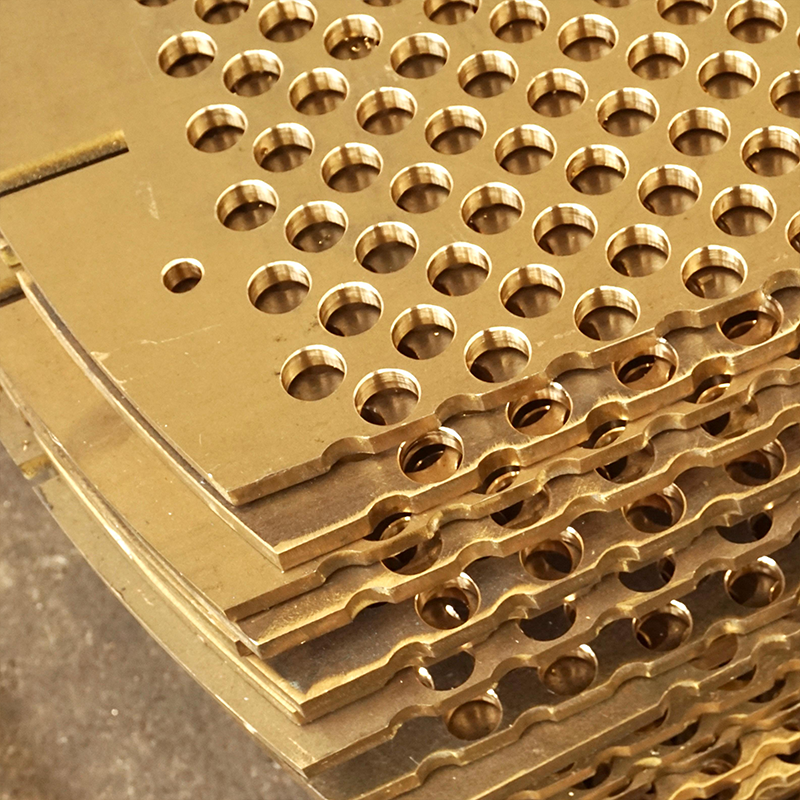
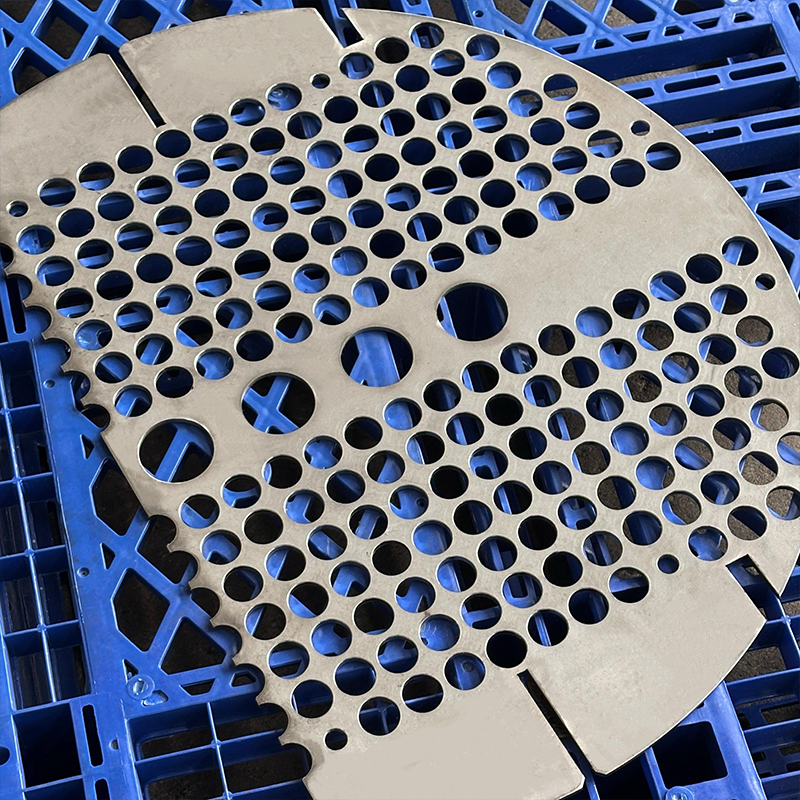
These issues are of particular relevance for enterprises working with complex alloys and high quality standards. For example, a companyWuxi Kaisheng LLC, specializing in the production of heat transfer and petrochemical equipment, solves highly complex problems every day. Their products, from titanium shell-and-tube heat exchangers to ASME-standard high-pressure apparatus, require precise consideration of the material characteristics: C46400 marine brass, copper-nickel alloys, N06625 nickel or 316 stainless steel. For such manufacturers, whose products operate in the harsh environments of oil refining, chemical industries and shipbuilding, an error in the metal specification is unacceptable. The experience of such companies shows that only a specialized CRM is able to correctly manage the parameters of certified products (PED, ASME) and ensure that each component, be it a 321 steel tubesheet or a corrugated bundle, meets customer requirements.
Key CRM Features for Tank Equipment Manufacturers
Universal CRMs are often powerless in the face of complex order structures in metal structures. Selling a tank is selling an engineering solution, not a product from a warehouse. ThereforeCRM systems for tank sales managementmust have a modular architecture tailored to the production cycle. Let's look at the critical blocks, without which the system turns into an expensive notebook.
Integrated engineering calculator
This is the heart of any industry CRM. The manager should not know the formula for calculating the mass of the shell or the bottom area. The system should do this automatically when entering basic parameters: diameter, height, roof type (conical, hipped, with pontoon), steel grade (St3sp5, 09G2S, stainless steel). A good CRM immediately shows the marginality of the transaction, taking into account not only the cost of the metal, but also the labor intensity of welding work, consumption of electrodes and workshop overhead.
It is important that the calculator supports variability. The client may request a change in the thickness of the bottom chord or the addition of manholes. In a regular CRM, this requires a new request to the engineer. In a specialized system, the manager changes the slider or checkbox, and the price is recalculated instantly. This allows negotiations to be carried out in real time, which significantly increases conversion at the stage of initial contact.
Technical documentation and version management
The life cycle of ordering a tank is accompanied by dozens of documents: questionnaires, KM and KMD drawings, quality certificates, metal certificates, as-built documentation. Losing the current version of the drawing may result in the factory producing flanges to the wrong standard (for example, GOST instead of DIN), which will make installation impossible. CRM must store the entire history of correspondence and file versions in relation to a specific production stage.
We recommend choosing systems where the status of the document (“Under approval”, “Approved”, “In progress”) is visible to all participants in the process. If the technologist makes changes to the stiffening ring reinforcement design, the manager and procurement department should be notified automatically. This prevents the purchase of the wrong assortment of rolled metal. An error in purchasing sheets 8 mm thick instead of 10 mm for a critical component can stop construction for weeks.
Control of production deadlines and logistics
Tanks are often oversized cargo that requires special transport and transportation permits. CRM should track not only the date of product readiness, but also the availability of free trawls, delivery routes and the schedule of installation crews. Integration with enterprise resource planning (ERP) systems allows you to see the actual load on welding stations and cutting machines.
One of our clients was faced with a situation where finished tanks sat on site for two weeks because the logistician forgot to order low-loaders. In modern CRM, such events trigger automatic reminders to the responsible person 5 days before the planned shipment. Transparency of the supply chain allows you to avoid downtime and penalties for missing the delivery deadlines.
Action:Check your current system: can the manager independently calculate the cost of the RVS-1000 tank, taking into account delivery to the site, without involving the chief engineer? If not, this is the first growth point for automation.
Comparison of universal and industry solutions: what to choose?
When choosing software, executives often hesitate between powerful general-purpose platforms and niche developments. Let's look at the pros and cons of each approach in relation to the production of capacitive equipment. The choice depends on the scale of your business and the complexity of your products.
| Comparison criterion | Universal CRM (Bitrix24, AmoCRM) | Industry CRM for metal structures factories | Self-written solutions based on 1C |
|---|---|---|---|
| Implementation cost | Low. Subscription from 1000 rub./month. | Medium/High. Licenses + setup from RUB 300,000. | High. Development from 1 million rubles. + support |
| Product cost calculation | Missing or requires complex modifications | Built-in calculator taking into account weight and consumption rates | Requires the programmer to write external processing |
| Accounting for technical characteristics | Only in the form of text comments | Structured fields (GOST, steel type, volume) | Flexibly configured for any directory |
| Integration with production | Weak. Only transfer of the order to work | Deep. Control of stages of cutting, welding, painting | Full integration with warehouse and accounting |
| Launch date | 1-3 days | 2-4 weeks | 3-6 months |
| Industry standard support | No | Yes (SP, SNiP, GOST) | Depends on the developer's qualifications |
Universal systems are great for trading houses that buy ready-made tanks from factories and resell them. They don’t need to count the mass of metal; it’s important for them to quickly send the CP and monitor calls. However, for a manufacturing enterprise, where each order is unique and requires design work, a universal CRM will become a crutch. You will have to create hundreds of additional fields, which will complicate the interface and demotivate employees.
Industry solutions, such as specialized modules for metallurgical plants, already contain best practices. It contains the logic for calculating costs that are typical for welding production. For example, the system itself will offer to add the cost of anti-corrosion coating if the client has indicated an aggressive operating environment. This reduces the risk of forgetting to include an important option in the estimate.
Solutions based on 1C are popular in Russia due to the familiarity of the interface for accounting and warehouses. But they often suffer from inconvenience for the sales team. Managers hate complex entry forms and lengthy reports. The ideal option is a hybrid system, where the front office (sales) works in a convenient web interface, and the back office (production, warehouse) is synchronized with 1C via API. This approach provides speed of sales and accuracy of accounting.
Recommendation:If your turnover is less than 50 million rubles per year and you sell standard containers (for example, fuel tanks for gas stations), start with a customized universal CRM with a simple calculator. For large plants building RVS with a volume of 1000 m³ or more, an investment in industry-specific software will pay off by preventing just one serious specification error.
How to implement a CRM system for tank sales management: step-by-step plan
The introduction of a new system is always stressful for the team. Personnel resistance is the main reason automation projects fail. ToCRM systems for tank sales managementhave taken root and started to make a profit, you need to act consistently, taking into account the psychology of engineers and managers.
- Audit of current business processes.Do not buy software until you describe on paper how the sale is going now. Where are applications lost? Why are deadlines missed? Who approves the price? We have seen factories that have automated chaos, resulting in “automated chaos.” Highlight bottlenecks. Often the problem is not the lack of a program, but the fact that technologists do not transmit data to managers on time.
- Formation of technical specifications (TOR).The technical specifications should not contain general phrases “user-friendly interface”, but specific requirements: “calculation of the cost of RGS-50 m³ in no more than 2 clicks”, “automatic generation of specifications according to GOST 31385”. Be sure to include the requirement for integration with your accounting system (1C, SAP, Galaktika). Without this, you will have to manually duplicate the data, which will kill the idea of a single source of truth.
- Vendor selection and pilot project.Don't be fooled by pretty presentations. Ask for a demo on your real data. Give a potential contractor a questionnaire from a real client and ask them to show how the system will handle this request. Run the pilot on one sales department or on one group of products (for example, only on underground tanks). This will allow you to identify configuration errors without risking the entire business.
- Training and adaptation.The most critical stage. People will sabotage innovations if they make their lives more difficult. Conduct training not in the format of lectures, but in the format of working sessions: “Here is a problem, solve it in the new system.” Appoint internal change champions—authoritative employees who will be the first to adopt the tool and help their colleagues. It is important to explain not “how to press the buttons,” but “how this will save you time and increase your premium.”
- Scaling and refinement.After a successful pilot, involve other departments. The first months of work will reveal new needs. The system must develop along with the business. Collect feedback from users regularly. If a manager spends more time entering data than communicating with the client, the process is not configured correctly.
A common mistake: trying to implement everything at once. Management wants the “perfect system” on day one. This is impossible. It is better to launch a simple working circuit in a month than to wait six months for the “ideal combine”, which will become obsolete even before launch. Start by automating the calculation and issuance of CP - this will give a quick economic effect.
Another pitfall is data quality. If you are transferring a customer database from old Excel files to a new CRM, prepare it in advance. Remove duplicates, check the relevance of contacts. Garbage in will lead to garbage out. An unclean database demotivates managers who will call non-existent numbers.
Tip:At the stage of choosing a vendor, be sure to check whether they have experience working specifically with manufacturers of metal structures. Universal integrators often do not understand the difference between selling a pipe and selling a turnkey tank, which leads to incorrect setup of sales funnels.
Typical mistakes when choosing and using software
Even with the budget and desire to digitalize, companies make the same rake. Analysis of failed implementations in the B2B manufacturing sector shows repeating patterns of errors. Avoiding them is easier than correcting the consequences.
Ignoring mobility
Tank sales often take place at customer sites or production sites. Managers and engineers must be able to access the system from a smartphone or tablet. If your CRM does not have a high-quality mobile application or a customized version, you lose responsiveness. The client asked at the construction site: “How much will it cost to add stairs?”, and the manager replied: “I’ll check with the office tomorrow.” Tomorrow the client will sign an agreement with a competitor who responded immediately.
Lack of real-time analytics
Many systems allow you to build beautiful reports, but with a delay of a day or a week. In a dynamic metal market, prices change daily. The head of the sales department must see the funnel, conversion and margin here and now. If you make decisions based on months-old data, you are managing blindly. ModernCRM systems for tank sales managementshould provide dashboards with real-time updates.
Interface overload
The desire to take into account all the nuances leads to the creation of forms with hundreds of fields. The manager spends 20 minutes filling out the deal card. This is absurd. Principle of minimum sufficiency: request only the information that is critical for the current stage. The rest can be refilled later or collected automatically. The more complex the interface, the lower the discipline in maintaining the database. Employees will start looking for workarounds, writing down important things in notepads.
Underestimating data security
The customer base and production technologies are the company’s intellectual property. When choosing a cloud solution, make sure that the servers are located in the jurisdiction of your country (for the Russian Federation - the registry of domestic software) and there is a reliable backup system. Leakage of the base to competitors can cost the company the market. The differentiation of access rights is also important: the manager should not see the cost of products, and the technologist should not see the payment terms of specific clients.
We came across a situation where a company saved money on hosting and chose a cheap plan without daily backups. When the server crashed, they lost three months of correspondence history and current specifications for active projects. The restoration took two weeks, during which two large contracts were disrupted. Saving on infrastructure reliability is a false economy.
Check:Open your CRM on your phone right now. Can you find the last call for a specific project and send the file to the client in 30 seconds? If not, the mobility of your system requires improvement.
Automation development trends in 2026
The industrial software market does not stand still. What was an innovation five years ago is becoming standard today. What awaitsCRM systems for tank sales managementin the near future? Understanding these trends will help you choose a solution with a margin of safety.
The first trend is artificial intelligence (AI) to help managers. Already now systems can analyze the text of correspondence and suggest next steps. For example, if a client mentions “short deadlines” in an email, AI will highlight this in red and offer a letter template with speed guarantees or an express delivery option. In the future, AI will be able to generate draft proposals based on the manager's voice notes after a meeting.
The second trend is integration with BIM modeling. Large infrastructure projects increasingly require building information modeling. The CRM of the future will be directly linked to BIM libraries. The manager will be able to show the client not just a PDF drawing, but an interactive 3D model of the tank, built into the general model of the object, directly from the transaction interface. This dramatically increases the level of trust and professionalism of the supplier.
The third trend is ecosystemism. CRM is no longer an isolated island. It becomes part of a unified digital environment connected with government customers through electronic document management systems (EDI), with banks for quick lending to customers, and with logistics aggregators. The deeper the integration, the higher the business value of the system.
Cybersecurity is also growing in importance. Taking into account the tightening requirements for the protection of personal data and trade secrets, vendors will offer solutions with end-to-end encryption and domestic security certificates. This will become a prerequisite for working with state-owned companies and critical information infrastructure (CII) facilities.
We should not forget about the development of low-code platforms. They allow businesses to modify the system themselves to meet changing needs without the involvement of expensive programmers. The plant will be able to independently add a new type of report or change the approval route in a couple of hours, reacting to market changes faster than competitors.
Frequently Asked Questions
How long does it take to implement CRM at a metal structures plant?
Basic setup and launch of a pilot group takes from 2 to 4 weeks. Full implementation for the entire enterprise with integration into 1C and employee training usually lasts 2-3 months. The period depends on the complexity of your business processes and the quality of data preparation. Don't try to speed up the process by skipping the testing stage - this will lead to disruptions in the work of the sales team at the most inopportune moment.
Can I use free versions of CRM to sell tanks?
Theoretically possible, but practically useless for a manufacturing business. Free plans have strict restrictions on the number of users, storage capacity and functionality. The main thing - an engineering calculator and deep integration - will not be there. You will spend more time on manual calculations and data transfer than you will save on a subscription. For the B2B sector with a high average check, investments in professional tools pay off with the first transaction.
What to do if managers refuse to work in the new system?
This is the classic problem of resistance to change. The solution lies in the plane of motivation and administrative resources. First, show employees the personal benefits: the system makes routine easier, reminds them to make calls, helps them remember details and earn more commissions. Second, make CRM work a requirement for bonuses. No entry in the system - no deal in the plan. Tough leadership at the start is necessary to form a habit.
Do you need your own server or is it better to use the cloud?
For most medium and small businesses, a cloud-based solution (SaaS) is preferable. It’s cheaper (no hardware and admin costs), safer (the provider makes backups) and more accessible (work from anywhere in the world). Only large holdings with special data security requirements or when working in closed circuits without Internet access should host their own server. Modern Russian cloud providers provide a high level of protection and compliance with legislation.
Conclusion
In a highly competitive industrial equipment market, the efficiency of sales processes is becoming a key factor for survival.CRM systems for tank sales managementThey have ceased to be a luxury and have become a necessary tool, as important as a welding machine or a cutting machine. They allow you to eliminate errors, speed up response to customer requests and transparently control every stage of production.
Choosing the right system requires understanding your processes and being open to change. Don't look for the perfect solution, look for one that solves your current pain points and scales with your business growth. Remember that the program is just a tool. Success comes from the competent use of this tool by people united by a common goal.
If you want to assess the potential of automation for your enterprise or need advice on choosing specialized software, contact our experts. We will help you conduct an audit and select a solution that actually works in the tank production industry.
Contact us todayto receive a personal demonstration of industry CRM capabilities.