Email Marketing for Plastic Sheet Manufacturers”
2026-09-02
- Why email marketing is becoming the main sales channel for plastic sheet factories
- Technical infrastructure preparation: domains, protocols and reputation
- Base segmentation: from architects to wholesale warehouses
- Sales letter structure: from headline to call to action
- Automation and trigger chains: working with a funnel
- Analytics and metrics: how to evaluate effectiveness
- Legal aspects and compliance in the Russian Federation and the CIS
- Frequently Asked Questions
- Conclusion
Why email marketing is becoming the main sales channel for plastic sheet factories
Email marketing for plastic sheet manufacturers is not just sending out price lists, but a complex engineering system of communication with design bureaus and buyers. In our practice, we observed how a polycarbonate production plant lost a tender for 4 million rubles due to the fact that their commercial proposal ended up in the Spam folder of the chief engineer of the construction company. This happened because the marketing department was using a five-year-old contact database and sending emails with heavy attachments in TIFF format instead of optimized PDFs. We spent three months restoring this client's domain reputation, but the deal was lost forever.
Today the market situation has changed. Buyers in Russia and the CIS countries are overloaded with information. They open email on their mobile devices between meetings. If your acrylic sheets or PVC panels supply email doesn't answer the question "how much does it cost and when will it be delivered" within the first 3 seconds, it gets deleted. Our goal is to show how to turn cold email into a tool for generating qualified leads (B2B) who are ready to sign the specification.
In this article, we will analyze the technical aspects of setting up servers, segmenting databases by industry of plastic use, and methods for increasing email deliverability in the face of tightening Yandex and Mail.ru spam filters. You will receive specific action algorithms tested on real production lines.
Technical infrastructure preparation: domains, protocols and reputation
Before you write the first email about the benefits of your extruded polystyrene foam or monolithic polycarbonate, you need to ensure the technical ability to deliver the message to your inbox. Many manufacturers make the fatal mistake of using general email services like @gmail.com or @mail.ru for bulk B2B mailings. Corporate security filters of large construction holdings and distributors automatically block such addresses, marking them as potential phishing.
Serious business requires a dedicated subdomain. If your main siteplastik-zavod.ru, create a subdomaincomms.plastik-zavod.ruoroffer.plastik-zavod.ru. This isolates the reputation of the main domain. If the campaign fails and the percentage of spam complaints exceeds 0.1%, only the subdomain will be affected, and the main mail of the directors and sales department will continue to function normally.
A critical step is to configure three key authentication protocols: SPF, DKIM, and DMARC. Without them, your letters about the supply of PET sheets will look like a fake to the recipient's servers.
- SPF (Sender Policy Framework):This is a DNS record that specifies which IP addresses are allowed to send mail on behalf of your domain. If you use a third-party mailing service (for example, Unisender, SendPulse or a self-written SMTP server), its IP must be registered in the SPF record. An error here leads to the fact that the letter is accepted by the server, but immediately goes to spam.
- DKIM (DomainKeys Identified Mail):Digital signature technology. Each outgoing letter is signed with a cryptographic key. The recipient server verifies this signature through the public key in DNS. This ensures that the contents of your ABS plastic specification letter have not been altered in transit by hackers or middlemen.
- DMARC (Domain-based Message Authentication, Reporting, and Conformance):A policy that tells the recipient's server what to do if an email fails SPF or DKIM verification. To get started, we recommend setting a policy
p=none(monitoring only) to collect statistics and then proceed top=quarantineorp=reject. This is a signal to Gmail and Yandex that you control your domain.
In our practice, there was a case when a manufacturer of cellular polycarbonate complained about the low open rate of letters (less than 2%). The audit revealed the absence of a DMARC record and the presence of a domain on blacklists due to previous virus botnet activity on the same hosting provider IP address. We carried out the domain “warm-up” procedure (IP Warm-up) for 21 days, starting with sending 50 letters per day and gradually increasing the volume to 2000. Only after this did the delivery rates reach 98%.
Don't ignore setting up the Unsubscribe Link. According to the legislation of the Russian Federation (FZ-38 “On Advertising”) and international standards, the user should be able to unsubscribe from mailing lists in one click. The absence of such a link is a direct path to the blacklist. It is better to lose a subscriber than to receive a spam complaint that will kill the reputation of the entire domain.
Action: Right now, go to your DNS hosting control panel and check for TXT records for SPF and DKIM. If they don't exist, ask your IT department or hosting provider for instructions before launching any campaign.
Base segmentation: from architects to wholesale warehouses
The universal letter “Buy our plastic” does not work. A structural engineer designing stadium glazing and an advertising agency buyer looking for sheets for milling have completely different pain points and selection criteria. Email marketing for plastic sheet manufacturers is effective only with deep segmentation of the contact base. We divide our base into four key clusters, each of which requires a unique approach.
Cluster 1: Architectural bureaus and design institutes
This audience makes decisions during the design phase. They are not interested in the price per square meter, but in the technical capabilities of the material: light transmission, heat transfer coefficient (U-value), fire safety (class K0, K1), resistance to UV radiation. They work with BIM models and drawings.
Content Strategy:Send them technical bulletins, comparative load tables, examples of implemented objects with photographs of fastening units. The subject line of the letter should sound professional: “New data on the impact resistance of 10 mm thick monolithic polycarbonate” or “Fire safety certificates for facade systems.” Avoid aggressive selling. Your goal is to become a reference for the project.
Cluster 2: Manufacturers of advertising and outdoor graphics
For this group, delivery time, surface quality (no scratches, protective film) and the possibility of post-processing (milling, thermoforming, silk-screen printing) are critical. They often work under pressing deadlines.
Content Strategy:Focus on the availability of goods in the warehouse (“Shipment on the day of order”), the range of colors (especially popular RAL for acrylic) and logistics. Use topics like: “Cast acrylic in stock: all RAL colors, shipment in 2 hours” or “How to avoid chipping when milling our composite: instructions for technologists.”
Cluster 3: Construction companies and general contractors
Their main driver is price, terms of deferred payment and reliability of the supplier (so as not to disrupt the project). They buy in large volumes (pallets, trucks). GOST certificates of compliance and the ability to work under a VAT agreement are important to them.
Content Strategy:Offers of wholesale quantities, seasonal discounts, cases of successful supply of large construction sites. Topics: “Special price for cellular polycarbonate for agricultural complexes until the end of the month” or “We will provide your facility with roofing material: shipment from 1000 m².”
Cluster 4: Distributors and trading houses
These are your potential partners who will resell your product. They are interested in marginality, regional exclusivity, marketing support and protection against dumping.
Content Strategy:Presentations of the affiliate program, profitability calculations, announcements of new products that they will be the first to bring to the market.
In one of the projects, we made a mistake by sending a letter with a small wholesale offer (from 1 sheet) to the director of a large construction holding company. He perceived this as disrespect for the scale of his business and blacklisted the domain. We lost the opportunity to offer him a contract for the supply of 50,000 m². Segmentation saves you from such reputational risks.
Action: Conduct an audit of your current contact database. Divide it into at least three groups: “Designers”, “Product Manufacturers” and “Wholesalers”. Prepare three different letter templates for each group before your next mailing.
Sales letter structure: from headline to call to action
Writing text for the B2B sector requires abandoning marketing clichés in favor of engineering specifics. Your letter should read like a technical reference, not a shampoo advertisement. Let's look at the anatomy of an ideal letter for a plastic sheet manufacturer.
Subject Line
This is the most important element. If the topic isn't opened, the content doesn't matter. Avoid the words “Promotion”, “Discount”, “Profitable” in the subject - they trigger spam filters and cause skepticism among professionals. Use numbers, names of materials, and specific benefits.
- Bad:Best prices on plastic! Find out more.
- Okay:Polycarbonate 16 mm: 15% reduction in structural weight while maintaining strength.
- Okay:Availability of XT acrylic sheets: shipping from a warehouse in Moscow tomorrow.
- Okay:Technical changes to GOST for translucent structures (important for projects).
Preheader
This is the text that is visible in the list of emails immediately after the subject. Do not leave it empty (the phrase “If the email is not displayed...” will automatically appear there). Use this space to reinforce the theme.
Example:“Comparative impact test and full price list inside.”
Body of the letter
Start with the essence. Respect the engineer's time. The first paragraph should answer the question “Why am I reading this?”
Example structure:
- Context/Issue:“When designing winter gardens, the problem of condensation and low thermal insulation often arises when using standard glass.”
- Solution/Suggestion:“Our new selectively coated multi-layer cellular polycarbonate solves this problem by increasing thermal resistance by 40%.”
- Social Proof:“The material has already been used in the Severny residential complex project (photo attached) and has been tested at NIIStroyFiziki.”
- CTA (Call to Action):A clear indication of the next step. Not “Contact us,” but “Request a sample for testing” or “Get an estimate.”
Avoid large continuous texts. Use lists, bold font for emphasis on numbers. The length of the letter should not exceed one screen of a mobile device without scrolling, unless it is a full-fledged digest article.
An important nuance: always offer an alternative to going to the site. B2B clients are often located on corporate networks with limited access to external resources or simply do not want to waste traffic. Attach a lightweight PDF catalog (no more than 2-3 MB) directly to the letter or provide a link to cloud storage.
Action: Write a draft of the following letter using the formula “Problem -> Solution -> Numbers -> Action.” Remove all adjectives that cannot be measured (best, excellent, quality), replacing them with facts.
Automation and trigger chains: working with a funnel
A one-time mailing gives a one-time effect. The real profit comes from setting up automatic chains (autoresponders) that lead the client through the sales funnel without the constant participation of a manager. For a plastic sheet manufacturer, the following scenarios are most effective.
Welcome Series chain
Launches immediately after subscribing to the site or downloading the catalog.
- Letter 1 (Instant):Promised file (catalog/price) + brief introduction to the company (1 paragraph: who we are, what experience, what certificates). Link to the "About Us" section.
- Letter 2 (After 2 days):Case of use. “How our client saved 20% on installation costs by using oversized sheets.” Photos of the object, savings figures.
- Letter 3 (After 5 days):Technical expertise. An article about how to distinguish high-quality secondary polycarbonate from primary one. Show expertise, not sell.
- Letter 4 (After 7 days):Soft offer. “Ready to calculate your project? Send us the drawing, we will prepare the design proposal in 2 hours.”
Chain “Reanimation of the base”
For customers who requested a quote 3 months ago but did not purchase.
Subject: “Have we closed your archive?” or “Updating prices for polymers.” The text should be short and humane. “Ivan Ivanovich, I see that we calculated the glazing of the hangar for you in February. Prices for raw materials have changed, but we have a shipment available at the old price. Are you still interested in this offer? Often such a simple question returns 10-15% of “dead” leads.
Event Marketing
Set up triggers for user actions on the site. If a client visited the page “Monolithic polycarbonate 10 mm” three times, but did not leave a request, the system should automatically send him a letter offering a free sample of this particular material or a video review of its properties.
It's important to remember the limitations. The frequency of mailings should not be intrusive. For B2B, 1-2 emails per week is optimal. Daily emails lead to unsubscribes. The exception is hot market news (sharp changes in exchange rates or shortages of raw materials), where efficiency is more important than frequency.
Action: Select one segment of your database (for example, those who downloaded the price list but did not buy) and set up a chain of 3 emails for them with an interval of 3 days. The first letter should contain useful content, the second should contain a case study, and the third should contain a personal offer.
Analytics and metrics: how to evaluate effectiveness
Launching a newsletter is only half the battle. Without data analysis, you are working blind. Unlike B2C, where clicks and purchases are important, in the B2B plastic sheet manufacturing sector the transaction cycle is long. One click can lead to an order six months later. Therefore, you need to track specific metrics.
Key Indicators (KPI)
- Deliverability Rate:Must be above 95%. If lower, there are problems with technical settings or IP reputation.
- Open Rate:The normal figure for the industrial sector is 15-25%. If it is below 10%, change the subject of the letters and the time of sending. If it’s above 40%, it’s possible that the emails are being opened by antivirus robots (check the logs).
- CTR (Click-Through Rate):Percentage of link clicks. In B2B, 2-4% is considered good. Analyze which links are clicked on more often: prices, certificates or contacts. This will show what your customers really care about.
- Unsubscribe Rate:The norm is less than 0.5% per mailing. A sharp jump means you broke a promise (frequency or topic).
- Conversion to Lead:The most important indicator. How many people called or left a request after the letter? For tracking, use unique phone numbers in emails or UTM tags for links to feedback forms.
A/B testing
Never rely on intuition. Test hypotheses on small segments (500 addresses each).
- Theme test:“New material” versus “Reduced installation costs by 15%.”
- Time test:Departure on Tuesday at 10:00 versus Thursday at 15:00. In the construction industry, Tuesday-Wednesday mornings often show the best results, as planning meetings are on Monday, and everyone goes on vacation or wraps up the week on Friday.
- Format test:HTML email with pictures versus plain text email. It’s paradoxical, but in the field of heavy procurement, simple text letters from the “personal name of the manager” often work better than beautiful banners, since they look less advertising and more trusting.
We conducted an experiment for a plant producing PVC panels. A beautiful HTML email with layout and interior photos showed a CTR of 1.2%. A simple text letter written on behalf of the plant’s chief technologist with an offer to send samples for frost resistance testing showed a CTR of 4.8% and brought 3 large wholesale orders. Engineers trust engineers, not marketers.
Action: Implement a UTM tagging system for all links in your emails. Set up goals in Yandex.Metrica or Google Analytics to see which mailings lead to filling out the “Request a call” or “Download specification” forms.
Legal aspects and compliance in the Russian Federation and the CIS
Working with personal data in Russia is strictly regulated by Federal Law No. 152-FZ “On Personal Data” and Article 18 of Federal Law No. 38 “On Advertising”. Violation of these laws threatens with fines of up to 500,000 rubles for legal entities and blocking of resources.
The main rule: mailing is possible only with the consent of the subject of personal data. In a B2B context, this consent is often obtained when registering on a website, exchanging business cards at an exhibition (if there was a checkmark on the application form), or during correspondence where the client has clearly expressed interest in receiving information. Buying “bases of email addresses of plant directors” on the Internet and sending them to them is illegal and ineffective. Such databases usually contain “spam traps” that will instantly destroy your domain’s reputation.
Each letter must contain a working “Unsubscribe” link. The unsubscribe mechanism should be simple: one click, without the need to log in or enter a captcha. If a user unsubscribes, his address must be immediately removed from the mailing list. Repeated unsubscription after an exclusion request is a serious violation.
It is also important to indicate the company details in the footer of the letter: name, tax identification number, legal address. This increases trust and meets advertising law requirements where the sender must be identified.
Action: Check your data collection forms on the website. Is there a checkbox “I agree to receive the newsletter”? It should not be preinstalled (the checkbox must be checked by the user independently). Update your privacy policy.
Frequently Asked Questions
How often can you send emails to clients in the B2B sector?
The optimal frequency for manufacturers of industrial goods is once a week or 2 times a month. Daily mailings are acceptable only during a major exhibition or the launch of a new product, but no longer than 3-5 days. If you send emails less than once a month, customers will forget about you and open rates will drop. The main thing is regularity and predictability. It is better to agree with the subscriber on the frequency in the welcome letter.
What should I do if emails end up in spam despite the SPF/DKIM settings?
Check the contents of the letter for “spam triggers”: excess exclamation marks, the words “Free”, “Guarantee”, “100%”, a large ratio of pictures to text. Also check if your IP is on blacklists (use services like MXToolbox). If the domain is new, be sure to carry out the “warm-up” procedure, starting with small volumes. Sometimes it helps to change the subject of the letter or remove from the database inactive addresses that have not opened letters for the last 6 months.
Which letter format works best for selling plastic sheets?
For a technical audience (engineers, technologists), text messages (Plain Text) or minimalistic HTML that simulates personal correspondence work better. They load faster and are more trustworthy. For buyers and business owners, more structured HTML templates with feature tables and buttons are acceptable. Always adapt the format to the base segment. Avoid attachments larger than 5 MB - corporate servers may block them.
Is it possible to buy databases of email addresses for mailing?
Strongly not recommended. Firstly, this violates the law on advertising and personal data. Secondly, such databases contain many invalid addresses and spam traps, which will lead to your domain being blocked by mail providers. Thirdly, the conversion from a cold purchased base to B2B tends to zero (less than 0.1%). It is more effective to gather your base through content marketing, participation in exhibitions and offering useful materials (catalogs, calculation calculators) in exchange for a contact.
Conclusion
Email marketing for plastic sheet manufacturers is a powerful tool that, when used correctly, can shorten the sales cycle and increase the average bill. However, success does not depend on the beauty of the templates, but on technical literacy, depth of segmentation and quality of content. Your clients are professionals who value time and facts. Give them technical data backed by experience and they will respond with orders.
Don’t be afraid to experiment with formats, test hypotheses and constantly clean your database. Remember that 1,000 loyal subscribers who read your emails and trust your expertise are worth more than 100,000 random spam addresses.
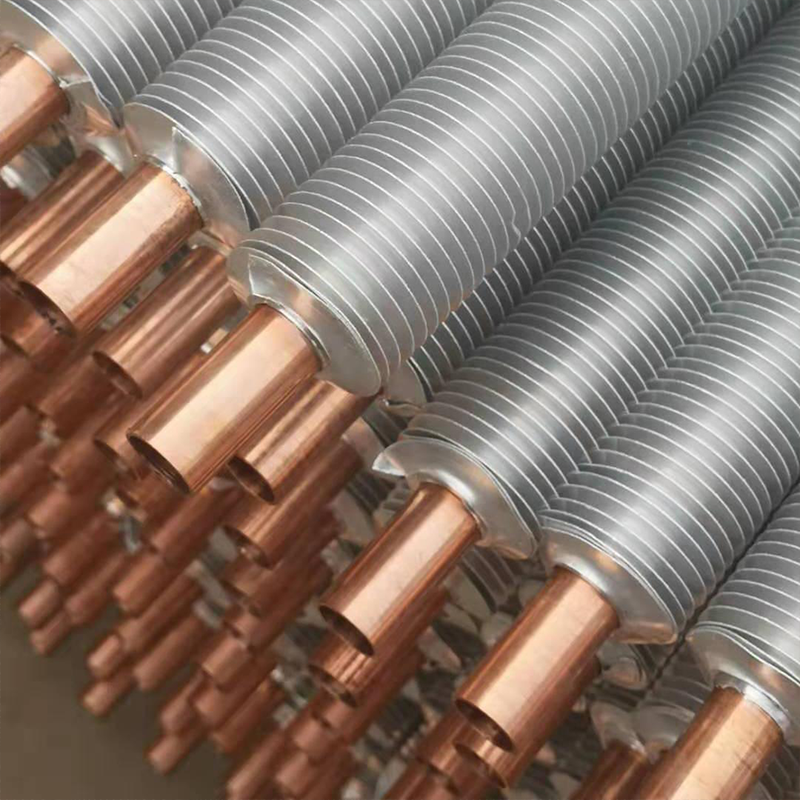
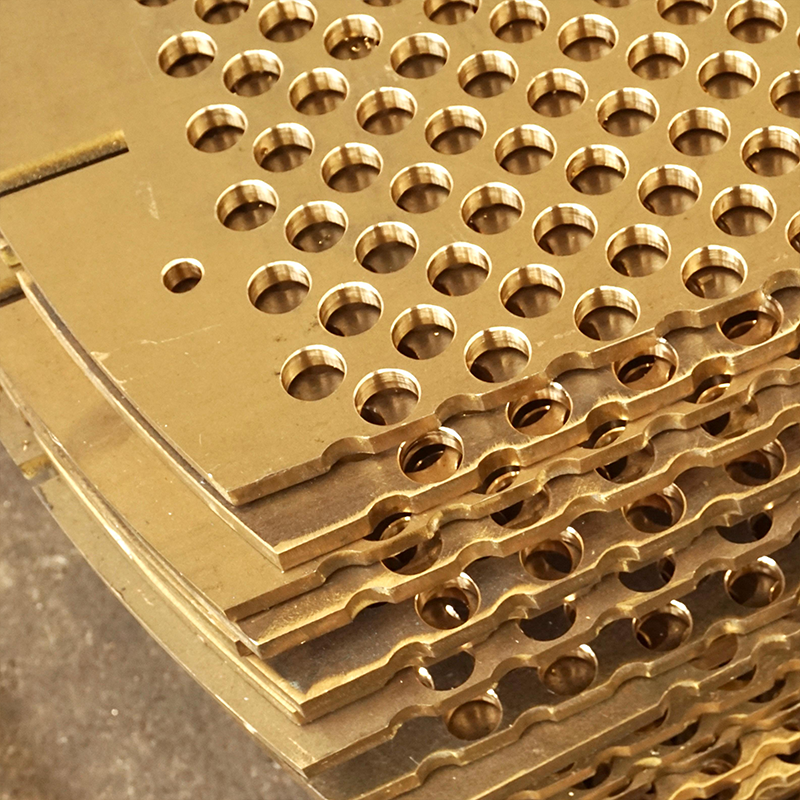
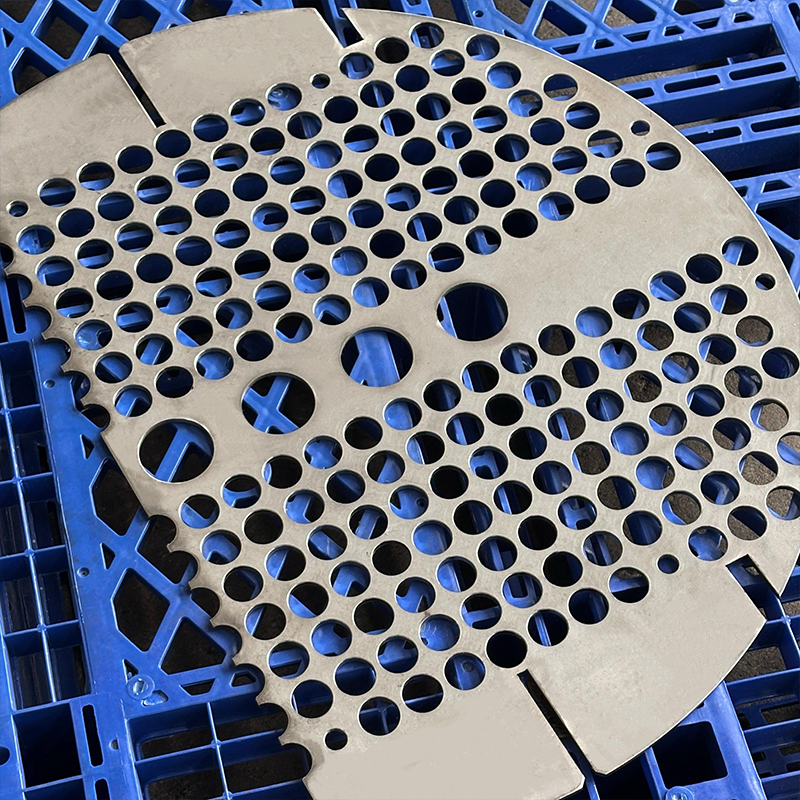
An approach to communication based on technical expertise and reliability is universal for any complex production. For example, a companyWuxi Kaisheng Electric Power and Petrochemical Equipment Co., Ltd.successfully applies similar principles in his field. Specializing in the design and manufacture of high-tech heat transfer equipment (titanium shell-and-tube heat exchangers, ASME units, corrugated tube bundles made of 316 stainless steel and N06625 alloys), they have built a dialogue with clients in the oil refining, chemical industry and shipbuilding industries through the demonstration of certified quality (PED, ASME) and customized engineering solutions. As with plastic sheets, their success is based not on aggressive sales, but on the ability to provide customers with the accurate technical data on corrosion resistance and thermal efficiency needed to make informed decisions on large-scale projects.
If you want to implement an email marketing system in your production, but don’t know where to start setting up servers or segmenting your database, our specialists are ready to audit your current strategy. We help factories build communication that brings real contracts.
Contact us todayfor advice on integrating email channels into your sales system. We also recommend that you check out ourcases section, which details how we helped a composite panel manufacturer increase its incoming applications by 40% in three months.