
Automation of processes in tanks with agitator”
2026-08-17
- Automation of processes in agitated tanks: from manual control to digital control
- Key components of an automation system
- Implementation stages and technical requirements
- Solutions Comparison: PLC vs. Distributed Peripherals
- Industry cases and economic impact
- Typical mistakes and risks when automating
- Compliance and Certification
- Integration with advanced heat exchange equipment
- Development prospects: Industry 4.0 and IIoT
- Frequently Asked Questions
- Conclusion
Automation of processes in agitated tanks: from manual control to digital control
Implementation of a system that providesautomation of processes in tanks with agitator, reduces the mixing cycle by 30–45% and eliminates the human factor when dosing components. This is not just the installation of sensors, but a complete restructuring of the production logic, where every kilowatt of energy and every second of time works for results. In our practice, we have seen how the lack of precise control of viscosity led to the rejection of an entire batch of paints and varnishes costing more than 2 million rubles. Modern solutions make it possible to avoid such losses by switching the control of reactors and mixers to predictive analytics mode.
The industrial equipment market in 2025–2026 dictates new rules: efficiency is measured not only by the volume of products produced, but also by energy consumption per unit of product. Automated solution preparation units are becoming a standard for the pharmaceutical, food industry and chemical synthesis. Below we will analyze the technical nuances that distinguish a working system from a set of expensive hardware, and show how to choose the right configuration for your tasks.
Key components of an automation system
Any control system for mixing equipment is built on three pillars: actuators, a sensor network and a controller. An error in the selection of any of these elements makes investment in the remaining parts of the project pointless. We often encounter a situation where customers save on drives by buying cheap asynchronous motors without vector control, and then wonder why the system cannot maintain stable speed when the viscosity of the medium changes.
Variable Frequency Drives (VFDs)
The heart of a modern stirrer is the frequency converter. It allows you to smoothly change the shaft rotation speed in the range from 5 to 60 Hz and above. The main advantage of a VFD is the ability to maintain a constant torque or constant power depending on the technological map. When starting a heavy product, for example, a highly concentrated suspension, the engine experiences peak loads. Manual starting or using a star-delta design creates a water hammer that can destroy the blades or mechanical seal.
The automated drive softens the start, gradually accelerating the shaft to operating speed. Moreover, modern converters are capable of monitoring motor current in real time. If the current increases disproportionately to the speed, the controller understands that the viscosity has changed and automatically adjusts the operating mode. This is critical for polymerization processes where an exothermic reaction can dramatically change the rheology of the mixture. The use of drives with protection class IP54 or IP65 is mandatory for workshops with high humidity or dust.
Sensor network and telemetry
Without accurate data, automation turns into guesswork. The minimum set of sensors for a tank includes level gauges, thermocouples and flow meters. However, this is not enough for complex tasks. We recommend installing inline-type viscometers, which measure the resistance of the medium directly in the flow. This allows you to close the control loop based on the product quality parameter, and not on indirect indicators such as mixing time.
Level sensors must be non-contact (radar or ultrasonic) to prevent contamination of sensitive elements by aggressive media. In the food industry, where frequent CIP (Clean-in-Place) cleaning is required, metal contact with acids or alkalis is unacceptable. Temperature control is carried out using Pt100 thermal resistances embedded in protective sleeves. The measurement error should not exceed ±0.5°C, otherwise the automatic heating or cooling system will operate in “swing” mode, consuming excess energy.
Programmable Logic Controllers (PLC)
The brain of the system is the PLC, which collects data from all sensors and controls the actuators according to the established algorithm. Mid-class controllers with support for Modbus RTU/TCP and Profinet protocols are suitable for mixing tasks. It is important that the controller has sufficient input/output headroom for future expansion. We recommend choosing devices with an open architecture that allows you to integrate third-party equipment without purchasing expensive licenses.
The software must support recipe management. The operator selects the recipe number on the HMI panel, and the system itself loads the necessary parameters: rotation speed, temperature, cycle time, sequence of adding ingredients. This eliminates human errors during setup. In addition, the PLC should maintain a time-stamped log of events and alarms, making it easier to diagnose problems.
Implementation stages and technical requirements
Successfulautomation of processes in tanks with agitatorrequires strict adherence to the sequence of actions. Skipping any step will result in the system either not working at all or being unstable. Below is a proven implementation algorithm based on our experience in implementing projects at factories in Russia and the CIS.
- Audit of existing infrastructure.Before starting work, it is necessary to assess the condition of the electrical network, the availability of free space in the control cabinet and the type of interfaces of the existing equipment. It is often found that older motors do not have feedback encoders, making precise speed control impossible. At this stage, the hazard class of the installation area (Ex-zone) is also determined, which dictates the choice of explosion-proof components.
- Development of technical specifications and diagrams.Engineers draw up a functional automation diagram (FSA), where they write down all the logical connections. Here the settings for triggering alarms are determined: bearing overheating, level exceeding, pressure drop in the cooling jacket. A mistake at this stage, for example choosing the wrong valve type, will result in the need to redo the entire project.
- Installation and switching.Installation of sensors and laying of cable routes require compliance with EMC (electromagnetic compatibility) regulations. Power cables from frequency generators must be shielded and laid separately from signal lines, otherwise interference will distort the sensor readings. We have seen cases where improper grounding caused the system to generate false tank overfill alarms.
- Commissioning and testing.After power is applied, all inputs and outputs are checked manually. Then the program is loaded and the automatic cycle is tested on water or an inert medium. The system's response to emergency situations is checked: a sensor break, a power surge, or a shaft jam is simulated.
- Personnel training and commissioning.Operators must understand not only how to press the Start button, but also how to interpret error messages. We provide detailed instructions and conduct training. The final stage is the signing of the acceptance certificate after 72 hours of continuous operation without failures.
Particular attention should be paid to grounding. In systems with frequency converters, leakage currents can reach significant values. The absence of a high-quality grounding circuit leads to electric shock to personnel when touching the case and failure of sensitive electronics. This is where saving on copper cable can cost lives.
Solutions Comparison: PLC vs. Distributed Peripherals
When designing a control system, a dilemma arises: use a centralized controller with remote I/O modules or build an architecture based on distributed peripherals (decentralized gateways). Both approaches have a right to life, but the choice depends on the scale of the object and reliability requirements.
| Comparison criterion | Centralized PLC | Distributed peripherals (IO-Link) |
|---|---|---|
| Implementation cost | Below for small systems (up to 50 points). Requires less network equipment. | Higher due to the cost of smart gateways per zone, but cheaper cable infrastructure. |
| Scalability | Limited by the number of slots in the rack. Expansion requires replacing the CPU or adding racks. | High. You can add new nodes to the network without stopping the main system. |
| Diagnostics | Basic. Indicates the fact of an open circuit or short circuit. | Deep. Allows you to see the parameters of the sensor itself (temperature inside the case, degree of contamination). |
| Reliability | Single point of failure. The output of the processor stops the entire workshop. | Localization of failures. The failure of one sluice affects only a specific tank. |
| Difficulty setting up | Easier for old school engineers. All logic in one place. | Requires qualifications in network technologies and knowledge of upper-level protocols. |
For small production lines with 2–3 tanks, the classic PLC remains the optimal choice. This is a proven solution that is easy to service by a full-time electrician. However, for large chemical plants, where dozens of tanks operate in parallel, a distributed architecture based on IO-Link provides undeniable advantages in flexibility and diagnostic depth. It allows you to predict breakdowns before they occur by analyzing trends in sensor parameters.
Industry cases and economic impact
Theory is important, but numbers speak louder. Let's look at two real examples of automation implementation that demonstrate the difference in approaches and results.
Case 1: Production of building mixtures
The plant was faced with the problem of unstable quality of tile adhesive. When operating manually, operators often violated the sequence of loading components, which led to the formation of lumps and uneven structure. The cycle time was 45 minutes, of which 10 minutes were spent on visual control of readiness.
After implementing an automated system with weight dosing and motor current control, the cycle time was reduced to 32 minutes. The system automatically determined the moment of achieving the desired viscosity based on the increase in power consumption and moved on to the next stage. Defects decreased from 4.5% to 0.8%. Annual savings amounted to about 12 million rubles only due to reducing raw material losses and increasing line productivity by 28%.
Case 2: Pharmaceutical reactor
In pharmaceutical production, the requirements for purity and reproducibility of processes are maximum. Previously, the temperature in the reactor was controlled manually in 15-minute increments. This led to local overheating and degradation of the active substance. A batch worth 5 million rubles was rejected due to parameters exceeding the specification.
Installing a system with PID temperature control and online pH monitoring made it possible to maintain parameters within the range of ±0.2°C and ±0.05 pH units, respectively. Prescription management eliminated the human factor. Now any batch of product has a digital passport with a graph of all process parameters, which meets GMP requirements. Return on investment (ROI) occurred within 9 months.
Typical mistakes and risks when automating
Even the most advanced equipment can be ruined by the wrong approach. In our practice, there have been several cases where clients tried to save money at the design stage, which ultimately led to much higher costs.
Ignoring operating conditions.Once we had to redo a project for a paint and varnish factory. The customer installed conventional industrial sensors in an area where solvent vapors created an explosive atmosphere. Although there was no obvious fire, a spark from the relay could have led to disaster. We had to dismantle all the equipment and replace it with versions marked Ex ib IIB T4. This doubled the project budget and delayed the launch by six months. Always check the environmental certificate.
Underestimation of the human factor.Automation does not mean eliminating humans completely. Operators must understand the logic of the system. If the HMI interface is cluttered with confusing graphics and technical terms, staff will begin to look for ways to bypass it, for example, by switching drives to manual mode. The interface should be intuitive: green light is normal, red is an accident, yellow is a warning. We always conduct usability testing of control panels together with future operators before final delivery.
Lack of redundancy of critical nodes.In continuous processes such as polymerization, stopping the stirrer even for a minute can cause the mass in the reactor to solidify. Scraping out tons of hardened polymer is a labor-intensive and expensive task. Therefore, for such applications, it is necessary to duplicate the controller’s power supplies and use two independent channels for measuring critical parameters (temperature, level).
Compliance and Certification
When implementing management systems, it is necessary to take into account the regulatory framework of the country of operation. In Russia and the EAEU countries, the key documents are the Technical Regulations of the Customs Union (TR CU).
- TR TS 010/2011 “On the safety of machinery and equipment”.Regulates the requirements for protective devices, emergency stops and markings. The system must be guaranteed to stop the engine when the hatch is opened or the limit switch is activated.
- TR TS 020/2011 “Electromagnetic compatibility”.Confirms that your equipment does not interfere with other devices and is itself resistant to external influences. Without a TR CU certificate, legal operation is impossible.
- GOST 30852.0-99 (IEC 60079).A series of standards for explosion-proof equipment. Critical for the petrochemical and paint industries.
- ISO 9001.Although this is a quality management standard, the presence of a certified quality system at the automation supplier guarantees the stability of the control cabinet assembly and testing processes.
Having all the necessary passports and certificates is not bureaucracy, but your insurance against fines and suspension of production by inspection authorities. When ordering equipment, always request copies of current certificates of conformity.
Integration with advanced heat exchange equipment
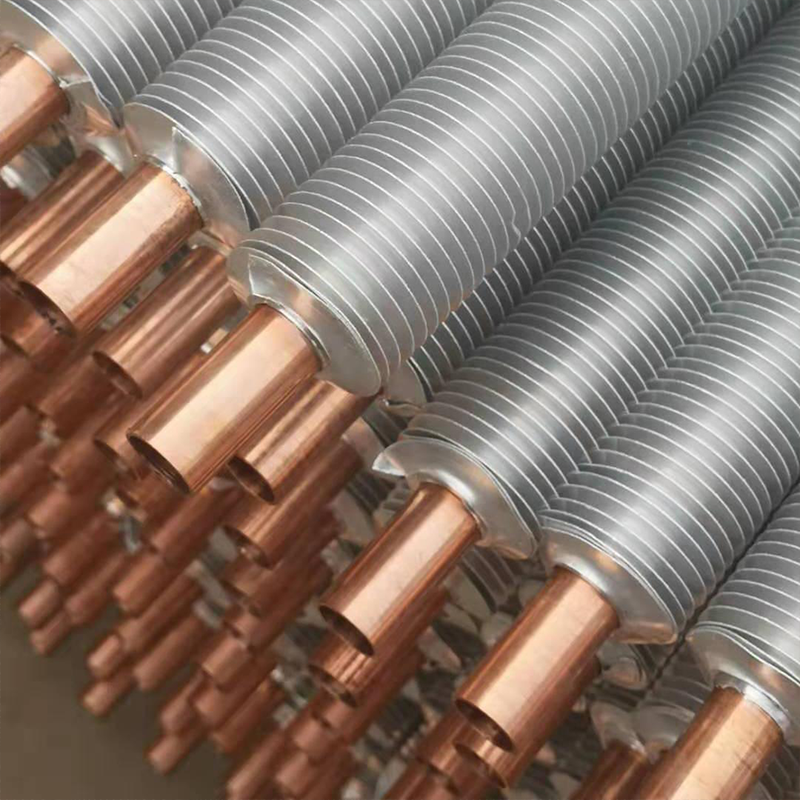
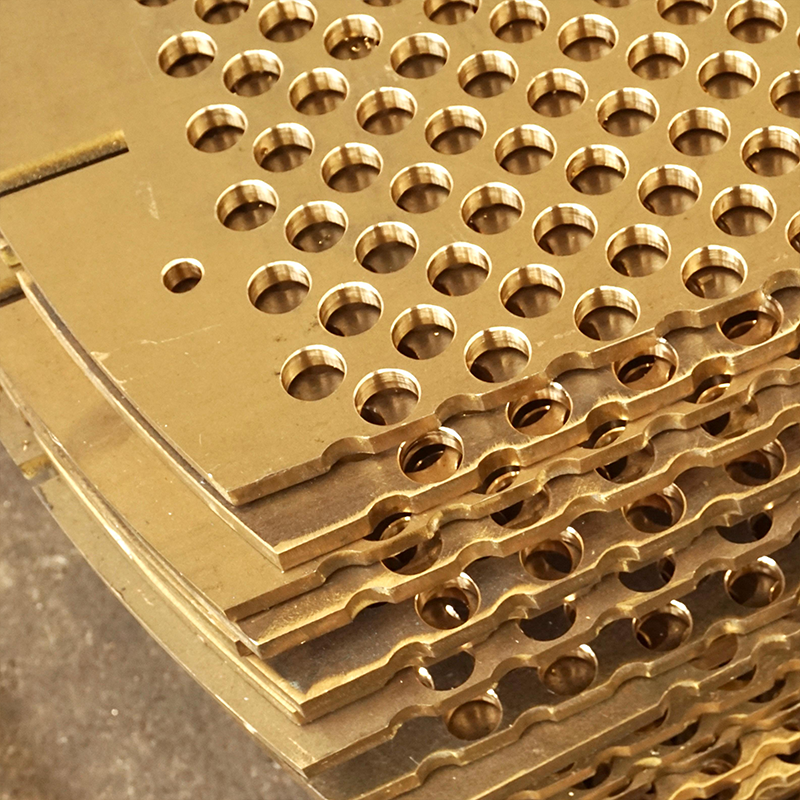
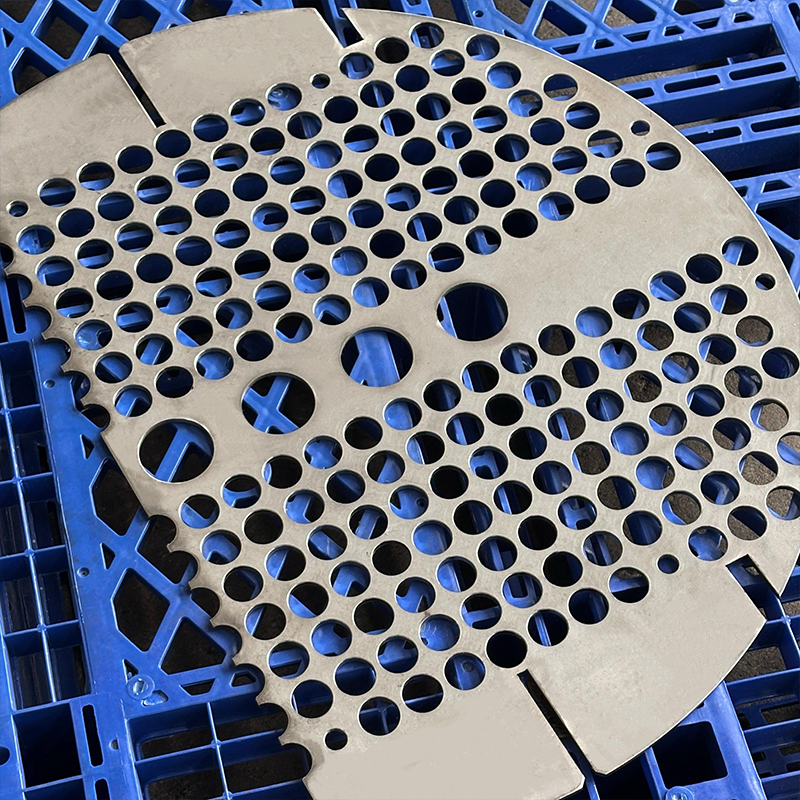
The effectiveness of an automated mixing process is directly dependent on the accuracy of temperature control, especially in exothermic reactions or when dealing with viscous media. Here, the quality of the heat exchange equipment integrated into the control loop plays a critical role. CompanyWuxi Kaisheng Electric Power and Petrochemical Equipment Co., Ltd.specializes in the development and production of high-tech solutions for such tasks, offering a full range of heat exchangers and components capable of operating in the most aggressive conditions.
The company's products, including titanium shell-and-tube heat exchangers, ASME high-pressure units, and 316 stainless steel, C46400 marine brass, and nickel alloy bundles (such as N06625), ideally complement automated mixing systems. The high corrosion resistance and thermal efficiency of these devices ensure the stability of temperature conditions set by the PLC, which is especially important in oil refining, chemical synthesis and water desalination. PED and ASME certified equipment from Wuxi Kaisheng guarantees reliability even under extreme loads, becoming an integral part of modern digital production chains.
Development prospects: Industry 4.0 and IIoT
The future of mixing process automation lies in the Industrial Internet of Things (IIoT). Modern systems already allow data to be transferred to the cloud for analysis in large arrays (Big Data). This opens up opportunities for predictive maintenance.
Machine learning algorithms can analyze bearing vibration and motor current, predicting the remaining life of an assembly with up to 95% accuracy. Instead of routine replacement of parts “on schedule,” which is often premature or late, maintenance is performed exactly when it is needed. This reduces parts costs and eliminates unplanned downtime.
Another trend is digital twins. A virtual copy of the tank and mixing process is created, on which new recipes and modes can be tested without the risk of spoiling the real product. This speeds the time to market for new products and increases production flexibility.
Frequently Asked Questions
What is the minimum motor power for practical automation?
The economic efficiency of implementing VFDs and PLCs starts from a motor power of 4 kW. For smaller capacities, the payback period can last for several years, unless we are talking about high-precision processes (pharmaceuticals), where the cost of defects exceeds the cost of the equipment. For motors from 7.5 kW, automation pays for itself in 6–12 months due to energy savings and increased productivity.
Is it possible to upgrade an old tank without replacing it?
Yes, in 90% of cases this is possible. We conduct an audit of the mechanical part: we check the condition of the gearbox, shaft and seals. If the mechanics are in order, a new drive, sensors and control cabinet are installed. The old container is cleaned, the inner coating is changed if necessary, and it gets a second life with new capabilities. A complete replacement is required only when the case is critically worn or the material does not match the new products.
How does the system react to a power outage?
A well-designed system has a safe stopping algorithm. If there is a power failure, the PLC records the failure. If there is an uninterruptible power supply (UPS) for the controller, it will save the current recipe status and log data. After power is restored, the system will offer the operator options: continue the cycle from where it stopped, drain the product into an emergency container, or switch the mixer to slow rotation to prevent sediment from settling (if there is a diesel generator).
Do I need special permission to work with automated systems?
For the operator controlling the process via the HMI panel, special permission is not required; internal training is sufficient. However, servicing electrical cabinets and setting PLC parameters is allowed only for electrical personnel with tolerance group no lower than III (up to 1000 V) and special training in working with a specific type of controller.
Conclusion
Automation of processes in agitated tanksis an investment in the stability and predictability of your business. It transforms production from a set of routine operations into a high-tech, data-driven process. You get control over every parameter, reduced costs and confidence in the quality of each batch of product. An important element of success is also the correct selection of related equipment, such as reliable heat exchangers from leading manufacturers that ensure accurate temperature conditions.
Don't put off modernization until later. Competitors who have already implemented these technologies work faster, cheaper and of better quality. Contact us today for a free audit of your operation and an estimate of your potential savings. Our engineers are ready to develop an individual solution that will fit perfectly into your process chains.
Find out more about our solutions for the chemical industry in the sectionautomation of chemical productionor check out the catalogindustrial mixing systems.