Autonomous forklifts in plastic warehouses”
2026-08-30
- Why autonomous forklifts will become the standard for plastics warehouses in 2026
- Specifics of polymer logistics: why conventional solutions do not work
- Types of autonomous systems: choosing navigation technology for warehouse tasks
- Business Case: Calculating Return on Investment (ROI) and Hidden Costs
- Integration with WMS and security: how to make the system work
- Practical implementation experience: analysis of a real case
- The role of reliable equipment in the petrochemical ecosystem
- Frequently Asked Questions
- Conclusion and recommendations for choosing a supplier
Why autonomous forklifts will become the standard for plastics warehouses in 2026
Implementationautonomous forklifts in plastic warehousestoday has ceased to be an experiment and has become a necessity dictated by the tough economics of logistics. If five years ago automation was considered the privilege of giants like SIBUR or Gazprom Neft, then in current realities even medium-sized distributors of polymer raw materials cannot compete without robotization. Our experience shows that manual labor in areas with granules, film and preforms becomes the bottleneck of the supply chain. We are seeing a situation where human error causes downtime, which robots eliminate completely.
The key difference between a plastics warehouse and other logistics hubs is the specifics of the cargo. Film rolls weigh from 500 kg to 2 tons, big bags with granulate require precision when stacked, and finished PET preforms are sensitive to shock. A conventional forklift with an operator often becomes a source of defects here. In our practice, there was a case when, due to driver fatigue at night, a batch of expensive medical plastic was damaged while being stacked in a rack. Losses amounted to more than 4 million rubles in just one shift. Autonomous vehicles (AGV/AMR) solve this problem radically: they do not get tired, do not get distracted and follow the algorithm with millimeter precision.
The market of Russia and the CIS countries in 2026 dictates new rules of the game. Sanction pressure and the breakdown of supply chains with Western equipment suppliers forced us to reconsider our approach to procurement. Nowautonomous forklifts in plastic warehouses- this is not just “buying a robot”, but a complex engineering task of integrating domestic or Asian chassis with Russian navigation software. In this article, we'll break down the technical nuances that are hidden from the eyes of marketing departments and give an honest assessment of what actually works in dusty workshops with narrow aisles.
Specifics of polymer logistics: why conventional solutions do not work
A warehouse of plastic products is an aggressive environment for any equipment, and ignoring this factor leads to rapid failure of the equipment. The main problem that engineers face when implementing AGVs (Automated Guided Vehicles) is dust. Polymer dust formed when pouring HDPE, LDPE or polypropylene granules has unique properties: it is fine, sticky and electrified. Conventional optical LiDAR sensors installed on general purpose robots begin to go blind after just two weeks of operation without special protection. We have seen examples where companies bought expensive European models that were idle 30% of the time due to the need for constant cleaning of sensors.
The second critical factor is the type of container and stability requirements. Plastic products are often stored in soft containers (big bags) or on high pallets with an unstable center of gravity (stretch film rolls). When accelerating or braking, a conventional forklift creates inertial loads that can tip the load. Forautonomous forklifts in plastic warehousesspecial motion algorithms with S-shaped acceleration trajectories are required to dampen load vibrations. This is not a standard feature in the basic software of many vendors; it must be ordered separately or modified by an integrator.
The third aspect is temperature. Finished product warehouses are often not heated in winter, since plastic is not afraid of the cold, but robot electronics are. Lithium iron phosphate (LiFePO4) batteries, which are now the de facto standard, lose up to 40% of their capacity at -15°C unless equipped with a heating system. In one of our projects at a warehouse in the Leningrad region, we were faced with the fact that a fleet of robots refused to go on line during the night shift when the temperature dropped below -10°C. The solution required installing thermal cameras in the batteries and changing the charging logic, which increased the project budget by 15%, but saved the operation.
Finally, compatibility with existing infrastructure is important. Floors in older chemical warehouses often have elevation changes, cracks, or oil stains that knock off magnetic tapes or create visual navigation problems. Before implementationautonomous forkliftsfloor audit is mandatory. If the difference exceeds 3 mm per meter, the robot will experience constant vibrations that destroy bearings and electronics. We recommend laser scanning the floor before starting work to avoid situations where an expensive robot cannot navigate its own warehouse.
Technical requirements for robots for working with polymers
When choosing equipment, you need to look not at beautiful renderings, but at the protection data and traction characteristics. To work with plastic products, the minimum housing protection standard should be IP54, and for granulate transfer areas - strictly IP65. This means complete protection against dust. The sensors must have air purge or mechanical brushes that clean the optics in real time. Ignoring this parameter will result in the security system constantly stopping the car in an emergency, mistaking the layer of dust for an obstacle.
The load capacity should be selected with a margin of at least 20%. If your maximum film roll weight is 1000 kg, go for a 1200–1300 kg robot. Why? Because when working with soft loads, the center of gravity shifts dynamically, and working at the limit reduces the life of the drive wheels and gearboxes. In addition, a power reserve is needed to overcome micro-unevenness in the floor with a full load without losing speed.
Types of autonomous systems: choosing navigation technology for warehouse tasks
The market offers three main types of navigation, and the choice between them determines 80% of the success of the project. An error at this stage cannot be corrected without a complete replacement of the equipment fleet. Let's look at each type in relation to the specifics of plastic storage.
Magnetic Tape:A classic solution that is still relevant for mono tasks. The robot drives strictly along the glued tape.
Pros:Low cost, high positioning accuracy (up to ±10 mm), which is ideal for narrow-aisle racks with rolls.
Cons:The tape becomes contaminated with glue and dust and needs to be changed every 6–8 months. The route is strictly fixed - it is impossible to quickly rebuild the warehouse for a new assortment.
Verdict:Only suitable for lines with a constant flow, for example feeding raw materials from the receiving area directly to the extruder or to a single packaging line.
Laser triangulation (Natural Navigation / SLAM):The robot builds a map of the room by scanning walls, columns and shelving with reflectors.
Pros:Flexibility. You can change the route in 5 minutes via the operator’s tablet. There is no need to tape or paint the floor.
Cons:High cost. Sensitivity to changes in environment (if you put a new pallet in the middle of an aisle, the robot may get confused). Requires installation of reflectors at a height of 2–3 meters, which is difficult in low warehouses.
Verdict:The best choice for finished product storage areas where the product range changes seasonally.
Visual navigation (Visual SLAM):Using cameras and artificial intelligence to recognize the environment.
Pros:Does not require any infrastructure (no tapes, no reflectors). The robot “sees” the world like a human.
Cons:Critically depends on lighting. In plastic warehouses there is often poor light or, conversely, glare from plastic packaging that confuses cameras. Also suffers from dust on lenses.
Verdict:Promising, but in 2026 we recommend only using it in combination with lidars to be on the safe side, especially in areas with variable lighting.
| Comparison parameter | Magnetic tape | Laser (SLAM) | Visual (V-SLAM) |
|---|---|---|---|
| Positioning accuracy | ±10mm (High) | ±20 mm (Average) | ±30mm (Depends on light) |
| Implementation cost | Low | High | Medium/High |
| Route flexibility | Missing (needs to be re-glued) | High (software) | Very high |
| Dust resistance | High (sensors below) | Medium (needs cleaning) | Low (cameras get dirty) |
| Recommendation for plastic | Raw material supply areas | Storage and shipping areas | Clean packing areas |
The choice of technology should be based on the flow map of your warehouse. If 90% of the time the robot carries cargo from point A to point B along one corridor, take magnetic tape and save your budget. If logistics are chaotic and require frequent lane changes, invest in laser navigation. Remember: a cheap solution in a complex environment will cost more than an expensive one.
Business Case: Calculating Return on Investment (ROI) and Hidden Costs
The financial director of any enterprise will ask: “When will these toys pay off?” Let's count honestly, without marketing fairy tales about “saving 200%.” Implementationautonomous forklifts in plastic warehouses- these are capital costs (CAPEX), which must be covered by operating savings (OPEX).
The main savings item is the wage fund (payroll). One autonomous forklift replaces approximately 2.5–3 shifts of drivers (including weekends, vacations and sick leave). In 2026, the cost of a qualified forklift driver in the industrial region of the Russian Federation is about 80,000 - 100,000 rubles per month including taxes. Three shifts cost 3 million rubles per year. A robot worth 4–5 million rubles pays for itself in this parameter in 1.5–2 years. However, this is a rough estimate.
The real benefit lies in the reduction of cargo losses. As we mentioned earlier, broken plastic, damage to packaging and loss of goods due to human factors can account for up to 2% of warehouse turnover. For an enterprise with a turnover of 500 million rubles, this is 10 million rubles in losses annually. Robots reduce this figure to almost zero. It is this figure that often makes the project profitable in the first year.
Don't forget about energy efficiency. Modern AGVs use regenerative braking: when the robot lowers a load or brakes, energy is returned to the battery. Electricity consumption by one robot averages 4–6 kWh per shift. Compare this to a diesel forklift, which burns fuel, heats up the room (which is good in winter, bad in summer) and requires expensive exhaust ventilation. The transition to electric traction reduces the overall energy consumption of the warehouse by 15–20%.
However, there are also hidden costs that sellers are silent about. This is service. Batteries last 5–7 years, then replacing them costs 20–30% of the price of the robot. The wheels wear out on concrete and require replacement once a year. Navigation software licenses are often sold as a subscription (SaaS model), which turns a one-time purchase into an ongoing expense. In our practice, there was a case when the client did not budget for the cost of annual updating of cards and licenses, and a year later the fleet of robots stopped working because the manufacturer blocked remote access.
To correctly calculate ROI, use the formula:
(Savings on payroll + Savings on scrap + Savings on energy) / (Cost of robots + Implementation + Annual maintenance) = Payback period.
In the realities of 2026, the normal payback period for plastic warehouses is 18–24 months. Everything that is promised faster is either manipulation of numbers or taking into account only direct salaries without taxes and social packages.
Integration with WMS and security: how to make the system work
The robot itself is just a cart with a battery. Its brain is in your warehouse management system (WMS). No deep integrationautonomous forkliftsturn into an expensive toy, which is controlled manually via a remote control. True efficiency is achieved only when the WMS itself assigns tasks to the robot: “Pick up the pallet from cell A-12 and take it to shipment No. 5.”
The interaction protocol is most often based on VDA 5050 - this is an international standard that allows you to control robots from different manufacturers from a single center. However, many Russian WMS do not yet have native support for this standard out of the box. Development of an intermediate layer (middleware) is required. In one of the projects, we had to write our own gateway, which translated 1C:WMS commands into a language understandable to Chinese robots. This took 3 months of programmers' work. Be sure to include time for integration in your project plan.
The issue of safety in plastic warehouses is especially acute. Humans and robots often cross paths in narrow passages. The standard requires Safety Laser Scanners, which create a protective field around the machine. If a person enters the “yellow zone” (warning), the robot slows down. If it turns to “red” (danger), it stops instantly. But there is a caveat: the transparent polyethylene film that wraps the pallets may be “invisible” to some types of lasers. We strongly recommend conducting detection tests for your specific cargo before launch. There have been cases when the robot rammed transparent packaging without seeing it as an obstacle.
The charging procedure is also important. For continuous operation (24/7), opportunity charging is used: the robot charges for 10 minutes every time it is free. This requires automatic contact plates or wireless floor panels. Wireless charging is more convenient (no contact wear), but its efficiency is 10–15% lower, which means more electricity consumption and heating. In a plastic warehouse, where fire safety is important, we recommend classic contact stations with automatic contact cleaning, as they are more reliable and cheaper to operate.
Practical implementation experience: analysis of a real case
So that the theory does not hang in the air, we will tell the story of one of our clients - a large manufacturer of packaging film in Central Russia. The task was ambitious: to automate a storage area for finished products with a volume of 400 tons per day. Previously, this was done by 12 people in three shifts using diesel forklifts.
Problem:High level of injuries, constant breakage of rolls during transportation (up to 1.5% of defects), shortage of drivers in winter. The room is unheated, down to -5°C in winter.
Solution:A fleet of 8 autonomous electric forklifts with laser navigation and enhanced IP54 protection was selected. Forks with side clamps were developed specifically for the task to prevent rolls from falling when turning.
Process:
1. Preparing the floor: all the cracks were repaired, a new wear-resistant coating was applied (this took 2 weeks, the warehouse worked in one shift).
2. Installation of reflectors: placed 40 reflectors on columns and walls at a height of 2.5 meters.
3. Integration: set up a connection with 1C:Enterprise via API. Now a shipment task is created in 1C, and the robot automatically arrives to pick up the pallet.
4. Training: staff were retrained as monitoring operators. Instead of driving, they now monitor fleet status on tablets.
Results after 6 months:
— The staff of drivers has been reduced from 12 to 3 operators (payroll savings of 6 million rubles/year).
— Product waste has been reduced to 0.1% (saving RUB 3 million/year).
— Productivity increased by 25% due to the absence of smoking breaks and downtime.
— The payback period for the project was 19 months.
The main lesson of this case: do not try to automate chaos. Before introducing robots, the client reviewed warehouse processes, streamlined targeted storage and standardized palletization. Without this, robots would simply stall in chaos.Autonomous forklifts in plastic warehousesrequire discipline not only from technology, but also from people.
The role of reliable equipment in the petrochemical ecosystem
Logistics automation is just one element of the complex value chain in modern industry. While robots ensure the smooth movement of finished products, plastic production itself relies on highly efficient heat exchange and energy equipment. The reliability of the entire system depends on the quality of each link: from the moment of processing of raw materials to shipment to the end consumer.
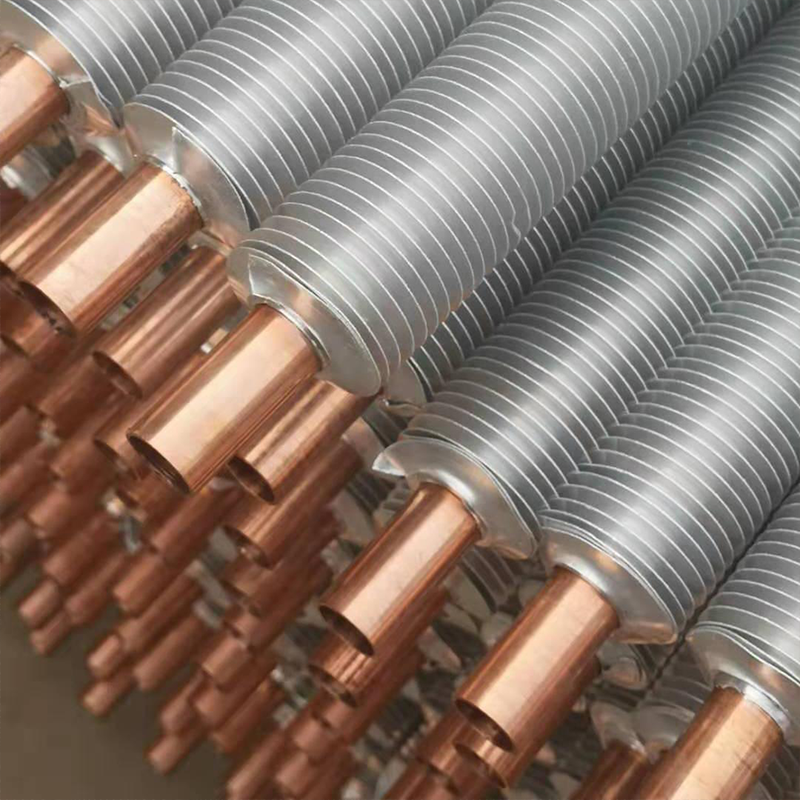
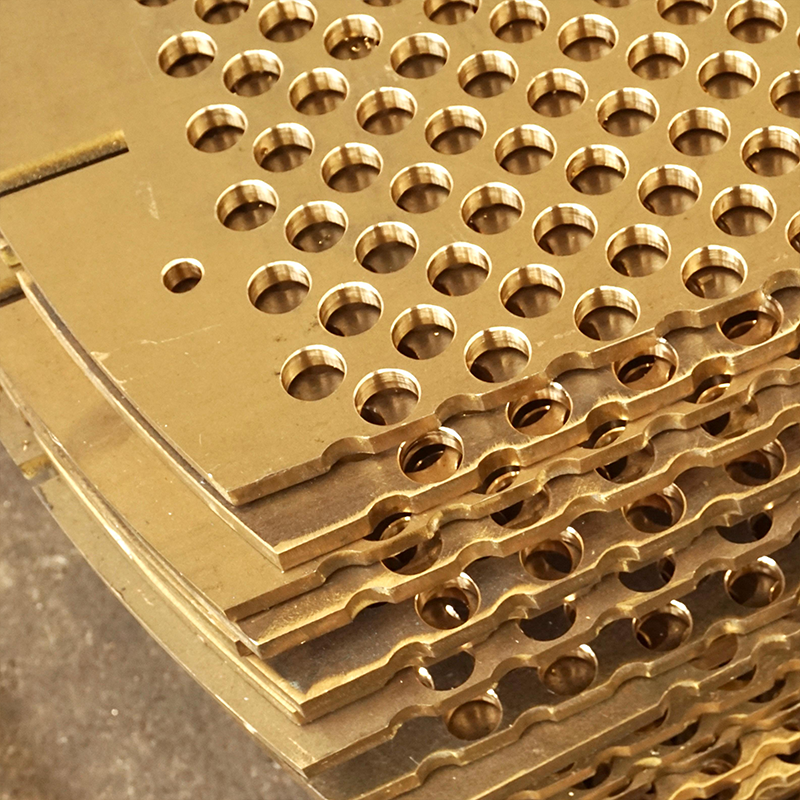
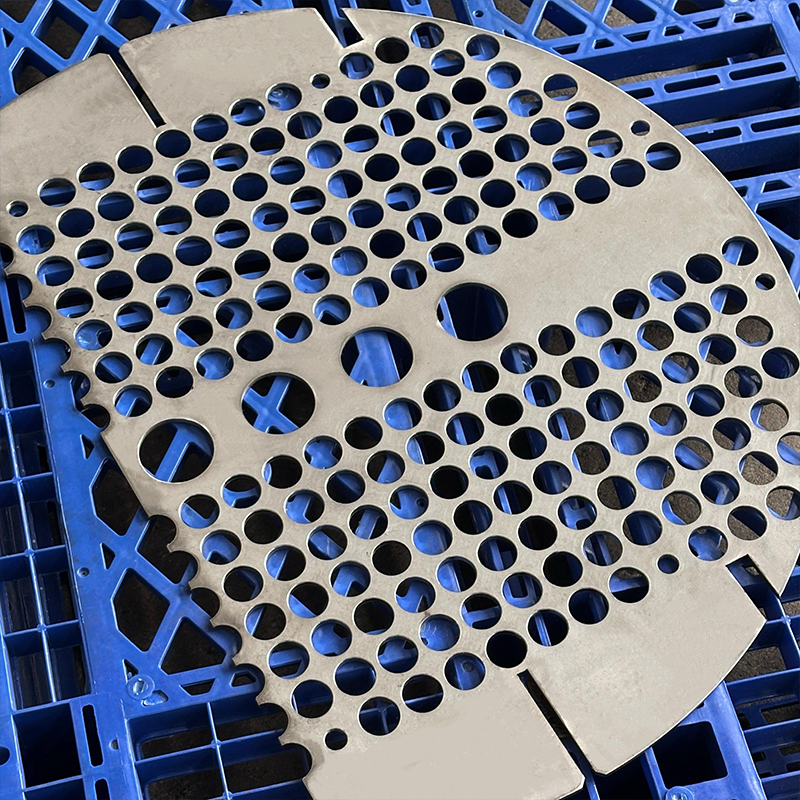
In this context, it is important to note the contributions of companies such asWuxi Kaisheng Electric Power and Petrochemical Equipment Co.,Ltd" Specializing in the development and production of advanced solutions for the oil, gas and chemical industries, the company provides critical infrastructure for polymer manufacturing plants. Their portfolio includes titanium shell-and-tube heat exchangers, ASME high-pressure units, 316 stainless steel and marine alloy corrugated tube bundles (C46400, C70600, N06625), as well as air coolers and recovery boilers.
Wuxi Kaisheng products, certified to PED and ASME standards, are characterized by exceptional corrosion resistance and the ability to operate under extreme conditions of high pressure and temperature. These characteristics directly affect the stability of the production of plastic raw materials: be it polyethylene granules or PET preforms. Using materials ranging from carbon steel to complex nickel alloys, the company provides customized solutions that enable businesses to minimize downtime during production. Thus, the introduction of autonomous forklifts in the warehouse goes hand in hand with the modernization of production lines, creating a single high-tech ecosystem where every device - from a heat exchanger to a stacking robot - works towards the overall result of business efficiency.
Frequently Asked Questions
Can autonomous forklifts operate in an unheated warehouse in winter?
Yes, they can, but only if certain conditions are met. Standard lithium batteries lose capacity in the cold. It is necessary to order a version with a thermal chamber (battery heating) and an insulated electronics housing. The operating temperature range of such machines is usually from -30°C to +45°C. It is also important to consider that the operating time on a single charge in winter will be reduced by 20–30%, so more frequent recharging or installation of additional stations will be required.
What to do if the warehouse is dark or the lighting changes?
If you use visual navigation (cameras), then poor light is a critical issue. In such cases, we strongly recommend choosing a hybrid system: laser navigation (SLAM) + wheel odometry. Laser scanners do not need light; they work by reflecting an infrared beam. For plastic warehouses, where there are often areas without windows or with flashing lights, laser navigation is the only sustainable solution.
How quickly can you reconfigure the robot to a new route?
It depends on the type of navigation. For robots with laser navigation (SLAM), changing the route takes from 15 minutes to 1 hour. The operator simply draws a new path on the tablet or in the WMS interface, and the robot begins to drive in a new way. No physical work (removing tape, repainting the floor) is required. This is a major advantage over magnetic tape, where reconfiguration can take days.
Do autonomous forklifts need to be certified in Russia?
Yes, all equipment imported or produced in the Russian Federation must have a declaration of conformity with TR CU 010/2011 “On the safety of machinery and equipment.” Compliance with fire safety and electrical safety requirements is also important for electric forklifts. When purchasing, be sure to request a copy of the EAEU declaration from the supplier. Without this document, the operation of equipment at an industrial facility is illegal and may lead to fines from Rostekhnadzor.
Will it be difficult to find parts for Chinese robots in 2026?
The situation has improved, but risks remain. Large integrators are now creating their own spare parts warehouses in Moscow and the regions. When concluding a contract, be sure to require a clause on the availability of a safety stock of parts (motors, control boards, wheels) in your warehouse or in the supplier’s warehouse for a period of 1 year. Localization of production of some components (for example, batteries and housings) in Russia has already become a reality, which simplifies repairs.
Conclusion and recommendations for choosing a supplier
Automation of a warehouse for plastic products is not a tribute to fashion, but a matter of business survival in conditions of personnel shortages and rising logistics prices.Autonomous forklifts in plastic warehouseshave proven their effectiveness in real industrial conditions, ensuring stable flows and cargo safety. However, the success of the project depends 90% not on the brand of the robot, but on the quality of the pre-project analysis and the competence of the integrator.
Don't chase the cheapest solutions. A cheap robot without proper technical support will become a monument to your wasted money in six months. Choose partners who have experience specifically in the chemical and polymer industries and understand the specifics of dust, weight and dimensions of your products. Require a pilot operation (POC) at your site before purchasing the entire fleet. This is the only way you can see the real work of technology in your environment.
We are ready to help you along this path: from warehouse audit and ROI calculation to equipment delivery and post-warranty service. Our specialists have more than 15 years of experience in automation of industrial enterprises and know all the pitfalls that are not written about in brochures.
Contact us todayto receive a free consultation and preliminary calculation of the effectiveness of implementing autonomous technology in your production. Don't put off upgrading until tomorrow—competitors are already doing it today.
Read also our materials on the topic:The Complete Guide to Warehouse AutomationandPolymer logistics trends 2026.