
Plastic sheet design copyright”
2026-08-31
- Plastic Sheet Design Copyright: The Straight Answer and Legal Realities
- Criteria for protection: where function ends and art begins
- Industrial design versus copyright: strategy for choosing protection
- Procedure for registration and fixation of rights in Russia and the EAEU
- Combating violations: practice and judicial prospects
- International aspect: design protection during export
- Economic feasibility of design protection
- Practical steps for the manufacturer: safety checklist
- Conclusion
- About the company: Synergy of technology and quality
Plastic Sheet Design Copyright: The Straight Answer and Legal Realities
The answer to the question is thereplastic sheet design copyright, is clear: yes, protection is possible, but only on the condition that the appearance of the product has artistic value and is not dictated solely by a technical function. In our work with polymer manufacturers, we often encounter situations where companies try to protect a standard “leather” texture or a typical ribbed pattern, mistakenly believing that the very fact of creating a new extrusion die gives them a monopoly. This is a dangerous misconception. The legislation of the Russian Federation (Part 4 of the Civil Code) clearly distinguishes between industrial designs and works of decorative and applied art. If your plastic sheet has a unique design that can be assessed separately from its ability to withstand stress or protect from UV rays, you are entitled to protection. However, if the shape of the sheet (for example, a trapezoidal profile for a roof) is determined by the need for water drainage, copyright is powerless here - you need a patent for a utility model or an industrial design.
We have seen cases where large distributors lost millions of rubles by investing in marketing a unique design, which six months later appeared at competitors from a neighboring region. The reason is simple: the lack of registration of rights before the start of mass sales. Unlike a trademark, which protects the name of a brand, copyright in a visual design requires evidence of creativity. A simple change in sheet thickness or granule color is not protected. In this article, we will analyze the intricacies of the legislation, based on real cases from the plastics processing industry, and provide a step-by-step algorithm for protecting your intellectual property in the EAEU markets.
Criteria for protection: where function ends and art begins
The main problem when trying to registerplastic sheet design copyrightconsists in distinguishing between a technical solution and an artistic concept. According to Article 1259 of the Civil Code of the Russian Federation, the objects of copyright are works of science, literature and art, which also include works of decorative and applied art. The key word here is “art”. If a designer has designed a polycarbonate surface that imitates the bark structure of an ancient oak tree with a high degree of detail, this may be considered copyrightable. But if the same texture was created only to hide minor scratches during installation or improve grip during transportation, the court will refuse protection, citing the technical nature of the form.
In our engineering practice, we conduct an internal audit of new products before they are launched into series. One of our clients, a PVC panel production plant, developed a striking geometric pattern for facade systems. They were confident in their exclusivity. However, when an analogue appeared, lawyers explained to them the hard truth: this pattern was necessary to ensure the rigidity of the structure with a minimum wall thickness. Forensic testing showed that any other design would have resulted in a reduction in load-bearing capacity. As a result, the copyright infringement suit was lost. This example teaches us the main rule: before talking about security, ask yourself whether this design would have turned out this way if not for the technical requirements? If the answer is “no,” forget about copyright and contact Rospatent to register an industrial design.
To be successfully defended, the design must have the attribute of “creative freedom.” This means that the author had a variety of design options to choose from and made conscious aesthetic choices. For example, the color scheme of a sheet is rarely protected on its own (the color RAL 3005 cannot be patented as an idea), but a unique combination of gradients, transitions or inclusions of sparkles of a certain shape may be subject to protection. It is important to understand that the scope of legal protection is determined not by the name of the product, but by the totality of its essential features displayed in the images. Therefore, the quality of photographs or 3D renderings submitted for registration is critically important. A blurry image will not prevent you from copying fine details.
There is also a nuance with mass production. Works of decorative and applied art intended for serial production (more than 50 copies) often require registration as industrial designs, and not just protection under copyright law. The line here is thin. If you plan to produce an edition of 10,000 square meters of sheets with a unique print, relying solely on automatic copyright creation is risky. Registration deposits your rights and creates a presumption of authorship, which greatly simplifies the fight against counterfeit goods on marketplaces and construction networks.
Design Qualification FAQs
- Is it possible to protect the wood grain texture of a polypropylene sheet?Yes, if the texture contains unique artistic elements that are not characteristic of real wood, or is a stylization that has its own aesthetic value. Simple imitation of fibers without creative processing is not subject to protection.
- Does the waveform of corrugated sheets protect copyright?No, the wave shape is dictated by the physics of load distribution and the installation method. This is a technical solution protected by a utility model patent, not copyright.
- Is it necessary to register a right if it arises automatically?For internal use - no. For commercial protection and collection of compensation from violators - mandatory. Without a certificate of registration or deposit, it will be extremely difficult and expensive to prove your primacy in court.
Industrial design versus copyright: strategy for choosing protection
Many plastic sheet manufacturers confuse the two, leading to fatal errors in their intellectual property protection strategy.Copyright of plastic sheet designarises at the time of creation of the work and does not require mandatory registration (although it is desirable), while the legal regime of an industrial design is valid only after state registration with Rospatent and the issuance of a patent. The choice between them depends on the lifespan of your product and the nature of its novelty. Copyright lasts for the life of the author plus 70 years, which is ideal for classical designs or art collections. A patent for an industrial design is valid for a maximum of 5 years with the possibility of extension up to 25 years, which completely covers the life cycle of most construction and finishing materials.
Let's look at a specific case from our practice of supplying extrusion equipment. The client developed a new type of cellular polycarbonate with a non-standard arrangement of internal stiffeners, which also created a beautiful optical effect at the end of the sheet. They tried to protect it through copyright. Competitors copied the geometry by changing the rib angle by 2 degrees and claimed it was a technical improvement. The court sided with the defendants, since copyright does not protect the ideas and methods underlying technical solutions. If the client had initially filed a patent for an industrial design, where it was the shape of the product that was protected, the copy would have been easier to identify and prohibit. A patent provides stronger protection specifically in the B2B field, where functional characteristics embodied in form are important.
However, copyright remains a powerful tool for protecting surface decoration. The application of images using digital printing, thermal transfer or co-extrusion of film with a pattern is copyright territory. The function is not important here, the picture is important. If you commission a unique pattern from an artist for a series of acrylic bathtubs or shower trays, a copyright agreement and subsequent escrow of the image will give you leverage over those who decide to buy the design from the freelancer and print it on their own equipment. Unlike a patent, the procedure here is faster and cheaper, but requires proper execution of the chain of rights from the creator to the manufacturer.
We recommend a combined approach for complex products. The outer decorative layer is protected by copyright (or as part of a complex object), and the design features of the form, if they have aesthetic significance, are patented as an industrial design. This creates a “patent umbrella” that makes it difficult for competitors to operate under. It is important to remember that patenting requires absolute world novelty. If you showed your new design at an exhibition in Moscow, and a month later you applied for a patent, you yourself have destroyed the novelty of your invention. Publication must strictly follow the submission of the application. With copyright it is simpler: fixing the date of creation (through a notary or specialized services) allows you to legally demonstrate the product before sales begin.
| Comparison criterion | Copyright (Decoration/Ornament) | Design Patent (Shape/Design) |
|---|---|---|
| Object of protection | An artistic decision, an image, a pattern independent of function. | The constructive and artistic design of a product, which determines its appearance. |
| Validity period | The author's entire life + 70 years. | 5 years with the possibility of extension up to 25 years. |
| Registration required | Not required (occurs automatically), but escrow is recommended. | Strictly required by Rospatent. Without a patent there is no protection. |
| Requirement for novelty | Originality (the result of creative work). | World novelty and originality (must not be known anywhere in the world). |
| Cost and terms | Low cost, quick registration of rights. | High duties, lengthy examination (6-12 months). |
| Effective against copies | High against direct copying of the design. | High resistance to copying the form even with minor changes. |
Procedure for registration and fixation of rights in Russia and the EAEU
If you have determined that your product qualifies as a protected item, the next step is the bureaucratic process. To registercopyright for plastic sheet designAs a deposited work or to obtain a patent for an industrial design, the preparation of a high-quality package of documents is required. A mistake at this stage could cost you your property rights. First of all, you need to prepare a set of images. For sheet materials, these should be photographs or renderings showing the product from different angles: general view, close-up fragment of texture, plan view and profile. Images should be clear, on a contrasting background, without unnecessary objects that distract attention from the essence of the design.
At our company, we help clients structure technical descriptions for patent attorneys. The description should reveal the essence of the novelty, but not contain advertising phrases. Phrases like “the most beautiful leaf on the market” are not acceptable in patent documents. It is necessary to use dry technical language: “the surface is made in the form of a relief consisting of repeating elements of a geometric shape...”. Particular attention is paid to the list of essential features. They are the ones who will be compared with the alleged offender in court. If you describe the design too narrowly (for example, “a blue sheet with 5mm diameter circles”), a competitor will circumvent the patent by making the sheet green or changing the diameter of the circles to 5.1mm. The description must be broad enough to cover variations, but specific enough to distinguish it from existing analogues.
For the EAEU countries (Russia, Belarus, Kazakhstan, Armenia, Kyrgyzstan) the principle of territoriality applies. A patent issued in Russia is valid only on the territory of the Russian Federation. If you plan to export your design sheets to Kazakhstan or Uzbekistan, you will need to file applications with the relevant national offices or use international registration mechanisms. However, within the framework of copyright law the situation is a little simpler thanks to the Berne Convention: a work created in Russia is automatically protected in all countries party to the convention. But again, without proof of the date of creation and authorship, this protection remains declarative. We strongly recommend using electronic escrow services that issue a certificate with a timestamp. It is inexpensive and serves as excellent evidence in pre-trial dispute resolution.
One of our partners encountered a problem when entering the Belarusian market. They registered the design in Russia, but did not check local databases. It turned out that a local manufacturer had already used a similar pattern, but had not registered it. There was a conflict of priorities. Although Russian registration provided advantages, local courts tended to protect the domestic manufacturer if there was no international patent. The conclusion is simple: do not skimp on legal purity when expanding. Freedom to Operate (FTO) testing before launching a new design into production should be standard procedure. This takes 2-3 weeks, but saves you from stopping production and confiscation of goods at customs.
Combating violations: practice and judicial prospects
Having rights is half the battle. The main problem for producers is enforcement, that is, coercion to respect these rights. The market for plastic sheets is highly competitive, and the appearance of a successful design instantly attracts the attention of “fast” factories, ready to produce a copy in a couple of weeks. When you discover a violationcopyright for plastic sheet design, the first reaction is often emotional: immediately file a lawsuit. Experience tells us that this is not always the best strategy. The trial in Russia can last from 6 months to 2 years, especially if the defendant files motions to order complex examinations. During this time, the violator can sell the entire circulation of the counterfeit and liquidate the legal entity.
The most effective tool at the first stage is a pre-trial claim, supported by a notarial protocol for the inspection of a site or retail outlet. We recommend recording the violation “here and now”: we buy a sample from the violator, package it in front of witnesses, and seal it. This material evidence will become the basis for the examination. Often the very fact of receiving a well-drafted claim with the threat of compensation up to 5 million rubles (or twice the cost of counterfeit goods) sobers up small players. Many agree to a settlement, remove the goods from displays and pay a small compensation. For large businesses this is a cost, for small businesses it is a threat of bankruptcy.
If it is not possible to come to an agreement, the mechanism of the customs register of intellectual property objects (CRIP) comes into effect. Entering your design into the registry allows customs to stop the release of suspicious cargo at the border. This is the most powerful barrier to imported counterfeits from Asia. We know of a case where a batch of polycarbonate with a counterfeit brand pattern was detained in the port of Novorossiysk precisely because the copyright holder had previously entered his rights into the FCS register. Without this, customs does not have the right to initiate an inspection on its own initiative, citing freedom of trade. The procedure for entering into the ROIS requires the provision of product samples and a detailed description of the characteristics of the original so that inspectors can visually distinguish a counterfeit.
However, there is also another side to the coin. Abuse of rights may lead to counterclaims for unfair competition. If you start sending complaints to all the dealers selling similar sheets without having a final court decision on the violation, you may be accused of discrediting your competitors. In one high-profile case, the court denied protection to the plaintiff because he was trying to monopolize the use of a conventional corrugated profile, which is the industry standard. The court indicated that an attempt to extend the exclusive right to technical solutions that have become the property of the industry is a violation of antitrust laws. Therefore, before starting an active struggle, make sure that your rights are “crystal clear” and do not affect public interests or GOST standards.
International aspect: design protection during export
Russian manufacturers are increasingly looking at the markets of the Middle East, Africa and Latin America. In these regions the conceptplastic sheet design copyrightmay be interpreted differently than in Europe or the Russian Federation. Some countries of Islamic law have restrictions on the depiction of living creatures, which may affect the registration of certain designs. In other jurisdictions, industrial design protection is virtually non-existent or does not work in practice due to corruption or weak judicial systems. When exporting products, you must understand: a Russian patent abroad is just beautiful paper. You need local registration.
The Hague Agreement system simplifies this task by submitting a single international application through WIPO (WIPO) specifying the countries of interest. It is cheaper and faster than filing applications in each state separately. However, Russia has withdrawn from a number of international conventions in recent years, making direct procedures more difficult for Russian applicants. Now many companies use the registration scheme through friendly jurisdictions or partners in the CIS countries, where interaction mechanisms have been preserved. For example, registration in Kazakhstan or Kyrgyzstan can become a springboard for protecting rights in the Central Asian region. It is important to consider the timing: some countries have a “first to file” rule rather than a “first to create” rule. If you show a design at an exhibition in Dubai and the local dealer applies for a patent in their name tomorrow, it will be almost impossible to get the rights back.
We advise our clients to include intellectual property clauses in distribution contracts. The prohibition on copying designs, the obligation to report counterfeit cases and the right of the manufacturer to conduct audits are basic protections. It is also worth considering the possibility of applying hidden markers or micro-textures to sheets that can only be identified using special equipment. This simplifies the evidence base in any country in the world, regardless of local copyright laws. Technical protection complements legal protection and is often more effective in conditions where the courts are overloaded.
Economic feasibility of design protection
The issue of protection always comes down to money. Is it worth spending hundreds of thousands of rubles on patenting and lawyers if the life cycle of a plastic sheet model is only 2-3 years? The answer depends on the marginality of the product. If you sell a commodity product (ordinary transparent polycarbonate), where competition is only on price, investing in design will not pay off. But if you create a premium segment, where the premium for a unique appearance is 30-50%, then protectioncopyright for plastic sheet designbecomes a direct asset. A patent can be sold, licensed, or used as an intangible asset to increase the value of a company when attracting investment.
In our practice, there was a case when a small factory developed a unique sheet with a “chameleon” effect. Development and patenting costs amounted to about 1.5 million rubles. Over three years of licensing fees from three large factories that bought the right to use this design in their products, the owner received more than 10 million rubles in net profit. Design has become a separate business. This shows that intellectual property in the plastics industry is not an expense, but a monetization tool. The main thing is to correctly assess the potential of a design before investing. If the trend for “concrete textures” passes in a year, there is no point in patenting them. If you are creating a classic that will be relevant for decades, protection is mandatory.
In addition, the presence of patents increases confidence on the part of large federal chains and developers. They prefer to work with suppliers who have a clean legal history and a guaranteed absence of claims from third parties. Participation in tenders for large construction projects often requires confirmation of rights to the technologies and designs used. Thus, legal defense costs can be seen as an investment in access to large contracts. The absence of such documents may become a formal basis for the rejection of your application, even if the price and quality of the product are ideal.
Practical steps for the manufacturer: safety checklist
To minimize risks and ensure reliable protection of your designs, follow this algorithm, tested in real production conditions:
- Conduct a patent search.Before putting the design into work, order research in the Rospatent database and international databases. Make sure your pattern or shape does not match any existing protected property. This will save you money on re-fitting in the future.
- Record the creation date.Once the design is approved, save the source files (CAD, PSD) with metadata, print the sample and notarize the date or use an e-deposit service. Don't wait for sales to start.
- Formalize relationships with designers.If the design was created by a third-party freelancer or studio, make sure that the contract clearly states the alienation of exclusive rights in favor of the factory. Otherwise, the designer will remain the author, and he will be able to sell the same pattern to your competitor.
- Select your registration strategy.Decide whether you need a quick Certificate of Escrow for a surface design or a full-blown design patent for a unique shape. For mission-critical products, use both options.
- Label products.Label the sheets or packaging with a copyright symbol (© for copyright or patent number). This does not provide automatic protection, but it does alert potential infringers that the product is protected and makes it more difficult for them to argue in court (they will not be able to plead honest misrepresentation).
Remember that in the plastic sheet industry, the speed of decision-making often outstrips legal procedures. While you are filing a patent, the market may change. Therefore, flexibility and a combination of defense methods are more important than blindly following the letter of the law. Use copyrights for quick collections and patents for flagship products that will form the core of the range for years to come.
Conclusion
Protecting intellectual property in the plastic sheet industry is a complex but necessary process for any player seeking market leadership.Copyright of plastic sheet designworks effectively only in conjunction with a competent patenting strategy and active market monitoring. Don't rely on the uniqueness of your product alone to stop copying. The right must not only be created, but also protected, documenting every step from sketch to sale. Investing in legal security today is a guarantee that tomorrow your profits will not go to those who simply copied your work.
If you are planning to launch a new collection of polymer materials or are faced with a violation of your rights, do not be left alone with this problem. Our team has extensive experience in supporting projects in the plastics processing industry and is ready to help you build a reliable asset protection system.Contact us todayto conduct a preliminary audit of your intellectual property and develop an individual protection strategy.
About the company: Synergy of technology and quality
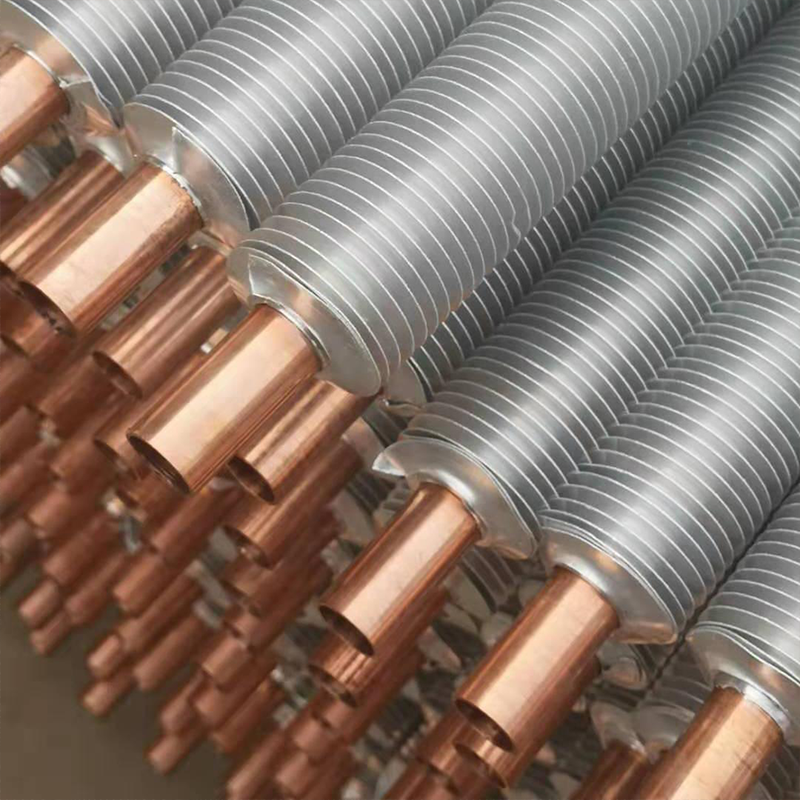
Although this article focuses on intellectual property issues in the polymer industry, the principles of protecting innovation and ensuring superior product quality are universal across the entire industrial sector. A striking example of this approach is the company’s activitiesWuxi Kaisheng Electric Power and Petrochemical Equipment Co., Ltd.. Specializing in the design and manufacture of high-tech heat transfer equipment, the company demonstrates how in-depth engineering expertise is combined with rigorous quality control.
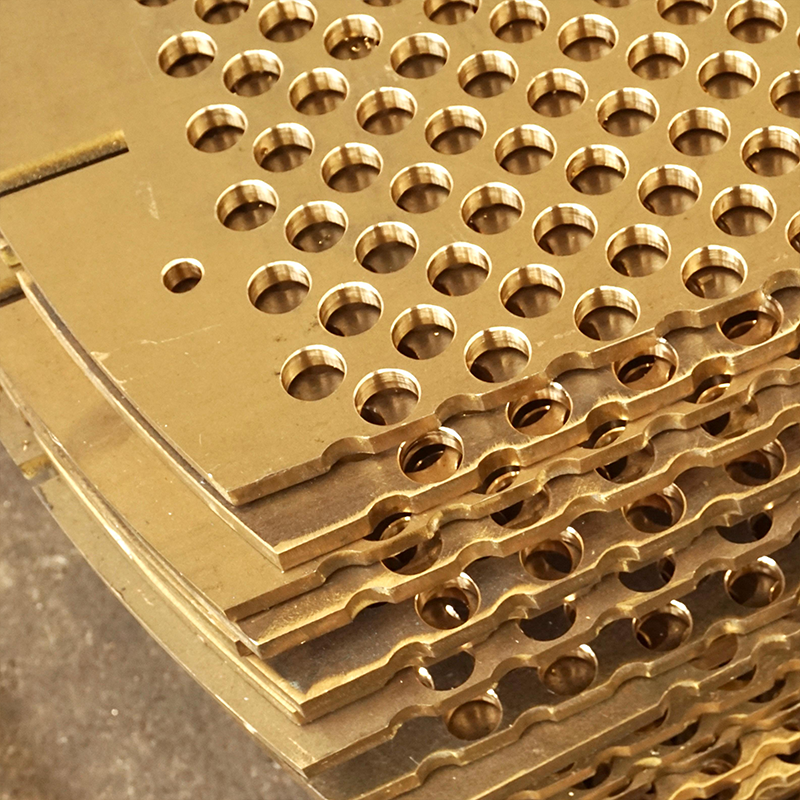
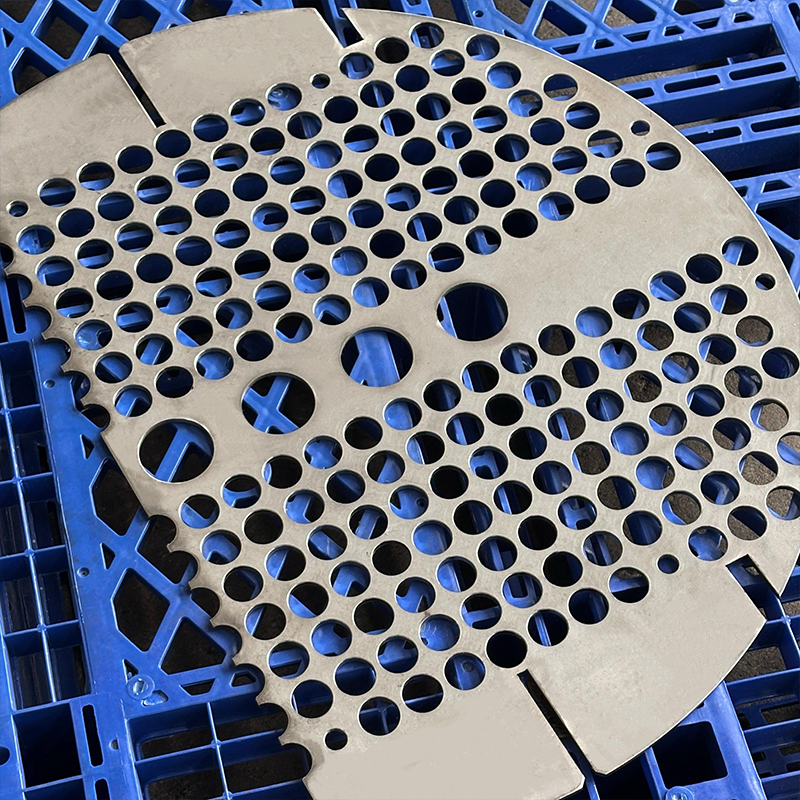
Wuxi Kaisheng Co., Ltd.'s product portfolio includes titanium shell and tube heat exchangers, ASME standard high pressure units, 316 stainless steel corrugated tube bundles, C46400 marine brass, copper-nickel alloys and N06625 nickel alloys. The company also produces air coolers, waste heat boilers and complex tube sheets from a variety of corrosion-resistant materials. Products are manufactured from carbon steel, stainless steel, alloy steel, titanium, copper and nickel alloys, meeting stringent international PED and ASME standards.
Just as the unique design of a plastic sheet requires protection from copying, complex heat transfer engineering solutions need to ensure reliability and durability. Wuxi Kaisheng LLC's equipment, characterized by high corrosion resistance and resistance to extreme pressures and temperatures, is widely used in oil refining, petrochemicals, chemical industries, seawater desalination and shipbuilding. The company provides customers around the world not just with products, but with customized engineering solutions that ensure energy efficiency and stability of production processes. This integrated approach to creating and protecting technological assets is the key to success in both polymer production and heavy engineering.