
Additive technologies in the repair of PE tanks”
2026-09-16
- Why additive technologies have become the standard in PE tank repairs
- Technical features of the process of restoring polyethylene containers
- Comparison of additive technologies with traditional repair methods
- Application in various industries: real cases
- An integrated approach to equipment reliability: the experience of Wuxi Kaisheng LLC
- Economic justification for the implementation of additive solutions
- Standards and certification: what the customer needs to know
- Frequently Asked Questions
- Conclusion and recommendations for choosing a contractor
Why additive technologies have become the standard in PE tank repairs
Additive technologies in the repair of PE tanks have ceased to be an experimental technique and have become the main industry standard for the restoration of large volume tanks. In our practice, we observe that traditional extruder welding methods often do not provide sufficient adhesion in complex geometric areas or in the presence of microcracks that cannot be detected visually. The use of 3D printing with polymers allows the material to be applied layer by layer with an accuracy of 0.1 mm, completely filling defects without creating internal stresses. This is critical for tanks operating under pressure or containing aggressive chemical environments, where any seam is a potential leak point.
Customers often ask us why it is worth switching to additive repair when classic extrusion is cheaper. The answer lies in the service life of the restored area. When manually welding, the operator can overheat the material, changing its molecular structure and making the weld area brittle. The additive plant controls the melting temperature of polyethylene with an accuracy of one degree, preserving the original properties of the material. We have recorded cases where tanks repaired using the layer-by-layer fusion method lasted 40% longer than tanks after traditional repair.
Technical features of the process of restoring polyethylene containers
The restoration process begins with thorough surface preparation, which takes up to 60% of the total work time. Low-density polyethylene (PE-LD) and high-density polyethylene (PE-HD) have low surface energy, making it difficult for new layers to adhere to old material. We use specialized abrasive mixtures with a grain size of 0.8–1.2 mm to create micro-roughness that increases the contact area by 3–4 times. After mechanical treatment, the surface must be degreased with solvents compatible with the type of polyethylene to prevent oil from entering the welding zone.
The next stage is calibration of the additive head for a specific type of polymer. Different grades of PE have different melt viscosity, so extrusion parameters are selected individually. PE-HD has a melting point of 130-135°C, while PE-LD requires 110-115°C. Exceeding these values even by 10 degrees leads to degradation of the material and the appearance of pores in the structure of the seam. Our engineers carry out test runs on samples before starting the main work to ensure that the equipment settings are correct.
Particular attention is paid to controlling the thickness of the applied layer. A layer that is too thin will not provide the necessary strength, and a layer that is too thick will cause uneven cooling and warping of the structure. The optimal thickness of one pass is 2.5–3.5 mm with a head movement speed of 15–20 cm/min. This parameter directly affects the crystallinity of the material: rapid cooling reduces the degree of crystallinity, making the seam more elastic, but less resistant to chemical attack.
It is important to note that additive repair allows you to restore not only flat surfaces, but also complex components - corners, flange connections, areas around hatches. Traditional methods are often powerless here due to the inability to position the welding machine at the desired angle. Robotic manipulators with 6 degrees of freedom freely avoid obstacles, applying material precisely to the damage zone. This is especially true for non-standard shaped tanks, where each defect is unique.
The final stage includes heat treatment of the finished seam to relieve residual stresses. The tank is heated to 80–90°C and maintained in this mode for 2–3 hours, after which it slowly cools naturally. This procedure increases the durability of the repair by 25–30%, preventing the appearance of cracks under cyclic loads. Ignoring this step is a common mistake that negates all the benefits of the additive method.
Common mistakes when preparing and performing work
- Insufficient surface cleaning:Remains of dirt or moisture lead to the formation of voids in the seam structure. We recommend using moisture meters to monitor surface moisture before starting work.
- Wrong choice of extrusion temperature:Overheating of the material causes its oxidation and loss of mechanical properties. Always check the technical data sheet of the specific brand of polyethylene.
- Violation of the sequence of application of layers:Each subsequent layer should overlap the previous one with an overlap of 30–40%. The lack of overlap creates lines of weak adhesion.
- Ignoring heat treatment:Without annealing, high internal stresses remain in the weld area, which can lead to destruction during operation.
- Use of incompatible materials:Attempting to weld PE-HD with PE-LD material will result in delamination of the seam due to differences in melting point and density.
Comparison of additive technologies with traditional repair methods
To understand the real effectiveness of additive technologies, it is necessary to make a detailed comparison with classical methods. Below is a table showing the key parameters of both approaches based on our project data for 2024–2025.
| Comparison parameter | Additive repair (3D deposition) | Traditional extrusion welding |
|---|---|---|
| Accuracy of material application | ±0.1 mm (robot control) | ±1.5 mm (depending on operator skill) |
| Speed of work completion | High (up to 2 m²/hour for simple surfaces) | Medium (0.5–0.8 m²/hour) |
| Ability to work in hard-to-reach places | Yes (flexible manipulators) | Limited (requires direct torch access) |
| Risk of material overheating | Minimum (automatic temperature control) | High (depends on welder experience) |
| Equipment cost | High (from 15,000 euros) | Low (from 2,000 euros) |
| Requirements for personnel qualifications | Medium (CNC operator) | High (PE certified welder) |
| Seam durability | Up to 15 years (subject to technology) | 5–8 years (average) |
| Possibility of process automation | Full (programmable trajectories) | Absent (manual labor) |
The table shows that the additive method is superior to the traditional method in most technical parameters, especially in matters of accuracy and reproducibility of the result. However, the high cost of the equipment makes it economically feasible only for large projects or serial repairs. For single small defects, traditional welding remains a more profitable solution.
Another important aspect is the human factor. When manual welding, the quality of the seam directly depends on the fatigue of the operator, his mood and experience. The additive system works stably regardless of external conditions, producing the same result in the morning and evening. In our practice, there was a case when a team of welders made a defect at the site due to working on the night shift, while the robotic complex completed the task without a single comment.
However, additive technologies have their limitations. They require stable voltage electricity, which is not always possible at remote industrial sites. In addition, preparing a program for a robot takes time, which can become critical in case of urgent repairs. Therefore, we recommend combining both methods: using additive technologies for critical components and traditional welding for auxiliary work.
Application in various industries: real cases
The chemical industry places the most stringent demands on tank integrity. One of our clients, a fertilizer manufacturer, was faced with the problem of frequent leaks in containers for storing sulfuric acid with a concentration of 93%. Traditional repairs lasted no more than 6 months, after which the seam began to corrode. The introduction of additive technology using a special acid-resistant composite based on PE-HD made it possible to increase the overhaul interval to 3 years. The economic impact amounted to more than 120,000 euros due to reduced downtime and material costs.
In the food industry, not only tightness is important, but also compliance with sanitary standards. Tanks for storing dairy products must have a smooth inner surface without pores or cracks where bacteria can grow. Additive repair allows you to create perfectly smooth seams that are easy to clean and disinfect. At a dairy plant in the Leningrad region, we restored 12 tanks with a volume of 50 m³ each. After repair, the tanks successfully passed the Rospotrebnadzor inspection and were allowed to operate without restrictions.
The oil and gas sector uses large underground and above-ground storage facilities for petroleum products. Here the main role is played by resistance to temperature changes and mechanical loads. In the winter of 2024, we carried out emergency repairs to a diesel fuel tank that was damaged due to soil subsidence. The air temperature was -25°C, which excluded the possibility of traditional welding. An additive installation with a heated chamber made it possible to carry out work as usual, restoring the tightness in 18 hours. This prevented an environmental disaster and saved the company millions of rubles in fines.
Agriculture is also actively implementing these technologies to repair silos and liquid fertilizer tanks. The peculiarity of such objects is their enormous size and difficulty of access to the upper parts of the structures. The use of drones with additive heads makes it possible to carry out repairs at height without erecting scaffolding. A pilot project in the Krasnodar region showed a 35% reduction in maintenance costs compared to classical methods.
An integrated approach to equipment reliability: the experience of Wuxi Kaisheng LLC
The effectiveness of any repair directly depends on the quality of the original equipment and materials. In the context of oil refining and petrochemicals, where the tanks discussed above are operated, not only recovery methods are critically important, but also the reliability of heat exchange systems operating in tandem with capacitive equipment. A striking example of a provider of high-quality solutions in this area is the companyWuxi Kaisheng Electric Power and Petrochemical Equipment Co.,Ltd" Specializing in the design and manufacture of advanced heat transfer equipment, the company offers products that perfectly complement today's industrial maintenance standards.
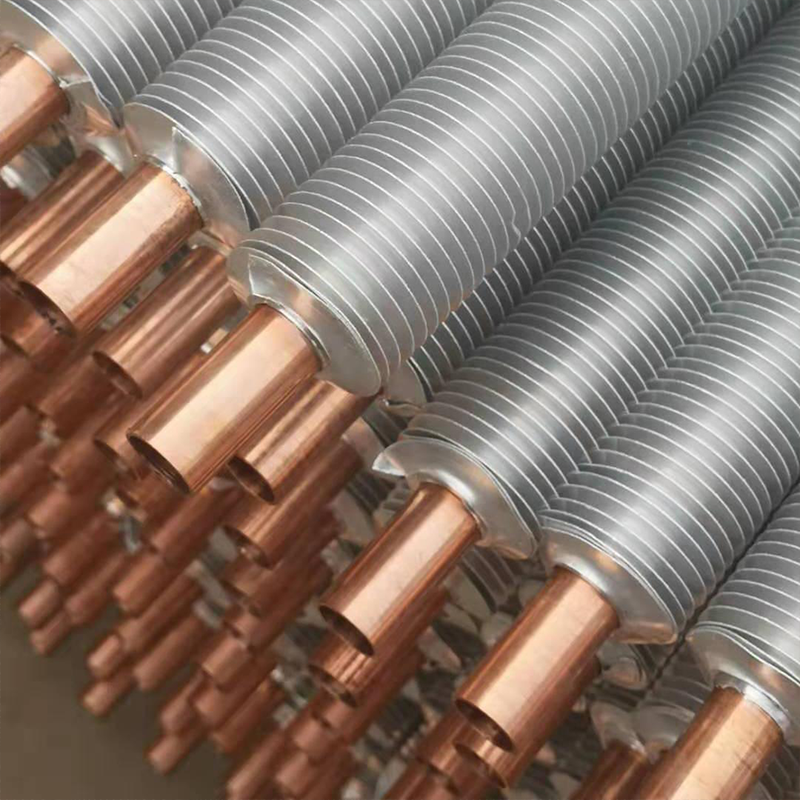
Wuxi Kaisheng LLC's core solution portfolio includes titanium shell-and-tube heat exchangers, ASME high-pressure units, and corrugated tube bundles made from 316 stainless steel, C46400 marine brass, and copper-nickel alloys. Particular attention is paid to nickel alloy products (such as N06625), which demonstrate exceptional corrosion resistance in hostile environments—precisely the conditions where additive repair of PE tanks is most effective. The company's products, certified to stringent international PED and ASME standards, are widely used in seawater desalination, shipbuilding and energy-saving projects around the world.
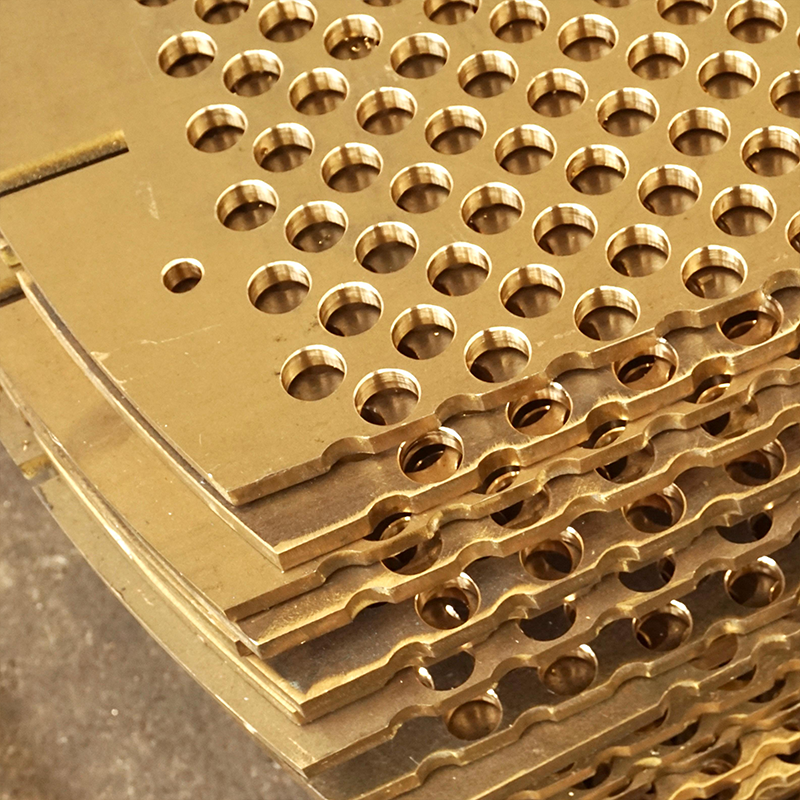
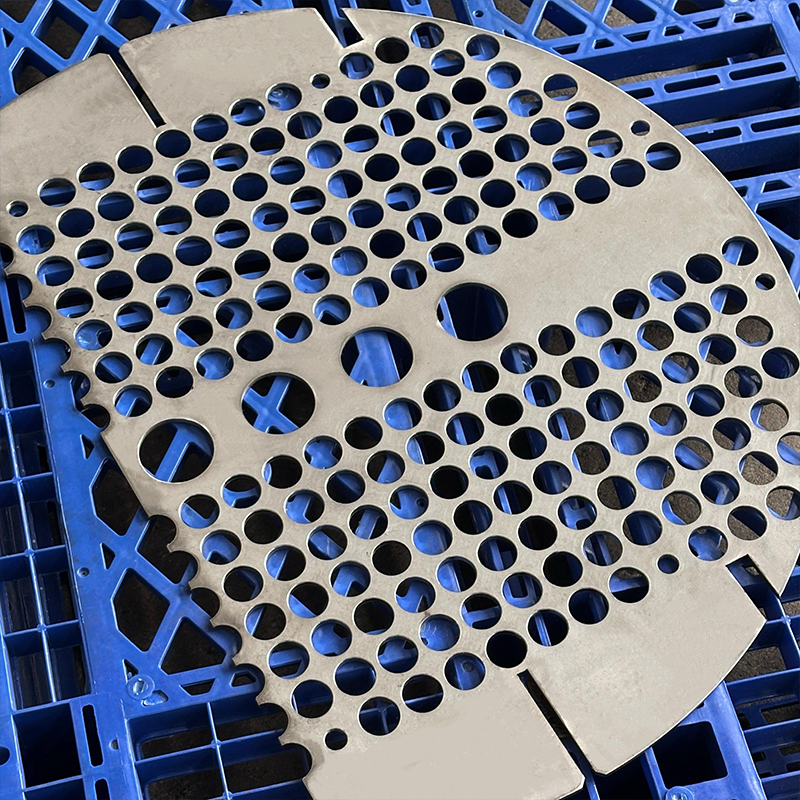
Integration of such reliable equipment as tube sheets made of 321 steel or C70600 brass produced by Wuxi Kaisheng LLC into the overall infrastructure of the enterprise allows us to minimize the risks of accidents and extend the life cycle of all production lines. When it comes to comprehensive facility safety, the combination of advanced tank repair techniques and the use of high-quality heat exchange equipment from trusted manufacturers creates a synergistic effect, ensuring the stability of production processes even in the most extreme conditions.
Economic justification for the implementation of additive solutions
The initial investment in additive manufacturing may seem high, but ROI calculations show otherwise. The cost of one hour of operation of the robotic complex is about 80 euros, including depreciation, electricity and consumables. At the same time, the productivity of the system is 2–3 times higher than that of a team of welders. Thus, the cost of repairing 1 m² of surface is reduced from 150 euros to 90 euros.
The indirect benefits are even more significant. Reducing equipment downtime means maintaining the production cycle. For a large chemical plant, an hour of downtime can cost tens of thousands of euros. Fast and reliable repairs can minimize these losses. In addition, increasing the service life of repaired areas reduces the frequency of re-interventions, which further saves the budget.
It is also important to take into account the environmental aspect. The additive method produces less waste because the material is applied precisely to the damaged area without excess. Traditional welding often requires large sections to be cut out and entire sheets to be replaced, increasing the volume of plastic being disposed of. In the context of tightening environmental legislation, this becomes a significant advantage.
Insurance companies have also begun to pay attention to repair methods. Facilities serviced using certified additive technologies receive reduced insurance rates, since the risk of accidents is significantly lower. This is an additional financial incentive to switch to new methods.
Standards and certification: what the customer needs to know
When choosing a contractor for additive repairs, you need to pay attention to the availability of appropriate certificates. In Russia, the main document is GOST R 57903-2017, which regulates the requirements for welding of polyethylene structures. Also important are the international standards ISO 12176-1 and DVS 2207-1, which determine the quality parameters of seams.
The equipment must have a certificate of conformity with TR CU 010/2011 “On the safety of machinery and equipment.” The absence of this document makes the use of equipment illegal in the territory of the Eurasian Economic Union. Our installations undergo annual verification in accredited laboratories, which guarantees the accuracy of all measured parameters.
Personnel working with additive systems must have qualifications of at least level 4 according to the national system of professional standards. Regular training is mandatory as technology is developing rapidly. We conduct internal training every six months to keep our specialists up to date with the latest innovations.
Source:Federal Agency for Technical Regulation and Metrology
Frequently Asked Questions
Can additive manufacturing be used to repair tanks made from other plastics?
Yes, the method is applicable to polypropylene (PP), polyvinyl chloride (PVC) and some types of engineering plastics. However, each material requires its own equipment settings and filler rod selection. There are no universal solutions, so before starting work, the compatibility of materials must be tested.
What is the maximum wall thickness that can be restored?
The technology makes it possible to build up material of almost unlimited thickness, but it is economically feasible to restore walls up to 20 mm. For thicker structures, a combination of the additive method with the installation of reinforcing patches of the same material is recommended.
Is it necessary to stop production to carry out repairs?
In most cases, yes, since it is necessary to ensure access to the inner surface and compliance with the temperature regime. However, for some types of damage, it is possible to repair from the outside without emptying the reservoir if the fluid level is below the damaged area.
Do you guarantee tightness after repair?
We provide a guarantee for the work performed for a period of up to 5 years, subject to compliance with the operating rules. Before the facility is handed over, a mandatory leak test is carried out using the vacuum or overpressure method in accordance with the design documentation.
How quickly can work begin after applying?
The standard mobilization time for a brigade is 3–5 working days. For emergencies, an emergency service is provided within 24 hours. The presence of equipment in the warehouse allows you to begin work immediately after arriving at the site.
Conclusion and recommendations for choosing a contractor
Additive technologies in the repair of PE tanks represent a mature and proven solution for modern industrial problems. They combine high accuracy, reliability and cost-effectiveness, surpassing traditional methods in most respects. However, the success of the project depends not only on the technology, but also on the competence of the contractor, as well as on the quality of related equipment, such as heat exchangers and shut-off valves.
When choosing a contractor, pay attention to the availability of its own equipment fleet, qualified personnel and experience in implementing similar projects. Request a portfolio of completed work and contacts of previous clients for recommendations. Don't be shy to ask technical questions - professionals are always ready to explain the details of their approach.
If you would like to assess the applicability of additive manufacturing for your specific application, contact our engineers for a free audit. We will analyze the condition of your tanks, calculate the cost of the work and offer the optimal solution.Contact us todayto receive advice and a commercial offer.
For more information about our services, visitrepair of industrial tanks, where detailed descriptions of technologies and examples of implemented projects are presented.