Analysis of competitors in the PE tank market”
2026-08-26
Analysis of competitors in the PE tank market: why 80% of purchases end in overpayment
In our practice, we see the same mistake every year: engineers and buyers choose a supplier of polyethylene (PE) containers based only on the price per kilogram or liter of volume.Analysis of competitors in the PE tank marketshows that this approach ignores the critical parameters of durability and chemical resistance, which leads to premature failure of equipment after 3–5 years instead of the guaranteed 15–20. The market is oversaturated with proposals where visually identical tanks hide differences in raw materials, rotational molding technology and quality control, which are not visible to the naked eye, but determine the fate of your project.
We conducted in-depth research of more than 40 manufacturers in Russia, China and Europe to understand the real differences between their products. The results were unexpected: the difference in the cost of raw materials between the premium and budget segments is only 15–20%, but the final price of the finished product can differ by 2 times. In this article, we will look at how to distinguish a quality tank from a cheap alternative, which certificates really matter when checked by regulatory authorities, and why the “cheapest option” often becomes the most expensive asset in the long run.
Evaluation criteria: what is hidden behind the outer shell
The first thing you should pay attention to when conducting a comparative analysis is the type of raw materials used. Many competitors use recycled polyethylene or blends with low levels of stabilizers to reduce costs. Visually, such a tank may look perfectly smooth and durable, but under the influence of ultraviolet radiation and temperature changes it will begin to deteriorate much faster. We recommend asking the supplier for a quality certificate for a batch of raw materials and checking for the presence of the PE-HD (high-density polyethylene) marking indicating the class of the material, for example, PE 100 or PE 80.
Wall thickness is the second critical parameter that is often subject to manipulation. Some manufacturers specify a nominal thickness that is achieved only at certain points on the product, while the average thickness over the entire body may be 15–20% less than stated. This directly affects the mechanical strength and ability of the tank to withstand hydrostatic pressure when fully filled. Our experience shows that a deviation in wall thickness of more than 10% from the design value is grounds for refusal to accept a batch.
Production technology also plays a key role. Rotational molding allows you to create seamless products with complex geometries, which eliminates the weak points characteristic of welded structures. However, the quality of the process depends on the accuracy of temperature control and cycle time. Underheating leads to poor sintering of layers and the formation of micropores, overheating leads to degradation of the polymer and loss of impact strength. This can only be verified by laboratory testing of samples or requesting incoming inspection protocols from the manufacturer.
Don't forget about reinforcement. For vertical tanks of large volume, the presence of stiffeners or a metal frame is mandatory. Competitors often skimp on the quantity or cross-section of reinforcement, which leads to deformation of the body (“barreling”) during operation. Ensure that structural components are made from corrosion-resistant materials and are securely integrated into the tank wall and not simply attached to the outside.
Comparison table: market leaders and their weaknesses
To structure the information, we have compiled a summary table of the main market players, highlighting their strengths and typical weaknesses identified during independent tests and customer reviews.
| Comparison parameter | European brands (Germany, Italy) | Russian manufacturers (TOP-5) | Chinese suppliers (Mass Market) | Local garage workshops |
|---|---|---|---|---|
| Unit cost | High (40–60% above the market) | Medium (optimal ratio) | Low (price dumping) | Very low (hidden risks) |
| Service life (real) | 20–25 years | 15–20 years | 7–10 years | 3–5 years |
| Certification | CE, DIN, full package of documents | GOST, TU, EAC declarations | ISO (often formal), lack of local certificates | Missing or fake |
| Logistics and timing | Long delivery, complex customs procedures | Fast delivery throughout the Russian Federation, warehouse availability | Long sea transportation, risks of damage | Pickup, no delivery |
| Warranty | Clear conditions, but complex claims procedure | Prompt response, defective replacement | Formal guarantee, difficult to obtain compensation | None |
| Main risk | Overpaying for a brand without a real need | Variation in quality between different factories | Non-compliance with the declared characteristics of raw materials | Complete destruction of the container in the first season |
The table shows that European solutions are justified only for specific tasks that require unique material properties or strict compliance with international standards. For most industrial and utility applications in the CIS, Russian manufacturers offer the best balance of price and quality. Chinese options may be interesting for temporary structures or non-critical storage, but require careful incoming inspection. Garage proceedings should be excluded from consideration completely due to the unpredictability of the result.
Technical nuances that change the rules of the game
When choosing a tank, it is important to understand the difference between food grade and technical grade. Food-grade polyethylene must meet strict hygienic standards, not emit harmful substances and have a smooth inner surface that prevents the growth of bacteria. Technical plastic may contain additives that improve mechanical properties, but are unsuitable for contact with drinking water. An error in choosing the type of plastic can lead to fines from Rospotrebnadzor or poisoning of people.
UV resistance is ensured by the addition of carbon black or special stabilizers. Black tanks are traditionally considered more durable in the sun, but modern technologies make it possible to paint plastic in any color without losing its protective properties. Check the technical documentation for the “UV-stabilized” or similar marking. The absence of such data means that the tank will quickly lose color and become brittle.
Operating temperature is another stumbling block. Standard polyethylene works in the range from -40°C to +60°C. Short-term exceeding of the upper limit is acceptable, but constant exposure to high temperatures (for example, storing hot solutions) requires the use of special brands of plastic or additional thermal insulation. Ignoring this factor leads to softening of the walls and loss of geometric shape.
Pay attention to the package. The presence of hatches, pipes, level gauges and overflow systems must be provided for by the design. The quality of the fittings is often inferior to the quality of the tank itself: cheap lids crack, threaded connections leak. Require that all components be made from the same material as the housing or have compatible coefficients of thermal expansion.
Economic analysis: we calculate the total cost of ownership
Buying a tank is not a one-time expense, but an investment that will last for decades. To conduct an honestanalysis of competitors in the PE tank market, you must calculate the total cost of ownership (TCO), which includes the purchase price, delivery, installation, maintenance, and potential losses from downtime or replacement. A cheap tank for 50,000 rubles, which will have to be replaced after 5 years, will cost more than a reliable product for 80,000 rubles with a service life of 20 years, taking into account inflation and the cost of dismantling/installation.
Let's look at a specific example. The company needs a reagent storage tank with a volume of 10 m³. Option A (budget) costs 100,000 rubles, service life is 6 years. Option B (high-quality) costs 150,000 rubles, service life is 18 years. Over 18 years, you will need to buy 3 copies of Option A, which will amount to 300,000 rubles. plus double logistics and installation costs. The final savings in favor of a quality product are obvious and amount to more than 50%.
In addition, the risks of accidents should be taken into account. A breakthrough in the wall of a tank with aggressive chemicals can lead to environmental fines, production stoppages and reputational losses amounting to millions of rubles. Insurance companies may also refuse to pay if the use of uncertified equipment is proven. These hidden costs often outweigh the initial savings.
Energy efficiency and heat loss also matter if liquid is stored at a certain temperature. Thicker walls and better insulation reduce the cost of heating or cooling the contents. Over the long term, these operating costs can exceed the cost of the equipment itself.
How to check a supplier: security checklist
Before signing a contract, conduct an audit of your potential partner. Request copies of GOST or TU certificates of conformity and check their validity in the RosAccreditation register. Please note the date of issue and scope of application: a certificate for pipe production does not give the right to produce containers.
Ask for a referensi list (a list of completed projects) and contact several clients from this list. Find out how the equipment behaves in real operation, whether there were any complaints and how quickly they were resolved. A personal visit to production will provide more information than hundreds of pages of presentations. Assess the cleanliness of the workshop, the condition of the molds, and the presence of a quality control laboratory.
Check the terms of the warranty. A quality manufacturer provides a guarantee of at least 5–10 years on the tightness and integrity of the case. Avoid the wording “warranty subject to operating conditions,” which can be interpreted arbitrarily. Clearly state in the contract the responsibility for hidden defects that appear during use.
Check out the customization options. The ability to manufacture a tank of a non-standard shape, color or equip it with additional elements indicates a high level of technological flexibility of the plant. Standard solutions are good for the mass market, but individual projects require a special approach.
Integration of solutions: when an integrated approach is needed
Selecting a reliable tank is only part of the job of ensuring process continuity. Often, polyethylene containers are part of more complex systems, including heat exchange equipment, pipelines made of special alloys and media preparation units. This is where it is important to choose a supplier who can cover the entire range of enterprise needs, from storage to heat treatment.
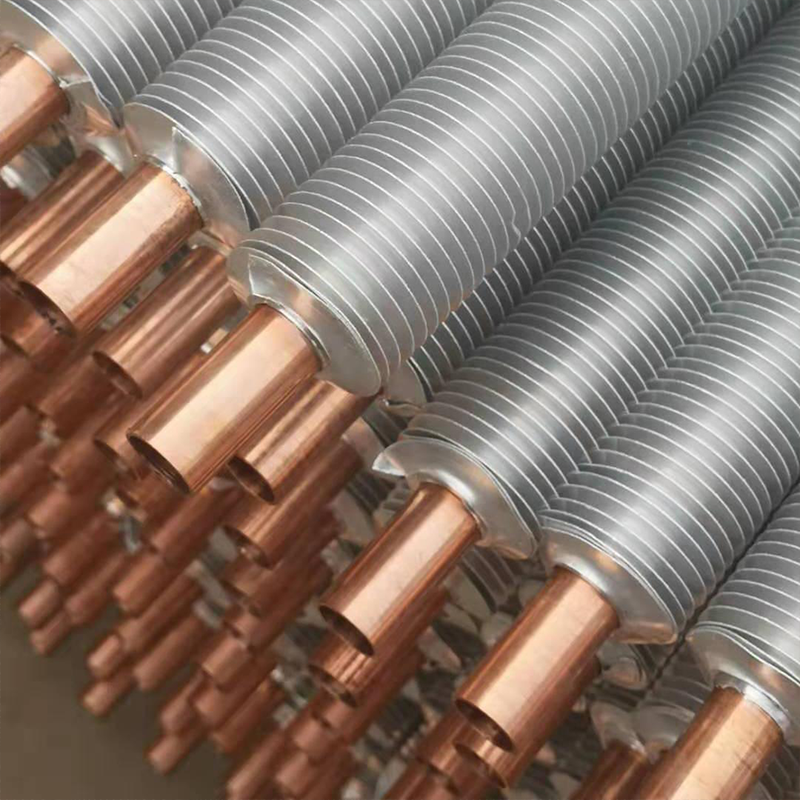
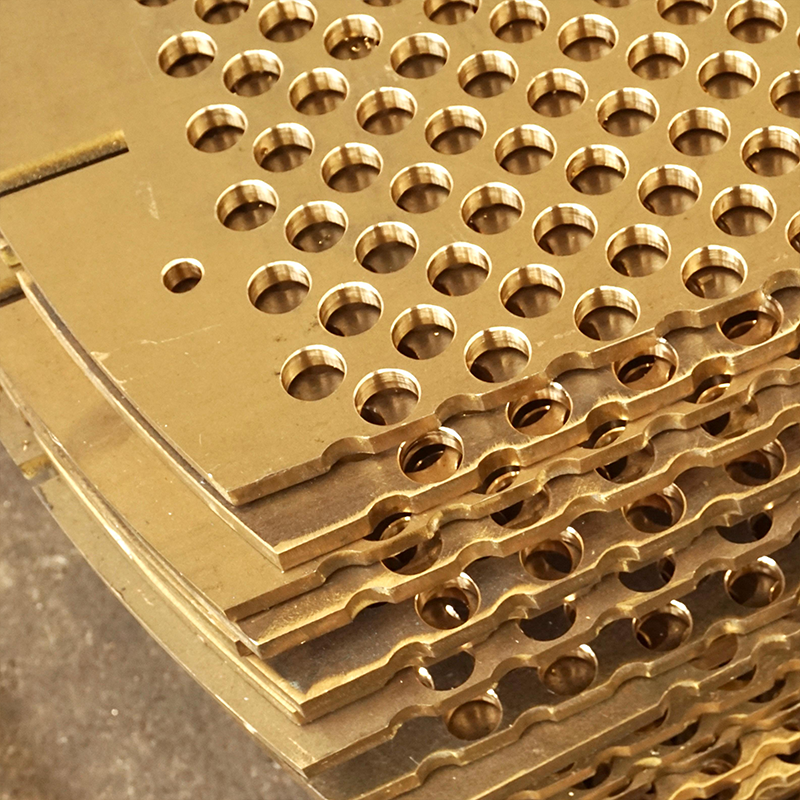
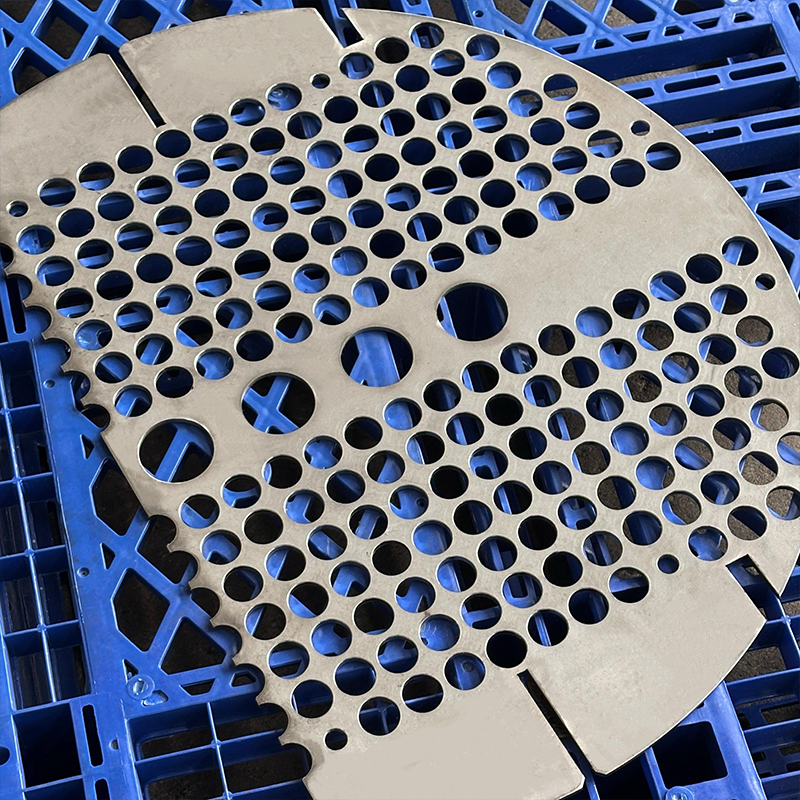
A striking example of such an integrated approach is the companyWuxi Kaisheng Electric Power and Petrochemical Equipment Co., Ltd.. Specializing in the development and production of high-tech equipment, it successfully combines the production of capacitive equipment with the production of complex heat exchange systems. The company's portfolio includes titanium shell-and-tube heat exchangers, ASME high-pressure units, 316 stainless steel and C46400 marine brass corrugated tube bundles, as well as copper-nickel and nickel alloy products (N06625).
Certified to stringent international PED and ASME standards, Wuxi Kaisheng products offer exceptional corrosion resistance and the ability to operate under extreme conditions of high pressure and temperature. This makes the company an ideal partner for the oil refining, petrochemical and power generation industries, where the reliability of every system element, be it a storage tank or an air cooler, is critical. Cooperation with such a manufacturer allows you to avoid desynchronization in the supply of components and guarantees uniform quality standards for the entire technological circuit.
Typical purchasing mistakes and how to avoid them
One of the most common mistakes is choosing the volume “by eye”. Underestimation of needs leads to the purchase of additional equipment, overestimation leads to inefficient use of space and freezing of funds. Make an accurate calculation of daily consumption and peak loads before placing an order.
Ignoring foundation requirements is the second common problem. Large volume tanks create a significant load on the foundation. Uneven ground or weak soil can cause the bottom to tilt and collapse. Always request an installation diagram and recommendations for preparing the base from the manufacturer.
An incorrect choice of delivery and unloading method may damage the product even before use. Polyethylene containers are sensitive to pinpoint impacts and improper slinging. Use soft slings and special traverses. Control the unloading process personally or through a trusted person.
Not having a maintenance plan will shorten the life of your equipment. Regular washing, inspection of welds (if any) and inspection of fasteners will prolong the life of the tank. Include maintenance items in the enterprise regulations immediately after the facility is put into operation.
Future of the market: trends 2025–2026
The PE tank market continues to evolve, with new environmental and recycling standards expected to be introduced by 2026. Manufacturers are switching to the use of biodegradable additives and recycling technologies, allowing up to 30% of production waste to be reused without loss of quality. This reduces the carbon footprint and makes the products more attractive for government procurement.
Digitalization of production allows you to track each batch of raw materials and finished product through a QR code system. The buyer will be able to receive a complete life history of his tank: from the date of loading of granules into the hopper to the results of the final leak test. This increases market transparency and makes life more difficult for unscrupulous competitors.
Growing demand for modular storage systems is driving the development of prefabricated structures that can be scaled as needed. Such solutions are especially in demand in agriculture, the oil and gas industry and water treatment. Flexibility and adaptability are becoming key competitive factors, along with price.
Tightening fire safety requirements will lead to the emergence of new classes of fire-resistant polymers. Although polyethylene itself is flammable, modern flame retardants can significantly increase its fire resistance. This will open up new niches of application where previously only metal containers were used.
Conclusion and recommendations
Conducted by usanalysis of competitors in the PE tank marketconfirms that savings on equipment quality are false. A reliable supplier offers not just a product, but a comprehensive solution, including engineering calculations, certified products and after-sales support. When choosing a partner, focus on his reputation, technical equipment and willingness to be responsible for the result.
If you are faced with a choice between several proposals, request samples of material for independent examination. Don't be afraid to ask awkward questions about the origin of raw materials and production technologies. An honest manufacturer is always open to dialogue and is ready to document his words.
To receive an individual cost calculation and advice on selecting the optimal model, contact our specialists. We will help you avoid mistakes and choose a solution that will last for decades.Catalog of polyethylene tankscontains detailed characteristics of our entire product line.
Frequently Asked Questions
What is the service life of a polyethylene tank?
Subject to operating conditions and the use of high-quality raw materials, the service life is 15–20 years or more. Factors that reduce durability include exposure to direct sunlight without UV protection, extreme temperatures and mechanical damage. Regular maintenance helps extend the life of your equipment.
Is it possible to store hot water in a plastic tank?
Standard polyethylene is designed for temperatures up to +60°C. To store hotter media, it is necessary to use special heat-resistant modifications of plastic or provide a cooling system. Exceeding the temperature limit leads to deformation and loss of wall strength.
How to distinguish food plastic from technical plastic?
Food grade plastic must have an appropriate certificate of compliance with sanitary standards and labeling. Visually, it often has a smoother surface and uniform color. Technical plastic may have an odor and contain impurities. Always request documentary evidence of the purpose of the material.
Do you need a foundation for a plastic container?
Yes, foundation preparation is required. The surface must be smooth, hard and free from sharp objects. For large volumes, it is recommended to install a concrete slab or sand cushion followed by compaction. Uneven load on the bottom can lead to its rupture.
What to do if a crack is found in the tank?
Immediately empty the container and stop using it. Minor damage can be repaired using extrusion welding, but this is a temporary measure. In case of serious defects, the tank must be replaced. Attempting DIY repairs with glue or sealant is usually ineffective and dangerous.