
Currency risks when purchasing raw materials for PE”
2026-09-01
- Currency risks when purchasing raw materials for PE: why 5% margin disappears in one week
- The mechanics of polyethylene price formation and hidden currency traps
- Hedging strategies: from forward contracts to multi-currency accounts
- Legal aspects of contracts: protection against exchange rate differences in specifications
- Comparison of currency zones: Yuan, Dollar and Rupee in polymer procurement
- Logistics and customs clearance as currency risk factors
- Practical steps to reduce risks: a checklist for the head of the procurement department
- Integrating reliable equipment into the supply chain: the role of Wuxi Kaisheng LLC
- Frequently Asked Questions
Currency risks when purchasing raw materials for PE: why 5% margin disappears in one week
Fluctuations in the exchange rate of the ruble against the yuan or dollar can completely destroy the profit from a deal for the supply of polyethylene (PE), even if you successfully negotiated a price with a Chinese factory. In our experience, we have seen a contract signed on Monday become unprofitable by Friday due to a sharp move in the currency pair, resulting in a 12% loss in margin for one of our clients in the pipe manufacturing industry. Currency risks when purchasing raw materials for PE are not an abstract economic theory, but a daily reality faced by polymer buyers who ignore hedging and the specifics of settlements in CNY.
Many companies make the fatal mistake of fixing prices in US dollars, while Chinese manufacturers increasingly demand payment in yuan, creating a double corridor of volatility. If you buy high-density polyethylene (LDPE) or linear polyethylene (LLDPE) from suppliers in China, India or the Middle East, your final cost depends on three variables: the exchange price of oil, the exchange rate of the local currency to the contract currency and logistics allowances, which are also indexed to hard currency. Ignoring at least one of these factors turns the purchase into a lottery.
In this article we will analyze specific mechanisms for protecting capital, based on real experience of importing more than 500 tons of polymer raw materials per month. We will not give general advice to “follow the course”, but will show which financial instruments work in 2026, how to correctly draw up contract specifications and why standard Incoterms can work against you when currency regulation changes.
The mechanics of polyethylene price formation and hidden currency traps
The price of raw materials for the production of polyethylene (PE) is formed by a complex cascade, where the foreign exchange component often takes up to 70% of the final cost for the Russian buyer. The polymer base price is linked to naphtha or ethylene quotes on the Asian spot markets (ICIS, Platts), which are denominated in US dollars. However, when you enter into a contract with a Chinese factory, settlements are increasingly converted to Yuan (CNY), creating an intermediate conversion between USD/CNY and then CNY/RUB. It is at this stage that the main losses occur.
Let's consider a typical situation. You are ordering a batch of LLDPE grade 218WJ. The Chinese factory issues an invoice in RMB, calculating the dollar exchange rate using the domestic PBOC rate on the day of shipment. At this moment, the rate may differ from the exchange rate of the Central Bank of the Russian Federation by 3-4%. If the ruble weakens during the cargo transit period (which lasts 30-45 days by sea or 15 days by rail), you pay more rubles for the same volume of yuan. With a purchase volume of $200,000, a difference of 2 rubles in the exchange rate means a direct loss of 1.2 million rubles in net profit.
Another hidden risk is currency clauses in long-term contracts. Many suppliers include a Price Adjustment Clause if the exchange rate changes by more than 5% per quarter. Inexperienced buyers skip this point, considering it a formality. In our practice, there was a case when a client signed an annual contract for the supply of HDPE for blow molding products, without noticing the clause on automatic price indexation in the event of ruble devaluation. When the exchange rate changed by 15%, the supplier legally demanded additional payment, threatening to stop shipments. The client was forced to accept the new conditions, since an alternative replacement of the material would require readjusting the extruders and stopping production for 3 days, which would cost more than the surcharge itself.
It is important to understand the PE pricing structure. About 60% of the price is the cost of the monomer (ethylene), which is strictly correlated with oil. The remaining 40% is the plant’s margin, logistics and energy intensity of production. When oil prices fall, the PE value decreases, but with a delay of 2-3 weeks. If you fix the price in a currency when oil peaks, and a month later oil falls, you are overpaying. On the contrary, when oil rises, fixing the price saves the budget. Therefore, the procurement strategy must be synchronized not only with the exchange rate, but also with the energy cycle.
To minimize these risks, it is necessary to require detailed pricing from the supplier (Cost Breakdown). Request a breakdown of the cost into FOB (factory price) and Freight. Freight is often paid separately in dollars, and goods in yuan. Splitting payments allows you to hedge each part separately using different financial instruments. Do not agree to CIF terms without deciphering the insurance premium, which may also be inflated in foreign currency.
Hedging strategies: from forward contracts to multi-currency accounts
Protection against currency fluctuations requires the active use of financial instruments available to Russian businesses in the current conditions. Passively waiting for a “better rate” is a losing strategy. The most effective method for medium and large purchases of raw materials for PE is to enter into forward contracts with a bank. The essence of the method is simple: you agree with the bank to purchase a certain amount of currency (RMB or dollars) at a fixed rate on a future date that coincides with the date of payment to the supplier.
For example, you need to pay for a shipment of polyethylene in 45 days. The current yuan exchange rate is 12.5 rubles. You are afraid that it will rise to 13.5. The bank proposes to fix the exchange rate at 12.8 rubles. Even if by the time of payment the rate becomes 14.0, you will pay 12.8. If the rate drops to 12.0, you still pay 12.8, losing potential benefits but maintaining budget predictability. For a manufacturing enterprise, cost stability is more important than speculative profit. In our work, we recommend covering at least 70% of the volume of expected payments with forwards, leaving 30% on the spot market for averaging.
Another effective tool is opening multi-currency accounts and accumulating foreign currency earnings. If you export PE products or have foreign currency income, create a foreign exchange cushion. Do not convert all proceeds into rubles at once. Pay for the import of raw materials directly from a foreign currency account, bypassing double conversion (Currency → Ruble → Currency). Each conversion eats up from 0.5% to 1.5% of the amount due to the bank spread. With a turnover of $1 million, this is a loss of up to $15,000 per year simply on commissions.
Options contracts are also worth considering, although they are more complex to draft. An option gives the right, but not the obligation, to buy a currency at a certain rate. You pay a premium for this opportunity. If the rate rises, you exercise the option and fix the loss at the premium level. If the rate falls, you give up the option and buy the currency cheaper on the market. This is an ideal tool for situations with high uncertainty, when the direction of the exchange rate is unpredictable.
However, hedging has its limitations. Bank fees for forwards can be high, especially for small businesses. In addition, a guarantee deposit (GB) is required, which freezes working capital. We came across a situation where a company hedged 100% of its purchases, but the bank demanded additional GO due to market volatility, which the company did not have. As a result, the hedge was closed forcibly at a loss. Therefore, the rule of thumb is: never hedge more than you can provide in liquidity.
Actionable step: Contact your bank to request a quote for a forward contract for the value of your next PE purchase. Compare this cost to the current spot rate and assess whether you are willing to pay a small premium for a no-loss guarantee. If the bank does not offer such services for RMB, consider working with brokers licensed by the Central Bank of the Russian Federation to deal with securities and derivatives.
Legal aspects of contracts: protection against exchange rate differences in specifications
The text of a foreign trade contract is your main shield against currency risks. Most standard templates downloaded from the Internet do not take into account the specifics of working with Asian polymer suppliers in 2026. A key element of protection is the correct wording of the currency clause. Avoid the wording “Fixed price in dollars” if the payment is in RMB. Instead, use the mechanism of linking to the rate on the payment date with a restriction (“corridor”).
Recommended wording: “The base price of the product is set in US dollars. Payment is made in Chinese Yuan (CNY) at the exchange rate of the Central Bank of China (PBOC) on the date of invoice. If the CNY/RUB exchange rate changes by more than 3% in the period between signing the contract and the date of shipment, the parties undertake to revise the price in proportion to the change in rate.” This phrase shifts some of the risk to the supplier or, at a minimum, forces him to come to the negotiating table before the cargo is shipped.
The second critical point is the choice of the Incoterms delivery basis. When purchasing PE, FCA (Free Carrier) or FOB (Free On Board) conditions are often more profitable than EXW (Ex Works), as they allow you to control the supply chain and insurance. But the main thing is the moment of risk transfer. With EXW, the risk passes to you upon loading at the factory in China. If the cargo gets stuck at customs or at the port due to currency restrictions or sanctions, all costs will fall on you. Under DAP (Delivered at Place), the risk passes in your city, which gives you more time to maneuver with the currency while the goods are in transit.
We strongly recommend including a Force Majeure clause in the contract that explicitly mentions “abrupt changes in currency regulations” or “inability to make cross-border payments.” In 2024-2025, many polymer payments were stuck due to secondary sanctions against intermediary banks. If there is no such clause in the contract, the supplier may demand payment through third countries with a huge commission (up to 10-15%), and you will be obliged to agree, otherwise you will break the contract. By writing out this risk in advance, you can legally terminate the deal or reschedule without penalties.
Also pay attention to penalties for late payments. Typically they are 0.1% per day. But with high inflation and exchange rate volatility, delaying payment for 2 weeks may be more profitable than paying today at a bad rate, even taking into account the fine. Carry out a mathematical calculation: if the expected strengthening of the ruble is 5% in two weeks, and the penalty is only 1.4%, then the delay in payment is economically justified. Of course, this is risky for your reputation, but in crisis situations it is a working tool. Make sure the contract has a limit on the total amount of penalties (for example, no more than 5% of the cost of the lot) to avoid endless charges.
Action: Review your current contracts with PE providers. Find the “Price and payment procedure” section. If there is no mechanism to protect against exchange rate fluctuations or a clear definition of the conversion rate, prepare an Addendum to the contract (Additional Agreement) and send it to the supplier before the next shipment.
Comparison of currency zones: Yuan, Dollar and Rupee in polymer procurement
The choice of contract currency determines 80% of success in risk management. Today, the polyethylene import market in Russia is divided into three main currency flows. Understanding the pros and cons of each will help you choose the best strategy for your business.
| Comparison criterion | Chinese Yuan (CNY) | US dollar (USD) | Indian Rupee (INR) |
|---|---|---|---|
| Liquidity availability | High. Easy to buy from Russian banks, wide selection of hedging instruments. | Limited. Difficulties with purchasing cash and non-cash transfers due to sanctions. | Low. It is difficult to find rupees on free sale, there is a high spread when buying. |
| Volatility against the ruble | Moderate. The exchange rate is more stable than the dollar, but depends on the policy of the PRC. | High. Reacts strongly to geopolitics and oil prices. | High. The rupee has historically weakened against the dollar, creating a double risk. |
| Transaction cost | Low. Direct correspondent accounts between Russian and Chinese banks. | Very tall. An intermediary bank in a third country is required, commissions up to 5-10%. | Average. Mechanism of special accounts in authorized banks, but slow posting. |
| Applicability for PE | Ideal for China (Sinopec, PetroChina). The main language of trade. | Universal for the Middle East (SABIC, Borouge), but difficult to pay. | Suitable for Indian manufacturers (Reliance), but narrow market segment. |
| Main risk | Political regulation of the course by Beijing. | Blocking payments and freezing funds. | Difficulty in converting back unspent rupees. |
An analysis of the table shows that the yuan is the uncontested leader for purchases from China. Attempts to pay Chinese partners in dollars now only lead to an increase in the price of goods by the amount of intermediary commissions. Chinese factories are themselves interested in receiving yuan and often give a 1-2% discount when paying in CNY compared to USD.
The situation in the Middle East is more complicated. The largest PE providers, such as SABIC (Saudi Arabia) or Borouge (UAE), traditionally operate in dollars. Direct payments in USD from Russia are now practically impossible without going through banks in friendly jurisdictions (Türkiye, UAE, Kazakhstan), which lengthens the chain and increases the risk of blocking. An alternative is to switch to settlements in dirhams (AED) or rials, but the liquidity of these currencies in Russia is still low. In this case, we recommend using the scheme of letters of credit in yuan, if the supplier agrees to accept them, or looking for traders who already have established channels and sell the polymer within the Russian Federation at a premium, taking on currency risks.
The Indian direction is promising, but niche. India produces a lot of PE, but some brands are inferior in quality to Chinese counterparts for high-tech applications. Payments in rupees require the opening of special accounts (Vostro accounts) in Russian banks. The main problem here is the surplus of Rs. You can accumulate millions of rupees from exports, but spending it on imports is difficult due to restrictions on capital outflows from India. This option is only suitable for those who have a balanced export-import flow with India.
Recommendation: If you work with China, switch to 100% settlements in yuan and open accounts in banks that have direct correspondent accounts with Chinese banks (for example, Industrial and Commercial Bank of China, Bank of China, as well as large Russian banks with a strong block of work with Asia). Avoid small regional banks where processing a payment in RMB can take 2-3 weeks due to the lack of direct channels.
Logistics and customs clearance as currency risk factors
Currency risks do not end when the invoice is paid. The logistics chain for the delivery of polyethylene creates additional points of vulnerability where exchange rate fluctuations can hit the budget. Freight rates (sea and railway rates) are almost always denominated in US dollars, regardless of the currency of the product itself. Even if you bought PE for yuan, shipping a container from Shanghai to Vladivostok or Novorossiysk will cost you dollars.
During periods of weakening of the ruble, the cost of freight in ruble equivalent soars instantly. For example, the freight rate of $3,000 for a 40-foot container at an exchange rate of 90 rubles is 270,000 rubles. At an exchange rate of 100 rubles - already 300,000 rubles. The difference is 30,000 rubles. from one container. If you transport 10 containers per month, that’s RUB 300,000. additional expenses that were not included in the cost. Moreover, freight forwarders often require prepayment of freight in foreign currency 2-3 weeks before the vessel arrives, creating a cash gap.
Customs duties are another critical element. The import duty on polyethylene (HS code 3901) is calculated in euros or dollars (depending on the country of origin and current rates), but is paid in rubles at the exchange rate of the Central Bank of the Russian Federation on the date of registration of the declaration. Between the moment of concluding the contract and the moment of customs clearance, 30-50 days pass. During this time, the course may change dramatically. If you have not reserved rubles to pay duties at the maximum predicted rate, you risk not releasing the goods due to a lack of funds in the Federal Customs Service account.
We came across a case where a shipment of LDPE was stuck at customs for 5 days because the importer did not have enough money to pay duties due to a jump in the euro exchange rate. Every day a container is idle at a temporary storage warehouse (temporary storage warehouse) costs about 5,000-10,000 rubles. As a result, savings on currency hedging resulted in direct losses from fines and downtime, exceeding three times the amount of the exchange rate difference.
To avoid this, use advance payments for a customs deposit. Deposit money into the customs account in advance while the exchange rate is favorable. Customs itself converts them at the rate on the day the declaration is issued, but the presence of a deposit guarantees that the goods will not be seized. Also require your logistics partner to fix the freight rate in rubles for the entire transportation period, if possible, although forwarders are reluctant to do this and include an insurance premium in the rate.
Advice: Always include a volatility buffer of 10-15% in your financial model on top of current logistics and customs costs. Calculate the cost of raw materials according to a pessimistic exchange rate scenario. If, with this calculation, the project remains profitable, we can work. If the margin disappears, it is better to postpone the deal or renegotiate the terms with the supplier.
Practical steps to reduce risks: a checklist for the head of the procurement department
Theory is useless without action. Below is an algorithm that is being implemented in our partner companies to systematically manage currency risks when purchasing raw materials for PE. Completing these items will take a few days, but will save millions annually.
- Audit of the current currency position.Make a table of all expected payments in foreign currency for the next 3 months. Specify the payment date, amount, currency and current exchange rate. Calculate how many rubles will be required under the scenario of a deterioration in the exchange rate by 5%, 10% and 15%. This will show your area of vulnerability.
- Negotiations with the supplier about the contract currency.Write an official letter to PE suppliers with a proposal to convert payments into yuan (for China) or offer a discount for prepayment in rubles (if the supplier has accounts in the Russian Federation). Use the argument for a long-term partnership: “We want stability so that we don’t have to disrupt your shipments due to payment problems.”
- Setting up banking products.Meet with your bank's CFO. Find out the conditions for yuan forwards and options. If the bank does not offer convenient conditions, consider transferring part of your turnover to a bank specializing in foreign trade with Asia. Open a foreign currency account to accumulate earnings.
- Implementation of internal hedging policy.Issue an order obliging you to hedge at least 50% of the volume of future purchases with a delivery time of more than 30 days. Prohibit speculative games with the exchange rate: the buyer’s task is to provide production with raw materials, and not to make money on the difference in exchange rates.
- Monitoring the news background.Assign a responsible person who monitors daily news on currency regulation, Fed rates, Chinese Central Bank policy, and oil prices. Subscribe to specialized Telegram channels and newsletters of analytical agencies. Early warning of a possible rate jump will give you a 1-2 day head start to complete transactions.
Don't forget about the human factor. Train your purchasing managers in basic financial literacy. They must understand that a cheap product in dollars can become expensive in rubles in a month. Motivate them not only for the volume of purchases, but also for maintaining budget discipline and the absence of cash gaps due to exchange rate losses.
Integrating reliable equipment into the supply chain: the role of Wuxi Kaisheng LLC
Currency risk management is only one side of the coin. Even a perfectly calculated financial model can collapse if the processing equipment used to process raw materials does not meet the stated quality standards or fails due to corrosion and pressure drops. In the context of unstable logistics and difficult supply conditions, it is critical to have reliable partners not only among raw material suppliers, but also among equipment manufacturers.
This is where it comes on stageWuxi Kaisheng Electric Power and Petrochemical Equipment Co.,Ltd" The company specializes in the development and production of highly efficient heat exchange and petrochemical equipment, which becomes the foundation of stability for processing enterprises. While you protect your finances from RMB fluctuations, Wuxi Kaisheng equipment protects your production process from technical failures.
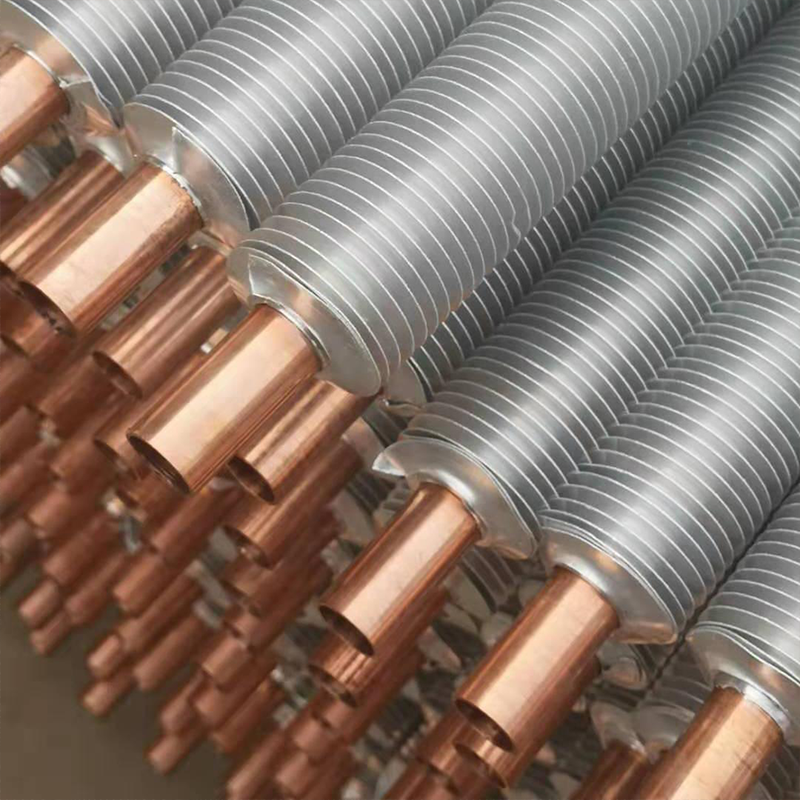
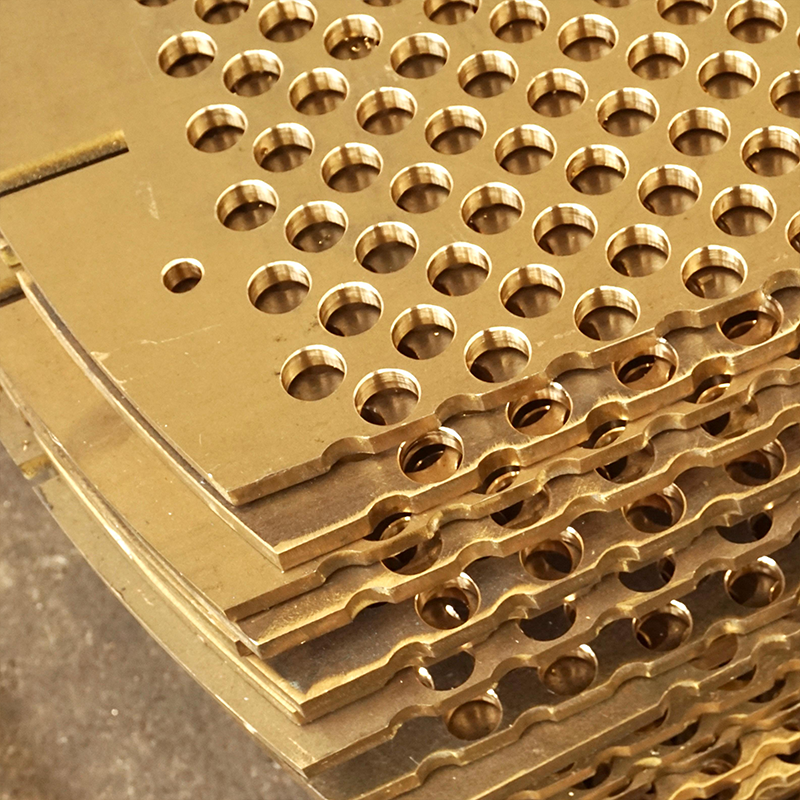
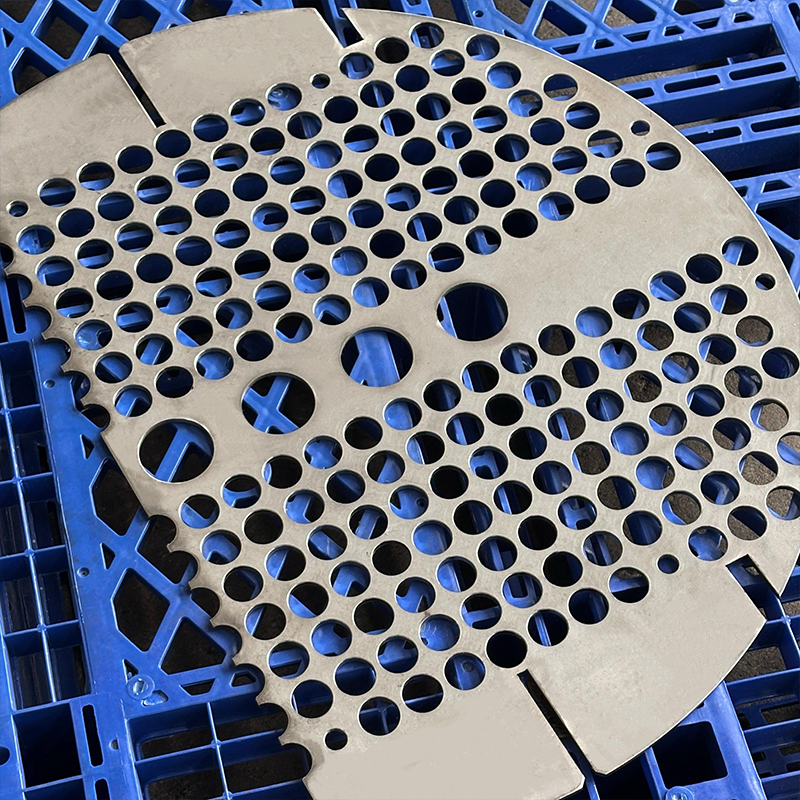
The company's core portfolio includes titanium shell-and-tube heat exchangers, ASME high-pressure heat exchangers, 316 stainless steel corrugated tube bundles, and C46400 marine brass, copper-nickel and N06625 nickel alloy solutions. Products also include air coolers, recovery boilers and various components such as 321 steel and C70600 alloy tube sheets. All products are certified to international PED and ASME standards, which ensures their applicability in the harshest conditions of oil refining, petrochemicals, water desalination and shipbuilding.
Why is this important for the PE buyer? Because modern polyethylene production requires equipment with exceptional corrosion resistance and the ability to operate at high temperatures and pressures. The use of components from Wuxi Kaisheng, made of carbon, stainless, alloy steel, titanium and special alloys, minimizes downtime and repair costs. Stable equipment means stable processing of raw materials, which ultimately secures the very margin that you worked so hard to win from the foreign exchange market. The company provides customized solutions to customers around the world, ensuring synergy between quality raw materials and advanced processing technologies.
Frequently Asked Questions
How to calculate the break-even point when purchasing PE taking into account currency risk?
To calculate, take the cost of the batch in foreign currency, multiply by the forecast rate (current rate + 10% of safety stock). Add to this amount the cost of freight, customs duties (also at the forecast rate) and logistics within the Russian Federation. Divide the resulting total amount in rubles by the number of kilograms of raw materials. The resulting figure is your actual cost. If the market selling price of PE products is below this figure, the purchase is unprofitable. Never calculate the cost at the current spot rate if payment is due in a month.
Is it possible to insure currency risks with an insurance company?
Classic insurance (like property) against exchange rate risks does not exist. Insurance covers force majeure (war, fire, confiscation), but not market fluctuations in exchange rates. The only way to “insure” the rate is through financial derivatives (forwards, options, swaps) through a bank. Some brokers offer structured products that are similar to insurance, but are essentially the same financial instruments. Beware of “guaranteed rate” offers from unverified pyramid schemes.
What to do if the supplier refuses to accept yuan and demands dollars?
If a supplier from a “friendly” country (China, Türkiye, UAE) insists on dollars, this is a red flag. Most likely, he does not have accounts to accept yuan or is afraid of secondary sanctions. Offer him payment through a letter of credit in yuan, where the bank acts as a guarantor. If he still refuses, find another supplier. The polyethylene market is huge, and dependence on one capricious partner is not worth the risk of locking up millions of dollars. As a last resort, use the services of professional intermediary traders who themselves convert the currency and deliver the goods to you in rubles, but be prepared for a 5-8% markup.
Does seasonality affect currency risks when purchasing plastic?
Yes, it does have an indirect effect. During periods of high demand (such as before harvest or construction season), PE prices rise in dollar terms. If at this moment the ruble also weakens, a “double blow” occurs. In winter, demand for some types of PE falls and prices stabilize. Plan the main volumes of purchases for periods of low seasonality, when suppliers have free capacity and are more accommodating in matters of price and payment terms. This allows you to level out part of the currency risk due to a better entry price.
Managing currency risk in PE raw material procurement is an ongoing process that requires discipline and professionalism. There is no magic pill that will eliminate market fluctuations, but the right set of tools can turn chaos into a manageable system. Start by auditing your contracts and implementing simple hedging rules today.
If you want to receive individual advice on optimizing the purchase of polymers, discuss the terms of supply of PE with minimal currency risks, or select reliable heat exchange equipment from Wuxi Kaisheng LLC for your production,contact us today. Our experts will help you analyze your supply chain, select reliable partners and ensure the technical security of your business.