
Webinars on polyethylene welding technologies”
2026-08-22
- What are webinars on polyethylene welding technologies and why do engineers need them?
- Key technical parameters discussed at webinars on HDPE welding
- Welding equipment: selection and configuration via online demonstrations
- Typical seam defects and methods for preventing them
- Standards and regulatory framework: GOST, ISO and international requirements
- Training program and webinar format
- Cost-effectiveness of personnel training
- Integration of advanced solutions: experience of Wuxi Kaisheng LLC
- Frequently Asked Questions
- Conclusion and next steps
What are webinars on polyethylene welding technologies and why do engineers need them?
Webinars on polyethylene welding technologies are not just online lectures, but a critical tool for reducing the risk of pipeline depressurization by 40–60% in the first year of operation. In our practice, we have observed how the lack of up-to-date knowledge about the new GOST R 58109-2018 standards led to the fact that entire sections of gas pipelines had to be redone due to the incorrect choice of heating temperature or cooling time. Today, when the market is flooded with equipment with questionable calibration, participation in specialized webinars is becoming a mandatory step in personnel qualification. We have analyzed dozens of training programs and are ready to tell you which topics really affect the strength of the joint, and which are just a marketing shell.
Welding polyethylene pipes (HDPE) requires pinpoint precision. An error of 5 degrees when heating the ends can lead to the formation of a brittle seam that will collapse under pressure within a few months. Webinars on polyethylene welding technologies allow engineers to see the process in real time, ask questions to manufacturing plant technologists and gain access to closed databases on welding parameters for various grades of raw materials (PE80, PE100, PE100-RC). This is a direct channel of communication between theory and practice, which saves companies millions of rubles in preventing emergency situations.
Key technical parameters discussed at webinars on HDPE welding
Any high-quality webinar on polyethylene welding begins with a deep dive into the physics of the process. You can't just say "heat to 220 degrees." The melting point depends on the thickness of the pipe wall, the type of heating element and even the air humidity in the workshop. At our sessions, we analyze in detail the dependence of settlement pressure (P1, P2, P3, P4) on the SDR (standard dimensional ratio) of the pipe. For example, for an SDR 11 pipe, the heating pressure must be strictly in the range of 0.15–0.2 MPa, while for SDR 17 this figure is reduced to 0.1 MPa. Excessive pressure leads to extrusion of the melt and thinning of the seam, and insufficient pressure leads to incomplete fusion of the polymer molecules.
Pressure holding time is another critical parameter that is often ignored by beginners. We provide specific formulas for calculating cooling time, which depend on the thickness of the pipe wall. The formula t = 10 + e (where e is the wall thickness in mm) is basic, but in webinars we show how to adjust it when working in winter conditions or when using pipes with a protective layer (co-extruded pipes). One of our clients encountered a situation where the welding machine showed readiness for the next cycle before the pipe had cooled to a safe temperature. The result was deformation of the joint under the pipe's own weight. Such nuances cannot be learned from the instructions for the device; they are conveyed only by experienced technologists.
Particular attention is paid to the preparation of the ends. Non-perpendicularity of the ends of more than 0.5 mm is unacceptable for pipes with a diameter of over 110 mm. At webinars, we demonstrate methods for controlling the gap between the ends before heating begins. The gap should not exceed 0.3 mm for small diameter pipes and 0.5 mm for large diameter pipes. We use probes and special gauges to show participants how to visually and instrumentally assess the quality of preparation. If the ends are chipped or dirty, welding is impossible - this is an axiom that we repeat at every meeting.
Influence of raw material grade on welding conditions
Different brands of polyethylene behave differently. PE80 requires less upsetting pressure compared to PE100 due to different melt viscosity. At webinars, we conduct a comparative analysis of the rheological properties of materials. Participants learn to read the quality passport (certificate) for a batch of pipes and configure the apparatus accordingly. For example, when welding pipes made of PE100-RC material (resistant to rapid crack propagation), the heating time can be increased by 10-15 seconds to ensure better diffusion of macromolecules. Ignoring these differences results in the connection becoming the weakest link in the system.
We also consider the impact of additives and stabilizers. Carbon black, used as a UV stabilizer, affects the thermal conductivity of the material. Pipes with a high soot content heat up more slowly, requiring adjustment of the holding time. In our practice, there was a case where the team used standard settings for black pipes produced according to a new recipe with a higher carbon content. The seam turned out to be “cold”, and a leak occurred during hydraulic tests. Analysis of this case at the webinar helps hundreds of specialists avoid similar mistakes in the future.
Welding equipment: selection and configuration via online demonstrations
The choice of welding equipment is an investment that pays off in the quality of the connections. At webinars, we don’t just list models, but conduct live tests of devices under load. Electronically controlled hydraulic stations allow you to set precise pressure profiles, eliminating the human factor. Mechanical devices are cheaper, but require highly qualified welders and constant monitoring of the pressure gauge. We show how to calibrate pressure and temperature sensors before starting work. A thermocouple error of 10 degrees can be fatal to the quality of the seam.
Centralizers play a key role in pipe alignment. At webinars we demonstrate the operation of hydraulic and mechanical centralizers for pipes with a diameter of 63 to 1200 mm. It is important to understand that the clamping force should be sufficient to hold the pipe, but not excessive, so as not to damage the surface. We look at typical mistakes when installing pipes into a centralizer: misalignment, insufficient fixation, use of dirty sponges. Each point is illustrated with video materials from real objects where violations were committed.
Trimmers (trimmers) must provide a perfectly smooth, lint-free surface. We compare circular and spiral knives, discuss their service life and signs of wear. A dull knife does not cut, but crushes polyethylene, creating microcracks at the end. In the webinar we show how to determine knife wear by the nature of the chips. If the chips come in ribbons rather than small crumbs, the knife requires sharpening or replacement. This is a simple diagnosis that saves you from marriage.
Automation vs Manual control
The debate about which is better - automatic or manual control - continues. At webinars we provide statistics: the percentage of defects when using fully automatic machines with parameter memory is less than 1%, while when manual welding it can reach 5–7%. However, automation is powerless if the operator prepares the pipes incorrectly. Therefore, we teach a hybrid approach: automation controls pressure and time, and humans are responsible for preparation and visual control. This approach combines the reliability of a machine and the flexibility of human intelligence.
Modern devices are equipped with Bluetooth and Wi-Fi modules for transmitting data to the cloud. This allows you to remotely monitor the welding process and generate electronic passports of joints. At the webinar we show the software interface and explain how to upload reports for technical supervision. For large projects, such as the construction of gas pipelines, the presence of a digital trace of each joint is a mandatory requirement of the customer. We help integrate these systems into the team's workflow.
Typical seam defects and methods for preventing them
Defects in welded joints can be divided into external and internal. External defects are visible to the naked eye: uneven burr, edge displacement, seam contamination. Internal defects (lack of penetration, overheating, oxidation) are detected only during ultrasonic testing or destructive testing. In our webinars, we teach you to recognize the first signs of problems before they become critical. For example, a change in the color of the burr from natural to yellowish or brown indicates overheating of the material and its degradation.
Lack of penetration is the most dangerous defect. It occurs when the upsetting pressure is insufficient or the heating time is too short. We show microphotographs of sections of welds with lack of fusion so that participants understand the scale of the problem. Even a small area of non-fusion becomes a stress concentrator, from where a crack begins to grow. Prevention is simple: strict adherence to the technological map and regular verification of devices. But in practice, there is often a banal rush when the welder reduces the cycle time in order to complete the plan. We provide examples of accidents caused by this time saving to motivate participants to maintain discipline.
Seam contamination with dust, moisture or oil is a common cause of defects in open areas. We discuss methods for protecting the welding area from wind and precipitation. The use of tents or awnings is mandatory at temperatures below +5°C or in strong winds. During the webinar, we demonstrate the correct technique for cleaning ends: using lint-free wipes and special degreasers. Alcohol or acetone can leave a film that will impair adhesion, so we recommend specialized compounds approved by pipe manufacturers.
Analysis of a real case: an accident on a water pipeline
One of our clients, a construction company, experienced a series of bursts on a new 315mm diameter water main. The investigation showed that all accidents occurred at joints performed during the night shift. An analysis of the welding logs revealed that the ambient temperature dropped to -2°C, and the welding machine was not warmed up. The cold metal of the heater took heat from the ends of the pipes faster than the melt could form. As a result, the seam did not gain the required strength. After implementing the recommendations received at our webinar (warming up the device, using heaters, increasing the heating time by 20%), the number of defects decreased to zero. This case clearly shows that a theory without taking into account environmental conditions is dead.
Standards and regulatory framework: GOST, ISO and international requirements
Knowledge of regulatory documentation is the foundation of a welder’s professionalism. In Russia, the main document is GOST R 58109-2018 “Polyethylene pipelines. Butt welding." It is harmonized with the international standard ISO 21307. At webinars, we provide a detailed analysis of each point of these standards, explaining the logic of the requirements. Why this particular pressure? Why exactly this time? Understanding the reasons makes compliance with the rules conscious, rather than formal.
European standards DVS 2207 and American ASTM F2620 are also often mentioned in technical documentation for imported equipment. We compare the approaches of different welding schools. For example, the German DVS standard regulates tolerances for the perpendicularity of the ends more strictly than the Russian GOST. Knowing these differences is necessary when working on international projects or with imported pipes. We provide participants with summary tables of parameter compliance according to different standards, which simplifies the work of PTO engineers.
Certification of welders and technologies is a mandatory requirement for permission to work at hazardous production facilities. At the webinars we talk about the certification procedure at NAKS (National Welding Control Agency). What documents need to be prepared? How is the exam going? What types of connections need to be passed? We share our partners' experience of successfully passing certification and warn against common mistakes when filling out applications. Having a valid NAKS certificate is a pass to large oil and gas industry facilities.
Updating knowledge in 2025-2026
The world does not stand still. In 2025, new amendments to the safety regulations for gas distribution systems will come into force. They are tightening the requirements for quality control of welded joints. Now it is becoming mandatory to carry out ultrasonic testing (UT) for pipes with a diameter of over 110 mm in critical areas. At webinars, we discuss new ultrasonic testing techniques for polyethylene, which were previously considered experimental. Equipment for ultrasonic testing is becoming more accessible, and every foreman needs to understand the principles of its operation in order to competently assign tasks to flaw detectors.
Electrofusion welding is also growing in popularity for repairs and tap-ins. Although the topic of our webinar is butt welding, we cover related areas since both methods are often used on site. New coupling materials with melt release indicators require a different approach to control. We analyze manufacturers' reports on the reliability of new generations of fittings and provide recommendations for their use in difficult soils.
Training program and webinar format
Our webinars are built on the principle of maximum interactivity. This is not a lecturer’s monologue, but a dialogue between experts. The program includes a theoretical block (40 minutes), a demonstration at the training ground (30 minutes) and a question-and-answer session (20 minutes). We use high-definition cameras with macro photography to show the burr structure in detail. Participants can see how the material behaves at different points in the cycle. The recording of the webinar is available in your personal account for a month so that you can review difficult moments.
For groups of 10 people or more, we organize corporate sessions with an analysis of the specific tasks of the enterprise. Engineers can send photos of their defects or pipeline diagrams in advance, and an expert will prepare an individual analysis. This approach allows us to solve real production problems here and now. We worked with companies from Siberia, the Far East and Central Russia, adapting content to the climatic characteristics of the regions.
At the end of the training, participants receive a certificate of advanced training of the established type. This document confirms the employee’s competence and can be presented to the customer or technical supervision inspector. We maintain a register of graduates and provide consulting support after completion of the course. If a welder has a difficult question on site, he can contact us and receive a prompt answer.
Technical requirements for connection
To participate in the webinar, a stable Internet connection and a device with a screen (PC, tablet, smartphone) are sufficient. There is no need to install special software - the broadcast is done through a browser. We recommend using headphones for a better sound experience, especially if you are in a noisy environment. The webinar chat is moderated so that questions do not get lost in the flow of messages. All questions are recorded and placed in a knowledge base available to all participants.
Cost-effectiveness of personnel training
Investments in training pay off many times over. The cost of one webinar is not comparable to the damage from one accident. Repairing a break on an active pipeline requires shutting down the supply, excavating, new material, and paying the emergency crew. A downtime network can cost a company hundreds of thousands of rubles per hour. In addition, reputational losses from frequent accidents can lead to loss of licenses and contracts. Training is insurance against these risks.
A qualified welder works faster and more confidently. He doesn't waste time trying again because of marriage. An increase in labor productivity by 15–20% is a realistic forecast after completing the course. We collected statistics on our partners: a reduction in the consumption of materials (pipes, fittings, electricity) by 10% in the first quarter after employee training. These numbers speak for themselves.
The shortage of personnel in the industry is acute. Finding a good welder is difficult. It is much more effective to grow your own specialist from among existing employees, giving him modern knowledge. Webinars allow you to quickly bring young employees up to speed and refresh the skills of production veterans. This is a human capital management tool that directly affects the company's profit.
Integration of advanced solutions: experience of Wuxi Kaisheng LLC
The high quality of welded joints and the reliability of pipeline systems directly depend not only on the qualifications of the personnel, but also on the characteristics of the equipment used and related components. In this context, it is important to note the experience of companies such asWuxi Kaisheng Electric Power and Petrochemical Equipment Co.,Ltd" Specializing in the development and production of high-tech equipment for the oil, gas and energy industries, the company creates solutions that work in extreme conditions similar to those discussed in our webinars.
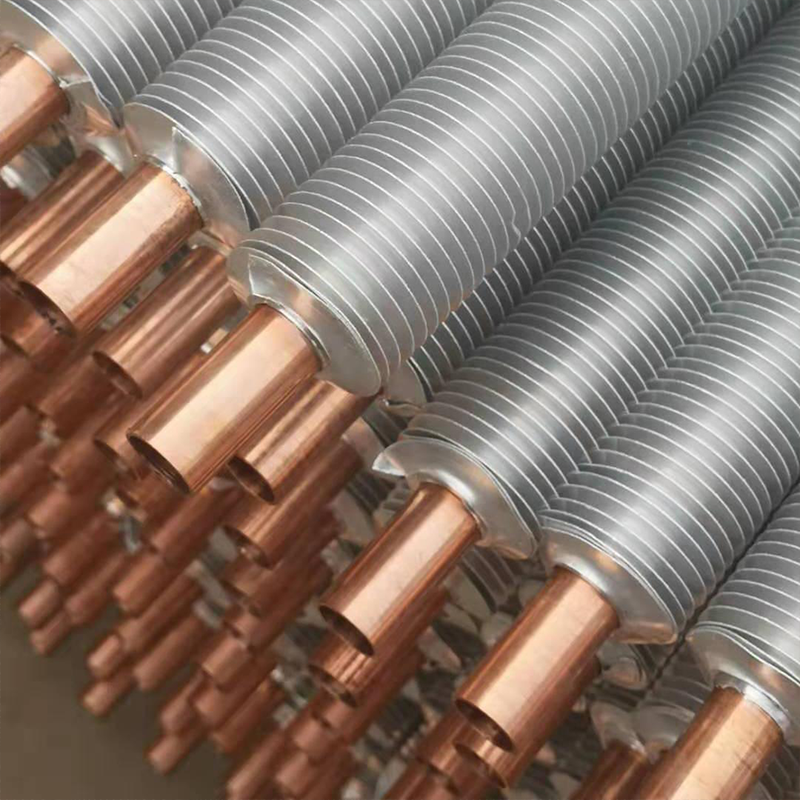
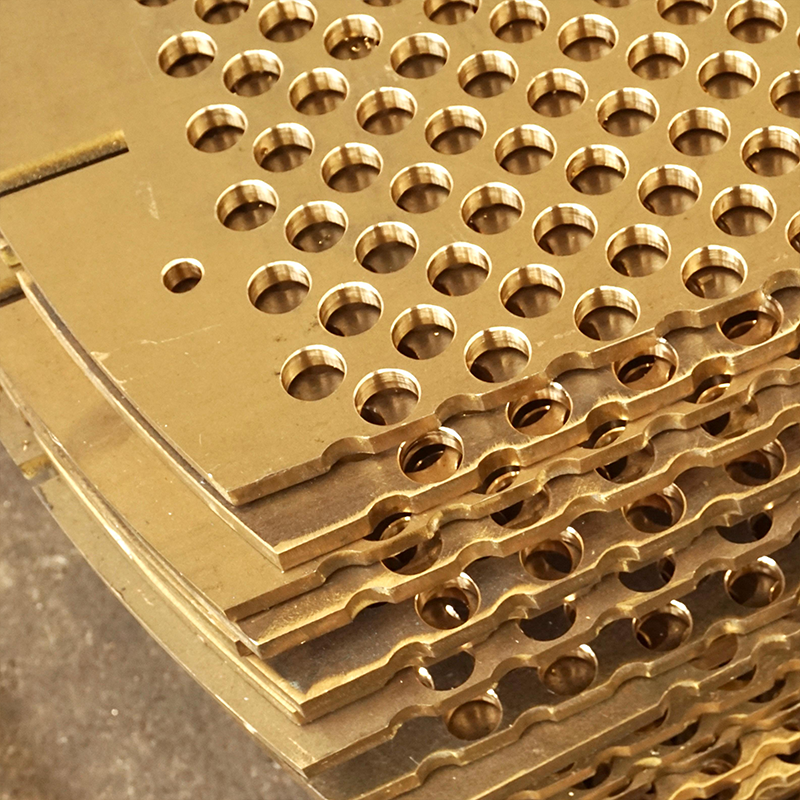
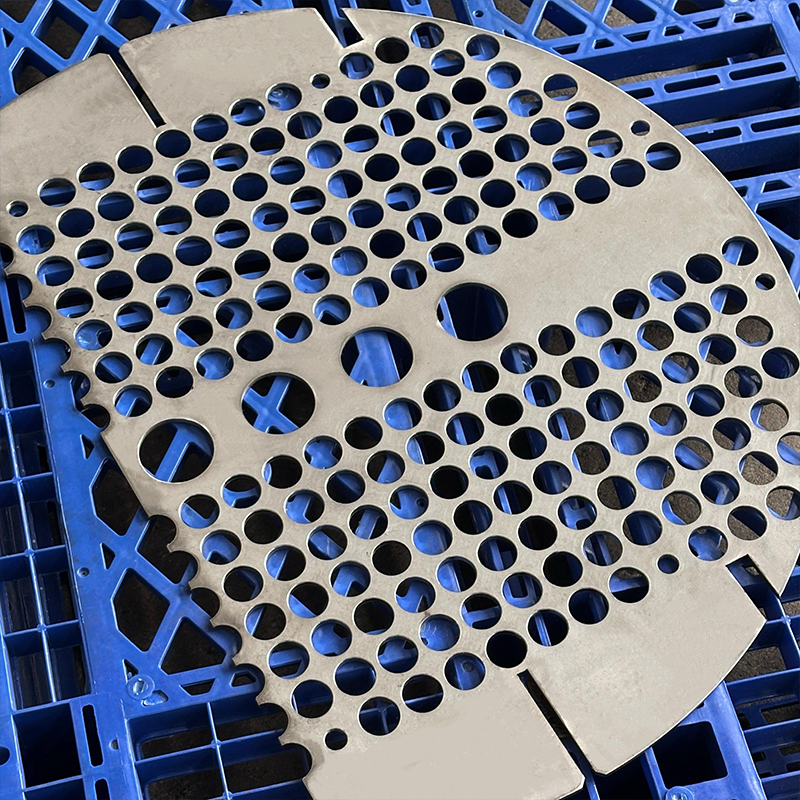
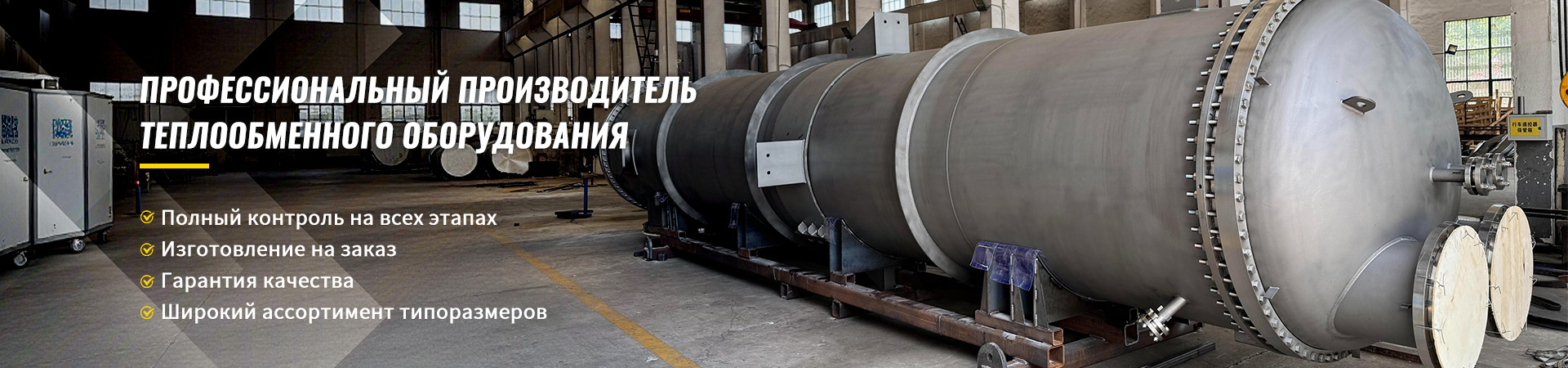
Wuxi Kaisheng's products, including titanium shell-and-tube heat exchangers, ASME high-pressure units, and specialty alloy corrugated tube bundles (316 stainless steel, C46400 marine brass, copper-nickel and N06625 nickel alloys), demonstrate the highest standards of corrosion resistance and resistance to high pressures and temperatures. These are the requirements that apply to modern polyethylene pipelines operating in aggressive environments or under significant pressure. Experience integrating carbon steel, stainless steel, titanium and copper components into complex industrial systems shows that attention to detail in material selection and quality control is the universal key to infrastructure longevity.
Wuxi Kaisheng's product certification to international PED and ASME standards echoes our discussions of GOST and ISO compliance for HDPE welding. Whether it’s a heat exchanger for an offshore platform or a polyethylene gas main, the principle remains the same: precision in manufacturing and strict adherence to technological maps prevent failures. Companies that implement a culture of quality at all stages - from the purchase of certified equipment to the training of welders - receive reliable assets that can last for decades without emergency stops.
Frequently Asked Questions
Is it possible to learn how to weld pipes only through webinars?
Webinars provide a powerful theoretical basis and visual understanding of processes, but they do not replace hands-on practice. Our goal is to develop the right thinking and knowledge of technology. After the webinar, the participant understandswhyyou need to do it this way and not otherwise. However, to obtain permission to work, practical training on simulators or real pipes under the guidance of a mentor is required. We recommend a combined format: online theory + offline practice. This is the most effective way to become a professional.
Are webinars suitable for beginners with no experience?
Yes, the program is adapted for different levels of training. For beginners, we introduce basic concepts: what polyethylene is, what types of welding there are, safety basics. Experienced professionals will find in-depth sections on new materials and standards. The structure of the material supply allows even those who see the welding machine to understand the essence for the first time. The main thing is the desire to learn and attentiveness.
How can I access recordings of past webinars?
All registered participants receive access to the archive of recordings in their personal account immediately after payment or registration (depending on the type of event). The recordings are stored in high quality and divided into thematic blocks. You can watch them at your own pace, pausing to take notes. Access is provided for a limited period (usually 30 days) to encourage timely learning.
Do you issue training documents?
Yes, upon completion of the course and successful completion of the final test, an electronic certificate is issued. It indicates the number of academic hours and the topic of the program. This document has legal force within the company and can serve as confirmation of advanced training during inspections. For corporate clients, we can prepare documents on the letterhead of the customer organization upon agreement.
Conclusion and next steps
Polyethylene welding technologies are developing rapidly, and staying abreast of changes is the task of every responsible specialist. Webinars on polyethylene welding technologies are your chance to gain up-to-date knowledge from practitioners, avoid costly mistakes and increase the status of your company in the market. We have seen many of the consequences of negligence and ignorance, and it is our mission to prevent them from happening again. Don't wait for an accident to start learning.
Join a community of professionals who value quality and safety, backed by global best practices and equipment like those built by industry leaders like Wuxi Kaisheng. Register for the next webinar right now to ensure a secure future for yourself and your facilities. Remember: a quality seam begins with quality knowledge.