
Video reviews of the production process of PP tanks”
2026-08-22
- Why video monitoring of polypropylene tank production has become an industry standard
- Critical production steps that should be covered in the video
- Technical parameters that determine the quality of the weld in the video
- Comparative Analysis: Manual Welding vs. Automated Lines
- Common errors identified when analyzing video recordings
- How to Use Video Reviews to Verify Certification and Compliance
- How-To: What to Ask Your Supplier Before Requesting a Video
- The future of digital monitoring in the plastic container industry
- Choosing a reliable partner: the experience of Wuxi Kaisheng LLC
- Frequently Asked Questions
Why video monitoring of polypropylene tank production has become an industry standard
Video reviews of the production process of PP tankstoday it is not just a marketing tool for attracting customers, but a critical element of technical quality verification. In our practice of working with the chemical and food industries, we are seeing a fundamental shift: customers no longer trust static photographs and glossy catalogs. The reason is simple - in the picture it is impossible to see the quality of the weld, the absence of internal stresses in the material, or the actual geometry of the container under load. When you watch a video of a real production run, you see how the extruder melts the pellets at a precisely defined temperature, how the robotic arm lays down the layers without gaps, and how the final pressure test is carried out.
We encountered a situation where one of the large customers from the oil and gas sector refused a batch of tanks only because the supplier did not provide video recording of the extrusion welding stage of the side walls. Later, an independent examination confirmed our fears: the material contained microvoids, which would lead to the destruction of the tank after 18 months of operation. This incident cost the manufacturer its reputation and millions of rubles in losses. This is why process transparency has become the currency of trust. If a plant hides the filming process, it means it has something to hide from a technical audit.
Modernvideo reviews of the production process of PP tanksallow a process engineer located thousands of kilometers away to assess compliance with GOST or ISO regulations without visiting the site. You see parameters for extruder temperature (usually 240-260°C for polypropylene), rod feed speed and nozzle angle. These details determine the durability of the product more than the wall thickness. In this article, we will look at what steps you need to pay attention to when viewing such materials, what technical nuances reveal handicraft production, and how to use video content to reduce risks when purchasing industrial equipment.
Critical production steps that should be covered in the video
Any professional video about the production of polypropylene containers should consistently reveal the value chain. Skipping even one key step renders the review useless for engineering decision making. We analyzed dozens of production cycles and identified four stages, the absence of which in the report is a “red flag”.
Preparation of raw materials and quality control of granules
It all starts not with the machine, but with the loading hopper. A high-quality video necessarily shows the process of preparing raw materials. Polypropylene (PP-H, PP-B or PP-R) is sensitive to humidity and the presence of recycled materials. On the screen you should see how the operator checks the batch certificate or how the automatic system doses additives (UV stabilizers, fire retardants). If dark powder or heterogeneous granules flash in the frame, this is a sign of using a low-grade recyclate. Such material will shrink up to 3-4% after cooling, which will lead to deformation of the bottom of the tank. We have seen cases where the use of cheap recycled materials led to cracking of the corners of the container even when it was first filled with an aggressive medium. Request footage that clearly shows the markings of bags of raw materials and the conditions for their storage in a dry room.
Extrusion welding process and sheet forming
This is the heart of production. The video should show the operation of the extruder in detail. Pay attention to the melt temperature: for homopolypropylene it should be stable in the range of 250±5°C. Deviation leads either to under-melting (weak weld) or to thermal degradation of the polymer (loss of chemical resistance). The camera should record the process of applying a bead of molten material to the joint of the sheets. The speed of movement of the extruder head is critical: too fast - the seam will not warm up, too slow - the material will overheat and leak. In our projects, we require a video to show the operator controlling the pressure of the pinch roller. The absence of this control guarantees the appearance of pores in the body of the seam. It is also important to see the cooling of the seam: it should be natural or forced air, but in no case with water, since a sharp temperature difference creates internal stresses.
Machining and assembly of the housing
After forming the blanks, the cutting and assembly stage follows. Here the video review should demonstrate the accuracy of the equipment. Laser cutting or CNC milling provides tolerances within ±1 mm. If you see manual marking with a marker and cutting with a grinder, run away from such a supplier. The inaccurate geometry of the sheets leads to the fact that when assembling a huge container (for example, with a volume of 50 m³), the corners do not meet, and welders have to “pull” the material, creating critical stress zones. The video should show fixing the sheets in the jig before welding. We often encounter a problem where, due to the lack of rigid equipment, the vertical walls of the tank are tilted (“screw effect”), which makes it impossible to install a lid and stirrers in the future.
Final control and hydrotesting
The final stage that separates the defect from the finished product. The video should show the tank filled with water to the design level. It is important to see not just the fact of the presence of water, but the process of inspection of seams. The operator should walk along each welded connection to the canopy or mirror, checking for leaks. For large containers, the air pressure test method using a soap solution is often used. In a high-quality video, you will see how the pressure gauge maintains pressure for a set time (usually 24 hours for large objects) without the needle dropping. If this stage is removed quickly or skipped, the risk of getting a leaky container increases many times over. One of our clients lost a shipment of reagents worth $40,000 precisely because of a microcrack in the bottom, which was not detected during a visual inspection without a hydrotest.
Technical parameters that determine the quality of the weld in the video
For a purchasing engineer, viewing video materials is an opportunity to conduct a remote audit of welding technology. Polypropylene is joined by diffusion welding, and the quality of this joint directly affects the chemical resistance and mechanical strength of the tank. Let's look at specific visual markers to look for in the frame.
Width and shape of the roller.During extrusion welding, a characteristic bead (fillet) is formed on both sides of the joint. In the video it should look symmetrical and smooth. The roller width is usually 10–15 mm for sheets 10–20 mm thick. If the roller is too narrow or has ragged edges, this indicates an incorrect nozzle setting or insufficient heating. A bead that is too wide indicates overheating and spreading of the material, which reduces the effective wall thickness in the joint area.
Seam color.This is one of the most reliable indicators. The color of the weld should perfectly match the color of the base sheet. If the seam is darker or lighter, it means the temperature has been violated. Darkening (yellowish or brown tint) indicates thermal decomposition of the polymer. Such a seam becomes brittle and loses its resistance to oxidation. In our laboratory, we tested samples with overheated seams: their impact strength dropped by 60% compared to the standard. This is easy to see in the video, especially on white or natural polypropylene.
No pores or inclusions.Close-up shots (macro photography) should show the monolithic structure of the seam. The presence of air bubbles, black spots (soot from overheating) or foreign inclusions is unacceptable. Pores become hotspots for stress corrosion. The aggressive environment penetrates into microvoids, causing delamination of the seam from the inside. We recommend requesting a zoom video of a section of the seam at least 30 cm long to assess the uniformity of the structure. Statistics show that 85% of emergency depressurization occurs precisely because of welding defects, visible to the naked eye upon careful examination.
Geometry of corner joints.The corners of the tank are the most loaded nodes. The video should show corner enhancement technology. The correct method involves the use of special corner profiles or double passage with an extruder to form a massive fillet. If you see that the corner is simply assembled end-to-end with minimal reinforcement, such a tank will not withstand prolonged liquid pressure. The stresses from the expansion of the walls are concentrated in the corners. We recorded cases when the corners diverged when filling the container with hot water (above 60°C), since the coefficient of linear expansion of the PP is significant, and the safety margin in the corner was insufficient.
Comparative Analysis: Manual Welding vs. Automated Lines
When choosing a supplier, a dilemma often arises: order a container made by hand by experienced welders, or trust a robotic line. Video materials help to understand the difference in approaches. Below is a detailed comparison of the two production methods, based on our experience with over 200 projects.
| Comparison criterion | Manual extrusion welding | Automated Line / Robotic Welding |
|---|---|---|
| Human factor | High risk. Quality depends on operator fatigue, qualifications and mood. On long seams (more than 5 meters), uneven heating is often observed. | Minimized. The robot performs movements with micron precision regardless of the time of day. Parameters (temperature, speed) are controlled electronically. |
| Productivity | Low. Manufacturing a large tank (50 m³) can take 3–4 weeks by a team of 3 people. | High. Automatic winding and welding of walls reduces production time by 2–3 times. Ideal for serial orders. |
| Design flexibility | Maximum. It is possible to manufacture a container of any complex shape, with internal partitions, and custom-sized hatches directly on site. | Limited. Robots are effective on standard cylindrical or rectangular containers. Complex nodes still require manual modification. |
| Seam quality (uniformity) | Variable. Local overheating or underheating is possible. Careful post-control of every centimeter is required. | Stable. The seam structure is identical along its entire length. The probability of hidden defects tends to zero with proper configuration. |
| Cost for the customer | Higher for larger batches due to labor intensity. Competitive for single, unique projects. | Lower for volumes of 5 pieces or more due to scalability. The high capital costs of the plant pay off in the price of the product. |
Based on this analysis, we make the following recommendation: if you need a standard vertical tank with a volume of up to 100 m³ for storing water or neutral solutions, choose a manufacturer with an automated line. Video reviews of such factories will show you the sterile cleanliness of the workshop and the rhythmic operation of the machines. If the task is to manufacture a complex bathtub of a galvanic line with many holes, pipes and partitions, or a tank of a non-standard shape for installation in an existing building, look for a team with a strong school of manual welding. In this case, the video should focus on the skill of specific performers and their instrument.
Common errors identified when analyzing video recordings
Reviewing the manufacturing process often reveals problems that are not visible in the finished product before use. We have compiled a list of typical violations that can be seen in the video and explained what consequences they lead to.
Ignore preheating.Some unscrupulous manufacturers begin to apply the filler rod immediately, without heating the edges of the main sheet with hot air. In the video it looks like the extruder moves quickly without a pause at the beginning of the seam. The result is a lack of adhesion between the base material and the seam. Under load, such a seam simply peels off, like a sticker. This is a gross violation of technology, which is unacceptable under any circumstances.
Incorrect rod insertion angle.The filler material should be fed at an angle of approximately 45–60 degrees to the plane of the weld. If the video shows that the rod is inserted perpendicularly or laid flat, the connection will be defective. Air will remain trapped inside the seam, creating channels for chemicals to penetrate. We opened such seams and found cavities occupying up to 30% of the joint volume.
Lack of surface cleaning.Before welding, the polypropylene surface must be degreased and cleaned of oxide film (if the sheet has been stored for a long time). In a high-quality video, you will see how the operator wipes the joint with alcohol or a special solvent before starting work. Skipping this step leads to the fact that welding occurs not with the polymer itself, but with a layer of dirt or grease on it. The strength of such a connection is negligible.
Violation of the temperature regime in cold weather.If filming is carried out in an unheated workshop in winter, and the air temperature is below +10°C, the polypropylene cools down too quickly. In the video you can see that the seam becomes dull and whitish immediately after passing through the extruder. This is a sign of crystallization under stress. Such tanks are prone to brittle fracture when subjected to shock or vibration. Manufacturers are required to use heat guns or screens to slow cooling in such conditions.
How to Use Video Reviews to Verify Certification and Compliance
The presence of an ISO 9001 certificate or CU TR (EAC) declaration of conformity on paper does not always guarantee the quality of a particular product. The video acts as proof of compliance with the stated procedures. For example, the standard requires maintaining welding logs with recording parameters for each critical weld. In modern manufacturing, this process is often digitalized. Ask to show on video how data from the welding machine is transferred to the accounting system or how each seam is marked with a permanent marker indicating the date and name of the welder.
The video also helps to check the compliance of the material with the declared type. Homopolypropylene (PP-H) and copolymer (PP-B) are visually similar, but have different properties. PP-H is more rigid and chemically resistant, but is susceptible to shock at low temperatures. PP-B is more elastic. In the description of the video, the manufacturer must indicate the brand of raw materials. You can request additional burn or bend test videos if in doubt. Although this is rare for large factories, there are cases of replacing expensive imported granulate with a cheap analogue. The transparency of video production makes such a fraudulent scheme more difficult.
Pay attention to personal protective equipment (PPE) for workers. This is an indirect but important indicator of production culture. If welders work without respirators (polymer microparticles are released during welding) or without safety glasses, this signals a disregard for labor safety standards. A plant that saves on the safety of its employees is highly likely to save on quality control of your products. In our practice, we gave priority to those suppliers whose videos demonstrated strict compliance with safety regulations.
How-To: What to Ask Your Supplier Before Requesting a Video
To get the most useful material, and not a commercial with music and quick editing, formulate your request correctly. Don’t just write “send a production video.” Use the following requirement checklist:
- Request raw fragments.Say: “We need raw files of the welding process of a specific assembly, without superimposed music and titles.” Editing often hides defects by changing angles at inopportune moments.
- Specify a specific object.“Show us the process of making a 20 m³ tank for sulfuric acid, similar to our order.” General videos from the finished goods warehouse are not very informative.
- Request a demonstration of hardware settings.“Fix on the camera the screen of the extruder control panel with the current temperature and speed values at the moment the welding begins.”
- Ask to see testing.“Include in your review a full cycle of hydrotests with fixation of the pressure gauge in dynamics.”
- Specify the shooting date.A video from five years ago may not reflect the current state of equipment and personnel. Content relevance is important.
Following these points will allow you to weed out intermediaries and reach real manufacturers who are confident in their technological process. We use this approach when auditing all new partners and have saved our clients millions by preventing the purchase of substandard equipment.
The future of digital monitoring in the plastic container industry
The industry is moving towards full transparency. Already, leading factories are implementing online broadcast systems for key customers. You will be able to watch your tank welding in real time through a secure portal. This eliminates any manipulation of records. In addition, computer vision technology is being developed, which automatically analyzes the video stream from welding heads and signals deviations in weld parameters in real time. Such systems generate a digital product passport, where every centimeter of a seam is tied to specific welding parameters.
For the buyer, this means reducing risks to a minimum. You no longer need to take my word for it. The data speaks for itself. However, until these technologies become ubiquitous, classicalvideo reviews of the production process of PP tanksremain the main tool for remote assessment. The ability to correctly “read” such videos distinguishes a professional buyer from an amateur.
Investments in quality polypropylene equipment pay off in years of trouble-free operation. But only on condition that the production technology is followed to the smallest detail. Don’t be lazy to request and carefully study video materials. This is your insurance against accidents, downtime and environmental fines. If the supplier refuses to provide detailed video recording, this is a sufficient reason to reconsider the contract.
Choosing a reliable partner: the experience of Wuxi Kaisheng LLC
The principle of technological transparency and strict quality control described in this article is the foundation of the work of the world's leading manufacturers of complex industrial equipment. A striking example of this approach is the companyWuxi Kaisheng Electric Power and Petrochemical Equipment Co.,Ltd" Specializing in the development and production of high-tech solutions for the oil, gas and chemical industries, the company successfully applies the same verification standards as when creating polypropylene tanks.
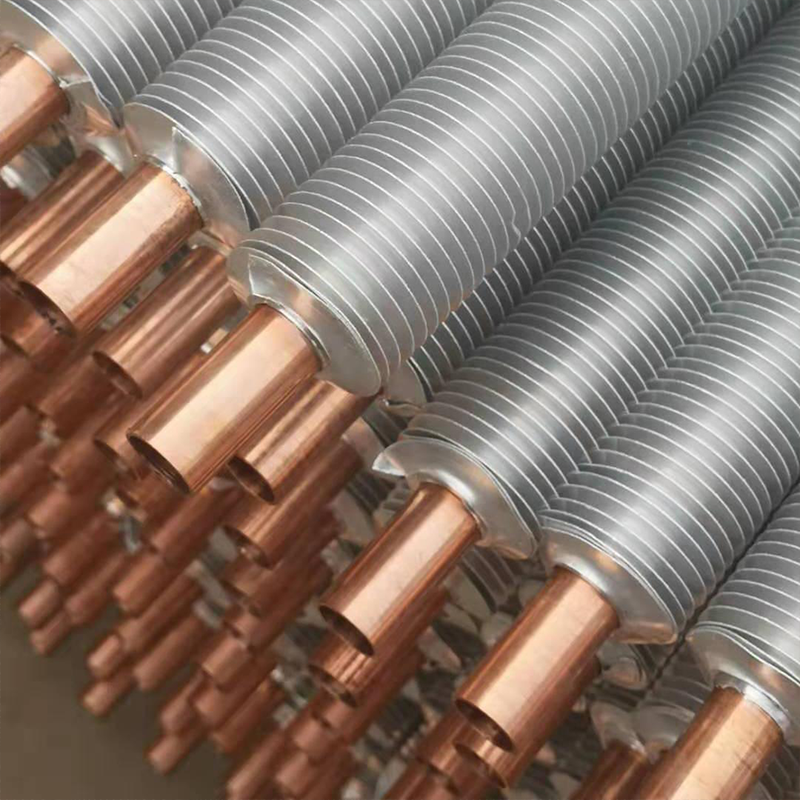
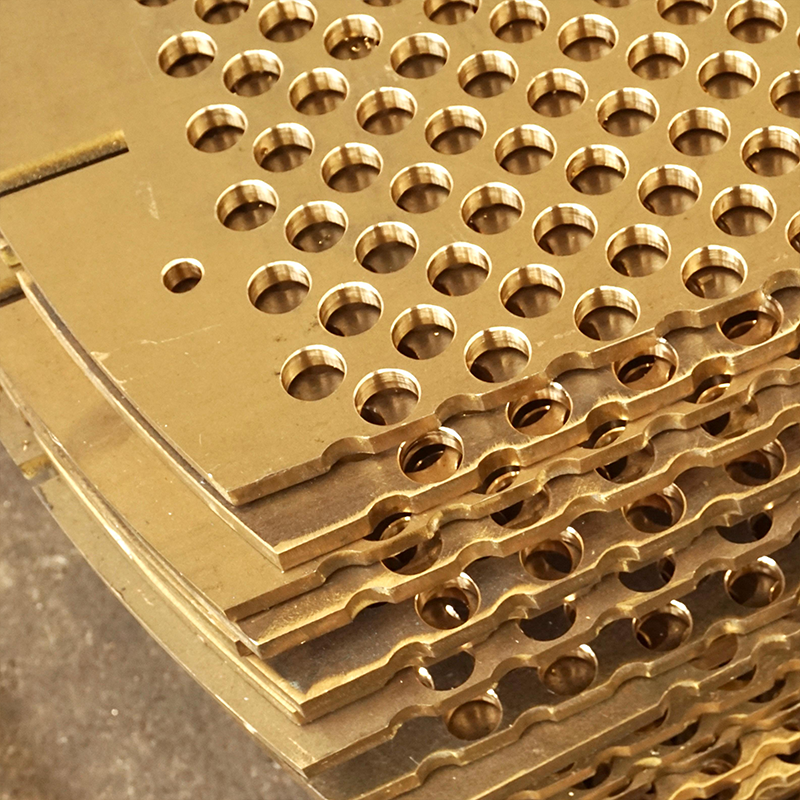
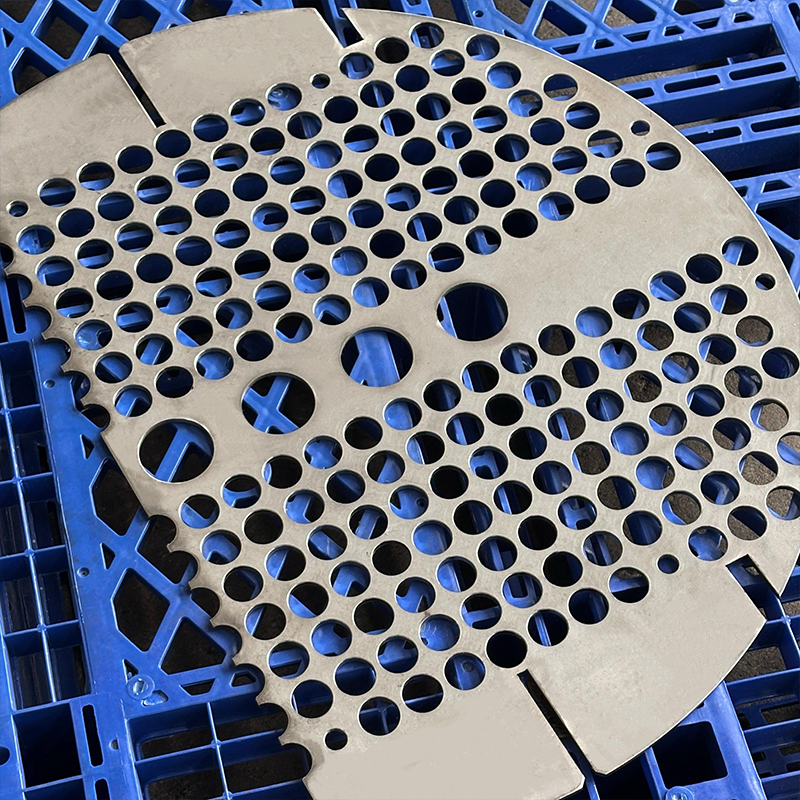
Wuxi Kaisheng's portfolio includes titanium shell-and-tube heat exchangers, ASME high-pressure units, corrugated tube bundles made of 316 stainless steel, C46400 marine brass, copper-nickel alloys and N06625 nickel alloys. As with PP containers, the quality of these products depends on adherence to the strictest welding and material processing parameters. The company's products, which also include air coolers, waste heat boilers and tube sheets made of various alloys, are certified to international PED and ASME standards. This confirms that a production culture where every stage - from the selection of raw materials to the final tests - is open to audit, allows us to create equipment with exceptional corrosion resistance and resistance to extreme pressures and temperatures. Wuxi Kaisheng's experience proves that whether it is a complex titanium heat exchanger or a polypropylene tank, customer trust is built on the manufacturer's ability to demonstrate the integrity of its process.
Frequently Asked Questions
Is it possible to determine the brand of polypropylene (PP-H or PP-B) from the video?
It is difficult to visually distinguish a homopolymer from a copolymer in a video with 100% accuracy, since they may look identical. However, indirect signs exist. PP-H is generally stiffer and has a slightly higher melting point. If the video shows that welding is carried out at temperatures above 270°C, most likely it is PP-H. But the only reliable way is to request from the manufacturer a quality certificate for a batch of raw materials (technical specification), which indicates the brand of granules (for example, Moplen or Borpure), and compare it with a video report on the acceptance of raw materials.
What frame rate is needed for good welding analysis?
To analyze the extrusion welding process, a standard 25–30 frames per second (fps) is sufficient. The main requirement is high resolution (minimum 1080p) in order to see the texture of the seam and the absence of pores. High filming speed (slow motion) is only useful for studying the dynamics of material spreading, but for a general quality audit it is redundant. Image stability and good illumination of the working area are more important than the technical delights of the camera.
Should the manufacturer provide a video of each seam?
Providing video of every millimeter of seam for large tanks is technically complex and generates terabytes of data. Usually, selective control is practiced: video of key stages (beginning, middle, end of long seams), all corner joints and welding points of pipes. However, if we are talking about critically important facilities (storage of toxic substances), the contract can stipulate a requirement for continuous video recording of all critical seams with data archiving. This increases the cost of work, but provides the maximum guarantee.
What to do if the video shows defects, but the manager claims that this is “acceptable”?
Refer to standards. For example, according to DIN 1980 or the internal regulations of most factories, pores, cracks and lack of fusion are unacceptable. If the manager says that “a slight yellowing of the seam is normal,” ask for a written opinion from the technologist explaining why this will not affect the chemical resistance. In 99% of cases, this is an attempt to sell a marriage. It is better to insist on reworking the unit under camera control than to accept a defective product. Remember: polypropylene does not forgive mistakes in welding.
Choosing a reliable partner for tank production is a strategic decision. Usagevideo reviews of the production process of PP tanksallows you to look “under the hood” of the technology and verify the competence of the performer. We are ready to provide full access to the archives of our production processes and organize an online broadcast of the production of your container. Transparency is the basis of our long-term cooperation.
Go to the catalog of polypropylene tanksto view technical specifications orcontact us todayto discuss the details of your project and organize a video conference with the chief technologist of the plant.