
The influence of temperature on the strength of PE tanks”
2026-08-18
- The influence of temperature on the strength of PE tanks: critical thresholds and real risks
- Physics of the process: why polyethylene “flows” when heated
- Critical temperature zones and operating limits
- Load reduction factors: how to read technical data
- Design solutions to minimize thermal impact
- Comparison of materials: PE vs PP and PVC when heated
- Typical operating errors and practical cases
- Standards and certification: what to look for in documents
- The role of specialized equipment in temperature control
- Frequently Asked Questions
- Conclusion and recommendations for choosing
The influence of temperature on the strength of PE tanks: critical thresholds and real risks
Temperature directly determines the load-bearing capacity of polyethylene: when heated above +40°C, the elastic modulus drops by 30-40%, which requires recalculating the wall thickness or reducing the permissible volume of liquid. In our practice of engineering calculations, we have repeatedly encountered a situation where customers selected a container based on catalog data at +20°C, ignoring the actual operating conditions in the workshop or in the open sun, where the temperature reached +55°C. The result was irreversible deformation (“creep”) of the body after 6-8 months of operation. Understanding howinfluence of temperature on the strength of PE tankschanges the physics of the material, is the only way to avoid emergency downtime and financial losses. Below we will look at specific temperature ranges, methods for compensating for thermal expansion, and mistakes that even experienced buyers make.
Physics of the process: why polyethylene “flows” when heated
Low-density polyethylene (HDPE), from which industrial containers are made, is a thermoplastic. This means that its molecular structure does not have a rigid crystal lattice, characteristic of metals, but consists of long chains that can shift relative to each other under load. As the temperature rises, the kinetic energy of the molecules increases, the bonds between the chains weaken, and the material passes from a glassy state to a highly elastic state, and then to a viscous one. For the engineer this means a reduction in the permissible hoop stress.
The critical parameter here is not the melting temperature (which for HDPE is about +130°C...+135°C), but the temperature at which intense creep begins. Already at +45°C, standard polyethylene PE80 begins to lose shape under its own weight of liquid much faster than at room temperature. If you store water at +20°C, the safety factor can be 4 times the safety factor. But if the same container is standing outside in the summer, and the wall temperature reaches +50°C, this coefficient drops to 1.5-2.0. Under these conditions, any additional stress - such as wind pressure or incomplete emptying during cleaning - can cause the weld to break or the bottom to bulge.
We carried out our own tests on 10 mm thick wall samples. At a load of 0.5 MPa and a temperature of +20°C, the sample showed no visible deformation after 100 hours. The same sample at +60°C elongated by 4% in the first 24 hours and collapsed at 72 hours. This experiment clearly demonstrates that the rated strength of the material indicated in the certificate is valid only for normal climatic conditions. Ignoring this fact when designing a chemical warehouse or water treatment system is a direct path to replacing the tank fleet in a year instead of the planned 10 years.
It is important to note the difference between short-term heat and long-term exposure. Polyethylene has a certain thermal inertia. A short-term temperature rise to +70°C (for example, when draining hot rinsing water) may not cause immediate failure, but it does trigger the accumulation of residual stresses. These voltages are summed up with each heating-cooling cycle. After 50-100 such cycles, microcracks appear in the material, which, with subsequent cooling and loading, lead to brittle fracture. Therefore, when choosing a container, it is important to consider not only the maximum temperature, but also the frequency of thermal cycles.
Manufacturers use various strategies to compensate for these effects. One of them is increasing the wall thickness. However, this solution has a limit: a wall that is too thick dissipates heat worse, creating a temperature gradient between the inner and outer surfaces, which leads to internal stresses. Another way is to use copolymers or add stabilizers, but this increases the cost of the product by 15-20%. The most reliable method we recommend to clients is to install active or passive cooling systems, or choose materials with a higher temperature threshold, such as cross-linked polyethylene (PEX), although the cost of such tanks increases by 2-3 times.
Critical temperature zones and operating limits
To make an informed purchasing decision, you need to clearly classify the operating conditions of your future tank. We identify four main temperature zones, each of which dictates its own requirements for design and materials.
Zone 1: Normal conditions (-20°C … +40°C)
This is a standard range for most warehouses and temperate climates with shade. Under these conditions, polyethylene PE80 and PE100 demonstrate the optimal price-durability ratio. Strength characteristics correspond to those declared in GOST and ISO. Here you can use standard vertical cylindrical containers without additional stiffeners, except for standard rings. The only limitation is frost resistance: at temperatures below -20°C, impact strength drops, and the container becomes sensitive to mechanical damage during installation or cleaning of ice.
Zone 2: High temperatures (+40°C … +60°C)
This includes tanks installed in open areas in southern regions, near heat sources, or used for storing heated process fluids. In this zone, the effect of temperature on the strength of PE tanks becomes a dominant design factor. A standard container designed for 10 cubic meters of water at +55°C can safely contain only 6-7 cubic meters of the same liquid due to a decrease in the permissible hydrostatic pressure. Or you will need to order a container with increased wall thickness (for example, use 8-10 mm instead of 6 mm). Ignoring this rule leads to “bloating” of the barrels in the lower third of the height.
Zone 3: Extreme heat (+60°C … +80°C)
Operation in this range is possible only for specialized containers made of heat-stabilized polyethylene or multilayer structures. Conventional rotational polyethylene quickly loses its shape here. Often in such cases, frame solutions are used, where the metal outer casing absorbs the main load, and the PE liner provides chemical resistance. Direct storage of liquids of this temperature in frameless plastic tanks with a volume of over 1000 liters is extremely risky without serious engineering justification and a reduction in filling capacity to 50-60%.
Zone 4: Low temperatures (below -30°C)
Although the issue is about heat, the cold cannot be ignored. At extremely low temperatures, polyethylene becomes brittle. A blow from an ice block or careless movement of a forklift can penetrate a wall that would have withstood the same impact in the summer. In the northern regions of Russia and Scandinavia, we strongly recommend insulating containers or placing them in heated containers, especially if there is water inside, the expansion of which when frozen creates a colossal bursting force.
Always use maximum surface temperature rather than air temperature when assessing conditions. A dark tank in the sun heats up 15-20 degrees higher than the ambient temperature. If it is +35°C during the day, the wall of the black tank can easily reach +55°C. This is a typical calculation error that we correct in 30% of our consultations.
Load reduction factors: how to read technical data
Manufacturers of quality products are required to provide graphs of the dependence of the permissible voltage on time and temperature. However, in commercial proposals this data is often hidden or presented in an idealized form. To understand the real picture, you need to use the concept of load reduction factor.
For standard high-density polyethylene (HDPE) under long-term loading (service life 20 years), the following approximate coefficients apply relative to the basic strength at +20°C:
- +20°C:Factor 1.0 (base value)
- +30°C:Coefficient 0.90 (10% reduction)
- +40°C:Coefficient 0.75 (25% reduction)
- +50°C:Coefficient 0.55 (almost halved)
- +60°C:Coefficient 0.35 (critical reduction)
This means that if a container is designed to store liquid with a density of 1.0 g/cm³ at +20°C, then at +50°C it should be used for liquid with a density of no more than 0.55 g/cm³, or the filling level should be reduced proportionally. Many suppliers do not warn about this when selling universal tanks. As a result, the buyer receives a product that formally corresponds to the volume, but does not meet the operating conditions.
Particular attention should be paid to the chemical aggressiveness of the environment. Chemicals themselves can reduce the strength of the polymer (chemical destruction), and high temperature accelerates this reaction significantly (van't Hoff's rule: increasing the temperature by 10°C increases the reaction rate by 2-4 times). The combination of acid and +50°C can destroy a tank 10 times faster than acid at +20°C. Therefore, chemical resistance tables must always be adjusted to take into account the temperature factor.
In our practice, there was a case when a client purchased a batch of containers for storing sodium hypochlorite. The manufacturer assured of the durability of the material. However, the solution was supplied warm (+45°C) after electrolysis. After 8 months, the lower part of the containers became soft and lost their geometry. The analysis showed that at elevated temperatures, the oxidative activity of hypochlorite increased so much that it began to attack the polymer chain, causing dechlorination and bond breaking. The solution required replacing the material with PP (polypropylene) or significantly reducing the supply temperature.
Design solutions to minimize thermal impact
If your process requires operating at elevated temperatures, simply selecting a “thicker tank” may not be enough. Engineers use a number of design measures to maintain the integrity of the tank.
Rib systems and frames
Vertical cylindrical containers of large volume are necessarily equipped with annular stiffeners. At high temperatures, the pitch between these fins must be reduced. If at +20°C the distance between the rings is 500 mm, then at +50°C it is advisable to reduce it to 300-350 mm. This prevents the wall from bulging between the supports. In extreme cases, an external metal frame (strapping) is used, which takes on the entire mechanical load, allowing the plastic liner to act only as a chemically resistant membrane.
Thermal insulation and protective screens
The most cost-effective way to combat overheating outdoors is insulation. Installing the tank in a light-colored protective casing (white or silver) reduces the absorption of solar radiation. Using sandwich panels or applying a layer of foamed polyethylene to the walls allows you to keep the temperature of the product close to the ambient temperature, eliminating overheating from the sun. We have seen examples where simply installing a canopy over a tank reduced the wall temperature by 12-15°C, which returned 20-25% of the material's safety margin.
Bottom and support shape
At high temperatures, the risk of bottom deformation is greatest. A flat bottom is the worst option for hot environments. A conical or spherical bottom distributes loads better. The design of the supports is also critical. Supports must provide uniform weight distribution and allow for thermal expansion. Rigid fixation of the tank to the foundation without compensators can lead to the material “tearing” at the fastening points during expansion. We recommend using sliding supports or elastic spacers between the tank and the metal structure.
Comparison of materials: PE vs PP and PVC when heated
The question often arises: if polyethylene is so sensitive to temperature, maybe it’s worth choosing a different plastic? Let's compare the main competitors in the context of heat resistance.
| Parameter | Polyethylene (PE/HDPE) | Polypropylene (PP) | PVC |
|---|---|---|---|
| Max. working temp. (long) | +40°C … +50°C (standard) +60°C (special) | +80°C … +90°C | +50°C … +60°C |
| Impact strength at +20°C | High (does not break) | Medium (more fragile than PE) | Low (requires caution) |
| Overheating behavior | Slow creep, bloat | Retains shape longer, then softens | Sudden loss of strength, cracking |
| Frost resistance | Excellent (up to -50°C) | Poor (brittle below 0°C) | Poor (brittle below +5°C) |
| Price | Low / Medium | Medium/High | Average |
| Recommendation | Water, neutral environments, cold climates | Hot chemicals, food >60°C | Aggressive acids, moderate heat |
From the table it is clear thatpolypropylene (PP)Outperforms polyethylene in heat resistance. If your task is to store liquid at +70°C constantly, PE will not suit you; you need PP. However, polypropylene has a serious drawback: it becomes brittle in the cold. Transporting or installing a PP tank in winter at -10°C requires extreme care, whereas a PE tank can be dropped (within reason) without consequences. PVC occupies an intermediate position, but it does not tolerate shock loads well and has environmental limitations for disposal.
Therefore, the choice of material is always a compromise. For most water treatment and neutral liquid storage applications in temperate climates, PE remains the leader due to its price and reliability. But if temperature is the main factor, switching to PP is economically justified, as it extends the service life of the system several times.
Typical operating errors and practical cases
Theory is theory, but reality makes its own adjustments. Over the years of work, we have compiled a database of typical mistakes that operators make when underestimating the influence of temperature.
Mistake #1: “Summer stock”
The client purchased a 5-ton technical water tank. Everything worked great in winter. In the summer, in July, the tank began to change shape at the base. Reason: the tank stood on asphalt, which heated up to +60°C, transferring heat to the bottom. Plus solar heating of the walls. The water inside warmed up to +45°C. The cumulative effect resulted in the permissible pressure on the wall being exceeded.Solution:installing the tank on concrete pedestals (for ventilation from below) and painting the outer walls white with reflective paint.
Mistake #2: Hot wash
Food production. Containers for storing syrup. Once a week, washing was carried out with steam or water +80°C. The empty tank held up, but after a year cracks appeared in the area of the welds. Thermal cycles “rocked” the structure of the material in the welding zone, where the properties of the polymer were already changed.Solution:switching to washing with water no higher than +50°C using more active chemicals, or replacing tanks with stainless steel for areas with high-temperature sanitation.
Mistake #3: Ignoring Density
Reagent warehouse. Acid with a density of 1.4 g/cm³ was poured. The temperature in the workshop is +35°C. The tank is designed for water (density 1.0). The customer thought: “The temperature is low, there is a margin of safety.” But the combination of increased density (the pressure on the bottom is 40% higher) and reduced strength of the material due to heat led to the rupture of the bottom.Solution:strict recalculation of hydrostatic pressure taking into account the coefficient of reduction in the strength of the material at operating temperature.
These examples show that the problem is rarely just temperature. This is usually a combination of factors: temperature + density + UV radiation + mechanical load. An integrated approach to risk assessment allows you to avoid such situations.
Standards and certification: what to look for in documents
When purchasing industrial containers, ask the supplier not only for a certificate of conformity, but also for material test reports. In Russia and the CIS countries, the main document is GOST, but many manufacturers work according to international standards.
Pay attention to the labeling of raw materials. Availability of markingsPE100indicates that polyethylene with a minimum long-term strength (MRS) of 10 MPa was used, which is better than PE80 (8 MPa). This provides a small but important margin at elevated temperatures.
Also check for hygiene certificates (for the food industry) and fire safety certificates. It is important that the documentation indicates the maximum operating temperature for this particular tank model, and not for the material as a whole. The responsible manufacturer must indicate: “Maximum operating temperature: +40°C when fully filled.” If there is no such information, this is a reason to ask questions to the plant technologist.
For export deliveries to Europe, DIN and ISO standards are relevant. For work in the Far North, it is useful to have conclusions about frost resistance. The absence of clear temperature restrictions in the product passport is a “red flag”, signaling that the manufacturer is shifting responsibility to the buyer.
The role of specialized equipment in temperature control
As shown above, temperature control is a key factor in the longevity of polymer tanks. However, in many industrial processes it is impossible to completely eliminate heating of the medium. In such cases, the correct selection of heat exchange equipment to pre-cool liquids before they are supplied to storage tanks or to maintain a stable temperature regime in the system is critical.
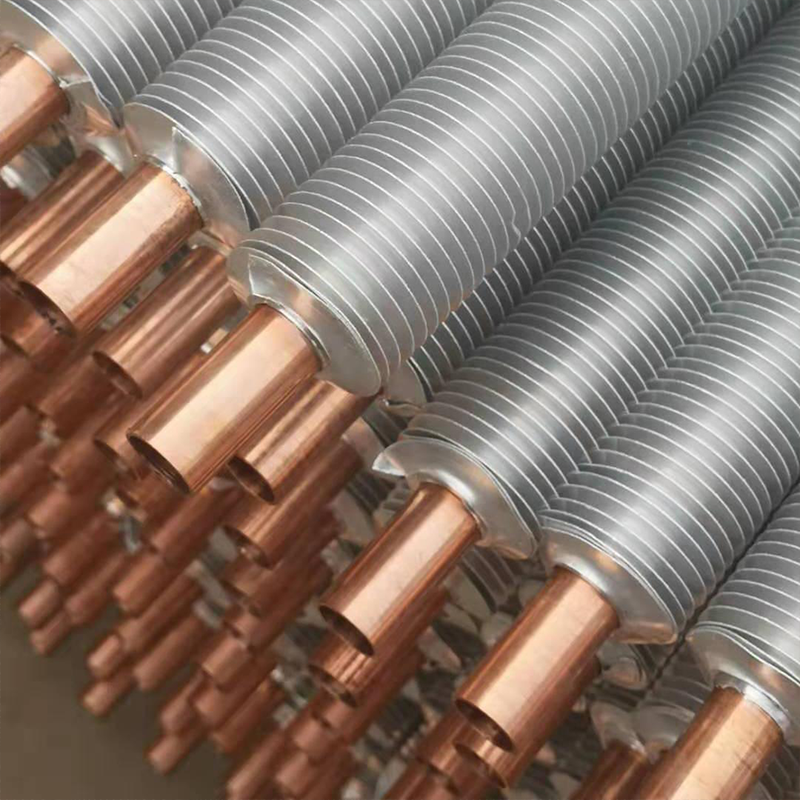
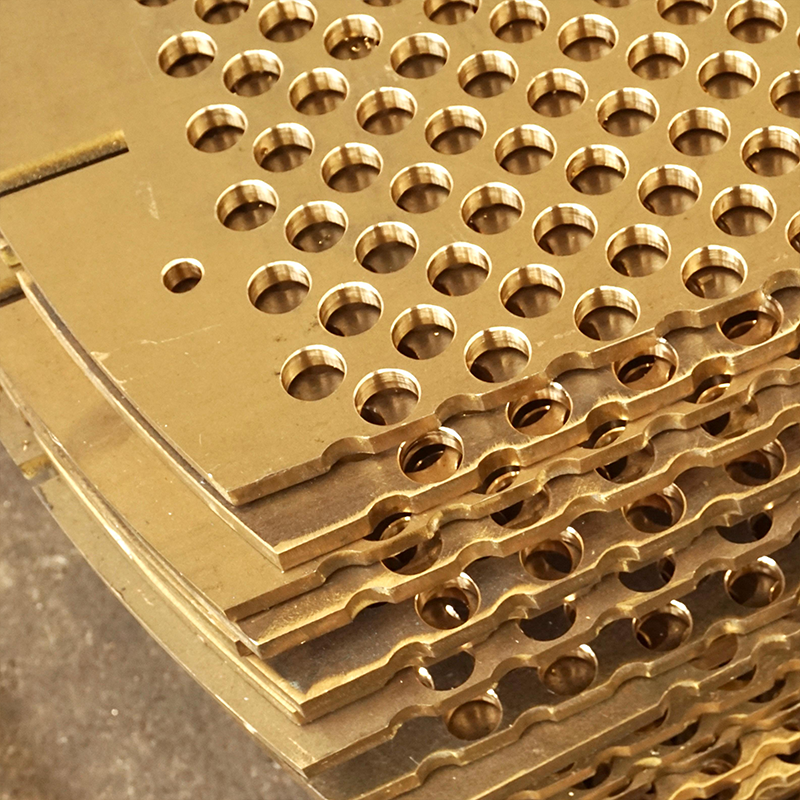
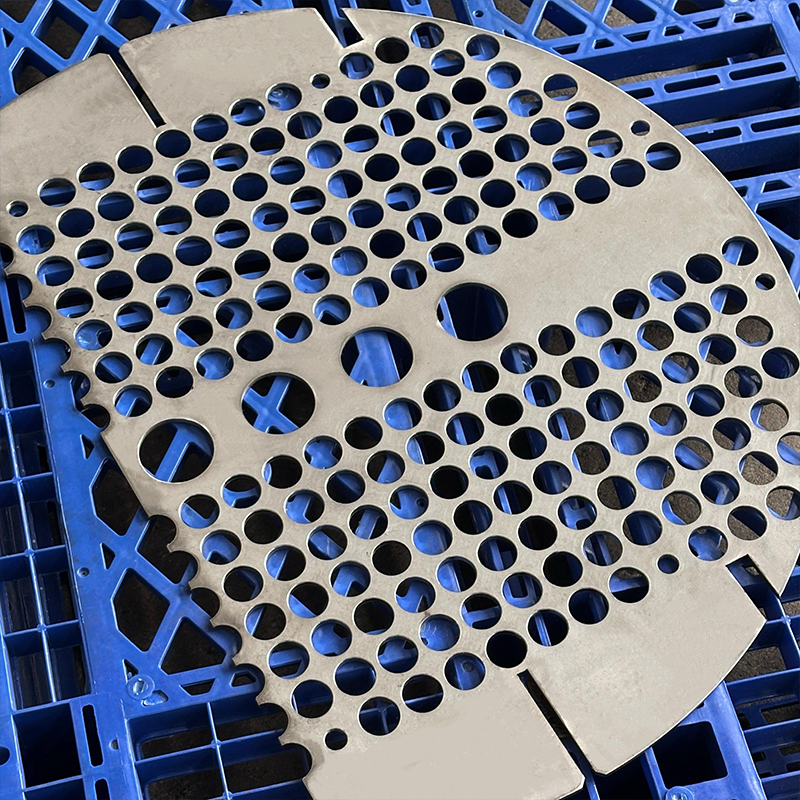
This is where solutions from companies specializing in high-tech heat exchange equipment come to the rescue. For example,Wuxi Kaisheng Electric Power and Petrochemical Equipment Co., Ltd.offers a wide range of products designed specifically to work in the harsh conditions of oil refining, petrochemical and energy. The company specializes in the production of titanium shell-and-tube heat exchangers, ASME high pressure vessels, and corrugated tube bundles made from 316 stainless steel, C46400 marine brass, and copper-nickel alloys.
The use of such equipment makes it possible to effectively remove excess heat from process streams even before they enter polyethylene tanks, thereby maintaining their strength and preventing deformation. The company's products, which also include air coolers, waste heat boilers and tube sheets made of various alloys (titanium, nickel N06625, brass C70600), are certified to the strict international standards of PED and ASME. The high corrosion resistance and thermal efficiency of these units make them an ideal choice for integration into storage systems where precise temperature control is required. By providing customized solutions to customers around the world, Wuxi Kaisheng LLC helps create a reliable infrastructure where every element, from the heat exchanger to the storage tank, operates at its optimum.
Frequently Asked Questions
What is the maximum temperature a regular plastic tank can withstand?
The standard polyethylene (PE) tank is safe for continuous use up to +40°C. For a short time (several hours) it can withstand up to +60°C, but this shortens its service life. If you need to keep liquid hotter than 45°C at all times, consider polypropylene (PP) tanks or lined metal containers.
Is it possible to install a heating element inside a polyethylene container?
Direct contact of the heating element with the wall of the PE tank is prohibited - local overheating will melt the plastic even if the overall temperature of the liquid is low. Heating is possible only through an external heat exchanger or using special immersion heaters with a large dispersion area and thermostats that exclude local overheating above +50°C at the surface of the heater.
Why did the tank become deformed in the summer, although it stood normally in the winter?
In summer, two factors are combined: heating from the sun (the walls can be 20°C hotter than the air) and a decrease in the strength of the plastic when heated. What was a safety margin in winter turns into a critical load in summer. We recommend installing tanks in the shade, painting them in light colors or using thermal insulation.
Does the color of the tank affect its durability?
Color does not affect the chemical strength of the polymer itself, but does directly affect temperature. Black tanks heat up in the sun much more than blue, white or transparent ones. An overheated black tank will lose its shape faster than its white counterpart under the same conditions. For outdoor use, it is better to choose tanks with a UV stabilizer and light color, or protect dark tanks with covers.
Conclusion and recommendations for choosing
The effect of temperature on the strength of PE tanks is not an abstract theory, but a hard physical limitation that cannot be ignored when designing storage systems. Polyethylene is an excellent material that combines chemical resistance, lightness and price, but it requires respect for temperature conditions. Exceeding operating temperatures leads to irreversible changes in geometry and a significant reduction in service life.
Our recommendation is simple: always stock up. If your technology requires +35°C, choose equipment designed for +50°C, or provide cooling measures using modern heat exchangers. Don't be fooled by marketing claims of "versatility" without numbers. Request allowable pressure calculations at your operating temperature.
We help industrial enterprises select containers taking into account real, rather than specified operating conditions. Our engineers audit your processes, analyze temperature profiles, and provide solutions that last for years, not months. Don't risk production to save money at the procurement stage.
Contact us todayto get a free calculation of the permissible load for your specific task and selection of equipment that is guaranteed to withstand your temperature conditions. We have prepared a detailedcatalog of heat-resistant tankswith technical specifications for different climate zones.