
Horizontal tank made of PPH to order - manufacturer”
2026-08-10
- Horizontal PPH tank to order: manufacturer selection criteria and technical nuances
- Technical characteristics and ordering parameters for horizontal containers
- Comparative Material Analysis: PPH vs PEHD and PVC for Horizontal Tanks
- Manufacturing process and quality control at the manufacturing plant
- An integrated approach to engineering solutions: the experience of Wuxi Kaisheng LLC
- Logistics, installation and typical installation errors
- Economic justification and production time
- Frequently asked questions (FAQ)
- Conclusion and call to action
Horizontal PPH tank to order: manufacturer selection criteria and technical nuances
Horizontal tank made of PPH to order - manufacturermust provide not just a container, but an engineering solution capable of withstanding aggressive environments at temperatures up to +95°C without deforming the case. In our production practice, we are faced with a situation where customers choose a supplier solely based on the price per kilogram of the finished product, ignoring seam welding technology and the quality of the original granulate. This is a fundamental mistake. Polypropylene homopolymer (PP-H) is a capricious material; If the temperature regime of extrusion or welding is violated, it loses its impact strength after just six months of operation. Our company, having its own thermoplastic welding workshop and quality control laboratory, offers horizontal tanks that meet strict EAC and GOST standards, where each seam undergoes vacuum testing, and the geometry of the body is designed for the specific loads of your foundation.
The industrial equipment market in 2025-2026 will dictate new requirements for the reliability of chemical storage. Failure statistics show that more than 40% of emergency situations at chemical warehouses are associated precisely with the depressurization of welded joints of horizontal tanks made by hand. We do not use the term “high quality” without evidence. Instead, we provide data: our tanks undergo hydraulic testing with a pressure exceeding the working pressure by 30% within 24 hours. If you are looking for a partner who takes responsibility for the integrity of your hazardous liquid storage system, you need a manufacturer with a transparent value chain - from the procurement of raw materials from leading European or Asian concerns to final assembly on site.
Technical characteristics and ordering parameters for horizontal containers
When forming technical specifications forhorizontal tank made of PPH to order, the key parameter is not only the volume, but also the specific gravity of the stored liquid, as well as the temperature regime of the process. Our standard range of products covers volumes from 1 m³ to 100 m³, however we regularly produce custom designs up to 200 m³ for the needs of the mining industry. Wall thickness varies from 10 mm to 50 mm depending on the diameter of the housing and the density of the product. For example, to store sulfuric acid with a concentration of 98% at a temperature of +60°C, we recommend using sheets with a thickness of at least 20 mm with an additional stiffener made from a profile of the same material.
The design of a horizontal tank includes several critical components. Firstly, these are the support saddles. They must be made of steel with an anti-corrosion coating or from the same PPH if full chemical resistance of the external part is required. The distance between the saddles is calculated individually to prevent the bottom from sagging under load. Secondly, a system of hatches and pipes. We use extrusion welded DIN or ANSI flange connections to ensure a seamless connection. A mistake many manufacturers make is to mechanically fasten pipes, which creates stress areas and potential leak points.
Here are the main technical parameters that we record in the specifications before production begins:
- Case material:Polypropylene homopolymer (PP-H) brand Beta-PP or an analogue, resistant to UV radiation (for outdoor installation).
- Operating temperature:from -20°C to +95°C (short-term up to +100°C).
- Working environment density:up to 1.9 g/cm³ (taking into account the safety factor).
- Welding type:Automatic hot air and extrusion welding for thicknesses over 12 mm.
- Test pressure:Hydrostatic testing according to the product data sheet.
- Certification:Compliance with the requirements of TR TS 010/2011 “On the safety of machinery and equipment”.
It is important to understand why the “working environment density” parameter affects cost faster than volume. An increase in density requires an exponential increase in wall thickness to maintain ring stiffness. If you plan to store solutions of metal salts or heavy acids, the standard thickness of 10 mm may not be sufficient even for a volume of 5 m³. In our practice, there was a case when a client tried to save money by ordering a tank with a wall thickness designed only for water. The result was bulging of the side walls (“barrel effect”) after just three months of operation under the load of an acid solution. We always calculate the stresses in the wall before cutting the sheet.
Comparative Material Analysis: PPH vs PEHD and PVC for Horizontal Tanks
The choice of material for horizontal containers is often a stumbling block for purchasing engineers. Three polymers dominate the market: high-density polyethylene (PEHD/HDPE), polyvinyl chloride (PVC) and polypropylene homopolymer (PPH). To make the right decision, it is necessary to consider their behavior under real operating conditions, and not just in laboratory chemical resistance tables.
| Comparison parameter | PPH (Polypropylene homopolymer) | PEHD (Polyethylene High Density) | PVC (Polyvinyl chloride) |
|---|---|---|---|
| Maximum operating temperature | up to +95°C (stable) | up to +60°C (higher risk of deformation) | up to +60°C (brittle at low temperatures) |
| Chemical resistance (oxidizers) | High (resistant to chlorine, acids) | Medium (not recommended for strong oxidizing agents) | High but limited by temperature |
| Impact strength at -20°C | Medium (requires modifiers) | Excellent (maintains elasticity) | Low (becomes brittle) |
| Manufacturability of welding large components | Excellent (extrusion welding) | Good, but difficult for thick walls | Requires special glue or hot welding |
| Cost of raw materials (index) | 1.2 (above average) | 1.0 (basic) | 1.1 (depending on stabilizers) |
Why do we most often recommend PPH for horizontal tanks? The answer lies in the combination of heat resistance and toughness. The horizontal container experiences significant tensile loads on the lower chord. PEHD, being a more elastic material, is prone to creep under constant load, especially at elevated temperatures. This means that over time the shape of the cylinder can change, causing the supports to become misaligned and the welds to fail. PPH has a high elastic modulus, which allows it to maintain geometry even at large volumes and high temperatures.
However, PPH also has a weak point - frost resistance. At temperatures below -15°C, a conventional homopolymer becomes brittle. If your facility is located in the northern regions of Russia or Siberia, where winter temperatures drop to -40°C, we are required to use a modified PPH with ethylene-propylene rubber additives or offer an alternative in the form of PEHD with a reinforced frame. One of our clients in Norilsk experienced cracks in the pipes of a pure PPH tank during commissioning work in the winter. Since then, we have introduced a mandatory climatic specification clause for all orders within the Arctic Circle.
PVC remains popular for harsh environments at room temperature, but its use for large horizontal tanks is limited by the difficulty of producing large-diameter seamless structures. Welding PVC requires a highly skilled operator, and the risk of overheating and destruction of the material is higher than that of polyolefins. Therefore, for volumes above 10 m³, our choice as experts clearly falls on PPH or composite solutions.
Manufacturing process and quality control at the manufacturing plant
Productionгоризонтального резервуара из PPH на заказ- This is not just gluing sheets of plastic. This is a high-tech process that begins with incoming control of raw materials. We work only with granulate from well-known brands (for example, Borealis, Sabic, Basell), which provide batch analysis certificates. The use of recycled materials or regranulate of unknown origin is unacceptable for containers operating under load, since it is impossible to predict the behavior of such material.
- Cutting and preparing sheets.PPH sheets are cut on CNC machines with an accuracy of 1 mm. The edges are specially processed (chamfered) at an angle of 45° or a V-shaped profile to ensure complete weld penetration. Improper edge preparation is the most common cause of lack of fusion, which is not visually noticeable, but reduces the strength of the joint by 50%.
- Housing assembly (tilter).The cylindrical shell is assembled on rotators (tilters). This allows welding to be carried out in a lower position, which ensures the best quality of bead application. We use automatic extruders with control of air temperature and rod material. The welding temperature is maintained in a narrow range of 260-280°C. A deviation of even 10 degrees can lead to either oxidation of the material (overheating) or a lack of diffusion of molecules (underheating).
- Welding bottoms and roofs.The bottoms of horizontal tanks are often made conical or elliptical for better product drainage. The butt joint between the shell and the bottom is the zone of maximum stress. Here we use a double seam: an internal root seam and an external reinforcing seam with a fillet.
- Installation of fittings and hatches.All holes are cut after the housing is completely assembled. The pipes are welded using reinforcing linings on the inside, if technology allows, or using special collars. This distributes the load from the weight of the pipelines over a larger area of the housing.
- Final tests (vacuum chamber control).Every millimeter of the weld is checked using a vacuum chamber method with the application of a soap solution. The appearance of bubbles indicates micropores. Visual inspection (VT) and, at the customer’s request, ultrasonic inspection (UT) of particularly critical seams are also carried out.
Pay attention to point number 2. In handicraft workshops, hand-held hair dryers are often used to weld long seams. This is a human factor: the operator is tired, his hand trembles, the speed of the hair dryer has changed. As a result, the seam is uneven. Our production minimizes this risk through automation. However, even automation requires configuration. We keep a log of welding parameters for each tank, which is transferred to the customer along with the product passport. This is documentary evidence that the technology was followed.
An integrated approach to engineering solutions: the experience of Wuxi Kaisheng LLC
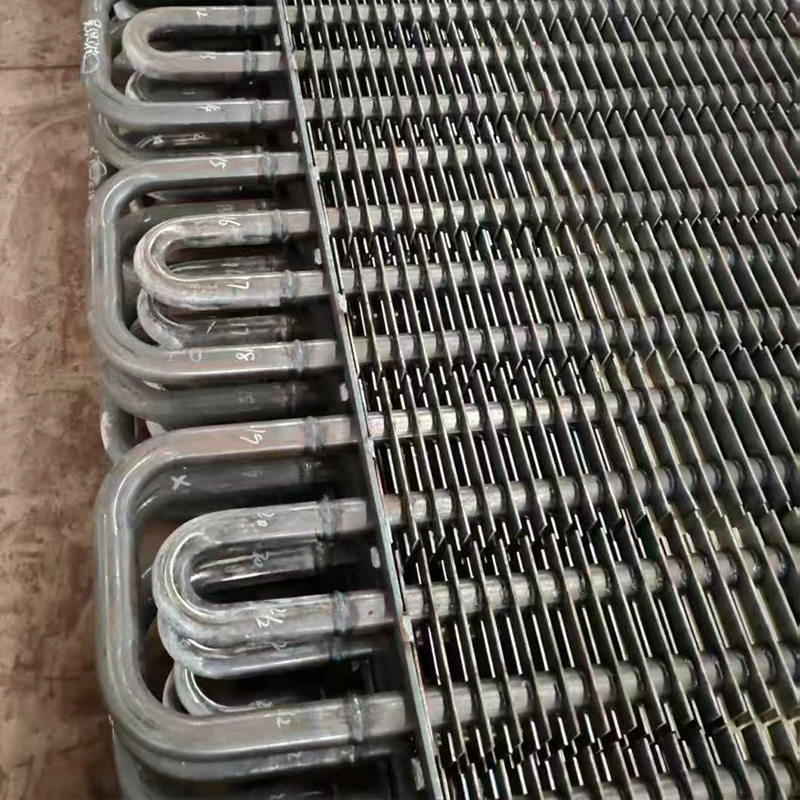
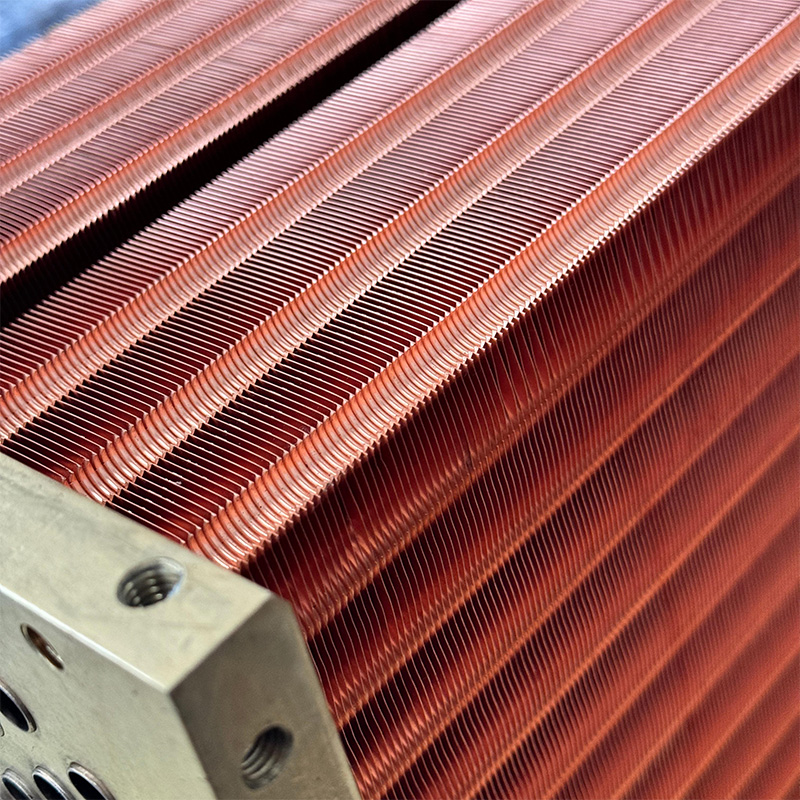
The reliability of polymer tanks often depends on integration with other process equipment, such as heat exchangers or heating systems. This is where the manufacturer's experience in dealing with complex environments and high quality standards comes into play.Wuxi Kaisheng Electric Power and Petrochemical Equipment Co.,Ltd, which specializes in the design and manufacture of heat transfer equipment, brings deep knowledge of metallurgy and corrosion resistance to tank design. Our core business includes the production of Titanium Shell and Tube Heat Exchangers, ASME Standard Apparatus, and 316 Stainless Steel, C46400 Marine Brass, and N06625 Nickel Alloy Tube Bundles.
This experience with extreme conditions in the oil refining, chemical industry and seawater desalination directly impacts the quality of our polymer solutions. Understanding how different alloys behave under high pressure and temperature allows us to intelligently design hybrid systems where PPH tanks interact with metal heat exchangers or coils. We apply the same strict quality control principles that apply to PED and ASME product certification, from raw material selection to final testing. For the customer, this means receiving not just a plastic container, but part of a single, reliable engineering system capable of operating for decades in the most aggressive environments.
Logistics, installation and typical installation errors
Delivery and installation of large-sized horizontal tanks is a stage where up to 30% of the built-in safety margin is lost. PPH is a material with a high linear expansion coefficient (about 0.15 mm/m °C). This means that a tank 10 meters long will lengthen by 90 mm when the temperature of the contents changes from +20°C to +80°C. If such a container is rigidly fixed to the foundation with anchor bolts without taking into account thermal expansion, the body will inevitably deform or burst in the support area.
Proper installation involves the use of sliding supports. One side of the tank is fixed rigidly (fixed support), and the other is installed on roller supports or Teflon gaskets, allowing the body to move freely along the axis. Often construction and installation organizations that are not familiar with the specifics of plastics weld metal corners directly to the plastic or drill holes for anchors directly in the bottom. It is strictly forbidden to violate the integrity of the lower part of the housing with fasteners. Fastening must be carried out through clamps covering the body, or through special metal saddles into which the tank is placed.
Another critical mistake is the lack of UV protection for outdoor installation. Although modern PPH contains stabilizers (carbon black or special additives), direct exposure to sunlight for 5-7 years leads to aging of the surface layer, its chalking and reduced impact strength. We strongly recommend installing horizontal tanks under cover or applying a protective paint coating that is compatible with polypropylene. In one project in southern Kazakhstan, an unprotected tank lost its surface elasticity after just 3 years, requiring expensive rehabilitation.
When connecting pipelines, it is important to use flexible inserts (compensators) immediately after the tank nozzle. The rigid “tank-pipe-pump” connection transfers all the vibrations of the pumping equipment to the plastic, causing fatigue failure of the welded joint of the pipe. Vibration is the hidden killer of polymer containers.
Economic justification and production time
Orderinghorizontal tank made of PPH to order, you are investing in a long-term asset. The service life of a properly operated container made of high-quality PPH is at least 20-25 years. Compared to painted steel tanks, which require regular anti-corrosion treatment, anodic protection replacement and liner repairs every 3-5 years, plastic tanks benefit in terms of total cost of ownership (TCO). No corrosion means no corrosion products in your process, which is critical in the food and pharmaceutical industries.
Production time depends on the complexity of the design and production load. We produce a standard tank with a volume of 10-20 m³ in 10-14 working days. Large projects (over 50 m³ volume) or tanks with complex internal peripheries (heating coils, agitators, baffles) require 20 to 30 days. It is important to consider logistics leverage. Transporting wide horizontal containers often requires an oversized cargo permit, since the diameter can exceed 2.55 meters. In such cases, we offer a modular design: production of parts at the factory, transportation and final assembly (welding) at the customer’s site. This increases the duration of the project, but solves the logistics problem.
The minimum order quantity (MOQ) for custom production is usually 1 unit, however, when ordering a batch of 5 units, we provide additional discounts on tooling and logistics. For regular partners, there is a deferred payment system and an extended warranty of up to 3 years, subject to an annual service inspection by our specialists.
Frequently asked questions (FAQ)
What is the maximum operating temperature for a PPH tank?
The maximum continuous operating temperature for standard polypropylene homopolymer (PP-H) is +90°C…+95°C. With short-term exposure (several hours), the material can withstand up to +100°C without loss of geometric stability. However, if your technology requires operation at temperatures above +100°C, we recommend considering an external metal casing to maintain pressure or switching to PVDF materials, although this will significantly increase the cost. It is important to remember: with increasing temperature, the chemical resistance of plastic decreases, therefore, for hot aggressive environments, the safety margin for wall thickness should be increased by 20-30%.
Can a PPH tank be repaired if damaged?
Yes, one of the main advantages of PPH is maintainability. Mechanical damage (scratches, through holes from falling objects) are eliminated by extrusion welding directly at the site of operation. Для этого не требуется демонтаж емкости или ее осушение (если повреждение выше уровня жидкости). Наши специалисты выезжают на объект с портативным сварочным оборудованием. The only limitation: repair is impossible if the material has undergone thermal destruction (charring) or deep chemical destruction of the structure. В таких случаях требуется вырезать поврежденный участок и ставить заплату из нового листа.
Выдержит ли горизонтальный резервуар полную заполненность при отрицательных температурах?
Это опасный сценарий. Хотя сам материал PPH сохраняет рабочие свойства до -20°C (а модифицированные марки до -40°C), проблема кроется в физике замерзания жидкости. Вода и многие водные растворы при замерзании расширяются на 9-10%. Давление льда на стенки резервуара может превысить предел текучести пластика, привести к разрыву корпуса, независимо от толщины стенки. Мы категорически не рекомендуем хранить жидкости, склонные к замерзанию, в полностью заполненных пластиковых резервуарах зимой без подогрева или теплоизоляции. Если риск замерзания существует, необходимо предусматривать систему обогрева (ТЭНы или паровые рубашки) и оставлять воздушную подушку не менее 10% объема.
What warranty do you provide on welds?
На все сварные соединения, выполненные нашим заводом, мы предоставляем гарантию 24 месяца с момента ввода в эксплуатацию, но не более 36 месяцев с даты отгрузки. Гарантия покрывает дефекты, возникшие вследствие нарушения технологии сварки (непровары, поры, трещины). Гарантия не распространяется на повреждения, вызванные неправильной эксплуатацией (превышение температуры/давления, механические удары, нарушение правил монтажа опор), а также на естественное старение материала под воздействием УФ-излучения при отсутствии защиты. Каждый резервуар сопровождается паспортом, где указаны номера партий сырья и протоколы испытаний швов.
Conclusion and call to action
Выбор надежного партнера для производствагоризонтального резервуара из PPH на заказ— это вопрос безопасности вашего предприятия и экологии. Экономия на этапе закупки оборудования часто оборачивается многократными потерями из-за простоев, утечек дорогостоящих реагентов и штрафов надзорных органов. Наша компания, объединяя expertise в области полимерных конструкций и передовые технологии производства теплообменного оборудования, готова предложить полный цикл услуг: от инженерного расчета и 3D-моделирования до доставки и шеф-монтажа. Мы не просто продаем емкости, мы берем на себя ответственность за их работу в ваших конкретных условиях.
Не рискуйте производственным процессом. Свяжитесь с нашими инженерами сегодня для бесплатной консультации и предварительного расчета стоимости вашего проекта. Предоставьте нам технические условия (объем, плотность, температура, химический состав среды), и мы подготовим коммерческое предложение с оптимальной конструкцией в течение 24 часов.
Contact us todayдля обсуждения деталей вашего заказа и получения каталога типовых решений.