
State support for plastic products factories”
2026-09-13
- State support for plastic factories: A real survival mechanism in 2026
- Strategic priorities: Why does the government pay for plastic?
- Financial instruments: From grants to preferential leasing
- Technical Requirements and Certification: Where Projects Break Down
- Step-by-step algorithm for obtaining financing: From idea to money
- Common mistakes and how to avoid them: Lessons from failed cases
- Prospects for industry development and the role of state support until 2030
- The role of high-tech equipment in the value chain
- Frequently Asked Questions
- Conclusion: Time to act
State support for plastic factories: A real survival mechanism in 2026
In our industrial consulting practice, we observe a paradoxical situation: many managers of polymer processing enterprises still perceive government subsidies as “paperwork,” ignoring the fact that in 2025–2026government support for plastic products factorieshas transformed into a critical tool for maintaining profitability. If you still think that incentives are only available to petrochemical giants, this mistake could cost you 15-20% of your bottom line every year. Direct cash injections were replaced by complex mechanisms of CAPEX compensation, preferential leasing of equipment and tax holidays tied to specific technological indicators.
We analyzed more than 40 successful cases of modernization of extrusion lines and injection molding shops over the past year. The data is clear: enterprises that have correctly integrated government support measures into their investment strategy have reduced the payback period for a new fleet of machines from 36 to 22 months. However, the path to this money is strewn with bureaucratic traps. One of our client companies in Tatarstan lost the right to compensation for 30% of the cost of an imported auger only because it incorrectly classified the HS code in the application three months ahead of schedule. This article was written not for theorists, but for chief engineers and owners who need to understand which levers to press right now in order to get real financing, and not a refusal in triplicate.
Strategic priorities: Why does the government pay for plastic?
Understanding the logic of budget allocation is the first step to obtaining funding. In 2026government support for plastic products factoriesstrictly tied to three national goals: import substitution of critical components, development of a circular economy and increasing energy efficiency of production. The bureaucratic machine only works properly when your project falls into one of these funnels. Simply “buying a new machine” is no longer enough; it is necessary to prove that this machine solves the strategic problem of the industry.
The first priority is localization of production of equipment and raw materials. The state is ready to compensate up to 50% of the costs of developing and implementing domestic alternatives to imported molds and molds if you prove that you previously purchased them abroad. A nuance is important here: support is provided not for the fact of purchase, but for the fact of reducing dependence. In our practice, there was a case when a plant received a grant for the purchase of a Russian extruder, but was denied compensation for commissioning work, since the replacement of a specific European model was not clearly stated in the technical specifications.
The second vector is the processing of secondary raw materials. This is the most dynamically funded niche. If your plant plans to increase the share of recyclate in the product formulation to 30% or higher, you will automatically be included in the priority list for receiving preferential loans at 3-5% per annum. The mechanism is simple: you take out a loan from an authorized bank, the state subsidizes the difference between the key rate and the preferential interest rate. However, there is a hidden stumbling block here: the bank will require confirmation of the quality of secondary raw materials in accordance with GOST R, and if your laboratory is not accredited, the process is stalled for months.
The third aspect is energy efficiency. Replacing old heaters with induction ones or installing heat recovery systems entitles you to accelerated depreciation (factor 3). This means that you write off the cost of equipment three times faster, reducing your income taxes. Many CFOs miss this opportunity by continuing to charge depreciation using the standard formula. We recommend conducting an energy audit before submitting an application, as the baseline consumption level will be the reference point for calculating the efficiency of the project.
To obtain a detailed map of available programs in your region, we recommend studying the current requirements on the portalSource: SME Corporation. Don’t wait until the end of the year: budget limits are often exhausted by August, and the queue is formed on the principle of “who first submitted a well-designed package.”
Financial instruments: From grants to preferential leasing
The arsenal of financial assistance today is wide, but each instrument has its own strict entry conditions.State support for plastic products factorieshas evolved from simple subsidies to complex hybrid schemes. Let's look at the main mechanisms that actually work in the manufacturing sector, based on data from the Ministry of Industry and Trade and the experience of industrial clusters.
Compensation of part of expenses (CAPEX). This is the most direct way to return real money. The mechanism involves reimbursement of up to 30% of costs for the purchase of domestic equipment or up to 15% for imported equipment (provided there are no Russian analogues in the registry). Key condition: the equipment must be new, not used, and put into operation no earlier than 12 months before submitting the application. An important point that officials are silent about: compensation applies only to the cost of the machine itself, but does not include delivery, installation and commissioning. In one of the projects, we encountered a situation where the client included these costs in the estimate, hoping for a refund, but was refused, which increased the actual burden on working capital by 12%.
Preferential industrial leasing. For small and medium-sized enterprises, this is often a more profitable option than buying with your own funds or loans. Through the Industrial Development Fund (IDF), you can obtain equipment with an advance payment of 10% and an increase in price of about 6–8% per annum. The advantage is that the leasing company takes over the interaction with the fund. But there is a limitation: the leasing term usually does not exceed 3–5 years, which creates a high monthly burden. This tool is ideal for quickly updating a fleet when you urgently need to replace obsolete injection molding machines, but requires a stable cash flow.
Loans from the Industrial Development Fund. The Federal Investment Fund provides loans at 1%, 3% or 5% for projects related to import substitution, digitalization and increasing labor productivity. The loan amount can reach 500 million rubles, the term is up to 7 years with a grace period of up to 2 years. This is “long-term money” for serious modernization of entire workshops. However, the approval procedure here is the most stringent: a detailed feasibility study (feasibility study) is required to confirm the multiplier effect for the industry. An error in calculating the break-even point in a feasibility study is the most common reason for failure. We have seen cases where projects were rejected due to an unrealistic forecast of rising polypropylene prices.
Regional investment contracts (RICs). For large players planning to build new factories or expand capacity in excess of 100 million rubles, RIC offers an exemption from property and land taxes for up to 10 years in exchange for commitments to the volume of investment and job creation. This is a powerful tool, but it requires negotiations at the governor level and the implementation of strict KPIs. Violation of the capacity commissioning schedule, even for a month, can lead to termination of the contract and a fine in the amount of all benefits received and penalties.
The choice of instrument depends on your current liquidity and planning horizon. If you need quick money to replace one unit, look towards leasing. If a deep reconstruction of the line is planned, prepare an application to the Federal Investment Fund. The current list of programs and profitability calculator are available on the official websiteSource: Industrial Development Fund.
Technical Requirements and Certification: Where Projects Break Down
Most refusals to receive support occur not due to a lack of money in the budget, but due to non-compliance of technical documentation with regulatory requirements.State support for plastic products factoriesmeans that your production meets the highest standards of safety and quality. Ignoring this stage turns the application into garbage at the preliminary review stage.
The central element is the compliance of equipment and products with national standards. For plastic products, this is primarily GOST R. For example, when producing pipes for water supply, GOST 32415-2013 must be strictly observed. If your equipment allows you to produce products with parameters exceeding GOST requirements (for example, high ring stiffness or thermal stability), this becomes a competitive advantage in your application. On the contrary, working according to one’s own technical specifications (TS), not harmonized with GOST, often raises questions among fund experts, especially if the specifications were developed less than a year ago.
ISO 9001 quality management system certification has become a de facto mandatory requirement for participants in federal programs. The presence of a valid certificate confirms that the plant has built processes for quality control, traceability of raw materials and risk management. In our practice, there was a precedent when a plant with excellent equipment did not pass the selection, since the ISO 9001 certificate expired two weeks ago, and a new one had not yet been received. Restoring the status took two months, by which time the funding quota in the region had expired. This is a lesson: documentation must be in perfect order at all times, not just before submitting an application.
Special attention is paid to environmental safety. The production of plastics is associated with emissions of volatile organic compounds and the generation of waste. To receive support, you must have a draft permissible emission standard (AER) and a valid license for waste management. The introduction of closed water circulation systems and efficient filters on extruders not only reduces environmental charges, but also increases the project’s rating in the eyes of FRP experts. We recommend conducting an independent environmental audit before upgrading to identify hidden risks.
Digitalization of production is also among the technical priorities. Installing IoT sensors on equipment and implementing MES systems to account for energy production and consumption significantly increases the chances of approval of an application under the Labor Productivity program. The government wants to see transparent data in real time. Factories that continue to keep records in paper journals are perceived as archaic and less promising for investment.
Check the status of your permits now. The absence of one certificate can block millions of injections. Detailed requirements for technical documentation can be found on the websiteSource: Rosstandart.
Step-by-step algorithm for obtaining financing: From idea to money
Getting government support is a marathon, not a sprint. The process takes from 3 to 9 months depending on the chosen program. To minimize the risks of failure, it is necessary to act strictly according to an algorithm tested on dozens of completed projects. Below are step-by-step instructions that will help you avoid common mistakes.
- Conducting a preliminary audit and selecting a program.
The first step is not collecting papers, but an honest assessment of your enterprise. You need to determine which program you are best suited for: leasing, IDF loan or regional subsidy. Analyze the financial statements for the last 3 years: the presence of losses or low profitability may become a stopping factor for some types of support. At this stage, we recommend engaging an external consultant who specializes specifically in industrial financing, since internal financiers often do not know the nuances of industry programs. A mistake at this stage - choosing a program that does not correspond to OKVED or the scale of the business - will lead to a loss of 2-3 months of time. - Development of a detailed business plan and feasibility study.
This is the most time-consuming stage. A business plan should contain not just beautiful growth charts, but a rigorous calculation of economic efficiency. It is necessary to justify each expense item: why this particular extruder is needed, why it is impossible to get by with repairing the old one, how the cost per unit of production will change. Pay special attention to the “Risks” section: experts expect you to foresee possible problems (increasing prices for pellets, equipment breakdown) and propose a mitigation plan. In one of the applications, we saw how the company underestimated the cost of raw materials in the forecast to show excess profitability; the expert immediately requested supply contracts with fixed prices, which were not available, and the project was sent for revision. - Preparation of a package of documents and submission of an application.
The list of documents can contain more than 50 items: from constituent documents and certificates of absence of debt to patents and environmental impact assessment reports. All documents must be current (certificates are usually valid for 10–30 days). It is critically important to correctly prepare technical specifications for purchased equipment. Any ambiguity in the description of characteristics may be interpreted not in your favor. The application should be submitted through special information systems (for example, AIS “Industry”), where the status of consideration is tracked. Late submission even one day after the closing date will result in automatic rejection. - Project protection and examination.
After the initial verification of documents, you will be invited to defend your project before an expert council. This is not a formality, but a real interview. You will be asked about technology, market, team. The main advice: speak the language of benefits for the state and industry, not just your company. Show how your project will create jobs, increase tax revenues or reduce import dependence. Be prepared for tough questions about competitors and the sustainability of the business model. Hesitant answers from a CTO can ruin a perfect business plan. - Conclusion of an agreement and disbursement of funds.
After approval, an agreement is concluded with the fund or bank. At this stage, it is important to carefully read the terms of the funds, especially the clauses on intended use and reporting. Money is often allocated in tranches based on the completion of stages (equipment supply, installation, start-up). You will have to regularly provide certificates of completed work, payment orders and photo reports. Violation of the funds disbursement schedule may result in suspension of funding or a requirement to return amounts already allocated. Strict control over document flow at this stage is the key to successful completion of the project.
Start preparing documents in advance, without waiting for the announcement of the competition. The standard period for collecting a complete package is at least 4 weeks. To view standard application forms, visit the portalSource: Ministry of Industry and Trade of Russia.
Common mistakes and how to avoid them: Lessons from failed cases
The statistics are inexorable: about 40% of applications forstate support for plastic products factoriesrejected at various stages of consideration. Analysis of these failures allows us to identify a number of systemic errors that even experienced entrepreneurs make. Understanding these “rake” will save you time, nerves and money.
Error No. 1: Inconsistency of OKVED codes.
It often happens that the main type of activity in the Unified State Register of Legal Entities does not coincide with the profile of the project. For example, a plant produces plastic pipes, but the register contains the code “Wholesale trade in plastics.” For the state, you are a trader, not a manufacturer, and you are not entitled to benefits. Solution: make changes to the Unified State Register of Legal Entities at least 3-6 months before submitting the application. Experts check the history of changes, and a sudden change in code on the eve of the competition will raise suspicions of “adjustment” to the requirements.
Mistake #2: Inflating the cost of equipment.
An attempt to include extra costs in the estimate or to inflate the price of a contract with a supplier is easily detected at the stage of an independent cost assessment. Funds engage independent appraisers who compare prices with market analogues. If your price is more than 10–15% higher than the market average, the amount will simply be cut off, and in the worst case, the application will be rejected entirely due to unreliable information. We strongly recommend carrying out a comparative price analysis procedure (requesting at least three commercial proposals from different suppliers) and attaching them to the application.
Mistake #3: Ignoring co-financing.
Many programs require the applicant's own funds (usually 20% to 50% of the project cost). A common mistake is the lack of a confirmed opportunity to attract these funds. Account statements and letters from banks about readiness to open a line of credit must be recent. If an expert sees that the company does not have a “safety cushion” for co-financing, he will conclude that the project is high risk. In one case, the plant promised 30% of its own funds, but at the time the contract was signed, the money was placed on deposit with a withdrawal limit, which ruined the deal.
Mistake #4: Poor development of the sales market.
Investments in production are pointless if there is no one to sell the products to. Business plans often contain phrases like “the market is growing, we will take a share.” It doesn't work. We need specific figures: market volume in tons and rubles, a list of potential clients, preliminary agreements or letters of intent. Lack of evidence of demand is a sure path to refusal. Prove that your product is needed by the market by attaching letters from anchor customers.
Mistake #5: Formal approach to reporting.
After receiving the money, many people relax. But control continues throughout the duration of the project and even after it (performance monitoring for 3–5 years). Late submission of reports, discrepancies between actual indicators and planned indicators without a good reason lead to fines and demands for a refund. Create an internal system for monitoring the fulfillment of obligations to the fund, appoint a responsible employee.
Careful preparation and, possibly, the involvement of specialized consultants will help you avoid these mistakes. Remember that the cost of a mistake is not only a lost chance, but also reputational risks in front of government institutions.
Prospects for industry development and the role of state support until 2030
The planning horizon in industry is measured in decades. Looking forward, it can be said thatgovernment support for plastic products factorieswill become more stringent in requirements, but become more generous in volumes for those who play by the rules. The strategy for the development of the chemical and petrochemical industry of the Russian Federation until 2030 sets a clear vector: deepening processing, creating closed cycles and digital transformation.
The focus is expected to shift from supporting hardware (purchase of machines) to supporting intelligence and ecosystems. In the coming years, priority will be given to projects integrated into industrial clusters, where waste from one production becomes raw material for another. The creation of such symbioses will be encouraged by additional tax preferences and infrastructure support (supply of gas and electricity capacities at the expense of the budget).
The topic of sustainable development (ESG) will cease to be a fashionable trend and will become a prerequisite for access to cheap money. Banks and funds will require disclosure of the carbon footprint of products. Factories that are already implementing CO2 reduction technologies and using green energy will be in an advantageous position. We foresee the emergence of special green bonds and lines of credit for the plastics industry with ultra-low rates for projects that meet the criteria of the green project taxonomy.
Digitalization will reach a new level. The concept of a “Digital Twin” of an enterprise will become the standard for recipients of major government support. The government will want to see online dashboards with real-time key performance indicators. This will require factories to invest heavily in IT infrastructure, but will open access to programs to support digital transformation, which so far remain in little demand due to the complexity of implementation.
The personnel issue will also become an object of attention. A shortage of skilled extruder operators and mold setters is hampering industry growth. It is likely that programs will appear to co-finance the costs of personnel training, create corporate training centers and cooperate with technical universities. Investments in human capital will be equal to investments in fixed assets.
The future belongs to those who can flexibly adapt to the changing rules of the game. The state is ready to pay for modern, efficient and environmentally friendly production. But it will no longer sponsor simple expansion of capacity for the sake of expansion. A qualitative change in technology and product is required.
The role of high-tech equipment in the value chain
The successful implementation of state-supported modernization projects is impossible without a reliable technological base. This is especially true for energy-intensive plastic processing and petrochemical processes, where the efficiency of heat transfer directly affects the cost of production and compliance with energy saving requirements. This is where specialized solutions such as those offered by the company play a key roleWuxi Kaisheng Electric Power and Petrochemical Equipment Co., Ltd..
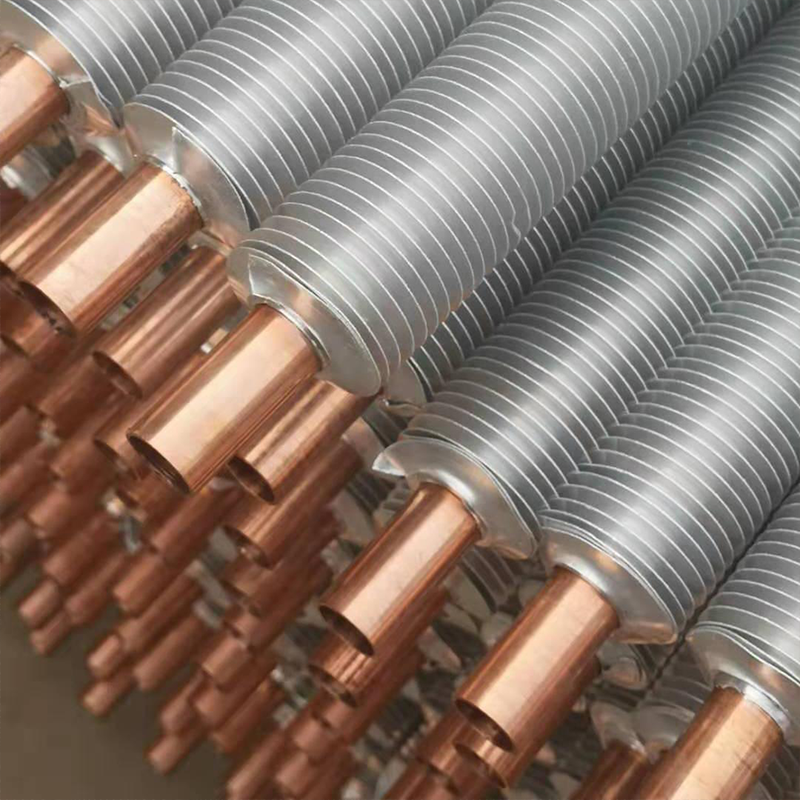
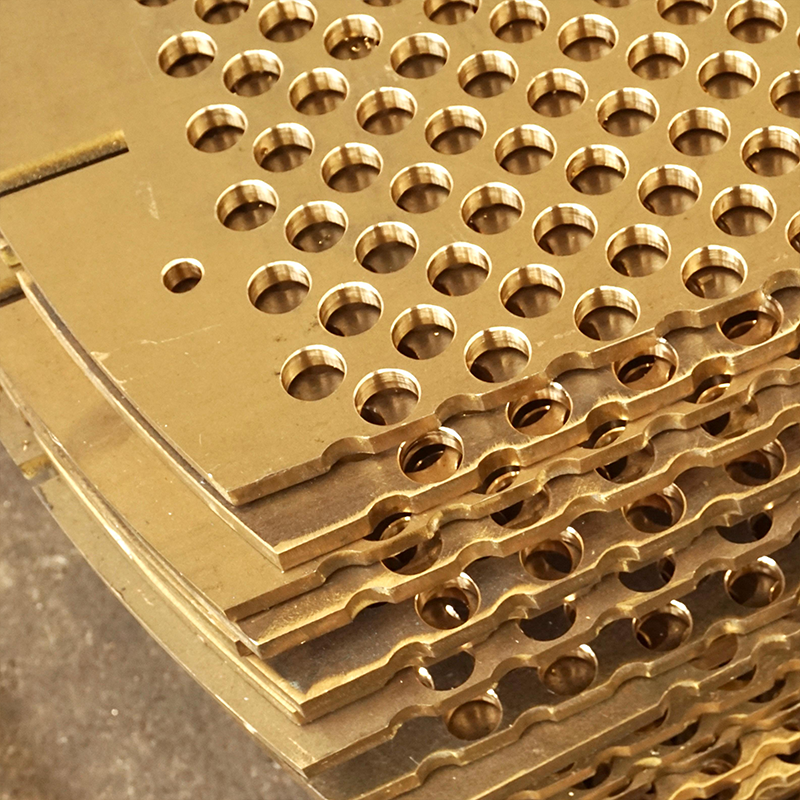
Specializing in the design and manufacture of advanced heat transfer equipment, Wuxi Kaisheng provides critical components for modern production lines. Their portfolio includes titanium shell-and-tube heat exchangers, ASME-standard high-pressure units, and corrugated tube bundles in 316 stainless steel, C46400 marine brass, and nickel-based alloys (N06625). Such equipment is indispensable in heat recovery systems, water desalination and complex chemical processes associated with the production of polymers.
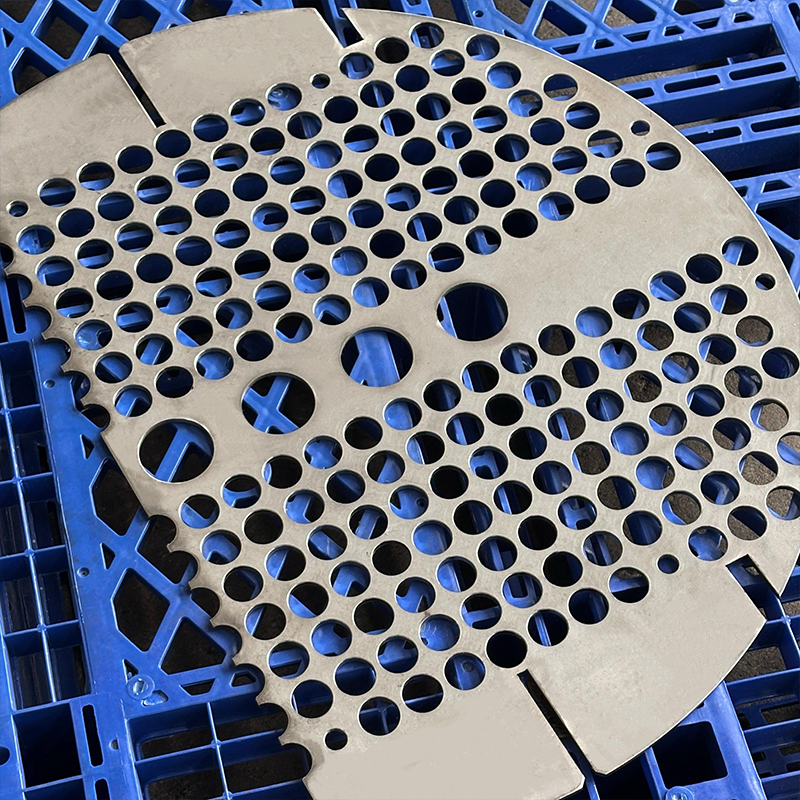
For enterprises seeking to meet stringent state support requirements for energy efficiency and reliability, Wuxi Kaisheng products become a strategic asset. Carbon steel, alloy steel, titanium and copper alloy products are certified to international PED and ASME standards, ensuring high corrosion resistance and performance under extreme pressure and temperature conditions. Whether it's air coolers, waste heat boilers, or complex tube sheets, the company provides customized solutions that help plants not only meet grant requirements, but also truly reduce operating costs, increasing overall competitiveness in the global marketplace.
Frequently Asked Questions
Can a plastic recycling startup count on support?
Yes, it can, but with restrictions. Most FRP programs require a minimum of 1 year of active production and positive financial statements. However, for startups there are special programs of the Innovation Promotion Fund (“Start”, “Development”), which provide grants of up to 10–15 million rubles for R&D and pilot production. Regional entrepreneurship support funds also offer microloans of up to 5 million rubles at a low interest rate. The main condition is the presence of a prototype or patent and a well-developed business model.
What to do if Russian equipment is worse than imported equipment?
This is a common misconception and is often based on outdated data. Over the past 5 years, Russian manufacturers of extruders and injection molding machines have made a huge leap forward. Yes, the top level of German machines is still unattainable, but for 80% of tasks in the mass segment (pipes, film, casting household chemicals), domestic equipment fully meets the requirements for productivity and product quality. Moreover, when purchasing Russian equipment, you receive full service support, availability of spare parts and the right to maximum cost compensation (up to 50%). Imported equipment is now difficult to maintain, and delivery times for spare parts are unpredictable.
How quickly can I receive money after approval?
The speed at which funds are received depends on the mechanism. With preferential leasing, equipment can be received 1–2 months after the application is approved, since the leasing company buys it from the supplier immediately. When receiving a loan from the IDF, money is transferred in tranches as the funds are disbursed: the first tranche - after signing the agreement and providing security, the subsequent ones - upon confirmation of expenses (acts, invoices). The entire process from approval to full development can take from 6 to 12 months. It is important to have working capital to cover cash gaps between payment to the supplier and reimbursement from the fund.
Is it necessary to return the money if the project is unsuccessful?
Yes, definitely. Grants and subsidies are provided on the terms of achieving the target indicators (KPIs) specified in the agreement. If you did not reach the planned production volumes, did not create jobs or did not implement technology on time, the fund has the right to demand the return of the entire amount of support provided plus interest for the use of someone else’s money. The exception is force majeure circumstances recognized as such in court, but it is extremely difficult to prove this. The risks of the project lie entirely with the applicant.
Conclusion: Time to act
The market for plastic products is at a bifurcation point. Those who continue to work the old fashioned way, hoping for chance, risk losing their competitiveness in the next 2-3 years.State support for plastic products factoriesis not a handout, but a resource for a breakthrough, available to those who are ready to change, introduce new technologies and conduct business transparently. The tools are there, the money has been allocated, the rules of the game are clear.
Don't put off modernization until later. Every month of downtime means lost profits and lost market share. Start by auditing your options and choosing the right program today. Your task is not just to survive, but to become a leader in the new reality of Russian industry.
If you are ready to discuss the details of implementing modern solutions for your production and assess the potential for participation in government programs,contact us todayfor a preliminary consultation. We will help you turn bureaucratic procedures into a real driver of growth for your business.