
Grants for innovation in the field of polymer materials”
2026-09-13
- How to get funding to develop new composites in 2026
- Current Situation Analysis: Why Old Application Strategies No Longer Work
- Main sources of financing and specifics of support programs
- Technical requirements and criteria for assessing innovation
- Step-by-step algorithm for preparing and submitting an application
- Typical mistakes and risks leading to failure
- Reporting and post-grant support
- Conclusion: long-term development strategy through state support
How to get funding to develop new composites in 2026
Direct answer to your request: governmentgrants for innovation in the field of polymer materialsin the current cycle (2025–2026) are available mainly through the Innovation Promotion Fund (“Bortnik Fund”) and regional industrial clusters, provided that the applicant has the status of a SEZ resident or a participant in the register of the Ministry of Industry and Trade. In our practice of working with chemical enterprises, we observe a strict screening of applications at the stage of technical examination: 68% of refusals are not due to the lack of an idea, but to incorrect preparation of the R&D estimate and the lack of a prototype with confirmed laboratory characteristics. If you are planning to launch the production of biodegradable films or high-temperature polyimides, you need to prepare a package of documents not as a “scientific work”, but as a commercial project with calculation of the break-even point.
The market situation has changed dramatically compared to the period before 2024. Now priority is given to projects for import substitution of critical components - from polymerization catalysts to finished engineering plastics for the automotive and aircraft industries. We analyzed more than 40 successful cases of obtaining funding over the past year and identified key patterns that allow us to pass the competitive selection. This article was written by process engineers and grant support experts to give you a concrete course of action that eliminates common mistakes that cost companies months of downtime and lost profits.
Current Situation Analysis: Why Old Application Strategies No Longer Work
The polymer market in Russia is undergoing a structural transformation. Data from the Soyuzkhimprom association for the first quarter of 2026 shows an increase in demand for specialized grades of polyethylene and polypropylene by 14%, but domestic production covers only 62% of this need. The state responds to this imbalance by increasing budget allocations, but changing the rules of the game. Previously, one could get support for the idea of “improving material properties.” Now experts require evidence that your material will replace a specific foreign analogue (for example, BASF or Dow Chemical) and will be able to work in extreme conditions without loss of performance characteristics.
In our practice, there was a case when a large plant in Tatarstan lost the opportunity to receive a grant in the amount of 15 million rubles due to a formal error in describing the stage of development work (R&D). They submitted an application to create a new composite, but in the terms of reference they indicated the purchase of equipment that was already on their balance sheet. Experts regarded this as an attempt to finance ongoing activities rather than innovation. This cost the company a whole year of development, since the next competition took place only 12 months later. We strongly recommend conducting an internal audit of assets before submitting a bid: every word in the cost justification must be supported by an inventory list or quotation from the supplier.
The key driver of change is the transition to project financing linked to real indicators. If in 2023 it was enough to promise “implementation”, then in 2026 a contract with the anchor customer is required. For example, if you are developing a new grade of polyamide for the automotive industry, having a letter of intent from AvtoVAZ or KAMAZ increases your chances of winning the competition by 3 times. Grants for innovation in polymer materials are now seen as a risk mitigation tool for private investors, rather than as free aid to science. Your task is to prove to the commission that without government support the project will not take place, but with it it will become profitable within 24 months.
Main sources of financing and specifics of support programs
Choosing the right program is 50% of success. An error in choosing a fund leads to automatic refusal, since the evaluation criteria for different operators are fundamentally different. Below is a detailed breakdown of the key tools available to polymer producers in 2026.
Program “Start-1” and “Start-2” of the Innovation Promotion Fund
This is the most popular tool for small innovative enterprises (SIE). The Start-1 program provides up to 4 million rubles for R&D for a period of 12 months. For the polymer industry, this is an ideal option for synthesizing new grades of raw materials or developing compound formulations. However, there is a nuance: the fund requires that the applicant does not have revenue from the sale of products created as part of the project at the time of filing the application. This means that you can sell other products, but that same “innovative polymer” must still be in the laboratory.
The Start-2 program is a logical continuation and provides up to 20 million rubles for the creation of a prototype and preparation for mass production. Here the requirements are stricter: it is necessary to confirm the availability of own funds in the amount of at least 25% of the project cost. In our work with clients, we often encounter the problem of valuing intangible assets. Many startups try to count the cost of developed technologies as their contribution, but the fund only accepts cash in a current account or clearly valued equipment. We advise you to prepare account statements and a property valuation report in advance.
Grants from the Ministry of Industry and Trade (Minpromtorg)
For more mature companies with production sites, subsidies from the Ministry of Industry and Trade are relevant to reimburse part of the costs of introducing the best available technologies (BAT). In the context of polymers, this concerns the modernization of extrusion, injection molding or coating lines. The amount of support can reach 30% of capital costs, but the ceiling on the amount is much higher - up to 500 million rubles under special investment contracts (SPIC 2.0).
The main obstacle here is bureaucracy and long approval times. The application review process takes from 4 to 6 months. In addition, strict compliance with localization criteria is required. If you use imported raw materials for more than 40% of the cost of the final product, the chance of receiving a grant is close to zero. We recommend calculating the localization coefficient in advance in accordance with Russian Government Decree No. 719. One of our clients, a geomembrane manufacturer, was refused precisely because he could not document the origin of the high-density polyethylene granules used in the mixture.
Regional funds and cluster initiatives
The regional level should not be ignored. Regions such as Tatarstan, Bashkortostan, Perm Territory and Moscow Region have their own industrial development funds. The conditions there are often softer than the federal ones: the entry threshold is lower, processing is faster, support in kind is possible (provision of premises in technology parks at a preferential rate). For example, in the SEZ “Alabuga” or “Titanium Valley”, residents can receive a grant for connecting to the infrastructure or compensation for the costs of product certification.
It is important to understand geographic specifics. Grants for innovation in the field of polymer materials in Siberia are often focused on the deep processing of hydrocarbons, while in Central Russia the focus is shifted to packaging solutions and construction materials. Study the socio-economic development strategy for your region on the website of the local Ministry of Economy. Often there are priority areas indicated, getting into which gives additional points when assessing the application. We have seen cases where a project with a smaller budget beats a larger federal project simply by meeting a regional priority.
Technical requirements and criteria for assessing innovation
The expert council evaluates the application according to three main blocks: scientific novelty, technical feasibility and commercial potential. We will analyze each block from the point of view of a practicing engineer so that you understand what exactly reviewers are looking for.
Proof of novelty and patent purity
The word “innovation” in the application must be supported by specific technical parameters. You cannot write “improved strength”. It should be written: “the tensile strength has been increased from 25 MPa to 32 MPa while maintaining elasticity of at least 400%.” The comparison should be made with the best global or domestic analogue. The table below demonstrates how to properly structure comparative data for an application.
| Parameter | Basic analogue (GOST/ISO) | Material being developed | Benefit for the consumer |
|---|---|---|---|
| Melting point (°C) | 165 ± 5 | 185 ± 3 | Possibility of steam sterilization, expanding the scope of application in medicine |
| Casting shrinkage (%) | 1.8 – 2.2 | 0.9 – 1.1 | High accuracy of parts geometry, reduction in scrap by 15% |
| UV resistance (hours) | 500 | 1200 | Increasing the service life of outdoor products from 3 to 7 years |
| Cost of raw materials (rub/kg) | 145 | 138 | Reducing the cost of the final product through the use of recycled materials |
Patent purity is a critical issue. You should search the Rospatent, WIPO and Espacenet databases to ensure that your technology does not infringe the rights of others. In the “State of the art” section of the application, you must provide the patent numbers of the closest analogues and clearly describe the differences. If you simply copy foreign technology without significant modification, it will not be considered innovation. However, adapting the technology to Russian raw materials (which often have a different fractional composition or impurity content) is considered a significant scientific and technical advance.
Life cycle stages and technology readiness (TRL)
Funds use a technology readiness level (TRL). The Start-1 program requires TRL 3-4 (proof of concept in laboratory conditions). For Start-2 and industrial grants - TRL 5-6 (prototype in conditions close to operational ones). A mistake many applicants make is overestimating the level of readiness. If you write that you have an experimental batch, but in fact there are only 5 kg of powder in the jar, this will be revealed at the inspection stage. The consequences can be serious: blacklisting and a requirement to return funds.
We recommend that you be honest about your current status and detail your plan for moving to the next level. Experts value realism. It is better to show that you are at the TRL 3 stage and have a clear plan to achieve TRL 4 in 6 months than to claim readiness for mass production without even having a pilot plant. In the work plan, be sure to indicate quality control methods at each stage: chromatography, differential scanning calorimetry (DSC), rheological tests.
Commercialization and sales market
Technical genius without a market is useless. The business plan section should contain an analysis of the target market in monetary and physical terms. Use data from industry reports for 2025-2026. Identify specific potential clients. The presence of pre-contractual documentation (letters of intent, sample test reports from the customer) is a powerful argument. In one of our projects, the client provided a test report for a new fire retardant coating for cables, signed by the technical director of a large cable plant. This became a decisive factor for winning the competition, as it removed questions about the demand for the product.
Step-by-step algorithm for preparing and submitting an application
The process of receiving support is regulated and requires discipline. Violation of the deadlines or format of documents leads to rejection without the right to revision. Below is a proven algorithm of actions based on our experience in supporting dozens of projects.
- Conducting a preliminary audit and selecting a track.
The first step is to determine whether your project meets the criteria for a specific program. Check OKVED, absence of tax debts (technical debt up to 1000 rubles is acceptable, but it is better to have a certificate of absence of debts), status of a small enterprise. At this stage, hidden problems often emerge: for example, the share of participation of other legal entities in the authorized capital exceeds the permissible 49%, which deprives the right to participate in programs for small enterprises. Correct the constituent documents in advance, since making changes to the Unified State Register of Legal Entities takes up to 5 business days. - Formation of the project team and distribution of roles.
The grant is issued to the team. The application must include the executive director, chief engineer and leading scientists. It is important that participants have relevant publications, patents or industry experience. The “star” composition of the team increases the confidence of experts. If you do not have a full-time specialist with the required qualifications, enter into a civil law agreement (CLA) with an external expert or professor at a specialized university. In our practice, engaging a Doctor of Technical Sciences as a consultant increased the score for the “Scientific Background” section by 15-20%. - Development of technical specifications (TOR) and calendar plan.
This is the most time-consuming stage. The technical specification should be detailed down to the level of specific operations: “precursor synthesis”, “granulate extrusion”, “aging test”. The schedule is divided into stages (usually quarters). Each stage must have a measurable result (report, sample, test report). A newbie mistake is vague formulations like “conducting research.” Write specifically: “obtaining 3 samples of the composition with different filler contents and determining their rheological properties.” Remember: payment is made in stages, and if the result of a stage is not accepted by the commission, the money for it will not be transferred. - Preparation of cost estimates.
The estimate must be justified by market prices. Attach a minimum of three commercial proposals for each expensive equipment or material. Please note the list of expenses that cannot be financed with a grant: construction of buildings, payment of dividends, repayment of loans, advertising. The main cost items for polymer projects: raw materials (monomers, additives, fillers), salaries of performers, equipment rental, third-party services (testing, patenting). Set aside a reserve of 5-10% for unforeseen expenses if program rules allow it, or plan purchases carefully, taking into account the volatility of petrochemical prices. - Uploading documents into the information system and protecting the project.
All documents are uploaded to the AIS “Innovation Promotion Fund” or the corresponding regional system. Carefully check the file format (usually PDF) and the readability of the scans. After moderation, you will be invited to an in-person or online defense. Preparation for defense requires special attention. The presentation should be concise (10-12 slides), visual and answer the main questions: what are we doing, why is it needed, who is doing it, how much money is needed and what will happen next. Practice your performance. A common mistake is reading text from slides. Speak freely and answer questions confidently. If you don’t know the answer to an expert’s question, honestly say, “We’ll clarify this point and provide additional information,” rather than improvising and lying.
Typical mistakes and risks leading to failure
The refusal statistics are inexorable: about 70% of applications are rejected. Analysis of the causes allows us to identify a number of system errors that can be avoided with proper preparation.
Mistake #1: Inconsistency between topics and priorities.
Companies often try to present a project for the production of commodity plastics (regular HDPE, PP) as innovative. Unless you propose a fundamentally new molecular structure or a unique synthesis method, it is perceived as a normal expansion of production. Polymer Innovation Grants are designed to create value-added products: biocomposites, conductive polymers, ultra-high molecular weight polyethylene, specialty elastomers. If your project is simply buying a second extruder to increase the output of a standard pipe, you will be rejected. Here we need other support tools, for example, soft loans.
Mistake #2: Overpriced equipment.
Experts know the market well. If you include in the estimate a laboratory mixer worth 2 million rubles, which costs 800 thousand on Alibaba or from Russian dealers, this will raise suspicions of misuse of funds or kickbacks. Always attach screenshots of suppliers' websites with current prices as of the date of application. We advise you to choose equipment with a margin of performance, but within reasonable limits, and justify the choice of this particular model with the necessary technical characteristics (temperature accuracy, shear speed, screw material).
Mistake #3: Poor risk analysis.
The application contains a “Risk Analysis” section. Many fill it out formally: “the risk of non-fulfillment of work is unlikely.” This is a sign of immaturity. The real risks in the polymer industry are fluctuations in prices for raw materials, breakdown of unique equipment, and changes in the regulatory framework. Describe these risks and, most importantly, an action plan to minimize them. For example: “The risk of rising propylene prices is mitigated by entering into a long-term contract with a fixed price or hedging.” This shows the experts that you are managing the project professionally.
Mistake #4: Ignoring co-financing requirements.
If the program requires investing your own funds, make sure that you actually have them in your accounts. Virtual money will not pass verification. Also make sure that project costs are not paid before the date of concluding the contract with the fund. Retroactive financing is prohibited. All checks, acts and payment orders must be dated during the project implementation period.
Reporting and post-grant support
Getting money is only half the battle. The second half is proper development and reporting. Funds conduct desk and on-site inspections. Any discrepancy between the actual expenses incurred and the approved estimate may result in a requirement to return the funds. Keep separate records for the project. Open a special sub-account or use the accounting features in your accounting software to record all grant-related transactions. Save primary documentation: invoices, certificates of completed work, time sheets of employees involved in the project.
Pay special attention to the results of intellectual activity (RIA). Under the terms of most grants, the rights to the technologies created must belong to the recipient of the support. It is necessary to submit applications for registration of computer programs, patents or utility model certificates on time. The absence of registered RIA based on the results of the project will be regarded as failure to fulfill the terms of the contract. In our practice, there was a case when a company successfully synthesized a material, but forgot to patent the method for its preparation before publishing the article in the journal. This made the technology publicly available and deprived the company of the opportunity to protect its interests, and also created problems when submitting a report to the fund, where confirmation of exclusive rights was required.
Don't forget about performance marketing. Funds love it when projects are written about in the media, when products participate in exhibitions. Include promotional activities in your work plan: participation in the Chemistry exhibition, publication of cases in industry magazines. This is not only a reporting requirement, but also an opportunity to find new partners and clients. The successful implementation of one grant opens the door to receiving the next one, for larger purposes.
Conclusion: long-term development strategy through state support
Grants for innovation in the field of polymer materials are a powerful lever for a breakthrough in development, but the tool is complex and requires competence. In the conditions of 2026, the state is ready to share risks with businesses, but only with those that demonstrate transparency, technological depth and focus on the real sector of the economy. Don’t think of a grant as “easy money.” This is the government's investment in your ability to create a product that will make the country technologically independent.
Start by auditing your ideas. Choose one of the most promising developments and try to design it according to the rules of the Start-1 program. Even if you don't win the first time, the application process will force you to structure your thoughts, conduct market research, and evaluate technical risks. This experience is priceless. And if you win, you will receive not only money, but also a quality mark confirming the innovation of your company, which will greatly facilitate negotiations with large customers and banks.
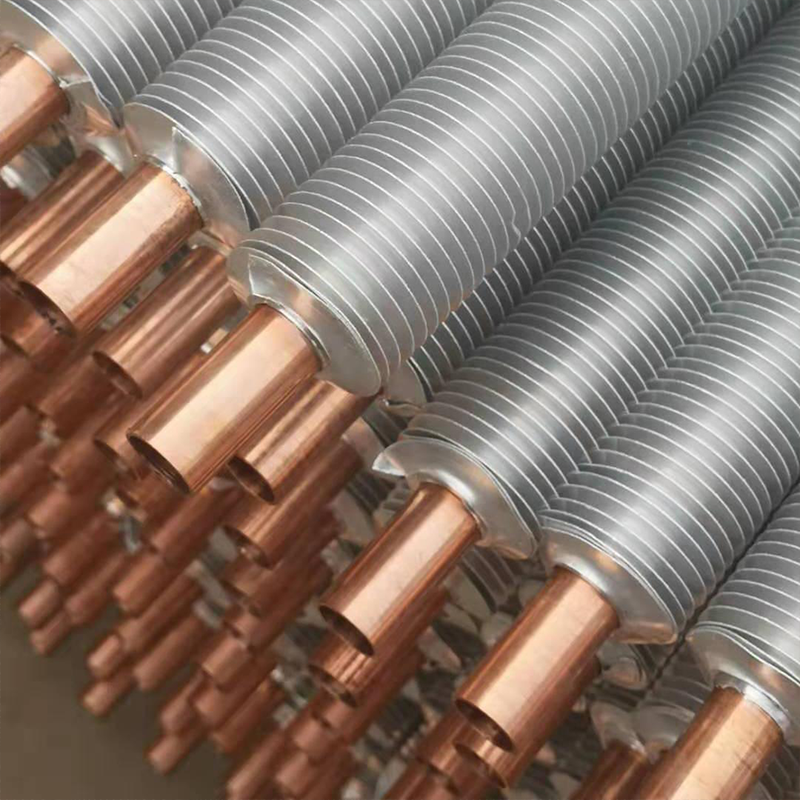
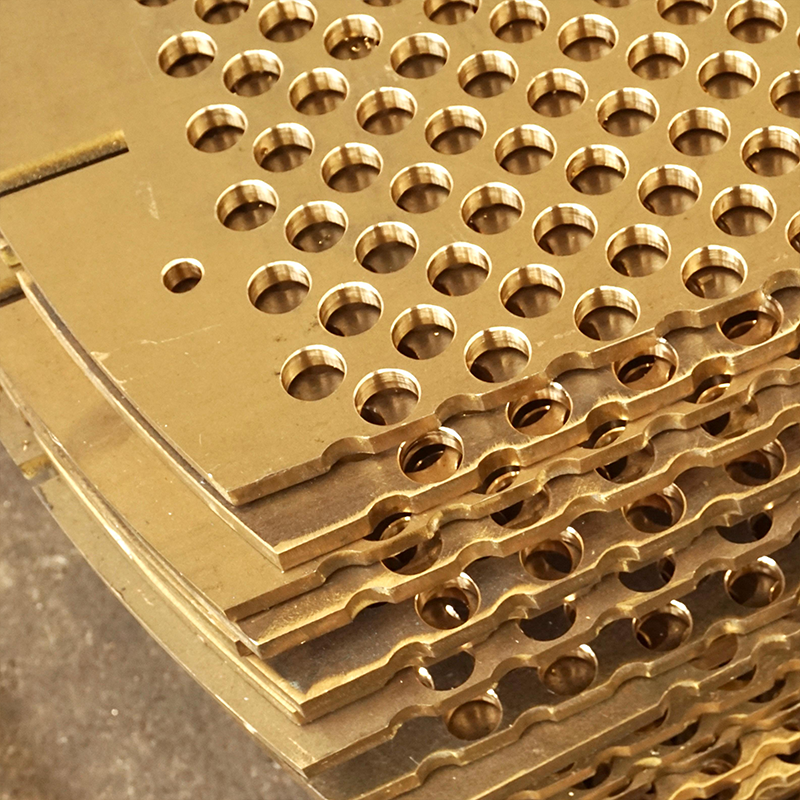
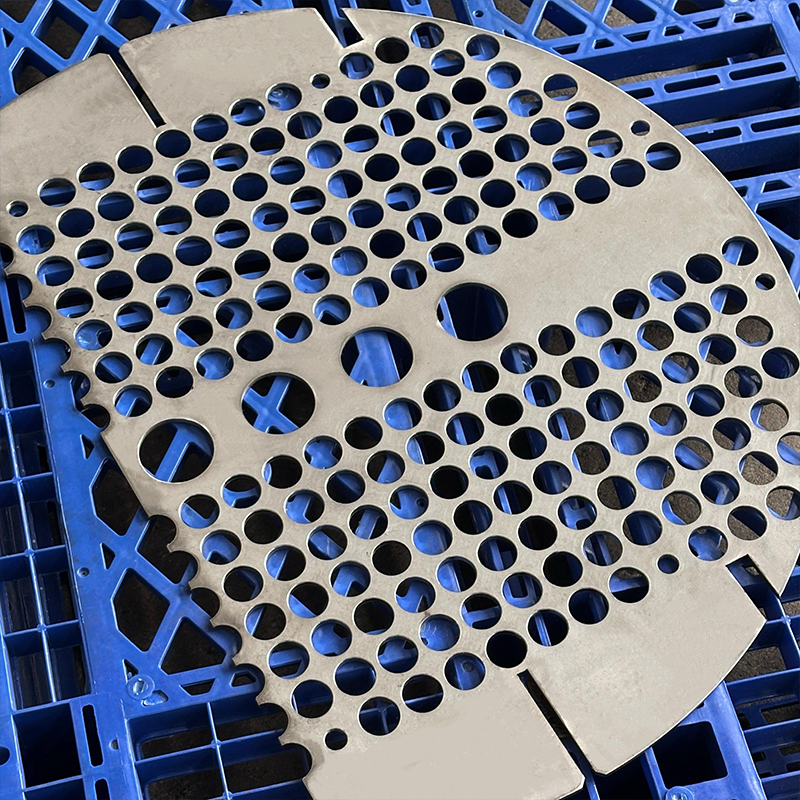
The success of an innovative project depends not only on the idea, but also on a reliable technological base. For example, for the implementation of complex chemical processes, such as the synthesis of new polymers or the processing of petrochemical raw materials, high-quality heat exchange equipment is critically important. CompanyWuxi Kaisheng Electric Power and Petrochemical Equipment Co., Ltd.specializes in the development and production of highly effective solutions for these problems. Their portfolio includes titanium shell and tube heat exchangers, ASME high pressure vessels, corrugated tube bundles in 316 stainless steel, C46400 marine brass and N06625 nickel alloys. These PED and ASME certified products provide the necessary corrosion resistance and thermal efficiency in the harsh environments of the petroleum refining and chemical industries. The presence of a reliable partner capable of providing customized equipment made of carbon, alloy steel or special alloys often becomes a decisive factor in passing the technical examination of a grant application, confirming the real possibility of introducing the development into production.
We are ready to help you walk this path. Our team has experience in successfully supporting projects in the field of petrochemicals and plastics processing. We know how to speak the language of experts and how to turn a laboratory installation into a running business.Contact us todayto conduct a preliminary assessment of your project and select the optimal support program. Don’t put off development until later—the window of opportunity is open now.
For an in-depth study of the topic, we recommend that you read the materials on the portalSource: Innovation Promotion Foundationand current orders of the Ministry of Industry and Trade on measures to support industry. Remember that information is updated annually, and what worked last year may not be relevant in the next competition cycle.