
Graph of PE strength versus temperature”
2026-08-24
- Why does the strength of polyethylene drop sharply with increasing temperature?
- Physics of the process: how temperature destroys the molecular bonds of PE
- Chart analysis: specific performance drop figures for PE80 and PE100
- Differences between PE-HD, PE-LD and PEX under heating conditions
- Practical application: calculation of wall thickness and choice of grade for hot environments
- Standards and certification: what standards regulate the heat resistance of PE
- Integrated solutions for extreme temperatures: the experience of Wuxi Kaisheng LLC
- Frequently asked questions regarding the use of PE at high temperatures
- Conclusion: safety is more important than saving on material
Why does the strength of polyethylene drop sharply with increasing temperature?
A graph of PE strength versus temperature is not just a theoretical textbook curve, but a critical tool for engineers designing pipelines, tanks and containments. In our practice, we have repeatedly encountered a situation where equipment designed for standard loads at 20°C failed in the first months of operation due to a banal disregard for the temperature factor. Polyethylene (PE) has a unique combination of chemical resistance and flexibility, but its mechanical properties change dramatically when heated to 40-50°C. If you are selecting a material for an environment where temperatures exceed room temperature, understanding this schedule becomes a matter of safety, not just cost optimization.
The crux of the problem lies in the semi-crystalline structure of the polymer. When heated, amorphous regions soften before crystalline ones, which leads to a loss of rigidity and yield strength long before the melting temperature is reached. Many buyers make the mistake of focusing only on the grade of material (PE80 or PE100) indicated in the data sheet at 20°C, and forget to apply reduction factors for real operating conditions. We have seen projects where pipes burst under pressure of only 6 bar at a coolant temperature of 60°C, although their nominal pressure (PN) was 10 bar. This was because no one looked at the strength reduction graph.
In this article, we will analyze the physics of the process, provide specific performance reduction figures for various types of polyethylene, and explain how to use this data when calculating wall thickness and choosing a grade of material. You'll learn why PE100-RC may be the right solution for hot environments and how to avoid catastrophic design mistakes. Our findings are based on real-world testing and field data collected over the past 15 years of working with industrial polymers.
Physics of the process: how temperature destroys the molecular bonds of PE
To correctly interpret a graph of PE strength versus temperature, it is necessary to understand what is happening inside the material at the micro level. Polyethylene consists of long chains of molecules packed into ordered (crystalline) and chaotic (amorphous) zones. The crystalline regions are responsible for strength and hardness, while the amorphous regions provide elasticity and toughness. As the temperature rises, thermal energy causes the molecular chains in amorphous zones to move more actively, weakening the intermolecular van der Waals forces.
The critical moment comes when the temperature approaches the glass transition temperature (for PE this is about -100°C...-120°C, but the effect begins much earlier) and further to the softening temperature. Already at 40°C, the elastic modulus of polyethylene begins to decrease noticeably. This means that under the same load, the pipe or part deforms more. When reaching 60-70°C, the reduction in strength becomes exponential. For engineering calculations this is expressed as a strength reduction factor (Ct) which is multiplied by the pressure rating of the pipe.
One of our clients, a chemical equipment manufacturer, was faced with a series of complaints about storage tanks. The tanks were made from sheet PE-HD and successfully passed hydraulic tests with cold water. However, when filled with a technological solution at a temperature of 55°C, after three months of operation, irreversible deformations of the bottom and the appearance of cracks in the welds were observed. The analysis showed that the designers used a stress rating of 20°C. The actual load on the material at 55°C exceeded the long-term strength limit by almost 2.5 times. This case clearly demonstrates: without taking into account the temperature graph, any strength calculation is a fiction.
It is important to note that the rate of degradation of properties depends not only on the current temperature, but also on the time of exposure. Short-term heating to 80°C may not cause destruction, but constant operation at 50°C for 10 years will lead to complete exhaustion of the material's life. This is why ISO and GOST standards require the use of different regression curves for short-term and long-term strength. The engineer must ask himself the question: “What is the maximum peak temperature and what is the average operating temperature?” The answers to these questions dictate the choice of safety factor.
To accurately predict material behavior, it is also necessary to take into account the presence of internal stresses generated during extrusion or injection molding. Heating can provoke relaxation of these stresses, which will lead to warping of the product even without external load. In our laboratory, we record cases where parts have changed geometry by 3-5% simply due to heating in an oven to 70°C, although mechanical integrity was maintained. This confirms that thermal dimensional stability and mechanical strength are closely related.
Chart analysis: specific performance drop figures for PE80 and PE100
Let's take a closer look at what the graph of PE strength versus temperature looks like for the most common grades - PE80 and PE100. These data are based on the ISO 9080 standard, which specifies an extrapolation method for determining the minimum required strength (MRS). Understanding specific values will allow you to make informed decisions when purchasing raw materials or finished products.
At 20°C (standard conditions), PE100 has a minimum required strength of 10 MPa and PE80 has a minimum strength requirement of 8 MPa. However, as soon as the temperature rises, this difference is leveled out, and the absolute values fall rapidly. The following are indicative strength reduction factors (fT) for continuous operation for 50 years:
| Ambient temperature (°C) | Reduction factor (PE80/PE100) | Residual strength (MPa) for PE100 | Critical risks |
|---|---|---|---|
| 20°C | 1.00 | 10.0 | None (basic mode) |
| 30°C | 0.87 | 8.7 | Slight reduction in safety factor |
| 40°C | 0.74 | 7.4 | Recalculation of wall thickness required |
| 50°C | 0.62 | 6.2 | High risk of creep under pulsating loads |
| 60°C | 0.52 | 5.2 | Critical zone for conventional PE grades |
| 70°C | 0.40 | 4.0 | Operation is only possible for special modifications |
| 80°C | 0.25 | 2.5 | Limit for most polyethylene pipe grades |
The table shows that at 60°C the material loses almost half of its load-bearing capacity compared to room temperature. This means that a PN10 pipe (10 bar) at 60°C effectively becomes a PN5 pipe. If water hammer or pressure surges are possible in the system, the safety margin disappears completely. In one of the heating main reconstruction projects, we insisted on increasing the SDR (standard dimensional ratio) from 11 to 9 precisely because the coolant temperature could briefly reach 65°C. The customer initially wanted to save on wall thickness, but our calculations showed that the savings would result in replacement of the entire line in 3 years.
Particular attention should be paid to the temperature zone of 40-50°C. This is the most treacherous range, since visually the material does not change its properties, does not melt or deform visibly, but its resistance to slow crack growth (SCG) is reduced dramatically. For PE80 this range is often the limit for long-term pressure operation. PE100 does a better job due to denser molecular packing and fewer structural defects, but it also has its limits.
It is interesting to note that at temperatures below 0°C the graph behaves differently. Tensile strength may even increase slightly, but toughness decreases. However, the topic of our article is the effect of heating, and here the trend is clear: the hotter, the weaker. There is no “heat-resistant” conventional polyethylene that would retain 100% of its properties at 80°C. If the supplier claims otherwise, ask for ISO 1167 test reports. You will most likely encounter a marketing ploy or confusion between short-term and long-term strength.
When selecting a material, always ask the manufacturer for a regression chart for the specific batch of raw material. Manufacturers of granulates (for example, Borealis, Sabic, LG Chem) provide this data in technical data sheets. The use of average values from the Internet is permissible only for preliminary assessment. The final design requires a calculation based on a certificate of the specific material that will be used in production. The spread of properties between different manufacturers of the same brand of PE100 can reach 10-15%, which significantly affects the final safety factor.
Differences between PE-HD, PE-LD and PEX under heating conditions
Not all polyethylene reacts equally to heat, and a graph of PE strength versus temperature will look different for different types of polymer. A mistake in choosing the type of polyethylene can cost the project. Let's look at the main differences between high-density polyethylene (PE-HD or HDPE), low-density polyethylene (PE-LD or LDPE) and cross-linked polyethylene (PEX).
PE-LD (LDPE) has a highly branched molecular structure, which makes it soft and flexible, but extremely sensitive to temperature. Its temperature at the beginning of intensive softening is in the region of 50-60°C. The use of LDPE for structures operating under load at elevated temperatures is strictly not recommended. Its scope of application is films, bags, insulation of low voltage cables, where mechanical loads are minimal. In the strength graph, the decline curve for LDPE is steepest.
PE-HD (HDPE), including grades PE80 and PE100, has a linear structure with a minimum number of branches. This ensures high crystallinity (up to 80%) and, as a result, the best heat resistance among thermoplastics of the PE family. HDPE is the main material for pressure pipes, gas communications and chemical tanks. However, as we saw in the previous section, even HDPE has a clear temperature ceiling of about 60-70°C for long-term operation under pressure.
Cross-linked polyethylene (PEX) is a category of its own. During the production process (peroxide, silane or radiation method), cross-linking chemical bonds (cross-linking) are created between the polymer chains. These connections act as “anchors,” preventing the chains from sliding freely relative to each other when heated. Thanks to this, PEX retains its shape and strength at temperatures up to 90-95°C continuously and can withstand short-term heating up to 110°C. The strength curve for PEX remains high in the range where regular PE is already viscous.
In our practice, there was a case of replacing the heating system in a production workshop. Initially, the contractor proposed using PE100 pipes, arguing that they were cheap and easy to install. The coolant temperature in the project was 75°C. Our experts blocked this specification, pointing out that at 75°C the service life of PE100 pipes would be reduced from 50 years to less than 2 years. The solution was found in switching to PEX-b pipes. Despite the fact that the cost of the material increased by 40%, this guaranteed the safety and durability of the system. An attempt to save on the grade of material would lead to an emergency in the first winter.
It is also worth mentioning modified PE grades such as PE-RT (heat-resistant polyethylene). They occupy an intermediate position between regular HDPE and PEX. PE-RT is specially developed for underfloor heating and water supply systems, operating at temperatures up to 70°C. Unlike PEX, PE-RT remains a thermoplastic, allowing it to be welded and processed, but its molecular structure is optimized for better resistance to heat creep. If your project requires a temperature regime of 60-70°C, switching from PE100 to PE-RT or PEX is a necessary step dictated by the physics of the process, and not by the desire to sell a more expensive product.
Practical application: calculation of wall thickness and choice of grade for hot environments
Knowledge of theory is useless without the ability to apply it in practice. As a design or purchasing engineer, you must be able to translate the PE strength versus temperature graph into specific specifications. The basic formula for calculating pipe wall thickness is the ISO 12162 and ISO 4065 formula:
e = (P × D) / (2 × σ + P)
Wheree- wall thickness,P— working pressure,D- outer diameter, andσ— permissible stress in the pipe wall. The key point here is the meaning.σ. It is calculated as the MRS (minimum required strength, e.g. 10 MPa for PE100) divided by the overall safety factor (C), which includes the temperature coefficient.
In real life, it works like this: if you are designing a pipeline to supply hot water (50°C) at a pressure of 10 bar, you cannot substitute the standard 10 MPa into the formula. You must multiply the MRS by the temperature coefficient (for 50°C this is approximately 0.62). Thus, the design stress drops to 6.2 MPa. To compensate for this drop and maintain the ability to hold 10 bar, you will have to either increase the pipe wall thickness (go from SDR11 to SDR9 or SDR7.4) or reduce the operating pressure in the system.
We conducted an audit of the irrigation system design in a greenhouse complex. Water was supplied heated to 45°C to accelerate plant growth. The designers used standard PN10 pipes. After two seasons, massive breakthroughs began in the fittings. The reason was that at 45°C the strength of the material decreased by 25%, and pressure pulsations from the pumps created fatigue loads. The solution was to replace the pipes with class PN12.5 (SDR9) and install water hammer dampers. This example shows that temperature considerations should be built into the design at the specification stage, rather than being corrected after the fact.
When choosing a brand of material for containers and reservoirs, the situation is even more complicated. Here, not only internal pressure acts, but also the hydrostatic pressure of the liquid column, which is maximum at the bottom. If the tank is placed outside and heated by the sun, the temperature of the walls can reach 60°C even if the contents are at 30°C. In such cases, we recommend using PE100 sheets with increased crack resistance (PE100-RC). This modification has an improved molecular structure that degrades more slowly under a combination of thermal and mechanical stress.
Another important aspect is the connection of elements. Welding polyethylene at elevated temperatures requires adjustment of parameters. If you are welding a pipe that will operate in a hot environment, the weld area becomes the weakest point. The crystal structure in the weld is different from the structure of the base material. When operating in hot environments, the strength reduction factor for the seam can be even lower than for the pipe body. Therefore, for critical hot pipelines, we always require additional non-destructive testing of welded joints and reduce the permissible stress for seams by 10-15% compared to the calculated one.
Never rely on “feelings”. Polyethylene is a treacherous material. It may look intact, but have microcracks that will instantly spread when the temperature changes. Use pipe calculation software (e.g. from raw material manufacturers) that automatically takes into account temperature coefficients according to current standards. Manual calculation is acceptable only for simple cases, but even there one error in the coefficient can lead to an accident.
Standards and certification: what standards regulate the heat resistance of PE
In international practice, and in particular in the markets of the CIS and Europe, the use of polyethylene at elevated temperatures is strictly regulated. Ignorance of these standards does not excuse you from liability in the event of an accident. The main document defining test methods and classification is the ISO 9080 and ISO 12162 series of standards.
The ISO 9080 standard describes a method for determining the long-term strength of thermoplastic pipes by extrapolating test data. It is on the basis of this standard that the regression graphs that we discussed above are built. The manufacturer is required to test samples at various temperatures (usually 20, 40, 60, 80°C) for thousands of hours to create a curve that predicts the behavior of the material over 50 years. By purchasing certified PE100 material, you also pay for these studies.
In Russia and the EAEU countries, the GOST system is in force, harmonized with international standards. The key standard is GOST R 52779-2007 (for pressure pipes made of polyethylene). It sets requirements for grades PE80 and PE100 and obliges manufacturers to indicate the service class of the pipe. For example, the marking of a pipe may indicate the operating class “CB” (cold water supply) or “HW” (hot water supply), which is directly related to temperature restrictions.
Also important is the GOST 32415-2013 standard, which applies to thermoplastic pipes for transport systems. He introduces the concept of “service class”, which is determined by a combination of temperature and time. For example, class 4 means operating at 70°C for most of the service life. Conventional PE100 cannot meet this class without significantly increasing the wall thickness or converting to PE-RT/PEX. The presence of service class markings on the pipe is a signal to the engineer that the material has passed the heat resistance test.
For equipment operating under pressure, compliance with the Technical Regulations of the Customs Union (TR CU 032/2013) is critical. This regulation requires an industrial safety assessment for vessels and pipelines operating under excess pressure. The examination necessarily includes checking the calculated wall thickness taking into account the operating temperature. If the design documentation does not take into account the schedule for reducing the strength of PE, the examination will not pass and the facility will not be put into operation.
We recommend that when purchasing large quantities of raw materials or pipes, you require from the supplier not only a certificate of conformity, but also test reports for thermal stability. This is especially true for materials from unknown Asian brands, which may declare the brand PE100, but in fact have the properties of PE63 or PE80 with poor purification from catalysts. Such materials age faster, and their decline in strength when heated is much steeper than that of branded raw materials. Saving on input control is unacceptable here.
Integrated solutions for extreme temperatures: the experience of Wuxi Kaisheng LLC
While polyethylene is an excellent material for many applications, there are industries—such as oil refining, petrochemicals, and energy—where temperatures and pressures are far beyond the capabilities of any polymer, including PEX or PE-RT. In such conditions, engineers are forced to turn to metal alloys and complex heat exchange systems. This is where the company's experience comes to the foreWuxi Kaisheng Electric Power and Petrochemical Equipment Co.,Ltd", specializing in the development and production of high-tech equipment for extreme environments.
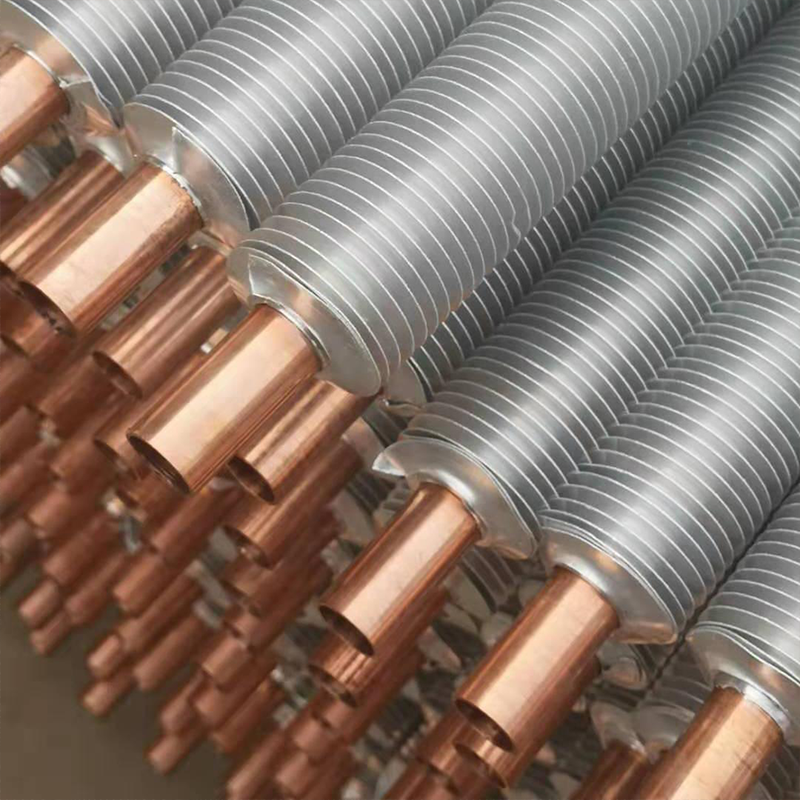
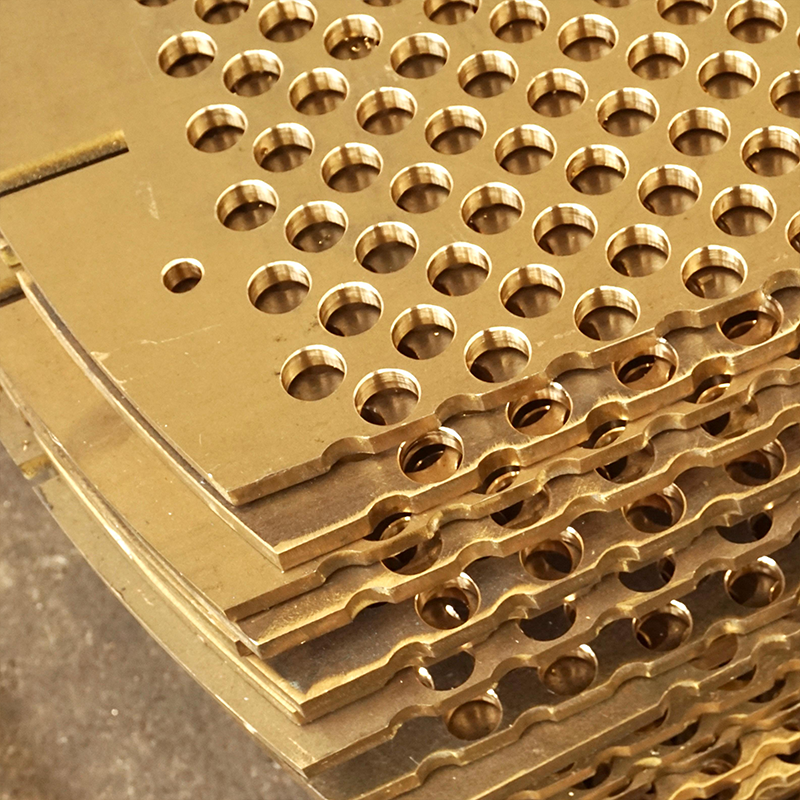
When the polyethylene strength graph shows a critical drop in performance already at 60-70°C, solutions from Wuxi Kaisheng continue to work stably at significantly higher parameters. The company manufactures ASME titanium shell-and-tube heat exchangers and high-pressure units that can withstand harsh chemical environments and extreme temperatures that polymers cannot. The company's product portfolio includes corrugated tube bundles made from 316 stainless steel, C46400 marine brass, copper-nickel alloys and N06625 nickel alloys, which provide high corrosion resistance and thermal efficiency where polyethylene would instantly melt or lose its seal.
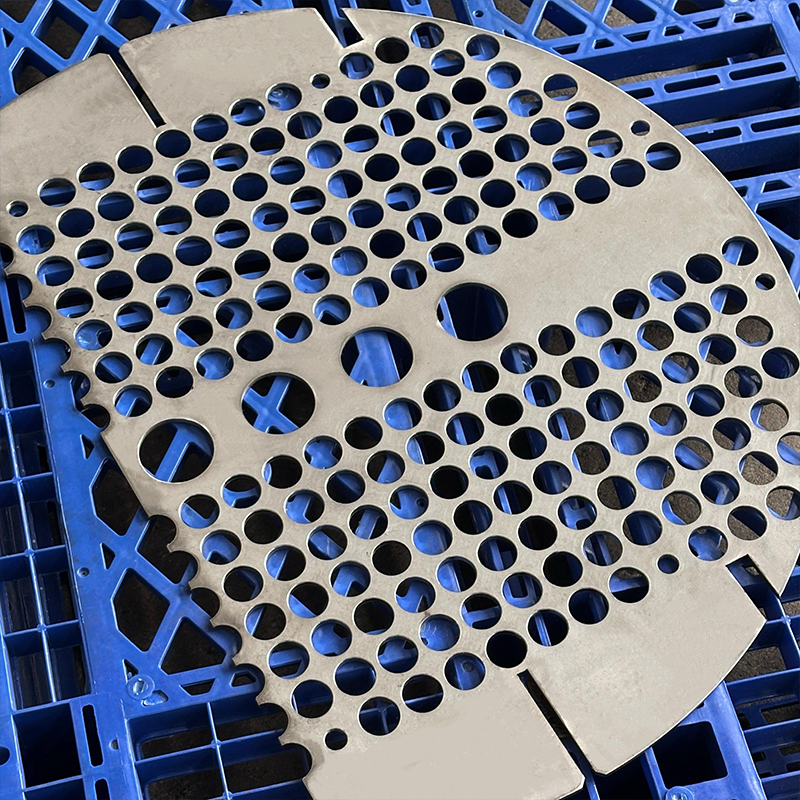
Wuxi Kaisheng products, including air coolers, waste heat boilers and special alloy tube sheets (titanium, 321 steel, C70600), are certified to strict international PED and ASME standards. This equipment is widely used in shipbuilding, seawater desalination and energy saving projects, providing customized solutions to customers around the world. If your project requires work in conditions where even special modifications of polyethylene do not guarantee safety, switching to metal systems from Wuxi Kaisheng becomes the only correct engineering solution that combines reliability, durability and compliance with the most stringent industry requirements.
Frequently asked questions regarding the use of PE at high temperatures
Can PE100 pipes be used for heating systems with a temperature of 80°C?
Absolutely not for continuous use. At 80°C the coefficient of reduction in polyethylene strength drops to 0.25-0.30. This means that the pipe will lose 70-75% of its load-bearing capacity. Even at low pressures, the risk of brittle fracture and rapid crack growth becomes unacceptably high. For such temperatures, it is necessary to use cross-linked polyethylene (PEX), metal-plastic or polypropylene (PP-RCT), specially designed for high temperature conditions, or switch to metal systems, such as those offered by Wuxi Kaisheng. The use of PE100 at 80°C is only possible in non-pressure drainage or ventilation systems where there is no mechanical stretching of the walls.
How quickly does cooled polyethylene regain its strength?
Polyethylene is a thermoplastic, which means the softening processes are reversible. When cooled to 20°C, the material almost completely restores its mechanical properties, if no irreversible changes in the structure (oxidation, destruction of chains) occurred during heating. However, if significant creep (deformation) occurs at high temperature under load, the geometric dimensions of the product will change permanently. The pipe will remain oval or stretch, affecting hydraulic performance and stress distribution. Therefore, restoring strength does not mean restoring shape.
Does the color of the pipe affect its heat resistance?
The pigment itself does not change the melting point or elastic modulus of the polymer. However, black color (technical carbon black) is a mandatory UV stabilizer for external pipes. Carbon black absorbs UV rays, preventing photo-oxidative degradation, which dramatically reduces the strength of the material. If a white or blue pipe is left in the sun, it will degrade faster, becoming brittle. In addition, the black pipe heats up more strongly in the sun (up to 60-70°C on the surface in summer), which must be taken into account when calculating the throughput, since the internal temperature of the environment will also increase. For underground installations, color is not important for heat resistance, but the standard requires longitudinal color stripes for identification (yellow for gas, blue for water).
What to do if the ambient temperature fluctuates unpredictably?
Thermal cycles (heating and cooling) create additional stresses due to the different coefficient of thermal expansion of polyethylene and metal fittings or supports. PE expands significantly (about 0.2 mm per meter when heated to 10°C). With frequent temperature fluctuations, this leads to material fatigue, especially at joints. In such cases, it is necessary to provide expansion compensators (U-shaped, lyre-shaped) and use sliding supports instead of rigid fixation. It is also recommended to increase the pressure safety factor by 15-20% above the calculated value for stable temperatures. In extreme cases, replacing the material with a more stable one should be considered.
Conclusion: safety is more important than saving on material
The graph of the dependence of PE strength on temperature is a fundamental law that cannot be circumvented by marketing gimmicks or hope for “maybe”. Polyethylene is a great material, but it has clear physical boundaries. Ignoring the loss of strength during heating is one of the most common causes of accidents in polymer pipelines and containers. We have verified this at hundreds of facilities: an attempt to use a conventional PE100 pipe where a PE-RT, PEX or even a metal heat exchanger is needed always ends in expensive repairs and production downtime.
When designing and purchasing, always consider the worst-case temperature scenario. Consider not only the operating temperature of the environment, but also possible peak temperatures, solar heating, flow friction and proximity to heat sources. Demand from suppliers full technical data and certificates confirming compliance with the service class. Do not hesitate to play it safe by choosing a pipe with a thicker wall, a higher grade of material, or switching to specialized equipment made of alloys - the cost of a mistake is many times higher than the difference in cost.
If you are unsure about choosing the right material for your specific conditions, don't take any chances. Our experts are ready to conduct a detailed calculation of your system, taking into account all temperature factors, and select the optimal solution, be it modern polymers or high-strength metal structures from partners like Wuxi Kaisheng, which will last for decades. We work only with proven raw materials and comply with all international safety standards.
Contact us todayto obtain an engineer's consultation and calculate the specifications for your project. Remember: choosing the right material now is a guarantee of trouble-free operation of your enterprise in the future.