
Scheme of installing a vertical tank on the foundation”
2026-08-24
- Key stages of installation: from site preparation to hydraulic testing
- Technical requirements for the construction of the foundation according to the installation diagram
- Step-by-step instructions for assembling the tank body
- Quality control of welded joints and anti-corrosion protection
- Integration of specialized equipment and the role of suppliers
- Hydraulic testing and commissioning
- Typical installation mistakes and ways to prevent them
- Compliance with international standards and certification
- Economic aspects and cost optimization
- Expert opinion and recommendations
Key stages of installation: from site preparation to hydraulic testing
A diagram for installing a vertical tank on a foundation is not just a drawing in a folder with documentation, but a strict algorithm of actions, violation of which leads to irreversible deformation of the housing and loss of warranty. In our practice, we have encountered situations where saving 48 hours on preparing a concrete base led to a distortion of a 12-meter-high wall after just three months of operation under load. Correct installation requires compliance with the sequence: geodetic layout, foundation installation, delivery of elements, bottom assembly, installation of the first chord, roof installation and testing. Each stage has its own critical control points, which cannot be ignored even with a short deadline for the delivery of the object.
We strongly recommend starting work only after receiving a complete set of working documentation (DD), approved by the chief engineer of the project. The absence of an agreed slinging scheme or work execution plan (WPP) is a direct reason for the suspension of work by the customer’s technical supervision. Below we will analyze in detail each step of the process, based on the requirements of GOST 31385-2016 and real experience in assembling more than 200 units of capacitive equipment of various sizes.
Necessary tools and prerequisites
Before the first slab is laid on the ground, it is necessary to ensure that all required equipment is available. Trying to start installation with an incomplete set of tools often leads to downtime, the cost of which exceeds the cost of renting the missing equipment. For high-quality assembly of a vertical steel tank (VSR), you will need:
- Lifting equipment:at least two truck cranes with a lifting capacity of 25 to 50 tons (depending on the weight of the rolled panels or sheets of the first belt). Using one tap is only possible for small-volume tanks up to 100 m³, but this significantly increases installation time.
- Welding equipment:semi-automatic machines for welding in shielding gases (MIG/MAG) with a power source capable of delivering current up to 500 A. Drying ovens for electrodes are required if manual arc welding of critical seams is used.
- Geodetic tool:an optical level or an electronic total station with a measurement accuracy of no worse than 2 mm per 1 km of travel. Conventional building levels are not sufficient to control the horizontality of a large diameter bottom.
- Rigging and equipment:traverses of a special design for lifting rolls without deforming them, mounting wedges, jacks with a lifting capacity of 10 tons and tightening belts.
- Instrumentation:thickness gauges, templates for checking the radius of curvature, vacuum chambers for checking the tightness of the bottom seams.
An important condition for starting work is the readiness of access roads. The soil must be compacted to a condition that can withstand the load of heavy equipment during the rainy season. We have seen cases where a crane got stuck in washed-out soil while lifting an element, which created an emergency situation. Check the bearing capacity of the soil in advance by ordering a geological report.
Technical requirements for the construction of the foundation according to the installation diagram
The foundation is the basis for the durability of the tank, and the scheme for installing a vertical tank on the foundation begins with soil analysis and selection of the type of foundation. An error in ground load calculations can result in uneven settlement, which can cause weld failure and product leakage. There are two main types of foundations for vertical tanks: ring reinforced concrete and solid sand (or crushed stone).
For tanks with a volume of over 1000 m³, a combined option is most often used: the central part is made of compacted sand with waterproofing, and the perimeter is made of a monolithic reinforced concrete ring. The height of the ring foundation is usually from 0.5 to 1.2 meters above the planning level, which provides access to shut-off valves and the possibility of visual inspection of the lower belt. The width of the ring is calculated based on the load from the wall and liquid, but should not be less than 1.5–2 meters for ease of welding.
Tolerances and geometry control
The foundation geometry must meet the tight tolerances specified in the design. Surface unevenness leads to the fact that the bottom sheets do not fit tightly to the base, forming air cavities. Under the weight of the product, these sheets can bend, creating pockets of corrosion on the inside, where it is impossible to apply a protective coating after installation. Permissible deviations in the height of the top of the foundation should not exceed ±10 mm around the entire perimeter. To control this parameter, we use the grid leveling method with a step of 2–3 meters.
Particular attention should be paid to anchor bolts if the tank design involves fastening to the foundation. Their location must strictly correspond to the arrangement of the base plates. A displacement of the anchor by more than 5 mm will make it impossible to install the tank without drilling new holes in the concrete, which is strictly prohibited without agreement with the designer. In our practice, there was a case when, due to an error in marking the anchors, the installation had to be stopped for a week for the manufacture of adapter plates, which increased the project budget by 15%.
The surface of the foundation must be cleaned of debris, oil and bitumen. Before laying the bottom, it is recommended to apply a layer of waterproofing (for example, roofing felt or special membranes) and make a sand cushion at least 100 mm thick with layer-by-layer compaction. The density of sand is checked by dynamic sounding. Do not forget that wet sand shrinks, so compaction must be carried out at optimal moisture content of the material.
Step-by-step instructions for assembling the tank body
The installation process depends on the chosen construction method: sheet assembly or roll-up. The scheme for installing a vertical tank on a foundation for these methods has significant differences in logistics and sequence of operations. The sheet method involves delivering flat sheets and rolling them on site, which takes more time but allows for the construction of tanks of unique diameters. Rolling involves factory-prepared belts, which are delivered in the form of cylinders and rolled out on site.
- Bottom installation.Assembly begins with laying the central sheets of the bottom (“rosette”) on a prepared sand bed. The sheets are welded together with an overlap of at least 30 mm. It is critical to maintain the order of sutures to minimize metal distortion. First, the longitudinal seams are welded, then the transverse ones. After assembling the central part, the edge sheets are mounted, which are connected to the first wall chord.Common mistake:Welders often neglect to use tacks of sufficient length, which causes the sheets to move during the main welding. Use magnetic squares to secure.
- Installation of the first wall chord.This is the most critical stage, since the first belt bears the maximum load from the liquid column. The sheets of the first belt are installed on the edge sheets of the bottom. Vertical joints are made with full penetration. The horizontal seam between the bottom and the first chord is one of the most stressed nodes. This requires special care in quality control. We recommend using automatic submerged arc welding for this weld if the dimensions allow, as this guarantees a consistent quality of penetration.
- Installation of subsequent belts.With the sheet-by-sheet method, assembly is carried out from the bottom up. Each subsequent belt is assembled on scaffolding or scaffolding installed inside or outside the tank. The sheets are temporarily fixed with clamps, verticality and roundness are checked, after which welding work is performed. With the roll method, the finished belts are fed by a crane, installed on top of each other, and the horizontal joints are welded. It is important to control the gap between the belts: it should not exceed 3 mm to ensure high-quality penetration.
- Roof installation.The roof design depends on the type of tank (pontoon, floating roof or fixed conical/spherical roof). Installation of a fixed roof is usually carried out by building on top or by lifting finished sections. For conical roofs, the center post and radial beams are installed first, then the deck is sheathed. Particular attention is paid to the junction of the roof to the upper chord of the wall (stiffening corner), which absorbs wind and snow loads.
- Installation of technological equipment.At the final stage, hatches, pipes, breathing valves, ladders and service platforms are installed. All holes in the wall must be reinforced with overlays according to the design. The installation of pipes must be carried out taking into account the thermal expansion of the pipelines in order to avoid the transfer of forces to the tank body.Please note:Never weld temporary rigging directly to the tank wall without subsequent removal and stripping of the metal, this creates pockets of corrosion and stress concentrations.
Once mechanical assembly is complete, a visual inspection of all welds is performed. Identified defects (undercuts, pores, lack of penetration) must be corrected before hydraulic testing begins. Remember that welding defects during testing is prohibited - you will have to drain the water and drain the tank, which will entail a huge loss of time.
Quality control of welded joints and anti-corrosion protection
The quality of the welds determines the tightness and safety of the entire structure. The installation scheme for a vertical tank on a foundation necessarily includes the stages of non-destructive testing (NDT). The scope of control is regulated by the project and regulatory documents (SP, SNiP, GOST). Typically, 100% of the length of the vertical seams of the first and second chords, as well as all cross-shaped joints, is subject to control.
To identify internal defects, radiographic testing (X-ray) or ultrasonic flaw detection (USF) is used. Radiography gives a clear picture in the form of a picture, but requires radiation safety measures and stopping work in the X-ray area. Ultrasonic testing is more mobile and safer, but requires highly qualified operator. Surface defects are detected by capillary inspection methods (color flaw detection) or magnetic particle method.
Application of protective coatings
Anti-corrosion protection is applied in accordance with the aggressiveness of the environment and the climatic region of construction. The inner surface of oil and petroleum product storage tanks is often not completely painted, since the product itself protects the metal, but the headwater area and bottom require reliable protection with epoxy compounds. The outer surface is painted with weather-resistant enamels in several layers.
Before painting, the surface must be cleaned of scale, rust and dirt to a degree of Sa 2.5 (shot blasting). The roughness of the surface profile is important for paint adhesion. Paint should be applied at air and metal temperatures not lower than +5°C and humidity not exceeding 80%. Violation of the temperature regime leads to the fact that the paint does not polymerize properly and peels off in the first season of operation. We have recorded cases where paintwork done in high humidity bubbled after just two weeks, requiring a complete redo.
Integration of specialized equipment and the role of suppliers
Successful operation of a tank farm is impossible without reliable auxiliary equipment. At the design and completion stage of a facility, it is critically important to select a supplier capable of ensuring not only compliance with standards, but also high corrosion resistance of materials in the aggressive environments of the oil refining and chemical industry. This is where companies likeWuxi Kaisheng Electric Power and Petrochemical Equipment Co., Ltd..
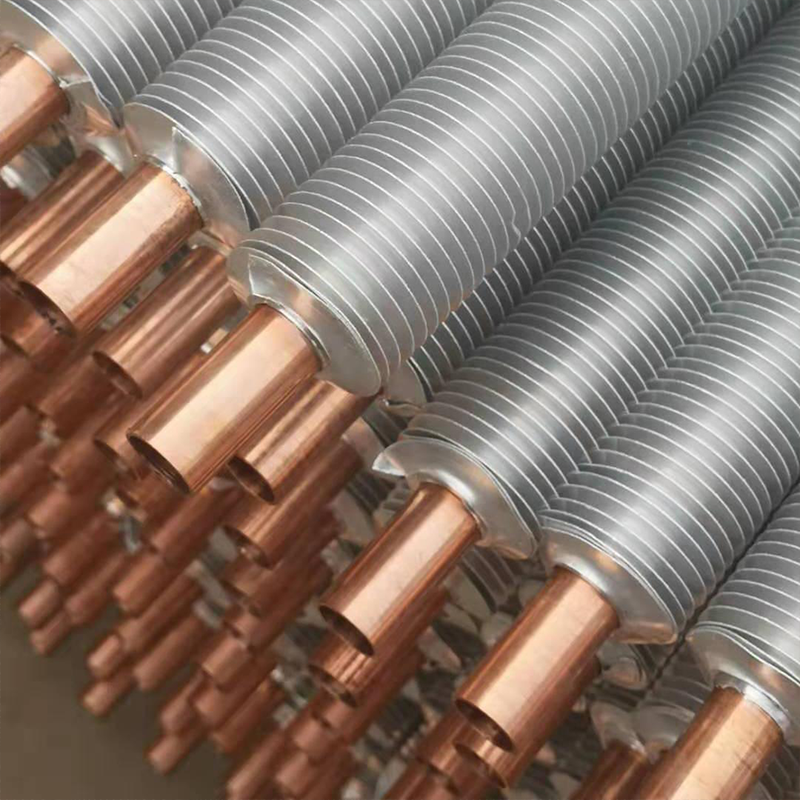
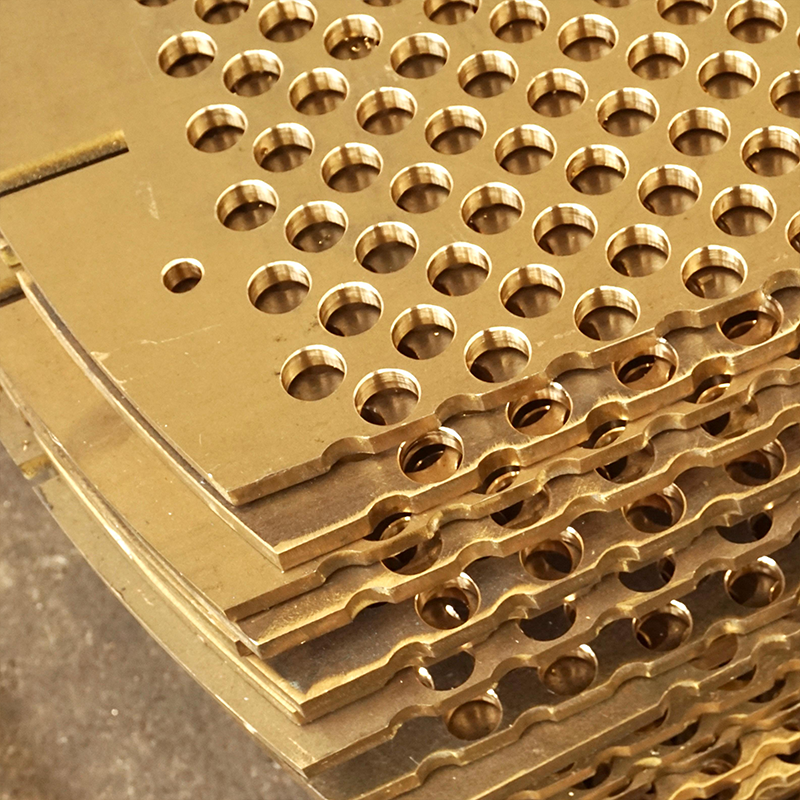
Specializing in the development and production of heat exchange, power generation and petrochemical equipment, the company offers solutions that ideally complement the infrastructure of tank farms. The manufacturer's portfolio includes titanium shell-and-tube heat exchangers, ASME-standard high-pressure units, and corrugated tube bundles made of 316 stainless steel, C46400 marine brass, and nickel-based alloys (N06625). These PED and ASME certified products offer exceptional resistance to high pressures and temperatures, making them ideal for oil treatment, water desalination and energy conservation applications.
The use of components made of carbon steel, stainless steel, titanium and copper alloys from trusted manufacturers allows us to create a unified ecosystem of the facility, where every element - from the tank itself to the heat exchange units - works with maximum efficiency. The company provides customized solutions for customers around the world, ensuring stable operation of equipment even in the most difficult operating conditions.
Hydraulic testing and commissioning
The final stage of installation is hydraulic testing, which confirms the strength and density of the tank. Tests are carried out with water whose temperature must be above +5°C. The tank is filled gradually, with stops at certain levels to measure foundation settlement and inspect welds.
The test procedure is as follows:
- Fill to 25%, 50%, 75% and 100% height.At each stage, a pause is maintained (usually 4–12 hours) to stabilize the stress in the metal and settlement of the base.
- Geodetic monitoring.During the filling process, surveyors record the settlement of the foundation using marks installed along the perimeter. Uneven settlement indicates problems with the soil or foundation structure.
- Visual inspection.The commission inspects all welds for leaks. Particular attention is paid to the area where the bottom is welded to the first chord.
- Load endurance.The tank is kept filled with water for the time specified in the design (usually 24 to 72 hours).
- Emptying.Water is drained at the same gradual rate as filling to avoid vacuuming and deformation of the walls during rapid release of pressure.
If a leak is detected during testing, water is drained below the level of the defect, the defect is cut out, resealed and monitored. After this, the tests are repeated. Only after successful completion of hydraulic tests is a readiness certificate signed and the tank is handed over to the customer.
Typical installation mistakes and ways to prevent them
Even experienced teams make mistakes that can be fatal to the facility. Analysis of our projects allowed us to identify a number of typical problems associated with violations of installation technology.
1. Ignoring thermal expansions.Metal expands when heated and contracts when cooled. If the tank is rigidly fixed to the foundation without taking this factor into account (for example, anchors or compensators on pipelines are installed incorrectly), colossal stresses arise in the walls. In summer, in hot climates, the difference in metal temperatures between day and night can reach 30–40°C, which causes cyclic loads on welds. Solution: strictly follow the design regarding the installation of sliding supports and compensation units.
2. Poor quality edge preparation.Welding dirty or wet edges will cause pores and cracks. Often, in a hurry, installers forget to dry the electrodes or clean the edges of oil. The result is hidden defects that only appear under load. The rule is simple: no cleanliness - no welding. Electrode humidity should be monitored daily.
3. Violation of the welding sequence.Chaotic seams cause warping of the sheets. Welding should be carried out from the center to the edges (for the bottom) or in a checkerboard pattern (for belts) so that the stresses are distributed evenly. Experienced welders know: “weld so that the metal has freedom to move.”
4. Savings on geodesy.An attempt to align the tank “by eye” or using a regular level is unacceptable. Misalignment of the tank axis by more than 1/1000 of the height leads to uneven distribution of pressure on the foundation and the risk of capsizing during strong winds or seismic activity. Use only certified optical instruments.
Compliance with international standards and certification
When implementing projects in different jurisdictions, it is important to consider local regulations. For the markets of Russia and the CIS countries, the main document isGOST 31385-2016“Vertical cylindrical steel tanks for oil and petroleum products.” This standard regulates all aspects: from metal requirements to control methods.
Standards are often applied for exports to EuropeAPI 650(American Petroleum Institute) orEN 14015. They have differences in safety factors, methods for calculating wall thickness and welding requirements. For example, API 650 allows the use of higher yield strength steels, which can reduce wall thickness and metal intensity, but requires more stringent control of welding procedures.
Equipment certification confirms its compliance with safety requirements. The presence of a GOST R certificate of conformity or a TR CU (EAS) declaration is mandatory for putting a facility into operation in the territory of the Customs Union. The manufacturer must provide a quality certificate for the metal, certificates for welding materials and NDT certificates. The absence of any of these documents may become grounds for refusal to accept the object by technical supervision.
Economic aspects and cost optimization
Installation costs make up a significant portion of the project budget. Cost optimization should not come at the expense of quality, but proper planning can save up to 20% of money. The main cost items are: rental of cranes, wages for welders and consumables.
Using the rolling method allows you to reduce the time spent on site by expensive crane equipment by 30–40% compared to sheet assembly. Although the cost of the rolls themselves may be higher due to factory processing, the overall cost often works out better due to the reduced lead time. In addition, factory welding under ideal conditions is always better and cheaper than manual welding in the field.
Logistics also plays a key role. Delivery of oversized cargo (rolls with a diameter of more than 3 meters) requires special permission and support. Sometimes it is more profitable to deliver sheets and roll them on site than to pay for transportation of large dimensions. Calculation of the optimal delivery option should be carried out at the design stage.
Expert opinion and recommendations
Installation of a vertical tank is a complex engineering process that requires highly qualified personnel and strict adherence to technology. The installation diagram of a vertical tank on a foundation is a road map that leads from the pit to the safe operation of the facility. Neglecting any stage, be it preparing the base or checking welds, creates risks, the cost of eliminating which is many times greater than the savings at the initial stage.
Our experience shows that successful project implementation is possible only with close cooperation between the customer, designer and installation organization. Regular supervision and independent technical audits help identify problems at an early stage. Do not try to save on the professionalism of the performers - the cost of an error in capacitive equipment is too high.
If you are planning the construction of a tank farm or need an examination of an existing project, contact specialists who have a reference list of successfully completed projects. We are ready to offer comprehensive solutions, including design, manufacturing, delivery and turnkey installation, with a guarantee of compliance with all current safety standards.
Find out more about tank installation services
Contact us todayto receive advice and calculate the cost of your project.