decorative perforation of metal surfaces
2026-07-27
- What is decorative perforation of metal surfaces and why is it a game changer in architecture?
- Choice of material: how steel grade affects the durability of decorative perforation
- Геометрия отверстий: влияние рисунка на прочность и прозрачность
- Application in various industries: from noise protection to interior design
- Frequently Asked Questions
- Контроль качества и типичные ошибки при приемке
- Conclusion and next steps
What is decorative perforation of metal surfaces and why is it a game changer in architecture?
Decorative perforation of metal surfaces— это не просто узор, пробитый в листе стали или алюминия. In our practice of working with industrial facilities and architectural bureaus, we are convinced that this is a high-tech process where aesthetics directly dictates the functionality of the material. When an architect chooses a perforated facade, he solves three problems simultaneously: visual identification of the building, solar radiation management and indoor acoustic comfort. A mistake at the stage of choosing the type of perforation can cost the customer millions of rubles in reworking the ventilation or replacing panels in two years due to corrosion.
We often see situations where clients come with the request to “just make it beautiful,” ignoring the physical and mechanical properties of the metal after stamping. The result is predictable: deformation of the sheets during installation, uneven fading of the paint, or, worst of all, a violation of the load-bearing capacity of the structure under wind load. In this article, we will analyze the technical nuances that distinguish a high-quality industrial product from a handicraft, and give specific recommendations for choosing parameters for your projects.
Technological limitations and real production capabilities
Many people believe that a modern CNC machine can punch any hole anywhere. This is a dangerous misconception. The reality is this: each type of hole has its own strict limitations on the minimum distance to the edge of the sheet (bridge) and the ratio of the hole diameter to the thickness of the material. If these rules are violated, the metal will simply tear during stamping or the sheet will deform (“lead”), making it unsuitable for installation on a flat surface.
In our workshop, we encountered a case when a contractor tried to implement a design project with 1 mm perforation in a 3 mm thick sheet without taking into account the hole spacing. Result: 40% of the batch was rejected at the press stage, and the remaining sheets had microcracks around the holes, which appeared only after powder coating. The client lost three weeks of the project delivery deadline. Therefore, the first step to a successful project is not choosing a picture in a catalog, but an engineering calculation of the live section of the metal.
There are three main methods for creating perforations, and the choice between them determines cost and quality:
- Штамповка на механических прессах.The fastest and cheapest method for print runs over 500 m². Used for standard round, square and hexagonal holes. The main advantage is high speed (up to 600 strokes per minute). The downside is the need to manufacture expensive equipment (stamp) for each unique design. Экономически оправдано только при больших объемах.
- Laser cutting.Ideal for complex artistic patterns, logos and small batches. No hardware required, instant setup flexibility. However, the speed is lower, and the cut edge may have a specific roughness that requires additional processing. The laser also changes the structure of the metal in the heat-affected zone, which is critical for some grades of stainless steel.
- Waterjet cutting.Suitable for thick sheets (more than 10 mm) or heat-sensitive materials. Gives a perfect edge without dross, but the process is slow and expensive. It is rarely used in decorative facades, mainly in heavy engineering or premium interior design.
If your project involves an area of less than 200 m² with a unique design, laser cutting will be more profitable, despite the high price per meter, since you save on tooling. For standard ventilated facades with an area of 1000 m² or more, stamping will reduce the cost per square meter by 3-4 times. We recommend that you always request a test sample before starting a production batch to check the behavior of a particular alloy under the selected processing method.
Choice of material: how steel grade affects the durability of decorative perforation
The choice of base metal is 80% of the success of operating a perforated panel. Decorative perforations on metal surfaces create hundreds of stress concentration points. In these places, the material is most vulnerable to corrosion, especially if the protective layer is damaged. The wrong choice of steel grade in an aggressive environment (for example, in a coastal climate or in chemical production) will lead to the appearance of rust within 6-8 months, even if painted.
Let's look at the main materials we work with and their actual behavior in operation, based on GOST standards and international analogues. It is our deep expertise in working with complex alloys that allows us to guarantee the reliability of our products even in extreme conditions.
Углеродистая сталь с полимерным покрытием
The most budget option, widely used in interior design and temporary structures. Обычно используется сталь марок St3SP или 08пс (аналог DC01/DC04). The key point here is not the steel itself, but the quality of the preliminary preparation and the type of coating. Galvanizing is required. Without a layer of zinc (minimum 140 g/m²), any scratch on the paint will become a source of corrosion.
We strongly do not recommend using regular black steel with a simple primer for outdoor façades. In our practice, there was a case when an object in the Moscow region began to “bloom” with red streaks after a year. The reason turned out to be savings on passivation of the surface before painting. For external use, use only double galvanized steel with a minimum 50 micron thick polyester (PE) or plastisol (PVC) coating. Plastisol hides minor stamping defects better due to its texture.
Stainless steel (AISI 304 and AISI 316)
The gold standard for premium facades and the food industry. Здесь важно понимать разницу между марками. AISI 304 (analogue 08Х18Н10) is suitable for most cities in the middle zone. But if the site is located closer than 5 km to the sea or near a chemical plant, the chlorides in the air will quickly penetrate the passive layer of 304 steel.
For such conditions, the only correct solution is AISI 316 (03Х17Н14М2), containing molybdenum. Yes, it is 30-40% more expensive, but its service life is calculated in decades without loss of appearance. An important nuance: after perforation, it is advisable to subject stainless steel to etching or electropolishing in order to remove hardening and restore the protective oxide film in the cut areas. Ignoring this stage leads to pitting corrosion along the contour of the holes.
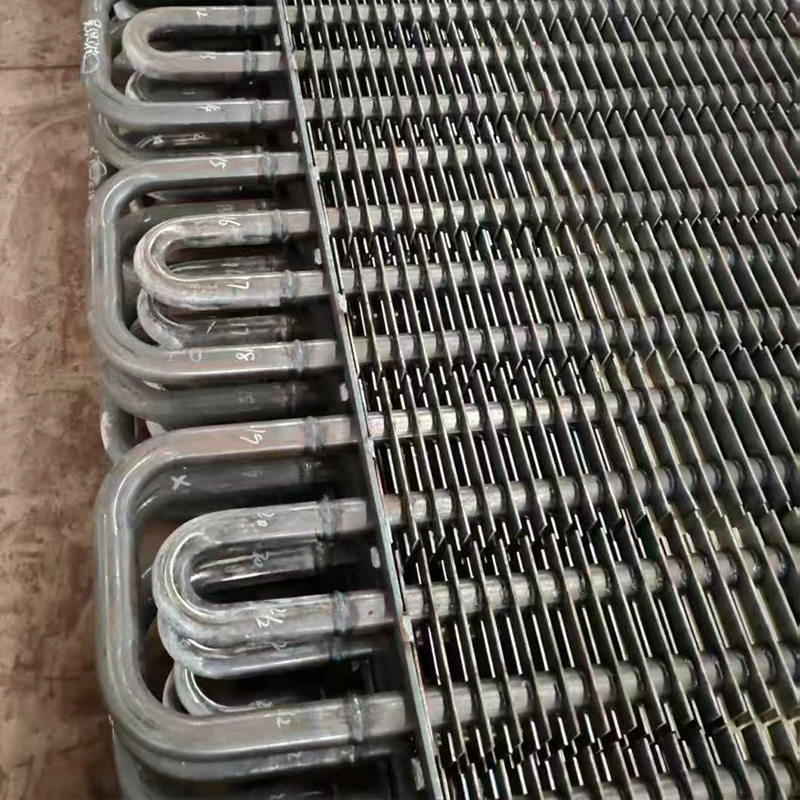
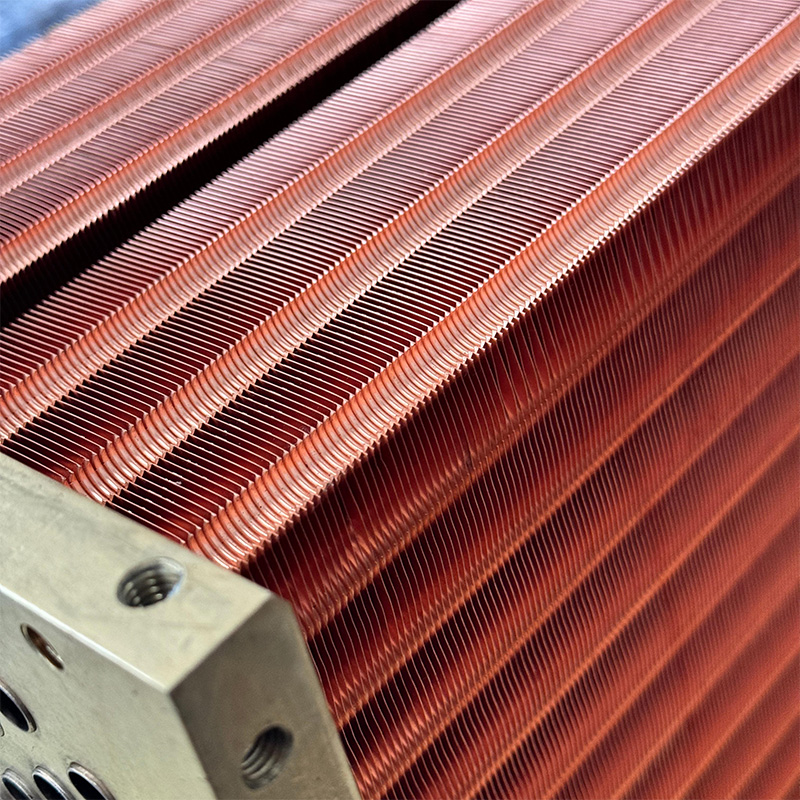
By the way, our experience with highly corrosive environments in the oil and gas industry confirms the critical importance of proper alloy selection. CompanyWuxi Kaisheng Electric Power and Petrochemical Equipment Co., Ltd.specializes in the design and production of equipment operating under extreme conditions: from titanium shell-and-tube heat exchangers to high-pressure systems according to ASME standards. We manufacture tube bundles and lattice structures in 316 stainless steel, C46400 marine brass, copper-nickel alloys and N06625 nickel alloys. Our PED and ASME certified products have proven exceptional corrosion resistance in seawater desalination plants and petrochemical plants. We apply the same approach to controlling the quality of materials and understanding the behavior of alloys under load when selecting architectural perforation solutions, ensuring that your façade will stand the test of time as reliably as our industrial equipment.
Алюминиевые сплавы (серии 3xxx и 5xxx)
Алюминий легче стали в 2.5 раза и не ржавеет в привычном понимании. Alloys AMg2 (AlMg2) or AMts (AlMn) are used for perforation. They bend perfectly and keep their shape. The main problem with aluminum is low hardness. If installed carelessly, perforated sheets can be easily scratched, and the anodized coating, unlike paint, cannot be touched up locally.
Anodizing with a thickness of 15-20 microns provides excellent protection, but limits the color range (silver, bronze, gold, black). If you need any RAL color, you will have to use powder painting, which requires careful surface preparation (chromatization), otherwise adhesion will be weak. In windy regions, large-area aluminum panels may begin to “flap” due to windage, so a reinforced substructure is required.
| Comparison parameter | Galvanized steel + Polymer | Stainless steel AISI 304/316 | Aluminum (AMg2/AMts) |
|---|---|---|---|
| Material cost | Low (baseline) | Высокая (в 3-5 раз выше стали) | Medium (1.5-2 times higher than steel) |
| Structure weight | Heavy (requires a powerful frame) | Very heavy (heaviest load) | Lightweight (reduces the load on the foundation) |
| Corrosion resistance | Depends on the integrity of the coating. Risk of paint damage. | Maximum. Самовосстанавливающийся слой оксида. | High. Does not rust, but is afraid of an alkaline environment (concrete). |
| Difficulty of processing | Average. Easily stamped, but requires edge protection. | High. Упрочняется при деформации, изнашивает инструмент. | Low. Мягкий материал, легко режется и гнется. |
| Recommended area | Shopping centers, warehouses, internal partitions. | Facades by the sea, food production, luxury segment. | Reconstruction of old buildings (where it is impossible to overload), ceilings. |
When choosing a material, always consider not only the initial estimate, but also the cost of maintenance after 5 years. Cheap steel may require complete panel replacement, while stainless steel only needs washing. Contact our engineers to calculate the cost of ownership of the material for your specific region.
Геометрия отверстий: влияние рисунка на прочность и прозрачность
The perforation design is a balance between “air” and “metal”. The term "percentage of open area" is a key parameter in technical specifications. Он показывает, какая часть листа удалена. The higher this percentage, the better the ventilation and light transmission, but the lower the rigidity of the sheet. Exceeding the threshold of 50-60% of the open area for thin sheets (up to 1.5 mm) often leads to the fact that the panel turns into a “mesh” and loses its ability to maintain a plane.
Рассмотрим самые популярные конфигурации и их скрытые особенности:
Round holes in a checkerboard pattern
A classic of the genre, occupying 70% of the market. The checkerboard pattern (shifting the rows by half a step) ensures maximum uniformity of stress distribution. With the same diameter and pitch, a checkerboard layout provides approximately 15% more open area than a straight layout, while maintaining better strength characteristics. Это связано с тем, что перемычки металла работают как пространственная ферма.
It is important to follow the rule: the distance from the edge of the sheet to the center of the first hole must be at least 1.5 times the diameter of the hole. If the designer wants to make perforation “on the edge,” the technology will require leaving an uncut frame (usually 10-20 mm), otherwise the edge of the sheet will be deformed by the wave. In our practice, we solve this problem by laser cutting the contour after stamping, but this makes the process more expensive.
Square and rectangular holes
Выглядят более строго и графично, но являются технологически сложными. The corners of the square are stress concentration points. Under dynamic loads (vibration, wind), cracks most often originate in the corners. To avoid this, manufacturers often make micro-roundings in the corners (radius 0.2-0.5 mm), which are invisible to the eye, but save the sheet from destruction.
Rectangular perforation (slotted) is often used for sound-absorbing screens along roads or in concert halls. The orientation of the slots (vertical or horizontal) affects the strength anisotropy. The sheet will be much stronger in bending along the long side of the crack and weaker across it. This must be taken into account when arranging fasteners.
Decorative and figured patterns
Звезды, цветы, волны, логотипы компаний. Laser cutting rules the roost here. Основная проблема таких решений — «термический коробление». Локальный нагрев металла приводит к тому, что лист выгибается пропеллером. This can be compensated for in two ways: either use cutting modes with minimal heat input (which is slow), or use subsequent straightening of the sheets on rollers (which is not possible for all reliefs).
For complex patterns, we recommend choosing sheets of greater thickness than the calculated load, so that the reserve of rigidity compensates for temperature deformations. It is also worth avoiding too small parts in the pattern, which may fall out during transportation or become clogged with dirt that cannot be cleaned.
Calculation of live cross-section and wind load
Design engineers often make the mistake of treating perforated sheet as solid by simply reducing its weight. This is not true. Perforation changes the aerodynamic coefficient. Wind passes through the openings, reducing the overall load on the façade but creating turbulence behind it. For high-rise buildings this is critical.
The simplified load capacity calculation formula must take into account the section weakening coefficient. If the open area is 40%, the bending capacity of the sheet does not drop by 40%, but exponentially more due to the violation of the integrity of the structure. We use specialized Finite Element Analysis (FEA) software to ensure the façade can withstand storm winds of up to 30m/s. Do not rely on the “eye gauge” when calculating high-rise structures.
Application in various industries: from noise protection to interior design
The versatility of perforated metal allows you to solve diametrically opposed problems. Let's look at real cases where this material became the only possible solution.
Architectural facades and sun protection
Modern glass office buildings suffer from the greenhouse effect. Кондиционеры работают на износ. The solution is a second cladding contour made of perforated panels. Such a screen allows diffused light to pass through, but cuts out direct sunlight, reducing heat gain by 40-60%.
In one of our projects in Krasnodar, we replaced conventional blinds with stationary perforated aluminum screens with variable hole spacing (gradient perforation). The holes are smaller at the bottom (more shadow), larger at the top (more light and views of the sky). Effect: indoor temperatures dropped by an average of 4°C in summer, and energy costs dropped by 25%. In addition, the building acquired a unique dynamic appearance: in the morning it looks translucent, in the evening it looks monolithic.
Промышленная акустика и шумозащита
Перфорированный металл — это лицевая панель для акустических систем. By itself, it does not absorb sound, but it protects the soft absorber (mineral wool, glass wool) from mechanical damage and moisture, allowing the sound wave to pass freely inside. The perforation ratio is critically important: for effective absorption of low frequencies it must be at least 20-25%.
At the production of compressor stations, we installed casings made of perforated steel (5 mm holes, 8 mm pitch) filled with basalt fiber. The noise level decreased from 95 dB to 65 dB, which complies with sanitary standards for workplaces. Important: the holes must be clean, without burrs, which can create a whistle when air passes at high speeds. We carry out mandatory vibration treatment (tumbling) of such panels before painting.
Filtration and sorting in the agricultural sector and food industry
Здесь требования к точности геометрии максимальны. Sieves for sorting grain, fruit or bulk construction mixtures are made of stainless steel. The holes must be perfectly calibrated: any deviation of 0.1 mm will result in the wrong size fraction entering the finished product.
Hygiene is important in the food industry. The perforation should be such that product residues do not get stuck in the holes. Conical perforations are often used (the hole widens downward) to ensure self-cleaning during vibration. We supply such solutions for potato processing plants, where resistance to humid environments and frequent cleaning with aggressive agents is important.
Design of retail spaces and retail
In stores, perforated panels are used to create lightweight partitions that zone the space without blocking views and ventilation. A popular trend is the use of lighting behind perforations. Light passing through thousands of holes creates a shimmering or 3D effect.
One of our clients, a chain of fitness clubs, used black perforated ceilings with built-in lighting. This made it possible to hide all communications (ventilation, pipes, cable routes), leaving the room visually high and “breathable”. Черный матовый металл растворяется в темноте потолка, видны только световые точки. Это решение дешевле подвесных систем типа Armstrong и долговечнее.
Frequently Asked Questions
Какой минимальный размер отверстия можно сделать?
Технически возможно пробить отверстие диаметром от 0.5 мм, но это экономически целесообразно только на специальных микро-перфорационных станках. Для стандартного оборудования нижний предел обычно равен толщине листа. То есть, в листе 2 мм минимальное надежное отверстие — 2 мм. Попытка сделать отверстие меньше толщины металла резко увеличивает износ инструмента и риск брака. Для микро-перфорации (менее 1 мм) лучше использовать лазерную резку, хотя скорость производства упадет в разы.
Можно ли гнуть перфорированные листы?
Да, можно, но с серьезными ограничениями. Линия сгиба не должна проходить через отверстие. Минимальное расстояние от центра ближайшего отверстия до линии сгиба должно составлять не менее 2.5 диаметров отверстия (для стали) или 3 диаметров (для алюминия). Если согнуть лист прямо по отверстию, металл треснет. В случаях, когда сложный гиб необходим, мы сначала гнем цельный лист, а затем делаем перфорацию лазером, либо используем специальные матрицы для гибки с поддержкой зоны отверстия.
Как очистить перфорацию от пыли и грязи?
Это больная тема для фасадов. Мелкие отверстия (менее 3 мм) со временем забиваются уличной пылью, особенно если за ними есть утеплитель. Обычная мойка водой под давлением помогает не всегда. Лучшее решение на этапе проектирования — заложить отверстия диаметром от 5-6 мм или щелевую перфорац ию, они самоочищаются дождем. Для уже установленных систем с мелкой перфорацией рекомендуется использовать мойки высокого давления с углом факела 25 градусов и химические средства, растворяющие органические загрязнения. Мы не рекомендуем использовать абразивные щетки, так как они повредят лакокрасочное покрытие вокруг отверстий.
Влияет ли перфорация на пожаробезопасность?
Напротив, перфорированные металлические экраны часто улучшают пожарную ситуацию. Они не горят (класс НГ) и позволяют системам дымоудаления работать эффективнее, не создавая сплошных завес. Однако, если за перфорацией расположен горючий утеплитель, наличие отверстий может создать тягу, усиливающую горение. Поэтому в вентилируемых фасадах обязательно устройство противопожарных рассечек из негорючей минваты в местах перекрытий этажей, независимо от типа облицовки.
Контроль качества и типичные ошибки при приемке
Получив партию перфорированных листов, не спешите подписывать акт приемки. Внешне все может выглядеть хорошо, но скрытые дефекты всплывут при монтаже. Вот чек-лист, который мы используем internally и рекомендуем нашим клиентам:
- Проверка геометрии отверстий.Возьмите штангенциркуль и измерьте диаметр 10 случайных отверстий в разных частях листа. Разброс не должен превышать ±0.1 мм для штамповки и ±0.05 мм для лазера. Если отверстия «плавают», значит, изношена оснастка или сбиты настройки станка. Это приведет к проблемам при стыковке рисунка между листами.
- Отсутствие заусенцев.Проведите рукой (в перчатке!) по обратной стороне листа. Заусенцы должны быть минимальными. Большие заусенцы травмируют монтажников, мешают плотному прилеганию панелей друг к другу и собирают на себе лишнюю краску, которая потом откалывается. Наличие ощутимых заусенцев — признак затупленного инструмента или неправильного зазора между пуансоном и матрицей.
- Плоскостность листа.Положите лист на ровный стол. Зазор между листом и столом не должен превышать 3-5 мм на погонный метр. Волнистость («коробление») часто возникает из-за внутренних напряжений, снятых неравномерно при перфорации. Такой лист невозможно закрепить ровно, он будет топорщиться углами.
- Качество кромки.Осмотрите края листа. Они должны быть ровными, без вырывов металла. Особенно важно для нержавейки и алюминия, где неровный край портит весь вид. Если планируется сварка каркаса, кромка должна быть очищена до металлического блеска.
- Адгезия покрытия.Для окрашенных листов проведите крестовой надрез (тест по ГОСТ 15140 / ISO 2409) в незаметном месте. Лента не должна отрывать краску вместе с металлом. В зонах вокруг отверстий краска часто ложится тоньше или, наоборот, скапливается каплями — проверьте эти места особо тщательно.
Одна из самых частых ошибок — игнорирование направления текстуры при перфорации прокатанных листов. На блестящем металле (нержавейка шлифованная, алюминий) направление волокон должно совпадать на всех панелях. Если при раскрое не учесть это, фасад будет выглядеть «разношерстным» на солнце: одни полосы светлые, другие темные. Всегда маркируйте направление проката при заказе.
Conclusion and next steps
Декоративная перфорация металлических поверхностей — это мощный инструмент в руках профессионала, который превращает обычный металл в функциональное искусство. Но магия исчезает, если пренебречь техническими деталями: выбором марки стали, расчетом открытой площади и контролем качества штамповки. Мы видели слишком много проектов, испорченных желанием сэкономить на этапе прототипирования или игнорированием физических свойств материала.
Наш опыт показывает: лучший результат достигается при сотрудничестве инженеров и дизайнеров на самой ранней стадии. Не ждите, пока чертежи будут утверждены, чтобы узнать, можно ли вообще реализовать такую перфорацию. Приглашаем вас обсудить ваш проект с нашими технологами. Мы поможем подобрать оптимальный рисунок, который впишется в бюджет и выдержит эксплуатацию в вашем регионе.
Не рискуйте репутацией объекта из-за неправильно подобранного материала. Получите бесплатный расчет стоимости и техническую консультацию прямо сейчас. Мы подготовим для вас образцы перфорации и расчеты прочности в течение 24 часов.
Contact us todayдля обсуждения деталей вашего заказа и получения каталога стандартных и эксклюзивных рисунков перфорации.