
Import of high-tech equipment for PP”
2026-09-01
- Import of high-tech equipment for PP: procurement strategy and technical nuances
- Critical technical parameters when choosing a PP extrusion line
- Import logistics and EAC/GOST certification requirements
- Economic efficiency and return on investment (ROI) calculations
- Typical integration errors and operational risks
- Market prospects and technology trends in 2026
- Frequently Asked Questions
- Conclusion and recommendations for choosing a supplier
Import of high-tech equipment for PP: procurement strategy and technical nuances
The polypropylene market in 2025–2026 is undergoing a structural transformation, where the key factor in competitiveness is not just production volume, but the efficiency of raw material processing. Importing high-tech equipment for PP is no longer the task of the logistics department; now it is a strategic decision that determines the profitability of the entire enterprise for the coming decades. In our practice, we see companies losing up to 18% of their margins due to the wrong choice of an extruder or melt filtration system purchased without taking into account the real characteristics of the granulate. This article was written by engineers who personally participated in the commissioning of more than 40 polypropylene processing lines in regions with harsh climates and unstable energy supplies.
We will not use general phrases about “high quality.” Instead, we will look at specific parameters: from the accuracy of maintaining temperature in the auger zones to the EAC certification requirements for customs clearance in the Eurasian Economic Union. If you're planning a workshop upgrade or new production launch, the information below will save you months of downtime and hundreds of thousands of dollars in correcting design errors.
Critical technical parameters when choosing a PP extrusion line
The choice of equipment begins not with the brand, but with an analysis of the rheology of your raw materials. Polypropylene (PP) is a finicky material, especially homopolymers with a high melt flow index (MFI). An error in calculating the length of the screw or the pitch of the turns leads to degradation of the polymer even before leaving the head. In our practice, there was a case when a client purchased a universal extruder for PVC and PE, trying to adapt it to PP. The result was a 30% drop in the mechanical strength of the finished pipe due to local overheating in the dosing area.
When evaluating supplier proposals, pay attention to the ratio of auger length to diameter (L/D). For modern PP recycling or compounding applications, the minimum ratio should be 36:1, and for critical applications (such as medical devices or automotive components) we recommend 40:1 or higher. Increasing this parameter provides more complete melting and homogenization of the mixture without the need to increase the temperature of the cylinder, which is critical to prevent thermal degradation.
The drive system also requires detailed analysis. Older models with gear drives often do not provide stable screw rotation when the melt viscosity changes. Modern high-tech solutions use direct drives with frequency regulation, allowing rotation speed fluctuations to be maintained within ±0.1 rpm. This directly affects the stability of the wall thickness of the produced profile or film. Ignoring this parameter leads to an overconsumption of raw materials of up to 5-7% only at the calibration stage.
Particular attention should be paid to the ventilation system. When processing wet or volatile recycled polypropylene, a two-stage screw with vacuum degassing is mandatory. The pressure of residual gases in the degassing zone should not exceed 5 mbar. We have seen lines where a weak vacuum system resulted in the formation of micropores in the granule, making subsequent injection molding impossible without pre-drying, increasing the production cycle by 40%.
Accuracy of temperature control is another marker of equipment class. Heating zones must be divided into independent contours with a pitch of no more than 150 mm along the cylinder. Using PID controllers with auto-tuning allows you to maintain the temperature with an accuracy of ±1°C. For PP this is critical, since the processing window for some brands is narrow: overheating just 10°C above the melting point starts a chain reaction of oxidation, changing the color and smell of the material. Check for Type J or K thermocouples in each zone and the ability to output data to the SCADA system for real-time monitoring.
Don’t forget about the materials used to make the working parts. Bimetallic coatings for screws and cylinders (for example, Xaloy alloy or equivalent) are required when working with filled composites (fiberglass, talc, chalk). Standard nitrided steel 38CrMoAlA will exhaust its service life in 6–8 months with intensive use with abrasive fillers, while bimetal lasts 3–5 years. Cost of ownership calculations should include screw replacement every 10,000 hours for conventional steels versus 40,000 hours for bimetallic steels.
Comparative analysis of melt filtration systems
The quality of the final product directly depends on the purity of the melt. The choice between hydraulic screen changer and continuous filtration system determines the operating mode of your line. Below is a detailed comparison of the two main technologies used in imported PP equipment.
| Comparison parameter | Hydraulic mesh replacement (Screw type / Slide plate) | Continuous Screen Changer |
|---|---|---|
| Operating principle | Periodic replacement of filter elements with a stop in flow or a short-term pressure surge. | Continuous cleaning without interrupting the process, removing contaminants automatically. |
| Impact on stability | Causes pressure pulsations (up to 15-20 bar), which leads to fluctuations in the thickness of the product. | Provides stable pressure with a deviation of less than 2 bar, ideal for films and thin profiles. |
| Applicability to raw materials | Suitable for pure virgin PP granulate with low impurity content. | Essential for recycled PP, film waste and highly contaminated materials. |
| Filter fabric consumption | Low, but stops are required for replacement (time loss 5-10 minutes per cycle). | The mesh consumption is higher, but the lack of downtime compensates for the costs when working in 3 shifts. |
| Maintenance cost | Lower capital costs, higher risk of defects due to pressure drops. | The initial cost is higher, but the defect rate is lower and the overall productivity of the line is higher. |
| Recommendation | For lines with a capacity of up to 500 kg/h, operating on primary raw materials. | For capacities from 800 kg/h and post-consumer waste (PCR) processing. |
If your task is to produce packaging tape or stretch film from recycled materials, the choice in favor of a continuous filtration system is obvious. Pressure surges during manual or semi-automatic mesh replacement lead to fabric ruptures and defects, which can reach 20 meters of product for each replacement cycle. In the long run, the lost time and raw materials outweigh the difference in equipment price.
Import logistics and EAC/GOST certification requirements
The process of importing industrial equipment into the EAEU countries (Russia, Belarus, Kazakhstan) is regulated by strict technical regulations. Import of high-tech equipment for PP is impossible without proper registration of permits. The main mistake made by importers is trying to save money at the certification stage by choosing declaration schemes that do not correspond to the actual functionality of the machine. This leads to cargo delays at customs for a period of 2 weeks to 2 months.
Equipment for plastic processing is subject to the Technical Regulations TR CU 010/2011 “On the safety of machinery and equipment”. The key requirement is confirmation of compliance according to the 1C (serial production) or 3C (batch) scheme, which includes analysis of design documentation and testing in an accredited laboratory. Particular attention is paid to protection systems: emergency buttons, housing locks, protection against overheating and overpressure must comply with GOST R IEC 60204-1 standards.
In 2025, the requirements for the energy efficiency of electric motors included in imported lines were tightened. Motors must comply with an efficiency class of at least IE3, and in some cases IE4 is recommended for new construction. Customs authorities may request an energy efficiency certificate for each engine with a power exceeding 0.75 kW. The absence of this document is grounds for refusal to release the goods. We recommend requesting IE3/IE4 certificates from the manufacturer at the contract stage.
Another critical point is labeling. All controls, warning signs and instructions must be duplicated in Russian. Stickers applied over English text with tape or poor-quality printing often cause orders from supervisory authorities during the first inspection by Rostechnadzor. Request from the manufacturer a Nameplate indicating the year of manufacture, serial number, rated power and EAC mark, engraved or laser marked on the metal.
The logistics chain also has its own characteristics. High-precision equipment, such as extruders with precision gears, are sensitive to shock loads. When transporting by sea, it is mandatory to install shock and tilt sensors inside the container. In our practice, there was a case when, during transportation from Southeast Asia, a container was subjected to strong rolling. The sensor recorded an overload of 4G. Acceptance of the equipment was suspended until a complete inspection of the gearbox and shafts was carried out, which revealed microcracks in the bearing housing. Without this sensor, the line would be running and fail after 3 months of operation, shifting the blame to the installers.
Delivery times today vary from 90 to 140 days, depending on the complexity of customization. Standard models can be shipped faster, but project-specific lines (for example, with a special feed zone configuration for light film waste) require additional engineering time. Schedule at least 4 weeks for customs clearance and receipt of certificates after the cargo arrives at the port of destination.
Economic efficiency and return on investment (ROI) calculations
Purchasing equipment is an investment that should pay off by reducing operating expenses (OPEX) and increasing the output of quality products. When calculating an economic model, many focus only on the purchase price (CAPEX), ignoring energy consumption and yield. For a line with a capacity of 1000 kg/h, the difference in electricity consumption between old and modern equipment can be 150–200 kWh per hour. With round-the-clock operation, this is more than 1 million kWh per year, which in monetary terms is a significant amount.
Let's look at an example of the implementation of a new line for compounding PP with glass fiber. The old line had a yield of 92% due to problems with fiber dispersion and thread breaks. New high-tech equipment with optimized screw geometry raised this figure to 97.5%. With a processing cost of $1.2 per kg and a production volume of 6000 tons per year, the increase in useful output amounted to 330 tons. This generated an additional $396,000 in revenue from waste reduction alone, not including energy savings.
An important factor is the flexibility of the line. Modern equipment allows you to quickly change from one recipe to another. Changeover time has been reduced from 4–6 hours to 45–60 minutes thanks to the modular design of the filters and quick-release heater connections. This allows small orders to be processed cost-effectively, which was impossible on old machines, where downtime for changeovers “ate up” the entire margin of a small batch.
Maintenance costs also play a role. The use of components from well-known global brands (Siemens, ABB, Schneider Electric) in the control and drive system simplifies the search for spare parts and service support in the region. Cheap analogues from unknown manufacturers can cost 20% less, but the waiting period for a control board in the event of a breakdown can reach 3 months, stopping all production. The reliability of automation directly affects the technical utilization index (KTI) of the equipment.
When planning your budget, consider pre-commissioning (PNA) costs. High-quality import of high-tech equipment for PP always includes a visit from the manufacturing plant’s engineers or certified partners. An attempt to save money at this stage and carry out adjustments using your own electricians often results in the line operating at 60–70% of its rated capacity for years. Correctly setting temperature profiles and speeds of auger zones is an art that requires experience working specifically with polypropylene.
Typical integration errors and operational risks
Even the most advanced equipment can perform poorly if not integrated correctly into the production process. One of the most common mistakes is that the auxiliary equipment does not match the main one. Installing a cheap dispenser with an accuracy of ±1% on a high-precision extruder negates all the advantages of an expensive machine. To introduce additives (flame retardants, dyes, stabilizers) into polypropylene, gravimetric dispensers are required with an accuracy of no worse than ±0.1%. An error in the dosage of an expensive additive leads either to a loss of product properties or to an unjustified overuse of chemicals.
The water cooling system is also often underestimated. Polypropylene requires specific temperature conditions in the cooling bath. The use of ordinary tap water without a thermostatic system leads to uneven cooling of the profile, causing internal stress and warping of the product after leaving the line. We strongly recommend using closed loops with chillers capable of maintaining water temperature within ±0.5°C. In addition, the water must be prepared (softened) to prevent the formation of scale in the calibrator channels, which impairs heat removal.
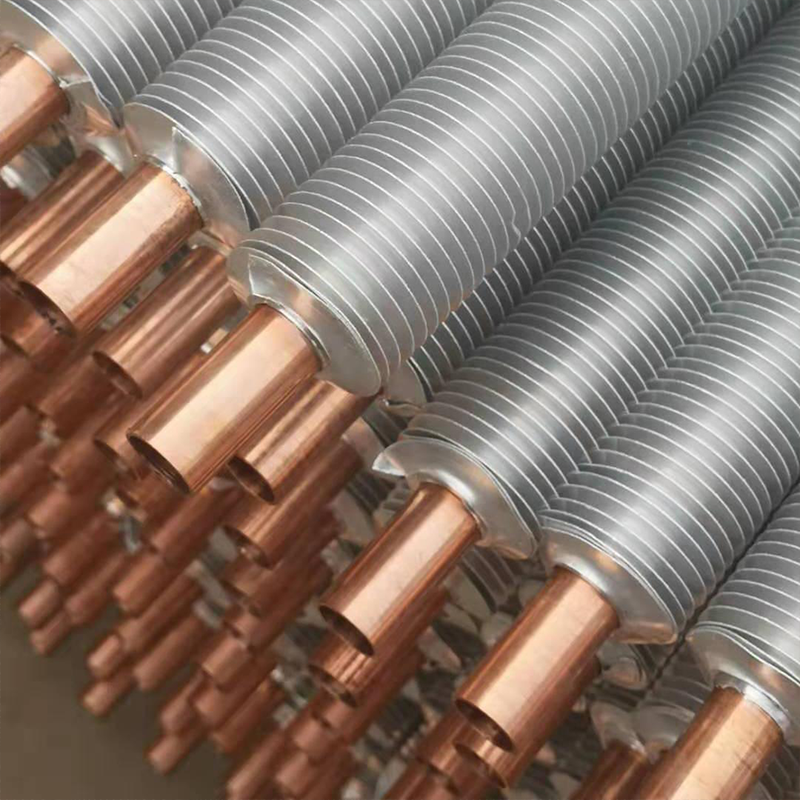
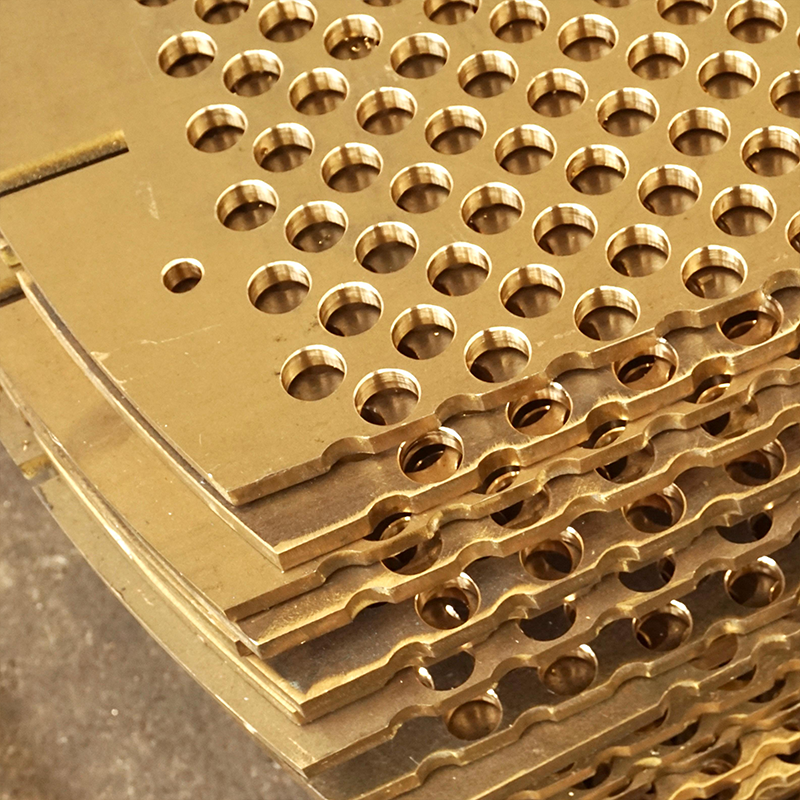
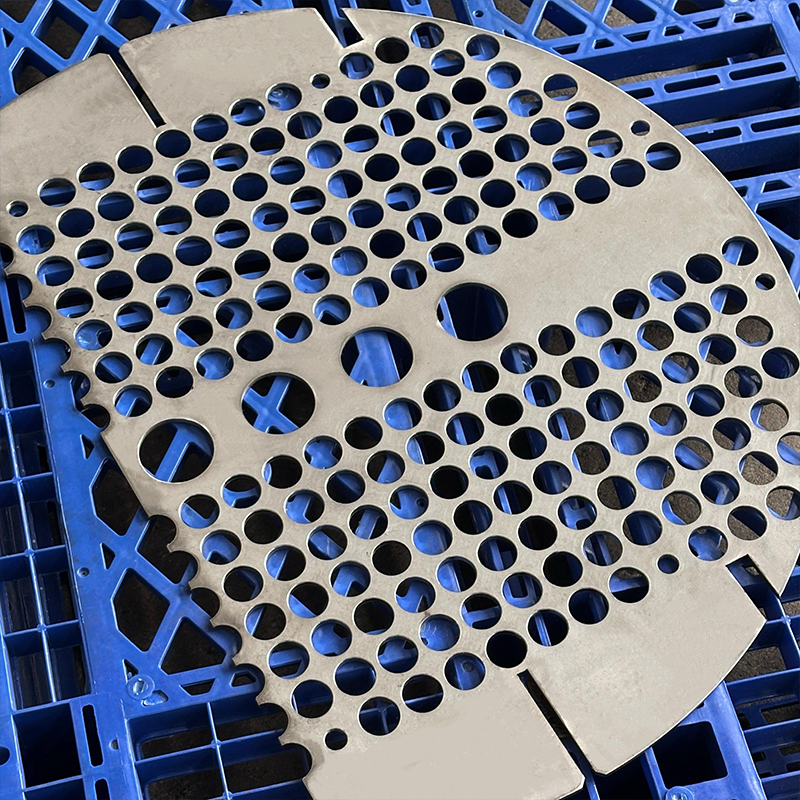
It is worth noting here the importance of the quality of heat exchange equipment, which is the heart of any thermoregulation system. CompanyWuxi Kaisheng Electric Power and Petrochemical Equipment Co., Ltd.specializes in the development and production of highly effective solutions for such problems. Their products, including titanium shell-and-tube heat exchangers, 316 stainless steel and copper-nickel corrugated tube bundles, and air coolers, are certified to international ASME and PED standards. Thanks to the use of corrosion-resistant materials (titanium, nickel alloys N06625, marine brass C46400), Wuxi Kaisheng equipment ensures stable heat transfer even in the aggressive environments of petrochemicals and water desalination. Integrating such reliable components into a PP extrusion line ensures the temperature precision needed to prevent polymer degradation and reduces the risk of downtime due to cooling system failures.
Errors in the organization of the raw material loading area lead to air entering the screw. Polypropylene granulate, especially light (bulk density< 0.5 g/cm³), can create “bridges” in the hopper. The absence of vibration exciters or force feeders results in pulsating material feed, which causes pressure surges and extrusion instability. The solution is to use conical hoppers with active systems to prevent material freezing.
Another risk is the human factor and personnel qualifications. Operators accustomed to working on mechanical machines from the 1990s often do not understand the logic behind HMI touch panels and automatic algorithms. Personnel training should not be carried out formally, but with practical training of actions in emergency situations. In our practice, there was a case when the operator, when an alarm went off, simply restarted the machine without eliminating the cause (clogged filter), which led to the melt being forced through the seals and a fire in the head area.
Lack of a preventative maintenance (maintenance) plan is a recipe for premature wear. The regulations should include regular checking of the tightening torque of flange bolts, monitoring the condition of heaters (measuring resistance), and lubrication of the gearbox according to operating hours. Ignoring these procedures leads to the fact that after 2 years of operation, the gaps in the screw pair increase beyond the permissible values, and productivity drops by 30% without the possibility of recovery by simply adjusting the speeds.
Market prospects and technology trends in 2026
The PP processing equipment market is moving towards maximum automation and environmental friendliness. The Industry 4.0 trend means that new equipment must be ready to connect to factory IIoT (Industrial Internet of Things) networks. The ability to remotely monitor process parameters from the equipment manufacturer makes it possible to predict breakdowns before they occur. Big data analysis of temperature, pressure and current consumption helps optimize formulations in real time.
Tightening environmental regulations around the world is driving demand for complex waste processing technologies. Future equipment must work effectively with multilayer films and contaminated raw materials. Advances in chemical recycling technologies are creating demand for pyrolysis plants and reactors integrated with traditional extrusion lines. The import of high-tech equipment for PP now includes not just mechanics, but complex chemical and technological complexes.
Energy independence is becoming a priority. New extruder models are being developed taking into account the possibility of operating from alternative energy sources or with heat recovery. Heat recovery systems from cylinder cooling zones can be used to preheat raw materials or heat shop floors, reducing the overall carbon footprint of production. This becomes an important argument when exporting products to EU countries where the cross-border carbon management mechanism (CBAM) operates.
Localization of component production is also changing the market landscape. To reduce the risks of logistics gaps, many suppliers are moving the assembly of components closer to their sales markets. This allows us to reduce the delivery time for spare parts and reduce the cost of service. However, critical components (augers, gearboxes, controllers) are still manufactured in central factories with the highest quality control. When choosing a supplier, it is important to understand the balance between localized assembly and the origin of key components.
Frequently Asked Questions
What is the service life of a screw pair for polypropylene processing?
The service life directly depends on the presence of abrasive fillers. For pure PP, a high-quality bimetallic screw lasts 40,000 – 50,000 hours. When processing composites with glass fiber (>20%), the resource is reduced to 20,000 - 25,000 hours. Regular measurement of gaps (at least once a year) will allow you to predict replacement in advance and avoid a drop in product quality.
Can the PP line be used to recycle polyethylene (PE)?
Technically possible, since the processing temperatures are close, but the efficiency will be lower. PP screws have a different geometry of compression and mixing zones, optimized for higher melt viscosity. When working with PE on a “polypropylene” screw, you will get worse homogenization and instability of extrusion. For versatility, special screws with combined geometry are required, but they are a compromise solution.
What certification is required to import equipment to Russia?
The main document is the Certificate of Conformity TR TS 010/2011. Additionally, a declaration of TR CU 004/2011 (low-voltage equipment) and TR CU 020/2011 (electromagnetic compatibility) may be required. Without the EAC mark on the equipment plate, customs clearance is not possible. All documents must be prepared in Russian by an accredited body.
What is the normal melt pressure for PP pipe extrusion?
The operating pressure in front of the filter plate is usually between 250 and 350 bar depending on the material viscosity and capacity. Exceeding 400 bar indicates a clogged filter or too low melt temperature. Operation at pressures above 450 bar is dangerous due to rupture of seals and requires immediate shutdown of the line to check the parameters.
Is pre-drying necessary for polypropylene?
PP homopolymer is practically non-hygroscopic and usually does not require drying if stored under proper conditions. However, copolymers (PP-R, PP-B) and especially recycled materials may contain moisture. If there is moisture in the melt, the surface of the product becomes dull or porous. In such cases, installing a drying hopper with a dew point of -40°C is mandatory. It is better to play it safe and install a dryer than to receive a defective batch.
Conclusion and recommendations for choosing a supplier
Investments in new production facilities require a balanced approach. Importing high-tech PP equipment is a complex process where technical specifications, logistics and legal clearance are equally important. Do not chase the lowest price at the procurement stage, since the cost of ownership for 10 years consists of reliability, energy efficiency and quality of the products. A mistake in choice can cost millions of rubles in lost profits.
We recommend starting your dialogue with potential suppliers with a technical audit of your current tasks and expansion plans. Request a reference list of customers in your area and contact them for feedback on actual equipment performance. Require factory testing (FAT) before shipment using your raw material or its equivalent.
Our team is ready to provide expert support at all stages: from selecting line configurations and checking drawings to supporting customs clearance and installation supervision. We help minimize risks and ensure rapid achievement of project targets.
Contact us todayto discuss your project and receive an individual commercial offer with a payback calculation. We will help you choose a solution that will become the foundation for the growth of your business in the coming years.View the catalog of polypropylene extrusion lines.