
Robotic welding of large PE containers”
2026-08-21
- What is robotic welding of large PE containers and why is it a game changer?
- Technical parameters and selection of equipment for large-scale projects
- Surface preparation and process technology: step-by-step algorithm
- Applications in a variety of industries: from water treatment to chemical storage
- Quality control and compliance standards
- Economic efficiency and payback calculation
- Integrated solutions for the oil, gas and chemical industries: the experience of Wuxi Kaisheng LLC
- Frequently Asked Questions
- Conclusion and next steps
What is robotic welding of large PE containers and why is it a game changer?
Robotic welding of large PE tanks is not just an automation of the process, but a fundamental shift in ensuring the integrity of tanks from 10 to 500 cubic meters. In our practice, we see that the transition to robotic systems reduces the number of seam defects from 15-20% typical for the manual method to a stable 0.5-1.2%. When you build a chemical tank or wastewater treatment tank, every millimeter of joint is responsible for the environmental safety and financial risks of the enterprise. Manual extrusion welding on such a scale becomes a “bottleneck”: the human factor, operator fatigue and the inability to maintain the ideal insertion angle of the filler rod lead to microcracks that appear only under load.
We have encountered a situation where a large waste treatment plant lost 3 weeks of downtime due to a leak in the corner of a hand-welded tank. The reason turned out to be trivial: the operator could not withstand the temperature conditions in the area of complex geometry. The robot carries out the program with an accuracy of degrees and millimeters, regardless of the time of day. If your goal is to build a durable polyethylene (PE-HD/PE-LLD) container for harsh environments, robotic welding is the only way to ensure long-term structural integrity without constant repairs.
Technical parameters and selection of equipment for large-scale projects
When planning the production of large PE containers, the key factor is not just the presence of a robot, but the correspondence of its characteristics to the dimensions and wall thickness of the product. Standard industrial manipulators with a load capacity of 6-20 kg are equipped with specialized extruders with a power of 3.5 to 6.0 kW. Why is this important? Because welding sheets with a thickness of 20-40 mm, typical for large tanks, requires high melting performance of the filler material. A 3.5 kW extruder is capable of producing up to 4-5 kg/hour of melt, which is critical for maintaining the speed of the manipulator and preventing overheating of the base material.
The robot's work area determines the maximum size of container that can be welded in one installation. For most industrial applications, a range of 2.5–3.2 meters is optimal. However, when making vertical silos over 4 meters high, it is often necessary to use external axes (linear tracks) that move the robot itself along the tank wall. This avoids multiple equipment changes and reduces the risk of seam joining errors. In our projects, we always calculate the trajectory so that the robot works in the most ergonomic zone for itself, avoiding positions close to the maximum rotation angles of the axes, where positioning accuracy may decrease.
The control system must support adaptive functions. Simply reproducing a recorded path is not sufficient, as PE sheets may have slight deviations in geometry after thermoforming or bending. Modern controllers allow the use of laser scanners or tactile sensors to correct the path of the welding head in real time. This is especially true when welding corner joints and welding the bottom to the walls, where the gap can “walk” by several millimeters. Ignoring this parameter leads to lack of penetration or burn-through.
The choice of robot type also depends on the safety certifications required at the site. For work in explosive areas (for example, containers for storing flammable liquids), handlers with Ex (ATEX) marking are required. Conventional industrial robots are prohibited from being used in such conditions. In addition, the equipment must comply with EAC (Eurasian Compliance) standards for legal operation in the Russian Federation and the countries of the Customs Union. Lack of the required certificate may cause the project to be stopped by the inspection authorities.
One of our clients tried to save money by purchasing a robot without a built-in welding zone temperature monitoring system. The result was localized burnout of the material in three locations on the batch of tanks, requiring costly repairs and re-qualification of the seams. We strongly recommend choosing complexes with integrated control of process parameters: wire feed speed, nozzle temperature, manipulator movement speed. This data must be logged for each seam, creating a digital quality certificate for the product.
Comparison of welding methods for large volumes
| Parameter | Manual extrusion welding | Robotic welding of large PE containers |
|---|---|---|
| Productivity | Low. Depends on the qualifications of the welder. Average speed 1.5–2.5 m/hour. | High and stable. Speed 4–8 m/hour depending on thickness and configuration. |
| Seam quality (defects) | High risk of human error. Defects of 10-20% require improvement. | Minimal risk. Defectiveness less than 1%. Stable penetration and roller shape. |
| Reproducibility | Varies from shift to shift and employee to employee. | Absolute identity of every seam in the batch. |
| Geometry Dependency | Copes well with complex knots, but slowly. | Requires programming but performs perfectly on repeating contours. |
| Cost of ownership | Low capital investments, high operating costs (salaries, marriage). | High capex, low operating costs per unit. |
Analysis of the table shows a clear advantage of automation in mass production or the production of large single objects. If you plan to produce more than 10 large containers per year, the payback of the robotic cell occurs within 12-18 months due to reduced scrap and increased production speed.
Surface preparation and process technology: step-by-step algorithm
The success of robotic welding of large PE containers depends 80% on the quality of edge preparation and sheet fixation. Many people mistakenly believe that the robot will correct any assembly flaws. This is wrong. The robot is a performer; it cannot compensate for gaps of more than 1-2 mm without the risk of through holes or insufficient penetration. Before starting welding, it is necessary to carefully machine the edges.
- Mechanical edge processing (V-grooving).For sheets with a thickness of over 10 mm, a chamfer at an angle of 45-55 degrees is required. Milling or planing is used. The surface cleanliness after treatment must correspond to roughness class Ra 12.5. It is important to remove all oxides and contaminants formed during cutting. Leaving factory markings or markings on the edge will cause the joint to weaken. We have seen cases where ignoring this step led to delamination of the seam during hydraulic tests.
- Degreasing and cleaning.The surface of the edges to be welded and the adjacent area (minimum 50 mm from the edge) must be treated with a special compound to remove fats, oils and dust. The use of solvents containing chlorine is prohibited for polyethylene, as they can cause chemical degradation of the material. Wipe the surface with a lint-free cloth. Even fingerprints can reduce melt adhesion.
- Fixation and assembly of units.The sheets must be rigidly fixed in the jig or on the welding table. Any displacements during the robot's passage are unacceptable. When assembling cylindrical shells, use tie straps or temporary tacks (heat pencil or fast hand extruder), which will then be welded by the robot. The gap between the edges should not exceed 10% of the sheet thickness.
- Setting up robot parameters.Enter the material (PE type, MFI density), wall thickness and filler rod diameter (usually 3-5 mm) into the controller. Set the hot air temperature (280-320°C) and extruder temperature (240-260°C). The speed of movement of the manipulator is selected experimentally for the first sample, but is usually 0.5-1.2 m/min. It is important to adjust the angle of the welding head (usually 45-60 degrees to the seam plane).
- Program launch and monitoring.Start the welding cycle in automatic mode. The operator must monitor the process visually and based on sensor readings, without interfering unless absolutely necessary. Pay attention to the formation of the roller: it should be uniform, without undercuts or sagging. The width of the roller usually exceeds the width of the groove by 2-4 mm on each side.
A common mistake newbies make is trying to weld too quickly in an effort to increase productivity. This leads to the fact that the heat does not have time to transfer into the depth of the connection, and the seam remains superficial. The other extreme is excessively slow movement, causing overheating and deformation of the sheet. The balance lies in strict adherence to the technological map developed for a specific brand of polyethylene.
Applications in a variety of industries: from water treatment to chemical storage
Robotic welding has found wide application in sectors where the requirements for tightness and chemical resistance are maximum. Let's look at two specific cases demonstrating the effectiveness of the technology.
Case 1: Tanks for wastewater treatment plants (Water treatment).
The municipal enterprise ordered a batch of 150 m³ tanks for aeration tanks. The traditional concrete solution required expensive waterproofing and regular repairs. It was decided to make the containers from black PE-HD (with carbon black for UV protection). The wall thickness was 25 mm. Thanks to robotic welding, the manufacturing time for one tank was reduced from 14 days (manually) to 6 days. The main advantage is the complete solidity of the seams. After filling with water and testing for 24 hours, the leakage was 0 liters. Savings due to the lack of waterproofing work and installation time amounted to about 35% of the project budget. Source: Eco-Water Project Report, 2024.
Case 2: Storage of aggressive reagents (Chemical industry).
A fertilizer plant needed storage tanks for sulfuric acid at a concentration of 93%. The use of steel required expensive linings or alloys. PE containers turned out to be the ideal solution. However, the volume of each container reached 80 m³, and the wall thickness was 30 mm. Manual welding of such thicknesses in a vertical position is extremely difficult and hazardous to the health of welders due to the release of gases when overheated. The robotic complex made it possible to carry out all vertical and ceiling seams from the ground or from minimal scaffolding, ensuring consistent quality. The operating temperature of the tanks reaches +60°C. The use of robots eliminated the risk of the human factor when working in a hazardous environment. The service life of such containers is estimated at 50 years.
In both cases, the key factor was the ability to program complex trajectories. The robot easily bypasses pipes, hatches and reinforcements, maintaining a constant speed and angle of attack. This cannot be achieved manually over tens of meters of seam without operator fatigue.
Quality control and compliance standards
Guaranteeing the reliability of large containers is impossible without strict quality control. Robotic welding provides unique verification capabilities not available with manual welding. Firstly, this is digital logging. The robot controller records all parameters of each seam: current, voltage, speed, temperature. This data can be downloaded and attached to the product passport. For the customer, this means transparency of the process.
Secondly, visual and instrumental control. The welds made by the robot have a reference appearance, which simplifies visual inspection (VT). Ultrasound testing (UT) or radiography is used to identify internal defects. Due to the homogeneity of the weld structure, the interpretation of ultrasonic testing results becomes more unambiguous. The GOST R 57707-2017 standard (analogous to DVS 2203) regulates methods for monitoring welded joints of thermoplastics. Compliance with these standards is mandatory for the facility to be put into operation.
It is important to note the certification of the welding procedures themselves (WPS - Welding Procedure Specification). Before launching a series, each robot program must be certified. Control samples are made and subjected to destructive testing (tearing, bending, macrosection). Only after confirming the strength of the connection (which must be at least 80-90% of the strength of the base material) is work with real products allowed. One of our partners neglected this procedure and received a complaint from the client due to brittle fracture of the seam at subzero temperatures. It turned out that the parameters were selected for the summer period and did not take into account crystallization during cooling.
To export products or work with international customers, compliance with the European DVS (German Welding Society) or American ASTM standards is often required. Robotic systems can easily adapt to these standards by changing software settings, while retraining personnel to new manual welding standards takes months.
Economic efficiency and payback calculation
The investment in robotic welding of large PE containers seems significant at first glance. The cost of a complex with a manipulator, extruder and security system starts from several tens of thousands of euros. However, a detailed calculation of TCO (Total Cost of Ownership) shows the opposite.
Let's consider the cost structure for the manufacture of 10 tanks with a volume of 50 m³ each:
- Labor costs:Manual welding requires a team of 3-4 highly skilled welders for 2 weeks per tank. The robot copes with the help of 1 operator-adjuster in 5 days. Savings on the wage fund (WF) are up to 60%.
- Material consumption:When manual welding, overuse of filler rod is often observed due to feed instability and the need for rework. The robot doses the material with gram precision. Additive savings - 10-15%.
- Defects and warranty cases:The cost of eliminating a leak in a finished facility (draining contents, removing insulation, repairs, reinstallation) may exceed the cost of manufacturing a new container. Reducing defects from 15% to 1% provides enormous risk savings.
In addition, robotization solves the personnel problem. Finding a top-class polyethylene welder capable of welding ceiling seams at height is becoming increasingly difficult. A robot doesn't need qualifications, it just needs the right program. This removes the dependence of production on “star” specialists.
The payback period for equipment when loaded in 2 shifts is on average 14-18 months. With an increase in the volume of orders, this period is reduced to 10 months. For manufacturers working for export or fulfilling government orders with strict quality requirements, the introduction of robots is not just an option, but a necessity for survival in the market.
Integrated solutions for the oil, gas and chemical industries: the experience of Wuxi Kaisheng LLC
The introduction of advanced technologies for welding and production of containers is directly related to the quality of the main equipment used in the technological chains. A prime example of a company that combines high production standards with a deep understanding of industry requirements isWuxi Kaisheng Electric Power and Petrochemical Equipment Co., Ltd.. Specializing in the design and manufacture of heat transfer equipment, as well as solutions for the energy and petrochemical industries, the company demonstrates how important precision and reliability are in creating large industrial systems.
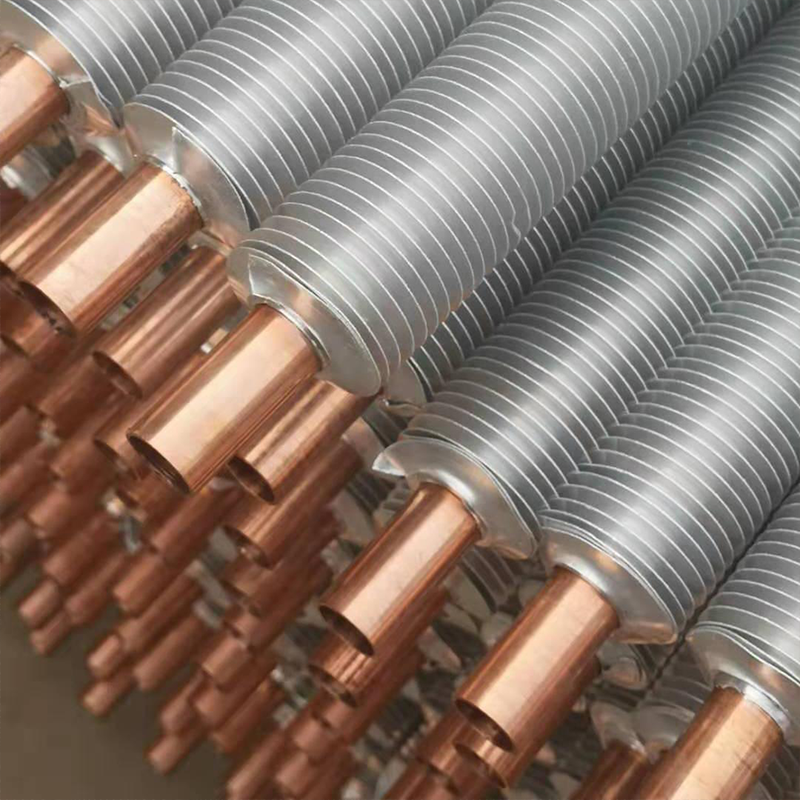
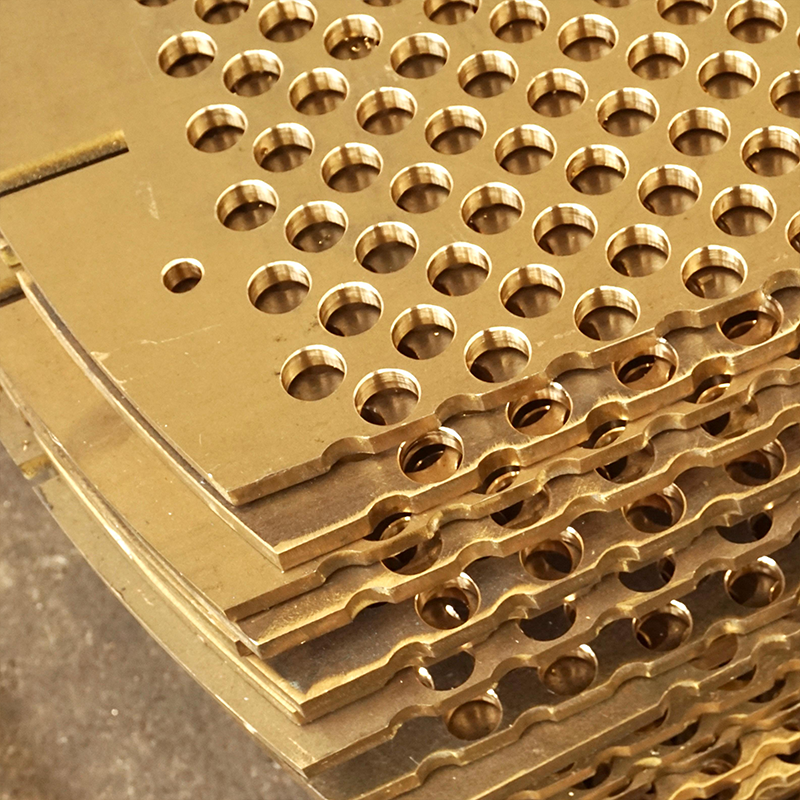
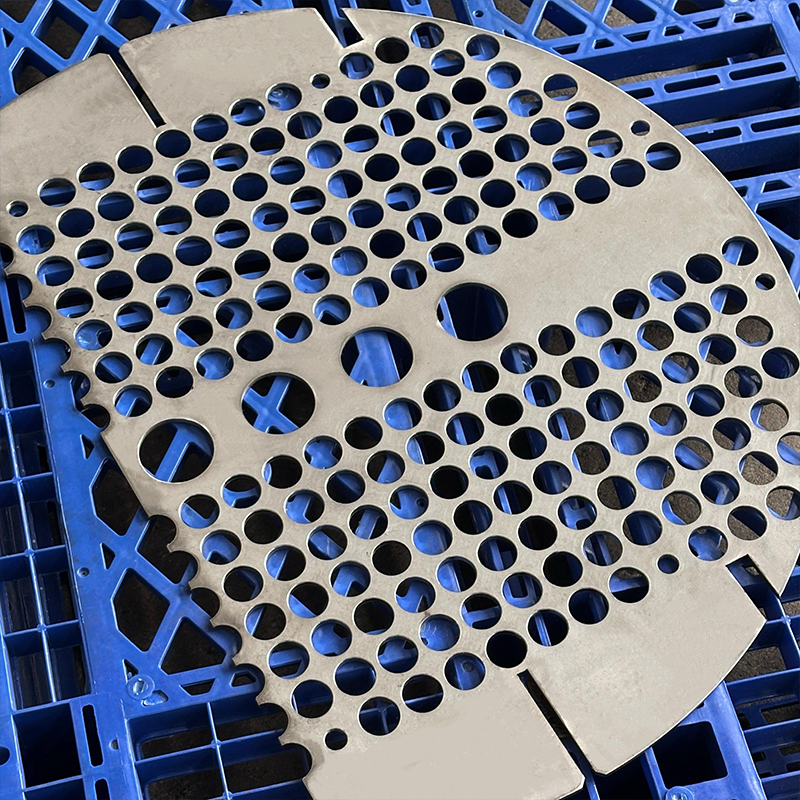
Wuxi Kaisheng LLC's main product portfolio includes titanium shell-and-tube heat exchangers, ASME high-pressure heat exchangers, 316 stainless steel corrugated tube bundles, as well as C46400 marine brass, copper-nickel alloy and N06625 nickel alloy solutions. The company also manufactures air coolers, recovery boilers and critical components such as tube sheets made from 321 stainless steel and other corrosion-resistant materials. Products are made from carbon, stainless, alloy steel, titanium, copper and nickel alloys, which ensures their exceptional resistance to high pressures, temperatures and aggressive environments.
The company's products are certified to international standards PED and ASME, which makes them in demand in oil refining, petrochemicals, seawater desalination, shipbuilding and energy conservation around the world. Wuxi Kaisheng LLC's approach to creating customized solutions and ensuring equipment stability fully resonates with the philosophy of robotic welding: minimizing human factors, guaranteeing repeatable quality and meeting the most stringent safety standards. For customers implementing projects for the construction of large tanks and chemical plants, partnerships with manufacturers such as Wuxi Kaisheng become the key to the durability and efficiency of the entire technological complex.
Frequently Asked Questions
What is the maximum wall thickness that the robot can weld?
Modern robotic extruders are capable of welding polyethylene with a thickness of up to 60 mm or even more in special modes. However, the most cost effective range is 10-40mm. For thicknesses over 40 mm, multi-layer welding or pre-preparation of specially shaped edges may be required. It is important to select an extruder of appropriate power (from 5 kW and above) to ensure a sufficient volume of melt.
Is it possible to weld different types of polyethylene (PE-HD and PE-LLD)?
Yes, robotic welding allows you to join different grades of polyethylene, but only if they are compatible in terms of melt index (MFI) and density. Welding PE-HD with PE-LLD is possible if the difference in MFI does not exceed 2-3 g/10 min. Otherwise, the connection will be patchy and weak. The robot program must be customized for a specific pair of materials, since their melting temperatures may differ. Always test weld samples before the main process.
Is a special room required to install the robot?
A robotic cell requires a prepared site with a flat concrete floor capable of supporting the weight of the manipulator and base (up to 1-2 tons). The room must be heated, since welding polyethylene at temperatures below +5°C is not recommended due to the risk of rapid cooling of the seam and the occurrence of thermal stresses. A ventilation system is also necessary to remove possible gases released when the plastic is heated, although their volume is significantly less than when welding PVC. The lighting must be sufficient for visual inspection by the operator.
Conclusion and next steps
Robotic welding of large PE tanks takes the production of plastic tanks to a new level of reliability and efficiency. This is a technology that eliminates the main disadvantage of polyethylene - the dependence of the quality of the connection on the human factor. By implementing such solutions, you receive a product with predictable characteristics, confirmed by digital protocols, and reduce your risks many times over.
If you are planning to modernize your production or launch a new project for the production of large containers, do not delay the introduction of automation. Competition in the market is getting tougher, and only those who offer guaranteed quality and deadlines remain in the game. Our team is ready to audit your current process and offer the optimal configuration of a robotic cell for your tasks.
Contact us todayto receive detailed advice and calculate the economic efficiency of introducing robotic welding at your enterprise. We will help you select equipment that meets EAC standards and your production requirements.
Find out more about our polymer welding solutions:Complete solutions for polymer welding.