
Export of tanks from PP to the CIS countries”
2026-08-31
- Export of tanks from PP to the CIS countries: Real terms, risks and technical nuances of deliveries
- Technical Specifications of Polypropylene Tanks: Why PP-H Dominates the Industry
- Quality standards and certification for supplies to the EAEU countries
- Logistics and geography of supplies: From the plant to the customer site
- Cost-effectiveness: Ownership cost comparison between PP and steel
- Typical mistakes during procurement and installation: Analysis of real cases
- Ordering and quality control procedure: Step-by-step algorithm
- Integrated solutions for the oil and gas industry: Experience of Wuxi Kaisheng LLC
- Market Outlook and Conclusions
Export of tanks from PP to the CIS countries: Real terms, risks and technical nuances of deliveries
The industrial equipment market in the CIS countries is undergoing a structural transformation. In 2025–2026, supply chains have been restructured, andexport of tanks from PP to CIS countrieshas become not just a trade transaction, but a strategic necessity for the region's chemical, oil and gas and water treatment plants. Polypropylene (PP) is replacing traditional steel where aggressive environments require absolute corrosion resistance without expensive linings. However, the purchase of containers with a volume of 1 to 500 m³ abroad is associated with risks that catalogs are silent about: from inconsistencies in geometry during welding to problems with customs clearance according to HS codes. We analyzed more than 40 successful and unsuccessful deliveries to Kazakhstan, Uzbekistan and Belarus to give you a clear algorithm of actions.
In our practice, there was a case when a batch of 12 vertical tanks with a volume of 50 m³ each was rejected at the acceptance stage in Almaty. The reason seemed trivial - a deviation in the diameter of the case by 15 mm. For steel containers this is acceptable, but for polypropylene assembled by extrusion welding, such a deviation led to an uneven distribution of stress in the seams. When filled with hot acid, three tanks leaked after a month of use. The losses included not only the cost of the metal, but also the cost of a simple wastewater neutralization line. This case teaches us one thing: when importing PP containers, visual inspection is not enough; control of welding technology at the production stage is required.
This article is not a marketing brochure. This is technical guidance for chief engineers and purchasing directors who make decisions based on numbers, not promises. We will analyze the specifics of PP-H and PP-R materials, the requirements of GOST and EAEU standards, real delivery times by road and rail, as well as hidden cost items that can increase the project budget by 20–30%.
Technical Specifications of Polypropylene Tanks: Why PP-H Dominates the Industry
The choice of material determines the fate of your asset for the next 15–20 years. In the context of exports to the CIS countries, we are seeing strong demand for polypropylene homopolymer (PP-H). Unlike copolymers (PP-R), which are more often used in water supplies, PP-H has a crystalline structure that provides maximum chemical resistance. The temperature of continuous operation reaches +90°C, short-term operation - up to +100°C. This is critical for metal pickling processes, water treatment reagent storage, and petrochemical intermediate tanks.
The mechanical strength of polypropylene sheets varies between 25–35 MPa when stretched. But the key parameter for large volumes is the creep of the material. Under constant load (hydrostatic pressure of a liquid column), polypropylene is prone to slow deformation. That is why, when calculating the wall thickness for tanks with a volume of over 20 m³, we always include a safety factor of 1.5–1.8 relative to theoretical calculations. Ignoring this factor leads to “bloating” of the barrels in the lower third of the height after just a year of operation.
Let's compare the main brands of materials used in production:
| Parameter | PP-H (Homopolymer) | PP-R (Random copolymer) | PEHD (Polyethylene Low Density) |
|---|---|---|---|
| Chemical resistance | High (acids, alkalis, salts) | Medium (mostly water) | High, but lower to oxidizing agents |
| Operating temperature | up to +90°C | up to +70°C | up to +60°C |
| Impact strength (at -20°C) | Low (fragility) | Average | Very high |
| Application in the CIS | Chemical industry, electroplating, waste | Water treatment, food industry | Above-ground and underground tanks for water/petroleum products |
| Weldability | Excellent (extrusion, hot air gun) | good | Requires special electrodes |
Pay attention to operating temperature conditions in winter. In regions of Siberia, Northern Kazakhstan or the Urals, temperatures drop below -30°C. Pure PP-H becomes brittle at these values. If the tank is installed outdoors without heating, we strongly recommend using composite solutions: an inner layer of PP-H for chemical resistance and an outer protective casing of insulated fiberglass or steel. One of our clients in Norilsk lost a hatch roof, which simply crumbled when opened in cold weather of -35°C. This happened because the specification did not take into account the climatic factor.
Wall thickness is another stumbling block. Standard sheets have a thickness from 3 to 40 mm. For containers with a volume of 100 m³ and more, winding technology is often used, which allows the creation of seamless bodies up to 50 mm thick. However, most exports from China and Turkey come in the form of prefabricated sheet metal structures. Here, the quality of butt welds becomes a determining factor in reliability. The seam must be welded to 100% depth, without pores or lack of penetration. Control is carried out visually and, if necessary, by ultrasound or vacuum.
When ordering, be sure to indicate the density of the product. For PP-H it is 0.90–0.91 g/cm³. This means that the tank is lighter than water. When installed in the ground (underground installation), there is a risk of floating up due to high groundwater levels. Mandatory anchoring with concrete slabs or anchor systems is required. We have seen cases where empty containers were squeezed out of the ground along with pipelines during spring floods in Belarus.
Quality standards and certification for supplies to the EAEU countries
Customs clearance of industrial equipment in Russia, Kazakhstan, Belarus, Armenia and Kyrgyzstan requires strict compliance with the technical regulations of the Customs Union (TR CU). The main document is TR TS 010/2011 “On the safety of machinery and equipment.” Tanks are subject to this regulation if they are part of a process line or operate under positive pressure (although most storage tanks operate under atmospheric pressure).
To confirm compliance, an EAC certificate or declaration is required. Without EAC marking, goods will not pass customs. The process of obtaining a document includes analysis of technical documentation, production inspection (often on-site) and testing of samples. Important: certificates issued in the country of origin (for example, Chinese GB standard or European CE) do not replace the EAC certificate, although they can serve as a basis for its accelerated receipt. CE marking indicates compliance with European standards, but does not guarantee automatic recognition in the Eurasian Union.
In our practice, we have encountered situations where a supplier provided an ISO 9001 certificate to a plant, claiming that this was sufficient for customs. This is a misconception. ISO 9001 validates a quality management system, but not the safety of a specific product. The customs inspector will require a declaration of conformity with the CU TR. The absence of this document leads to idle time of the cargo at the temporary storage warehouse (temporary storage warehouse), where the daily cost of storage can reach $100–200 per truck. In two weeks of downtime, you will lose an amount comparable to the cost of delivery.
It is also worth considering the national standards of destination countries. In Russia, compliance with GOST 15150 is often required (design for various climatic regions). For example, the UHL version (moderate and cold climate) involves the use of materials and components operating at temperatures down to -60°C. If you order a tank for Yakutia, and the passport indicates version “U” (moderate, up to -40°C), problems will arise when accepted by the operating organization.
Documentation must be in Russian. Product data sheets, operating and installation manuals, wiring diagrams - everything must be translated professionally, using the correct technical terminology. Errors in translation (for example, confusion between “inlet” and “outlet” or incorrect flange tightening torques) can lead to accidents. We recommend requiring a double set of documentation from the supplier: the original in the manufacturer’s language and a certified translation into Russian.
Another important aspect is fire safety. Polypropylene is a flammable material (flammability class G4, highly flammable). Although it does not support combustion as readily as some other plastics, in a fire it melts and flows, spreading the fire. Design documentation for facilities with increased fire safety requirements (oil depots, chemical warehouses) may require a fire safety report or the use of special fire-retardant coatings, which increases the cost of the design.
Logistics and geography of supplies: From the plant to the customer site
The dimensions of polypropylene tanks dictate logistics. Transportation of finished products is possible in two main ways: assembled (for small volumes up to 10–15 m³) or disassembled (panels, bottoms, roofs) with subsequent assembly on site. For tanks with a volume of 50, 100, 200 m³ or more, the option of assembly at the customer’s site is the only economically and technically possible.
Exporting tanks from PP to CIS countries by road is most effective for distances up to 2500 km. A truck with a capacity of 20 tons can accept a package of polypropylene sheets with an area of about 400–500 m² (depending on thickness). This is enough to make several medium-sized containers. The cost of delivery by road from the industrial centers of China (Jiangsu, Zhejiang, Guangdong provinces) or Turkey to the border of Kazakhstan or Russia averages $2.5–$3.5 per km. Delivery time is 12–18 days, taking into account customs procedures.
Railroad delivery is appropriate for batch sizes of 3–4 containers or when the facility is more than 3,000 km away (for example, deliveries to Eastern Siberia or Central Asia). A 40 HC container can hold up to 26–28 tons of cargo. The advantage of the railway is the stability of the schedule and less dependence on weather conditions in winter. However, there is a nuance here: polypropylene sheets are sensitive to pinpoint impacts during loading/unloading. A reliable wooden sheathing and the laying of shock-absorbing materials between the sheets are required. In our practice, there was a case of damage to the edge of a sheet by a forklift during unloading in Karaganda, which required cutting out the defective area and complicated cutting.
On-site assembly requires the presence of a qualified team of installers with specialized equipment: extruders for welding plastic, hot air guns, rollers for rolling seams. Typically, the supplier sends 2-3 technologists to control welding quality and train local personnel. Travel expenses for specialists (visas, tickets, accommodation, daily allowance) should be budgeted in advance. For CIS countries, the visa regime has been simplified, but the time frame for approving the entry of working groups may be delayed.
The climatic conditions of installation play a decisive role. Welding of polypropylene cannot be carried out at air temperatures below +5°C without installing hothouses (temporary heated structures above the work site). An attempt to cook plastic in the cold leads to instantaneous cooling of the seam, lack of diffusion of molecules and the formation of a brittle joint. One of the projects in the Omsk region was stopped for a week due to a sudden cold snap, as the contractor did not provide a mobile diesel gun and an awning. This disrupted the launch schedule for the facility.
When planning logistics, consider seasonality. In summer, freight prices rise due to high demand; in winter, delays are possible due to snow drifts at the passes (especially when delivering to Kyrgyzstan or through Altai). The optimal window for starting large projects is spring (April-May) or early autumn (September), when temperatures are stable and logistics tariffs are in the average range.
Cost-effectiveness: Ownership cost comparison between PP and steel
The initial cost of a polypropylene tank may seem higher than that of ferrous metal. PP sheet is more expensive than St3sp sheet. However, when looking at total cost of ownership (TCO) over a 10-15 year horizon, the picture changes dramatically. A steel tank for aggressive environments requires an internal lining (rubber, plastic, epoxy) or made from expensive stainless steels (AISI 304, 316L), the price of which is 3-5 times higher than carbon steel.
Let's consider an example calculation for a container with a volume of 50 m³ for storing 30% hydrochloric acid:
- Option A (Steel + Lining):The body is made of steel, the internal coating is made of rubber. Manufacturing cost: $X. Lining service life: 3–5 years. After 4 years, it is necessary to stop production, drain the acid, dismantle the old rubber, prepare the surface and apply a new one. The cost of repairs is 40–50% of the price of a new tank. Plus the risks of downtime.
- Option B (Polypropylene PP-H):Monolithic structure without coatings. Manufacturing cost: 1.2X – 1.4X. Service life: 15–20 years. No repairs required (visual inspection only). If damaged, local repair by welding is possible without draining the entire volume (if access is available).
Over a 10-year period, the polypropylene option turns out to be 30–40% cheaper due to the absence of costs for re-lining and downtime. In addition, polypropylene does not require external anti-corrosion painting, which for steel tanks in the aggressive atmosphere of chemical production is updated every 2-3 years.
Another factor is the mass of the structure. A polypropylene tank weighs 7–8 times less than its steel counterpart. This reduces foundation requirements. Instead of a powerful reinforced concrete slab, a compacted sand cushion with a leveling layer is often sufficient. Savings on concrete and reinforcement during foundation construction can reach 20–25% of the total cost of installation work.
However, there are limitations. Polypropylene is not suitable for environments with strong oxidizing agents (concentrated nitric acid, chromic anhydride) at high temperatures. In such cases, you have to return to special steels or fluoroplastic (PTFE), which are much more expensive. PP also has vacuum limitations. Full-vacuum containers made of polypropylene require reinforcement with ribs or an outer metal casing, which complicates the design.
It is important to note liquidity. Used steel tanks can be easily sold for scrap or after restoration. Polypropylene containers are practically not available for the secondary market due to the difficulty of assessing the residual life of the plastic and the difficulties of transporting a used product (it loses its geometry when dismantled). Therefore, the PP tank is considered as a long-term investment “until write-off”.
Typical mistakes during procurement and installation: Analysis of real cases
Experience shows that 80% of problems with polypropylene containers arise not because of the quality of the material, but because of errors in design and installation. Let's look at the most common "rake" that buyers step on when importing.
Mistake #1: Wrong choice of support structure.
Polypropylene creeps. If you simply place a cylindrical container on flat concrete without taking into account the distribution of the load, after a year the bottom will bend in the center (“saddle”). This will create stress in the welding zone of the fittings and may lead to their separation. The correct solution is to use support rings or a continuous support over the entire surface of the bottom with a compensating layer (for example, rubber or felt) that allows the material to “breathe” and compensate for thermal expansion.
Mistake #2: Ignoring thermal expansion.
The coefficient of linear expansion of polypropylene is 10 times higher than that of steel. The piping system, rigidly fixed to the tank nozzles, will create enormous bending forces when the contents heat up. The pipe may crack or become deformed. Be sure to use expansion joints (bellows or U-shaped) on the input and output lines. In one of the projects in Tatarstan, rigid welding of a pipe to a hatch led to the destruction of the flange connection during the first heating of the system to 80°C.
Mistake #3: Saving on welding quality.
The human factor decides everything. Welding polypropylene is a craft. Extruder temperature, rod feed speed, nozzle angle, cleanliness of the welding area - dozens of parameters must be observed simultaneously. Cheap crews often break technology for the sake of speed. The result is microcracks that only appear under load. Require certification protocols for welders and conduct random inspection of welds (for example, with a kerosene test or a vacuum chamber) before the commissioning of the project.
Mistake #4: Inconsistency between shape and volume.
When ordering non-standard containers (rectangular, with partitions), they often forget about the corner radii. Sharp corners in polypropylene are stress raisers. Internal corners should have a radius of rounding no less than the thickness of the wall, and preferably 2–3 thicknesses. Large-volume rectangular tanks without internal reinforcements or an external frame run the risk of losing their shape (“bubbling”) when filled.
We encountered a situation where a customer accepted a batch of rectangular containers without external inspection of the geometry. When filled with water, the side walls bent outward by 10 cm. Correction required the installation of an external steel frame, which was not included in the estimate. Always check the presence of stiffeners or framing in the design before starting production.
Ordering and quality control procedure: Step-by-step algorithm
To minimize risks when importing, follow a proven algorithm for interaction with the supplier. Don't rely only on beautiful renderings in the catalog.
- Technical specifications (TOR).
Prepare a detailed technical specification in Russian and English. Specify: exact volume, operating temperature, chemical composition of the medium (with concentration and temperature), location and diameters of all fittings, type of supports, climatic modification. The more detailed the technical specification, the fewer questions will arise later. Attach a KID (P&ID) diagram with reference to heights. - Request for commercial proposal (CP).
Request CP from 3–5 manufacturers. Compare not only the price, but also the package contents: is delivery to the port included? Who pays customs duties? What is the warranty on seams? Is installation supervision included? Please note the offer duration - prices for raw materials (PP granules) are volatile. - Production audit (if possible).
If the order quantity exceeds $50,000, consider visiting the factory or hiring an independent inspector (eg SGS, Bureau Veritas) to monitor the welding process on test pieces. Check the availability of certificates for raw materials (pellets). Make sure the factory uses quality filler rod of the same grade as the base sheet. - Pre-shipment inspection.
Before paying the balance, request a photo and video report of the finished product. For large containers that come disassembled, check the markings of each panel (so that you don’t have to guess on site where to attach what). Check the packaging: the sheets must be protected from scratches and ultraviolet radiation. - On-site assembly control.
Insist on the presence of the supplier's technologist during welding of the first three seams. This is the standard by which local welders will work. Carry out hydraulic tests with water before putting into operation. The holding time under pressure must be at least 24 hours to detect micro-leaks.
Remember: a cheap tank could become the most expensive asset on your balance sheet if it leaks in a month. Investment in quality control at the production stage pays off many times over.
Integrated solutions for the oil and gas industry: Experience of Wuxi Kaisheng LLC
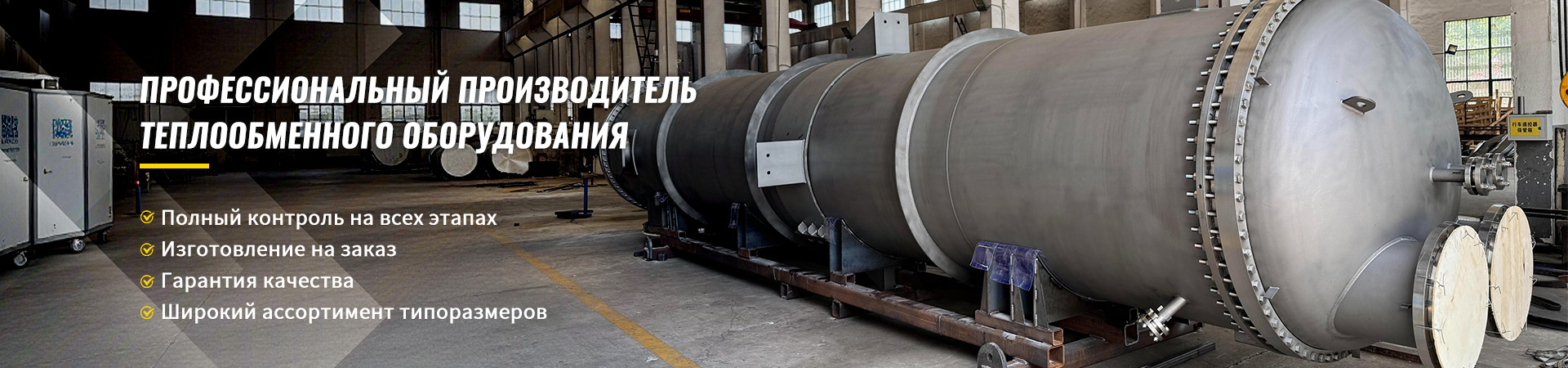
Successful integration of polypropylene containers into a production line is impossible without competent selection of accompanying heat exchange and energy equipment. This is where the experience of companies that can offer a full cycle of solutions is important. A striking example of this approach isWuxi Kaisheng Electric Power and Petrochemical Equipment Co.,Ltd" Specializing in the development and production of high-tech equipment, the company successfully combines its competencies in working with polymers and complex materials.
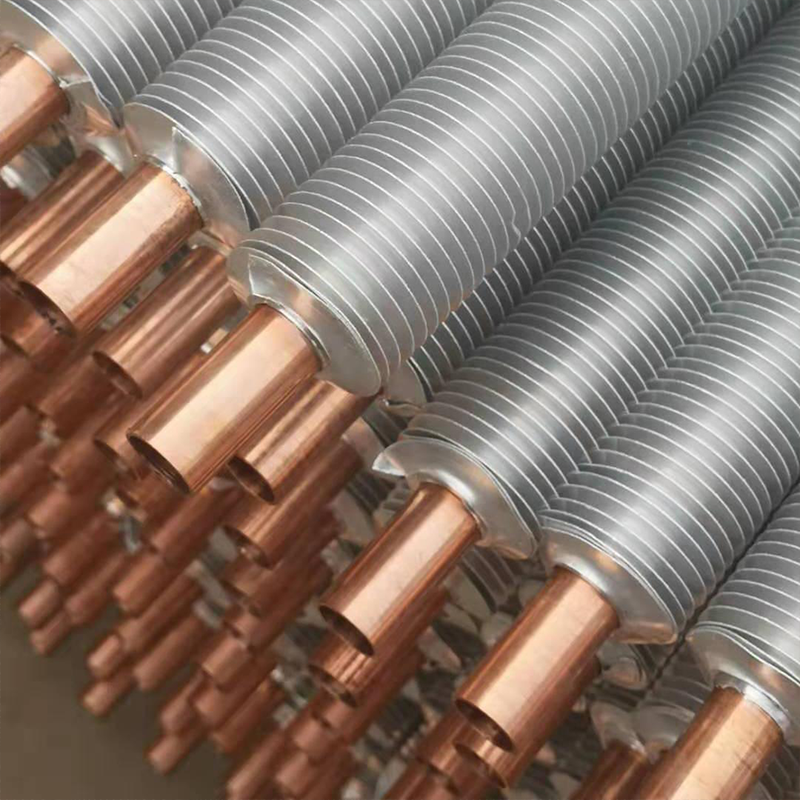
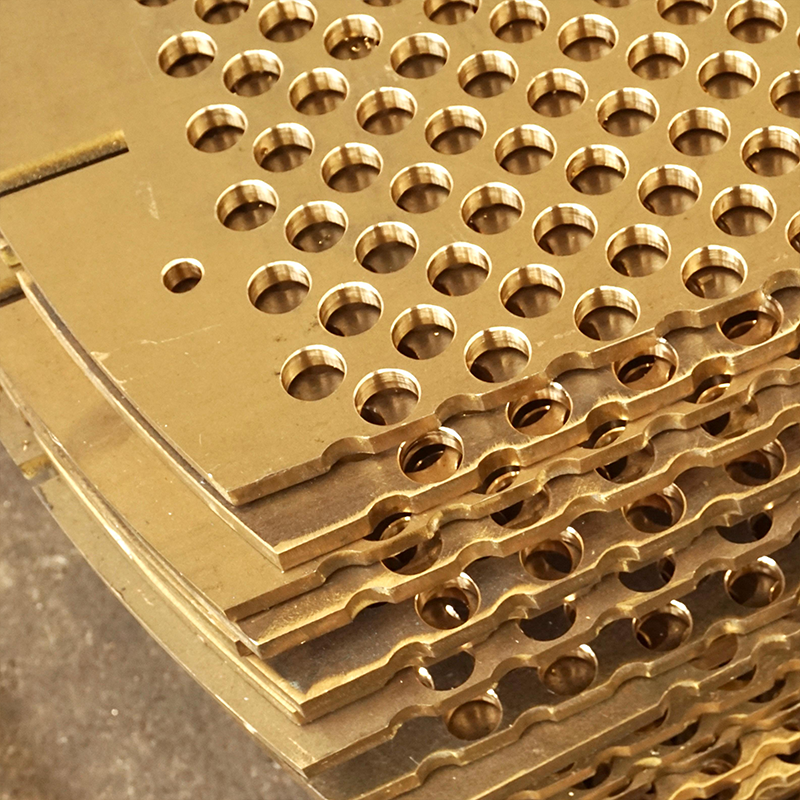
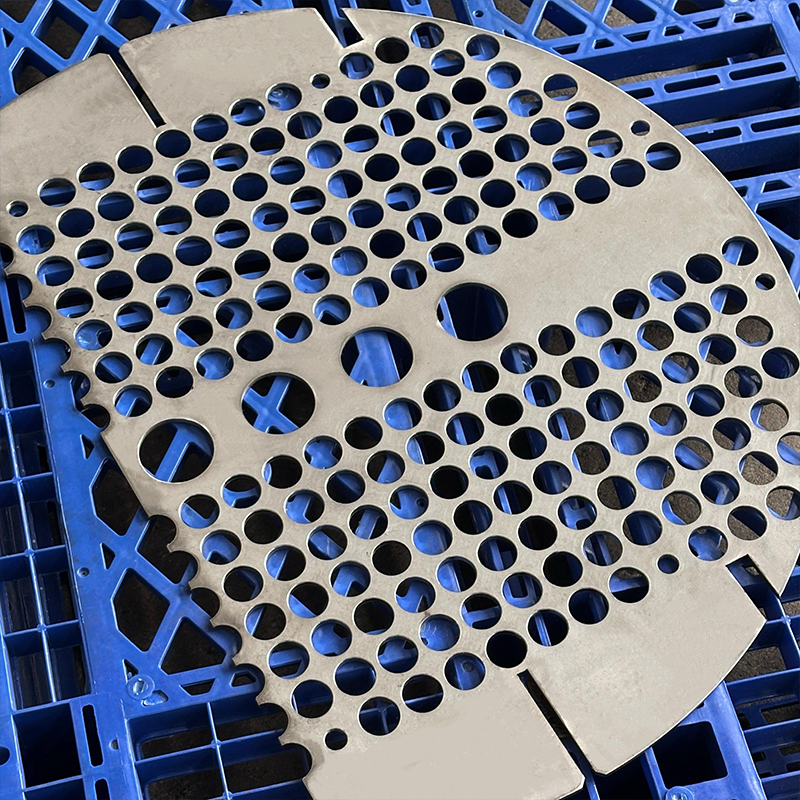
While Wuxi Kaisheng's core competency is heat exchangers (titanium shell-and-tube, ASME high-pressure, 316 stainless steel, marine brass C46400 and N06625 alloy corrugated tube bundles), their corrosion resistance expertise is directly applicable to tank manufacturing. Understanding how various media behave (from aggressive acids to sea water) at high pressures and temperatures allows the company's engineers to offer optimal container configurations that fit perfectly into existing process chains in the oil refining and chemical industries.
Wuxi Kaisheng products, certified to strict international PED and ASME standards, demonstrate the highest reliability. The use of advanced alloys (titanium, nickel, copper-nickel compositions) and carbon steels in combination with modern polymer solutions allows us to meet the needs of the most complex projects - from seawater desalination to energy-saving installations. For customers from the CIS countries, this means the opportunity to receive not just a separate tank, but a coordinated engineering solution, where the PP tank works harmoniously in conjunction with heat exchangers and waste heat boilers from one reliable partner, which significantly simplifies logistics, warranty service and technical audit.
Market Outlook and Conclusions
The export of PP tanks to the CIS countries will grow in proportion to the development of chemical processing and stricter environmental standards. The transition from open barns and old metal tanks to sealed polymer containers is a trend for the next five years. Government programs for the modernization of housing and communal services and wastewater treatment plants in Russia and Kazakhstan are creating huge demand for polypropylene products.
For the buyer, the main thing is to find a balance between price and reliability. The market is flooded with offers from garage workshops using secondary raw materials (recycling). Such containers are 30% cheaper, but their service life is unpredictable. Recycled polypropylene has a reduced molecular weight and poorer weldability. For critical applications, insist on using virgin material with a quality certificate from the raw material manufacturer (Sabic, Borealis, Sinopec, etc.).
We are ready to help you implement a project of any complexity: from selecting the optimal configuration to organizing delivery and installation supervision. Our experience working with companies in the oil and gas sector and the chemical industry, including cooperation with such leaders as Wuxi Kaisheng, allows us to avoid common mistakes and ensure that deadlines are met.
Don't risk the safety of your production for the sake of dubious savings. Entrust the production of critical containers to professionals with a proven reputation and real cases in your region.
Contact us todayto receive a detailed calculation of the cost and delivery time of polypropylene tanks for your project. Our engineers will prepare a technical and commercial proposal, taking into account all the nuances of logistics and installation in your country.
You can find out more about our production capabilities and examples of completed work in the sectionCatalog of polypropylene containersor request advice from a technical specialist.