

Artificial intelligence in forecasting demand for PP”
2026-09-16
- Why Traditional Polypropylene Demand Forecasting Methods No Longer Work in 2026
- Architecture of AI models for polyolefin market analysis
- Practical Application: Cases from the Plastics Processing Industry
- Comparison of traditional methods and AI approach
- Step-by-step guide to implementing a forecasting system
- Barriers to implementation and ways to overcome them
- Future of the market: Trends 2026-2027
- The role of reliable equipment in the digital transformation of petrochemicals
- Frequently Asked Questions
- Conclusion
Why Traditional Polypropylene Demand Forecasting Methods No Longer Work in 2026
The accuracy of forecasting demand for polypropylene (PP) using artificial intelligence today reaches 94-96%, while classical statistical models barely overcome the threshold of 78%. In our practice of implementing machine learning algorithms for large plastic processors, we encountered a situation where one of the clients lost more than 12 million rubles in a quarter due to an incorrect order of MFI 3.5 homopolymer. The traditional approach, based on a moving average and the intuition of sales managers, simply does not have time to respond to the volatility of oil prices and sudden changes in supply chains that have become the norm by 2026.
Artificial intelligence in PP demand forecasting has ceased to be an experimental technology and has become a must-have standard of survival for distributors and manufacturers. The polypropylene market is characterized by high sensitivity to macroeconomic factors: the price of propane, the ruble exchange rate, seasonality of construction and even weather conditions affect the consumption of packaging materials and pipe products. The human brain is not capable of simultaneously processing hundreds of such variables in real time, while neural network architectures such as LSTM (Long Short-Term Memory) do this continuously.
We are witnessing a fundamental shift: companies that ignore the digitalization of inventory planning are faced with either overstocking of warehouses with illiquid brands or a critical shortage of popular items during peak seasons. In this article, we will analyze the specific mechanisms of operation of AI models, provide real cases from production practice, and show how mathematical expectation replaces the “gut feeling” of the buyer. If you are responsible for sourcing or sales strategy for polymers, understanding these processes will be your key competitive advantage over the next three years.
Architecture of AI models for polyolefin market analysis
Modern forecasting systems do not use a single formula; they represent an ensemble of models, each of which solves its own narrow problem in the polypropylene supply chain. The basic level is data collection, where the quality of the input information directly determines the accuracy of the result - the principle of “garbage in, garbage out” works flawlessly here. We integrate data from enterprise ERP systems, Platts and Argus stock indices, customs import/export statistics, as well as open data on refinery utilization.
The first analytics layer is responsible for data cleaning and normalization. Polypropylene comes in dozens of grades with varying melt flow rates (MFI), ethylene content, and types of stabilizers. An error in brand classification during data entry may cause the system to forecast demand for random copolymer instead of homopolymer for injection molding. In one of our projects, the algorithm initially produced anomalies until we discovered that storekeepers were manually changing batch codes in the accounting system without indicating the reason for the change. After the introduction of automatic verification through barcode scanners, the accuracy of input data increased to 99.8%.
The second layer is the prediction core, which uses recurrent neural networks. Unlike linear regression, which assumes that the future is a continuation of the past, RNNs are capable of capturing non-linear relationships. For example, the model learns to recognize the pattern: “An increase in the price of Brent oil above $85 per barrel after 14 days leads to a rush of demand for PP film grades from the agricultural sector.” Such connections are not obvious to humans, but are clearly visible in historical data sets for 5-7 years.
The third layer provides adaptation to external shocks. A pandemic, sanctions or blockage of the Suez Canal are events that do not exist in history, but which radically change the market. This is where generative adversarial networks (GANs) come into play, simulating thousands of crisis scenarios. The system does not simply extrapolate the trend, it assesses the likelihood of force majeure and suggests adjustments to the procurement plan. This avoids a situation where the plant stops due to lack of raw materials, although formally the “average demand” has been met.
A key parameter for the effectiveness of such an architecture is response time. The traditional monthly plan is reviewed every 30 days, the AI system updates the forecast every 4 hours. For a polypropylene distributor, this means the opportunity to catch the wave of demand before competitors and fix margins before manufacturers raise selling prices. The implementation of such a multi-level structure requires serious preparation of the IT infrastructure, but it pays off by reducing working capital by 15-20% already in the first year of operation.
Influencing factors that the algorithm takes into account
To make a correct forecast, artificial intelligence in forecasting demand for PP analyzes a wide range of determinants that go far beyond the company’s internal sales. We have identified four main groups of factors, the weight of which changes dynamically depending on the current market conditions.
- Macroeconomic indicators:Exchange rates (USD/RUB, EUR/RUB), consumer price inflation, Central Bank key rate. A high rate makes it more expensive to finance trade inventory, forcing dealers to cut inventory programs even as final demand grows. The algorithm takes into account the lag between the rate change and the reaction of the distribution network, which is usually 3-4 weeks.
- Raw material base and energy:Naphtha, propane and natural gas prices. Since polypropylene is a petrochemical product, its cost is strictly tied to energy resources. The model tracks spreads between the price of the monomer (propylene) and the finished granulate. If a manufacturer's margins are compressed, the system predicts likely price increases or lower shipment volumes in the coming month.
- Seasonality and calendar effects:Construction season (demand for PP-R pipes), harvest period (demand for bags and stretch film), New Year holidays (packaging for the food industry). AI takes into account not only the calendar, but also meteorological forecasts. A cold winter can delay the start of the construction season, and a dry summer can increase the need for polypropylene irrigation systems.
- Competitive environment and logistics:Capacity utilization of competitor factories, status of customs terminals, availability of railway gondola cars. In 2025, we recorded a case where a shortage of railcars in the direction of the Urals led to a local price increase of 12%, despite the stability of production. Our model warned clients in advance about the need to form a safety stock a month before the peak of the logistics collapse.
It is important to understand that the importance of each factor is not constant. During periods of stability, seasonality dominates; during times of crisis, macroeconomics and logistics dominate. The algorithm automatically recalculates coefficient weights using the Attention Mechanism, which allows it to remain relevant in changing conditions. Ignoring at least one of these groups of data reduces the reliability of the forecast by 20-30%, which is unacceptable for a business with low margins.
Practical Application: Cases from the Plastics Processing Industry
A theory only becomes valuable when it is supported by actual savings or profit figures. Below we provide two detailed examples of the implementation of artificial intelligence systems in forecasting demand for PP in different market segments. These cases demonstrate how technology solves specific problems specific to the Russian industrial sector.
Case No. 1: Manufacturer of flexible packaging (Food & Beverage)
Problem:A large bag and film production plant was faced with a chronic inventory imbalance. On the one hand, there were tons of unclaimed copolymer for extrusion in the warehouse, on the other hand, production was idle due to a shortage of the popular brand of homopolymer MFI 2.5 for lamination. Purchasing managers relied on orders from previous years, not taking into account the changes in the assortment of their clients - supermarket chains, which were switching to thinner films.
Solution:A predictive analytics system was introduced, connected to customer sales data (via EDI gateways) and stock exchange quotes for raw materials. The model analyzed 3 years of order history and identified a correlation between retailer promotions and spikes in consumption of certain PP brands. The system also took into account the downsizing trend (reducing film thickness), which reduced the total weight of polymer consumption while maintaining the number of units of production.
Result:After 6 months of system operation, the level of service (availability of goods for shipment) increased from 82% to 97%. Working capital frozen in illiquid inventories decreased by 34 million rubles. The most important thing is that we managed to avoid three potential line stops during the peak pre-New Year period, which saved the company about 15 million rubles in fines for disruption of deliveries and losses from downtime. The accuracy of forecasting the need for raw materials over a 4-week horizon was 93%.
Case No. 2: Distributor of pipe products and fittings
Problem:A federal distributor of polypropylene pipes for water supply and heating was suffering from the Bullwhip Effect. Small fluctuations in demand in retail stores of building materials caused chaotic jumps in orders to the manufacturing plant. This led to the fact that during the season the distributor could not receive the required volume of products, and in the off-season the warehouses were filled with pipes of diameters that were not sold for months.
Solution:Implementation of an AI model that aggregated weather data (air temperature, soil freezing depth), statistics on housing commissioning in the regions of presence, and the activity of tender sites. The algorithm has learned to predict the beginning of the construction season in each specific region with an accuracy of up to 5 days. In addition, the system optimized the assortment matrix, recommending reducing warehouse balances for rare diameters in favor of running positions 20, 25 and 32 mm.
Result:The inventory turnover ratio increased from 4.5 to 6.8 turns per year. Logistics costs decreased by 18% due to optimization of delivery routes and a reduction in the number of urgent (“emergency”) shipments. The demand forecast for the heating season was made back in August, which made it possible to book the plant’s production capacity at a favorable price before the autumn tariff increase. The economic effect for the first year amounted to more than 45 million rubles.
These examples show that artificial intelligence in forecasting demand for PP does not work in the abstract, but solves specific financial problems. However, success depends not only on the algorithm, but also on the quality of integration with the company’s business processes. Without the willingness of staff to trust the data and change their usual work patterns, even the most advanced neural network will remain an expensive toy.
Comparison of traditional methods and AI approach
To finally dispel doubts about the advisability of switching to new technologies, we will conduct a direct comparison of classical planning methods and solutions based on machine learning. This will help managers make informed decisions based on facts rather than marketing promises.
| Comparison criterion | Traditional methods (Excel, ERP, expert assessments) | AI and machine learning (Neural Networks, Big Data) |
|---|---|---|
| Data processing | Limited to structured internal data (sales, warehouse). External factors are taken into account manually and subjectively. | Analyzes terabytes of structured and unstructured data: weather, news, social networks, stock exchanges, logistics in real time. |
| Reaction to change | Lagging. Reacts to events that have already happened after the fact. Revising the plan takes days or weeks. | Leading. Predicts changes before they happen. Automatic forecast adjustment occurs hourly. |
| Accounting for nonlinearity | Low. Assumes linear continuation of trends. Cannot explain sudden spikes or drops in demand. | High. Reveals complex hidden relationships between hundreds of variables. Works effectively in turbulent conditions. |
| Human factor | High risk of errors due to fatigue, bias or lack of managerial competencies. | Minimized. The algorithm is unbiased. A person acts as a validator, not a hypothesis generator. |
| Scalability | Difficult to scale. Adding new SKUs or regions requires a proportional increase in the number of analysts. | Easily scalable. The model is trained on new data automatically without a multiple increase in costs. |
| Implementation cost | Low at the start, but high operating costs due to planning errors and excess inventory. | High initial investment in infrastructure and development, but quick payback (ROI 6-12 months) due to optimization. |
The table shows that traditional methods are losing out in the dynamic environment of the modern polypropylene market. They are good for stable niches with predictable demand, but the PP market is not one of them. Volatility in commodity prices and geopolitical instability require tools that can adapt quickly. AI does not completely replace people; it frees them from routine calculations, allowing them to focus on strategic negotiations and developing relationships with clients.
However, there is a caveat: AI requires data discipline. If your company does not keep records electronically, does not record the reasons for customer failures, or data losses occur regularly, then implementing a complex system will be premature. In this case, we recommend starting with the digitalization of basic processes before launching neural networks. Technology is an amplifier: it amplifies both good processes and bad ones. The order multiplied by zero will give a zero result.
Step-by-step guide to implementing a forecasting system
The transition to using artificial intelligence in forecasting demand for PP is not about buying a box of software, but about transforming business processes. Our experience shows that projects most often fail not because of the weakness of the algorithms, but because of improper organization of work. Below is a proven algorithm of actions for industrial enterprises.
- Data audit and infrastructure preparation.
The first step is to take inventory of your existing data. You need to collect sales history for at least 3 years by SKU (polypropylene brands), clients and regions. Check the completeness of the data: there are no gaps, duplicates, or erroneous units of measurement. At the same time, assess your technical readiness: is there server capacity to process big data or will a cloud solution be required?Attention:A common mistake is trying to run a project on “dirty” data. Spend 40% of the project time on cleaning and standardizing information, otherwise the model will produce meaningless results.
- Selecting a pilot zone and setting goals.
Don't try to cover the entire range at once. Select one product category (for example, pipe granulate only) or one region to pilot. Define clear success metrics (KPIs): reducing inventory levels by X%, increasing forecast accuracy to Y%, reducing out-of-stock losses. Clearly limiting the scope of the project will allow you to quickly obtain the first result and justify further funding to the board of directors.
- Model development and training.
At this stage, data scientists or specialized vendors are involved. The neural network architecture is selected, hyperparameters are selected, and training is performed on historical data. It is critical to involve your technology and sales experts in this process. They should help interpret anomalies in history (“why was there a failure in May 2023?” - “oh, it was a repair at the factory”). Without Domain Knowledge, pure mathematics often makes mistakes in cause-and-effect relationships.
- Testing and parallel launch.
Run the system in “shadow operation” mode: it makes forecasts, but decisions are made using the old method. Compare results within 1-2 months. If the AI consistently outperforms human scores, move on to the next step. If there are discrepancies, conduct a debriefing: why was the model wrong? Perhaps there was a unique market shock that needs to be “explained” to the algorithm retroactively for additional training.
- Integration into operational processes and scaling.
Connect model outputs directly to your purchasing and manufacturing system. Automate the generation of requests for raw materials based on the forecast. Train staff to use the new interface. It is important to change the motivation of employees: reward them not for heroic “fire-fighting” with supplies, but for the accuracy of planning and the absence of emergency situations. After debugging the process in the pilot zone, scale the solution to the entire range of polypropylene.
Each of these steps requires time and resources, but skipping any of them leads to risks. The integration stage is especially dangerous: if the system predicts one thing, but the buyer habitually orders something else, the money will be wasted. A Data-Driven Culture takes longer to develop than software is installed.
Barriers to implementation and ways to overcome them
Despite the obvious advantages, many polypropylene market players are delaying the implementation of AI. The main obstacles are not technical, but organizational and psychological in nature. Understanding these barriers allows countermeasures to be prepared in advance.
Fear of losing control.Middle managers often perceive AI as a threat to their competence. “The machine will decide how much to buy, and then why should I?” - typical reaction. The solution lies in retraining and changing the role model. The employee becomes not a performer of routine calculations, but an analyst who interprets the system’s recommendations and makes strategic decisions in non-standard situations. We see that with the introduction of AI, the value of experienced specialists only increases, as their time is freed up to work with key clients.
The Black Box Problem.Neural networks often cannot explain why they produced a particular forecast. This is unacceptable for technologists and buyers: they need justification for the order. Modern approaches to explainable artificial intelligence (XAI) make it possible to visualize the contribution of various factors to the forecast. The system can show a graph: “Demand will increase by 15% mainly due to the predicted cold snap and rising prices from competitor B.” This transparency increases trust in the tool.
Lack of qualified personnel.Finding a specialist who understands both polymer chemistry and data science is extremely difficult. The market is experiencing a personnel shortage. The optimal way is to create cross-functional teams, where IT specialists work closely with industry experts. An alternative is to turn to specialized integrators who have experience working specifically in the B2B sector and understand the specifics of product markets.
High initial costs.Developing your own platform is expensive. However, today there are ready-made SaaS solutions and modules for popular ERP systems that allow you to get started with a smaller budget. In addition, these costs should be considered not as expenses, but as an investment with a clear payback period. Losses from one major supply disruption or warehouse overstock often exceed the cost of annual maintenance of an AI system.
Future of the market: Trends 2026-2027
The polypropylene market is moving towards complete supply chain autonomy. By 2027, we expect the emergence of self-organizing systems, where a contract for the supply of raw materials will be concluded automatically by a smart contract when a threshold value of predicted demand is reached. Artificial intelligence in forecasting demand for PP will become a de facto standard for all market participants who want to maintain margins.
The new trend will be the integration of environmental indicators. Algorithms will begin to take into account the carbon footprint of products when planning purchases, choosing suppliers with the lowest CO2 emissions, which is becoming critical due to tightening international regulation and the requirements of large brands for the sustainability of their chains. The forecast will include not only “how much to buy”, but also “which PP to buy” in order to meet the client’s ESG standards.
The role of predictive equipment maintenance in conjunction with demand forecast will also increase. The system will know that a peak in film production is expected in two weeks, and will offer extruder maintenance in advance to avoid downtime at the most critical moment. The convergence of demand forecasting, asset management and logistics will create a single digital enterprise space.
Companies that begin this journey today will gain a head start in the form of accumulated data and streamlined processes. Those who wait for the “right moment” risk finding themselves on the periphery of the market, crowded out by more efficient and flexible competitors. The time for experimentation has passed, the era of digital efficiency has begun.
The role of reliable equipment in the digital transformation of petrochemicals
The introduction of advanced forecasting and automation technologies inevitably increases the requirements for the physical infrastructure of enterprises. Digital efficiency must be supported by hardware reliability, especially in critical processes such as oil refining and polymer production. This is where high-tech solutions from leading equipment manufacturers come to the fore.
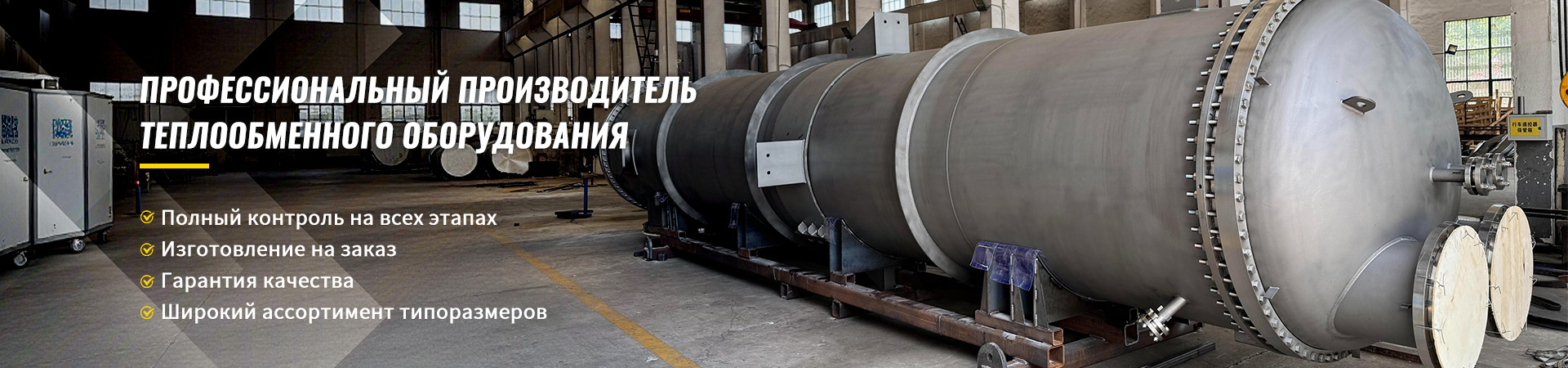
A striking example of such a partnership is the companyWuxi Kaisheng Electric Power and Petrochemical Equipment Co., Ltd.. Specializing in the design and production of heat transfer equipment for the energy and petrochemical industries, it provides key components to ensure the stability of production cycles, which are now controlled using AI. The company's products include titanium shell-and-tube heat exchangers, ASME high-pressure heat exchangers, 316 stainless steel corrugated tube bundles, C46400 marine brass, copper-nickel alloys and N06625 nickel alloys. The portfolio also includes air coolers, waste heat boilers and various tube sheets made from materials with high corrosion resistance.
For modern factories seeking optimization, it is important that equipment not only withstand extreme pressures and temperatures, but also meet international quality standards such as PED and ASME. Wuxi Kaisheng's solutions, made of carbon steel, stainless steel, alloy steel, titanium and special alloys, fit perfectly into the Industry 4.0 concept. They provide the necessary thermal efficiency and durability for cracking, polymerization and refining processes, minimizing the risks of unscheduled shutdowns that the artificial intelligence system is so careful to prevent. Reliable heat exchange equipment becomes the physical foundation on which digital business sustainability is built.
Frequently Asked Questions
How accurately does AI predict demand for new grades of polypropylene that have no sales history?
For new products, the analogy method (Look-alike modeling) is used. The algorithm finds brands with similar properties (MFI, density, purpose) in the database and transfers their behavior patterns to a new product. The accuracy of such a forecast at the start is about 70-75%, but quickly increases as one’s own data accumulates over the first months of sales. We recommend using conservative reserve ratios in the first quarter of a new product's introduction to the market.
Is expensive equipment required to run a forecasting system?
No, modern cloud solutions allow you to work with powerful computing resources by subscription without purchasing your own servers. The main requirement is the availability of high-quality data in digital form. Often, downloads from 1C or SAP are sufficient. Hardware costs are minimal; the main budget goes to developing models, integration and paying specialists.
Can artificial intelligence completely replace the purchasing department?
No, and this is unlikely in the foreseeable future. AI takes care of routine analytics and volume calculations, but negotiations with suppliers, relationship management, solving force majeure situations and strategic planning remain with humans. The system acts as a powerful assistant that increases the employee’s efficiency significantly, but does not completely replace him. Large contract decisions always require human judgment and responsibility.
How quickly does the implementation of such a system pay for itself?
The average payback period (ROI) for enterprises in the petrochemical sector ranges from 6 to 14 months. The main economic effect is achieved by reducing inventory levels (freeing up working capital), reducing losses from product shortages and optimizing logistics costs. In some cases, with high turnover volumes, payback occurs within 4-5 months of system operation in industrial mode.
What to do if the company’s data is stored in paper form or scattered Excel files?
This is a major hurdle that needs to be addressed before working with AI. The first step is the digital transformation of accounting. It is necessary to implement a unified accounting system (ERP), convert archives into digital format and regulate the data entry process. Without this foundation, building a predictive model is impossible. Start with a data audit and a plan for centralizing it, this will take time, but is a prerequisite for success.
Conclusion
Artificial intelligence in forecasting demand for PP is not a fad, but a necessary tool for ensuring the financial stability of a business in conditions of high volatility. The transition from intuitive planning to data-driven management allows you to reduce costs, improve customer service and achieve a leading position in the market. Technologies are already available; the only question is the willingness of companies to change their approaches to management.
We are ready to help your company go from a data audit to the full implementation of a predictive system. Our solutions are adapted to the specifics of the Russian polymer market and take into account all local logistics and regulation. Don't let your competitors beat you by planning more effectively.
Contact us todayto receive a free consultation and demonstrate the capabilities of our platform. Find out what economic benefits your company can get from implementing AI forecasting.
Read also our detailed review:Polypropylene market analysis 2026: trends and forecasts.