
History of the development of plastic products factories in the Russian Federation”
2026-09-05
- From artisanal workshops to automated complexes: industry evolution
- Soviet legacy and the crisis of the 90s: the foundation of modern industry
- The era of the petrochemical boom and the advent of international standards (2000–2014)
- Sanctions pressure and the policy of import substitution (2014–2022)
- New reality 2025–2026: Technological sovereignty and digitalization
- Comparative analysis of the stages of industry development
- Problems and risks of the modern stage
- Practical recommendations for buyers and investors
- The role of related industries: ensuring process reliability
- Frequently Asked Questions
- Conclusion
From artisanal workshops to automated complexes: industry evolution
The history of the development of plastic products factories in the Russian Federation is not just a chronology of equipment changes, but a path of survival and adaptation in conditions of fierce competition and changing geopolitics. In our work with industrial clients, we see that understanding this path is critical to making the right investment decisions today. The industry has gone through the stage of chaotic import substitution in the 90s, the period of raw material abundance in the 2000s, and is now at the stage of technological reassembly. The key starting point was 1991, when the state monopoly collapsed, giving way to thousands of small processors working on used European equipment. However, the real transformation began later, when major players realized that without their own extrusion and injection molding, dependence on imported pellets and finished products became a strategic risk.
Today's market picture is radically different from what it was ten years ago. If previously the main driver of growth was construction and packaging, now the focus has shifted to infrastructure projects, defense orders and deep processing of secondary raw materials. We are seeing how factories that five years ago were considered local producers of HDPE pipes are turning into holdings with a closed production cycle. This requires not only capital investment, but also a completely different approach to personnel qualifications. The mistake many purchasing managers make is that they evaluate suppliers only on current prices, ignoring the history of modernization of their product lines. A plant that has not updated its fleet of injection molding machines since 2015 will physically not be able to ensure the stability of the part geometry for large runs, no matter how many certificates it shows.
Soviet legacy and the crisis of the 90s: the foundation of modern industry
To understand the current state of the market, we need to go back to basics. The Soviet plastics production system was focused on large specialized plants, such as Polymir in Novopolotsk or Kazanorgsintez. These giants produced raw materials, but the culture of deep processing into finished products was poorly developed. The main attention was paid to the gross output of polyethylene and polypropylene, and the technology for casting complex technical parts lagged behind Western analogues by 15–20 years. After the collapse of the Union, this vertical collapsed. Factories were fragmented, supply chains were disrupted, and the market was flooded with cheap imported products, mainly from China and Turkey.
In the period from 1992 to 1998, the history of the development of plastic products factories in the Russian Federation was characterized by spontaneous entrepreneurship. Hundreds of small workshops appeared, equipped with decommissioned machines from the companyKraussMaffeiorArburg, bought in Germany for next to nothing. The owners of such production facilities often did not have a technical education, relying on the experience of old adjusters. Product quality during this period was extremely unstable: the lack of temperature control systems, manual dosing of additives and the use of secondary raw materials of unknown origin led to a high percentage of defects. We analyzed the archives of several operating enterprises and found that many of them began their journey in garage conditions, producing simple products like buckets or lids for cans.
However, it was during this period that a class of industrial engineers was formed who were able to work in conditions of scarcity. They learned to repair complex electronics with a soldering iron and adapt recipes for unstable raw materials. This experience of “survival” has become a unique competitive advantage of the Russian processing school. When the economy began to gradually grow in the late 90s, these workshops became the first to scale quickly. It is important to note that at that time GOST standards were still formally in force, but in practice they were rarely observed. The only real regulator of quality was consumer demand: if a bucket cracked after a week, the manufacturer lost its reputation instantly. This lesson of market discipline was learned by all surviving players, and it remains relevant to this day.
The era of the petrochemical boom and the advent of international standards (2000–2014)
The beginning of the 2000s marked a qualitative leap. Stabilization of oil prices and growth in domestic demand stimulated investment in new capacity. Large petrochemical holdings such asSIBURandTANECO, began to actively develop the lower links of the production chain. The history of the development of plastic products factories in the Russian Federation during this period is inextricably linked with the emergence of modern domestically produced polymers. Previously, processors depended on imports of H030GP grade polypropylene or low-density polyethylene. Now, raw materials have appeared that were specially developed for Russian operating conditions, which reduced logistics costs and made it possible to control the composition of the granules.
During this ten-year period, there was a massive replacement of the equipment fleet. Enterprises that wanted to enter the federal level began to purchase new lines from European leaders:Husky, Engel, Battenfeld-Cincinnati. This made it possible to introduce automatic quality control systems directly during the production process. The implementation of the ISO 9001 standard has ceased to be just a “piece of paper” for tenders and has become a real necessity for integration into the supply chains of automakers and construction giants. We see that factories that were certified in the period 2005–2010 still hold leading positions thanks to their established production culture.
During these years, special attention was paid to the pipe industry. The construction of gas and water pipelines required millions of kilometers of cross-linked polyethylene (PEX) and polypropylene (PP-R) pipes. Factories were forced to develop co-extrusion (multi-layer extrusion) technologies to meet strength and durability requirements. It was then that the first Russian manufacturers appeared, capable of producing pipes with a diameter of more than 1200 mm. This required huge investments in extruders and calibrators. The mistake of that time was an excessive reliance on imported equipment without training. We have encountered situations where a line worth several million euros was idle for months due to the lack of a specialist capable of setting up the output profile. This led to the fact that by 2014 the market for service maintenance and engineering consulting had emerged as a separate powerful industry.
Technological breakthrough in the packaging and packaging segment
In parallel with the pipe industry, packaging production was rapidly developing. The growth of the retail and food processing industries has created a huge demand for PET bottles, films and thermoformed containers. Plastic factories have begun to introduce high-performance blow molding lines. If in the 90s bottles were made on semi-automatic machines with a capacity of 400 bottles per hour, then by 2012 lines producing 20,000 bottles per hour became the norm. This changed the economics of a unit of production: margins fell, but volumes increased manifold. Only those who optimized the weight of the preform were able to survive, reducing material consumption by 0.5 grams, which, with circulations of billions of pieces, resulted in millions of rubles in savings.
During the same period, the active use of additives and modifiers began. Russian technologists have learned to create compositions that are resistant to ultraviolet radiation and low temperatures, which is critically important for the climatic zones of the Russian Federation. For example, the development of frost-resistant composites for car bumpers made it possible to localize the production of components for factoriesVolkswagenandRenaultin Kaluga and Moscow. This was an example of the successful integration of processors into international production chains. However, this integration also had a downside: complete dependence on imported additives, dyes and masterbatches. When the first sanctions restrictions began in 2014, many factories were faced with the problem of finding alternatives, since the recipes were strictly tied to specific brands of chemical additives from Europe.
Sanctions pressure and the policy of import substitution (2014–2022)
2014 was a watershed that divided the history of the industry into “before” and “after.” Restrictions on the supply of high-tech equipment and components forced Russian manufacturers to look for new ways of development. The history of the development of plastic products factories in the Russian Federation during this period is characterized by attempts to replace European machines with Chinese analogues and the development of their own mechanical engineering. At first this caused skepticism: Chinese ROVs were considered unreliable and inaccurate. However, in eight years the situation has changed dramatically. Chinese manufacturers such asHaitianandYizumi, have seriously raised the quality bar by offering equipment that, in terms of price/performance ratio, turned out to be optimal for the Russian market.
The key problem of this period was the lack of spare parts and service support for the existing fleet of “Europeans”. Factories were forced to create their own repair services and even produce worn-out components on their own using CNC machines. We have seen examples where engineers from one of the large factories in the Moscow region completely reconstructed screw pairs for extruders using domestic steels, which surpassed the originals in wear resistance. This forced step led to the development of related industries of metalworking and tool production. Factories of plastic products have ceased to be simply consumers of technology and have themselves become generators of engineering solutions.
In the raw materials segment, the situation was less dramatic, but also required restructuring. The departure of some Western chemical concerns stimulated the development of domestic chemical additives. Russian manufacturers of stabilizers, fire retardants and sliding additives began to appear. Of course, at first the quality varied, and processors had to conduct hundreds of tests to find the right analogue. One of our clients told how they lost a batch of 50 tons of pipes due to the instability of a batch of domestic carbon black filler. This case was a lesson: you cannot blindly change the supplier of a key component without extensive testing. Now, by 2022, the share of imported additives in a number of segments has decreased from 80% to 40%, which indicates serious progress.
Development of a cluster approach and industrial parks
The response to the challenges of isolation was the creation of industrial clusters. Plants began to unite around large petrochemical centers in Tatarstan, Bashkiria and the Tomsk region. The logistics involved in delivering granules has been reduced, which has provided a significant cost advantage. In such clusters, a closed cycle is formed: from the production of monomer to the release of the finished product and its disposal. This allows you to minimize transportation costs and quickly respond to changes in demand. Government support in the form of preferential loans and tax preferences for residents of industrial parks also played a role. Many medium-sized enterprises were able to modernize precisely thanks to these programs.
However, the transition to new rails did not go smoothly. The lack of qualified service technicians for new equipment has become a bottleneck. The old school of nursing, but the new one has not yet fully formed. Factories were forced to invest in their own training centers, invite specialists from Asia and retrain staff. We note that companies that invested in personnel training in the period 2015–2020 now have the highest production efficiency. The human factor turned out to be more important than having the most modern machine. Without a competent technologist, even the most expensive Chinese machine will produce defects.
New reality 2025–2026: Technological sovereignty and digitalization
Today, in 2026, the industry is entering a phase of maturity and technological independence. The history of the development of plastic products factories in the Russian Federation has reached a stage when copying Western designs is giving way to our own developments. The main trends of the current moment are the digitalization of production, the introduction of the principles of Industry 4.0 and deep recycling of waste. Modern factories are high-tech complexes, where every stage of production is controlled by artificial intelligence. Sensors monitor melt viscosity, mold temperature and clamping force in real time, automatically making adjustments to the process. This allows us to reduce the defect rate to a minimum, which is critically important when raw materials are expensive.
The second most important trend is the circular economy. Environmental requirements are becoming more stringent, and the disposal of plastic waste is becoming economically unprofitable and legally limited. Factories are actively introducing lines for processing post-consumer plastic. Technologies make it possible to obtain high-quality granulate from used bottles and films, suitable for the production of new goods, including food packaging (after appropriate cleaning). We see that major players are already announcing a goal of using up to 30% recycled materials in their production by 2027. This requires the installation of complex melt filtration and degassing systems, with which only a few enterprises were previously equipped.
The geopolitical situation also continues to shape the market landscape. Reorientation to the markets of Asia, the Middle East and Latin America requires Russian factories to be flexible and able to work with different standards. Products must comply not only with GOST, but also with the specifications of foreign partners. This stimulates the development of laboratory facilities and technical control departments. Factories that were able to certify their products according to international standards (even in new conditions) gain access to export markets. Exports of plastic products from Russia are growing at an accelerated pace, especially in the segment of pipe products and building profiles.
Digital twins and predictive analytics
The implementation of digital twins of production lines has become the standard for advanced enterprises. The system creates a virtual copy of an extruder or injection molding machine, on which various operating modes are simulated. This allows you to predict breakdowns before they occur. For example, by analyzing the vibration of auger bearings, an algorithm can predict their failure two weeks in advance, allowing repairs to be scheduled during a planned shutdown rather than an emergency. For us, as market experts, this means a change in approach to supplier audit. Now, when assessing a plant, we look not only at the availability of machines, but also at the level of their digitalization. A plant without an MES (manufacturing process management system) system in 2026 is considered obsolete.
Another important aspect is traceability. Each batch of products has a digital passport, which records the parameters of raw materials, equipment settings and the results of incoming inspection. This increases customer confidence, especially in sensitive industries such as medicine and food. The buyer can scan the QR code on the product and see the entire history of its production. This transparency becomes a powerful marketing tool. Factories that ignore this trend risk losing contracts with large chains and state corporations, for which supply chain transparency is a mandatory requirement.
Comparative analysis of the stages of industry development
To better understand the evolution of the industry, we suggest comparing the key characteristics of different periods. This will help assess how far we have come and what challenges remain.
| Comparison parameter | 1990s | 2000–2014 | 2015–2022 | 2025–2026 |
|---|---|---|---|---|
| Main equipment | Used European, handicraft | New European (Germany, Italy) | Mixed: Europe + China + Russia | Chinese premium, Russian, Digital lines |
| Raw material base | Import, deficit | Growth of domestic production | Dependence on imported additives | Full localization, development of recycling |
| Quality management | None, selective control | Implementation of ISO 9001 | Adaptation of standards, import substitution of tests | AI control, digital product passports |
| Personnel | Spontaneous entrepreneurs | Training using Western methods | Deficiency, retraining, search for analogues | Highly qualified operators 4.0 |
| Sales market | Local, spontaneous | Federal, integration with the West | Reorientation to the East and South | Global export, high standards |
The table shows that the vector of development has shifted from quantity to quality and technological complexity. If in the 90s the main thing was simply to produce a product, now it is important to produce it with specified properties, traceability and a minimum carbon footprint. Competition has shifted from the price plane to the level of technological competencies. A plant that does not invest in R&D and digitalization is doomed to marginalization.
Problems and risks of the modern stage
Despite obvious progress, the history of the development of plastic products factories in the Russian Federation also contains warnings about future risks. The main problem is the frame update speed. Technologies are changing faster than universities can train specialists. The gap between theoretical preparation and real production requirements reaches critical levels. Factories are forced to spend up to 20% of their wage fund on additional training of employees. This is a hidden cost item that is often not taken into account when calculating costs.
The second risk is related to software dependency. The transition to Chinese and Russian equipment is often accompanied by software problems. Interfaces may be awkward, documentation may be incomplete, and updates may be late. Unlike German systems, where the software has been debugged for decades, new platforms require “filing.” We have encountered cases where an error in the controller firmware led to damage to an expensive mold. Therefore, having a strong IT team inside the plant becomes as important as having a chief engineer.
The third aspect is environmental regulation. It is expected that by 2027, a full-fledged extended producer responsibility (EPR) mechanism with strict recycling standards will be introduced in Russia. Factories that are not willing to recycle their waste or pay high environmental fees will see their costs skyrocket. Investment in recycling lines, which now seems excessive for small businesses, will become a requirement for survival in two years. Ignoring this trend is a direct road to bankruptcy.
Practical recommendations for buyers and investors
Based on an analysis of the history and current state of the industry, we can formulate a number of recommendations for those who plan to cooperate with manufacturers of plastic products. Firstly, when choosing a supplier, pay attention not to the age of the company, but to the date of the last modernization of the equipment fleet. A plant with a 20-year history, but with machines manufactured in 2010, is less reliable than a company founded in 2020 on new lines. Second, ask for information about the quality control system. A laboratory with a spectrometer and a device for determining melt flow (MFR) is required. If a factory sends samples to a third-party lab once a month, that's a red flag.
Third, evaluate the supplier's flexibility. Is he able to quickly reconfigure the line for another task? In a volatile market, this is critically important. Factories with a universal machine fleet have an advantage over highly specialized giants. Finally, check your own service competencies. Can a plant independently maintain its equipment? If they depend on field teams from another country or region, the risk of downtime increases many times over. In our practice, there have been cases when waiting for spare parts from abroad stopped production for three weeks, which led to fines from customers.
Investors should pay attention to the segment of deep processing of secondary raw materials and the production of engineering plastics. These are the growth points of the coming decade. The market for commercial plastics is oversaturated and low-margin. The money lies in creating products with high added value: composites, plastics for 3D printing, special grades for medicine. State support for such projects will only increase.
The role of related industries: ensuring process reliability
Successful modernization and digitalization of the plastics industry is impossible without a reliable foundation from related sectors, in particular mechanical engineering for the oil and gas and energy industries. A modern polymer processing plant is a complex organism where temperature conditions, pressure and cleanliness of processes are critically important. Here, suppliers of high-tech heat exchange and energy equipment, capable of ensuring production stability in any conditions, come to the fore.
A striking example of such a partner is the companyWuxi Kaisheng Electric Power and Petrochemical Equipment Co., Ltd.. Specializing in the development and production of advanced solutions, the company offers a wide range of equipment indispensable for modern production cycles, including polymerization and processing processes. Their portfolio includes titanium shell-and-tube heat exchangers and high-pressure units certified to the stringent international standards of ASME and PED. The use of the highest quality materials such as 316 stainless steel, C46400 marine brass, cupro-nickel alloys and N06625 nickel alloys ensures exceptional corrosion resistance and thermal efficiency even in harsh environments.
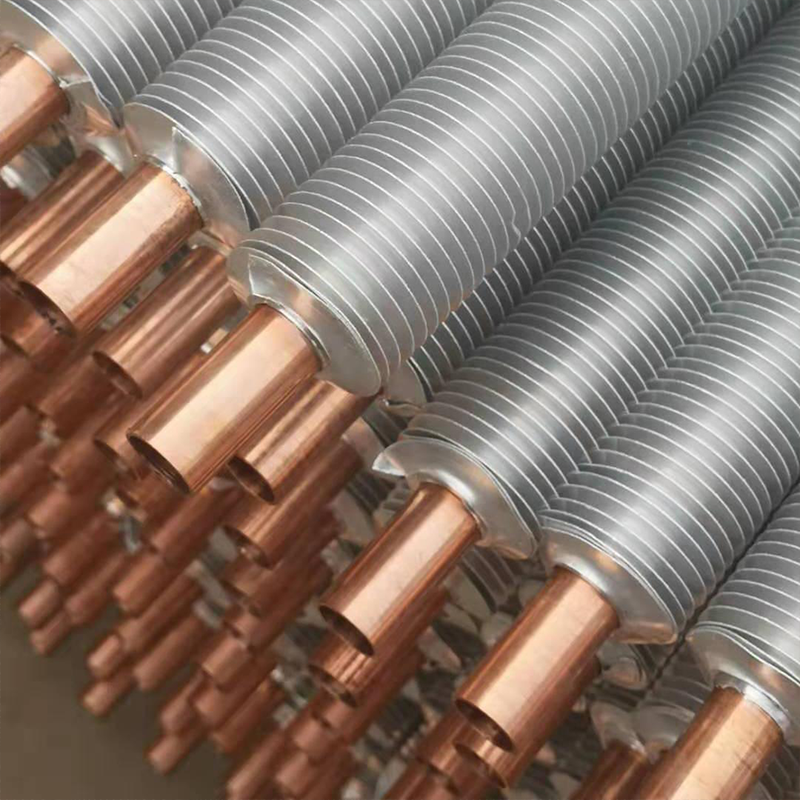
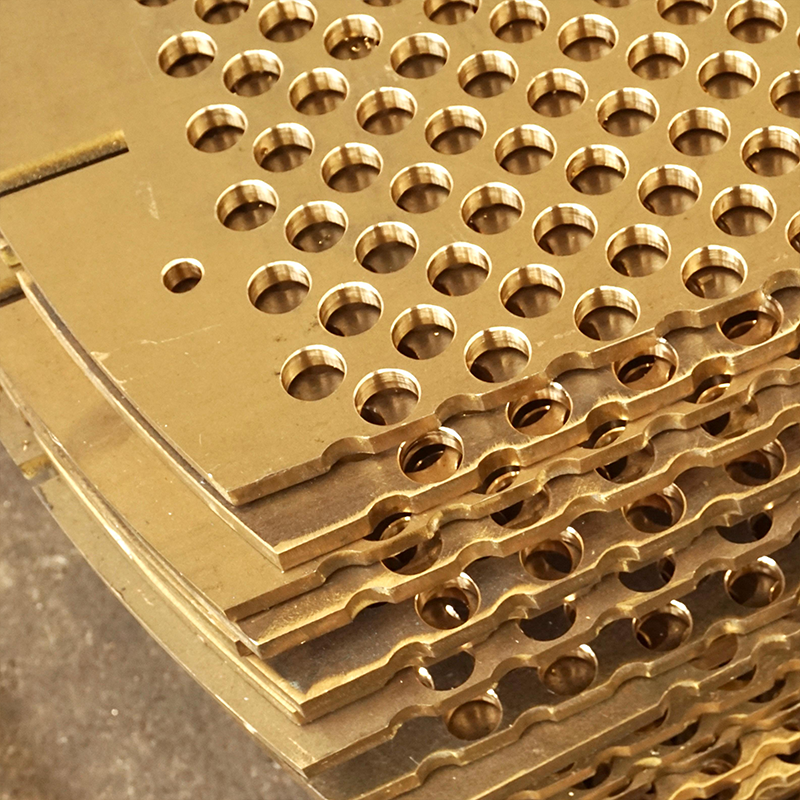
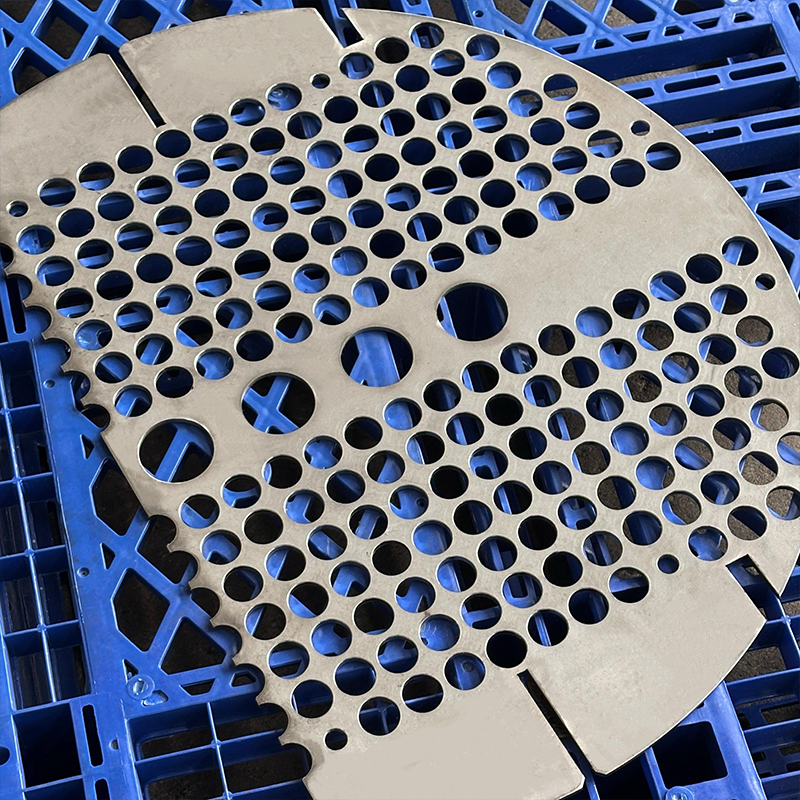
For enterprises in the plastics industry, where melt temperature control and mold cooling play a critical role, solutions from Wuxi Kaisheng are the key to smooth operation. Corrugated tube bundles, air coolers and waste heat boilers from this manufacturer optimize energy consumption and increase overall line efficiency. The company places particular emphasis on components such as 321 steel or C70600 tubesheets that provide durability for high-pressure applications. With the ability to provide customized engineering solutions and stable equipment to customers around the world, Wuxi Kaisheng LLC helps Russian factories overcome technological barriers and confidently move towards import substitution in critical parts of the production infrastructure.
Frequently Asked Questions
What quality standards are currently in force for plastic products in the Russian Federation?
Currently, the main standardization system is based on GOST, which are harmonized with international ISO standards. However, for export-oriented production and work with foreign customers, technical specifications (TS) developed by the enterprise itself, or ASTM and DIN standards are often used. The key document remains the certificate of conformity, confirming the safety of the product. Since 2025, the requirements for the content of harmful substances and the possibility of recycling the product after use have become more stringent. When choosing a supplier, be sure to ask for test reports from the most recent quarter, and not just a copy of a certificate issued a year ago.
How reliable is Russian equipment for plastic processing?
Russian mechanical engineering has made a huge leap forward in this area over the past 5 years. If previously domestic injection molding machines were inferior in accuracy and speed, now they compete with the budget segment of their Chinese counterparts. The main advantage is the availability of service and spare parts. You don't have to wait two weeks for a part from Shanghai; it is in stock in Novosibirsk or Moscow. However, for ultra-precise medical or optical products, many factories still prefer to use European or Japanese machines that have been preserved from past years, or top Chinese brands. Reliability depends not so much on the country of origin, but on the class of the car and the quality of its service.
How does the cost of oil affect the price of plastic products?
There is an influence, but it is not direct and not immediate. The price of plastic depends on the cost of naphtha or gas (raw materials for cracking), as well as on exchange rates, since some additives and equipment are imported. Typically, changes in the price of raw materials are translated into the price of the finished product with a lag of 1–2 months. In addition, energy resources and logistics occupy a significant share of the cost. Therefore, when planning long-term procurement, it is worth concluding contracts with a fixed price formula or hedging risks. Sharp fluctuations in oil prices can temporarily destabilize the market, but in the long term, producers strive to level out these fluctuations by optimizing processes.
Is it possible to find a full-cycle supplier?
Yes, such companies exist, and their number is growing. The full cycle implies the presence of in-house production of polymer granules (or close integration with a refinery), compounding and processing into a finished product. Working with such suppliers reduces the risk of supply chain disruption and allows for better control over the quality of raw materials. However, the cost of their services may be higher due to high overhead costs. For large projects and infrastructure construction, this is the optimal choice. For small-scale production, it is more profitable to work with specialized processors who buy granules on the exchange. The choice depends on the scope of your needs and material customization requirements.
Conclusion
The history of the development of plastic products factories in the Russian Federation is a vivid example of the adaptability and sustainability of the industrial sector. Having gone from complete collapse and dependence on imports to the creation of a self-sufficient high-tech industry, Russian manufacturers have proven their worth. Today dictates new rules: the one who knows how to combine traditional engineering skills with digital technologies and environmental responsibility wins. The market is being cleared of random players, leaving room for strong, technology-based companies.
For the customer, this means the opportunity to receive world-class products within the country, without long delivery times and currency risks. But this also requires a more careful approach to choosing a partner. Don't be afraid to ask questions about technology, check out labs, and inquire about upgrade plans. Transparency and openness are signs of a healthy business. We are confident that cooperation with proven Russian factories will be the key to the stability of your production in the coming years.
If you are looking for a reliable partner in the production of plastic products or want to get advice on the selection of materials and technologies,contact us today. Our experts will help you analyze your challenges and propose the optimal solution based on in-depth knowledge of the market and production capabilities. We also recommend that you check out ourproduct catalogto evaluate the range of available solutions.