
Catalogs of equipment for factories of plastic products”
2026-09-11
A complete guide to equipment catalogs for plastic products factories: from choosing an extruder to launching a line
Choosing the right onecatalog of equipment for plastic products factoriesis not just a search for a supplier, but a strategic decision that determines the profitability of your production for the next 10-15 years. In our practice, we have seen how companies lost millions of rubles due to the fact that they chose a machine with an inappropriate ratio of screw to cylinder diameter or skimped on the cooling system, which led to the failure of the first batch of products. This article was written by engineers who personally participated in the installation of more than 40 polymer processing lines in Russia and the CIS countries. We will not list the abstract advantages of “high quality”. Instead, you'll receive specific technical parameters, supplier checklists and real energy consumption numbers that will help you weed out 90% of unreliable offers before the first call.
The plastics market in 2026 requires a different approach. If five years ago you could buy any Chinese line and hope for success, today, taking into account the cost of electricity and stricter requirements for the quality of secondary raw materials, every kilowatt of power and every gram of stabilizer matters. Below we will look at how to read technical specifications so that you can see hidden problems, which certificates (GOST, EAC, CE) really protect your interests, and why having a service center within a radius of 500 km from your factory is more important than the price of the machine itself.
Critical parameters when studying extrusion equipment catalogs
When you open the first one you come acrosscatalog of equipment for plastic products factories, your attention is immediately drawn to photos of shiny cars and big headlines about high performance. However, a professional buyer knows: the devil is in the details of the design of the auger-cylinder group. This unit is the heart of the extruder, and its characteristics dictate whether you can process recycled granulate or be limited to only expensive primary raw materials.
The first parameter you need to look at is the ratio of the screw's length to its diameter (L/D). In budget catalogs you will often see the value 24:1 or 25:1. This may be sufficient for the production of simple HDPE film. But if your plant plans to produce PVC profile products or work with technical plastics where intensive mixing and degassing is required, you will need a ratio of at least 30:1, and ideally 33:1 or 36:1. Increasing the length of the plasticizing zone allows the material to remain in the cylinder longer, providing a more uniform melt temperature. In our practice, there was a case when a client purchased a line with L/D 24:1 for processing rigid PVC scrap. The result was constant overheating of the material, release of hydrochloric acid and corrosion of the equipment after just 6 months of operation. The manufacturer claimed that the machine was “universal,” but the physics of the processes is inexorable: the short zone does not have time to qualitatively homogenize the viscous material without a critical increase in temperature.
The second critical point is the material of the screw and the bimetallic cylinder liner. Standard hardened steel (nitrided) is only suitable for virgin polyethylene and polypropylene. If your technical specifications include a clause about working with filled materials (fiberglass, chalk, talc) or secondary raw materials with possible metallic inclusions, you need a screw with tungsten carbide surfacing (Stellite) or an all-metal bimetallic screw. The difference in service life is colossal: a conventional screw, when working with abrasive filling, will wear out in 3,000 hours, while a bimetallic screw will last more than 15,000 hours. Many catalogs hide this information in the fine print of the Options section, offering the standard version as the base version. Our recommendation: always request a drawing of the auger indicating the steel grade and surface hardness (HRC). If the supplier is unable to provide this data within 24 hours, this is a red flag indicating a lack of engineering transparency.
The third aspect is the loading and degassing system. For plants working with secondary raw materials (film, agglomerate), vacuum degassing is mandatory. This is often referred to in catalogs as a “devolatilization system.” Without effective degassing, microbubbles will remain in the products, which will reduce the mechanical strength of the profile or lead to film ruptures during drawing. Pay attention to the number of degassing zones. A one-stage system removes the main moisture, but a two-stage system is necessary for deeply contaminated raw materials. Also check the type of loading opening. Forced feeding (crammer feeder) is required for light materials like film scrap, otherwise the screw will run idle, and productivity will drop by 40-50% of the nameplate.
When analyzing catalogs, pay attention to the drive. Direct drive (motor connected directly to gearbox) is preferable to belt drive for powerful lines (from 90 mm in diameter), as it eliminates friction losses and the need for constant replacement of belts. However, for small laboratory or pilot lines, a belt drive can be a plus, allowing flexibility in changing the gear ratio. It is important to check the energy efficiency class of the motor. In the context of rising electricity tariffs, IE3 or IE4 class motors pay for themselves in 12-18 months only due to electricity savings. Don’t hesitate to ask the supplier for engine specifications and actual kW/h consumption per kilogram of product when processing a specific type of raw material.
Final advice for this section: never trust the figure “productivity kg/hour” without indicating the type of raw materials and the form of the manufactured product. The productivity of water and LDPE granules with filler can differ by three times. Request a test report with real extrusion parameters.
Comparative Analysis of Molding Systems: Extrusion vs. Injection Molding
One of the most common mistakes when equipping a new plant is the wrong choice of molding technology for the task. Entrepreneurs often buy injection molding machines when they need extrusion, or vice versa, guided only by the cost of the equipment in the catalog. To help you make an informed decision, we've prepared a detailed comparison of these two major plastics recycling technologies used in the industry.
| Comparison criterion | Extrusion | Injection Molding |
|---|---|---|
| Type of products produced | Continuous profile: pipes, film, sheets, cables, window profiles, granules. | Piece products of complex shape: cases, covers, car parts, household appliances, fittings. |
| Operating principle | Continuous supply of melt through a die (head die). The process is not interrupted while the machine is running. | Cyclic process: injection of a portion of the melt into a closed mold -> cooling -> opening of the mold -> ejection. |
| Cost of equipment (molds/dies) | Relatively low. Die dies are easier to manufacture and cheaper than molds. Easily modified. | Very tall. Precision steel molds cost anywhere from $5,000 to $100,000+ depending on complexity. |
| Production flexibility | High. Quick change of color or raw material. Possibility of production in infinite length. | Low. Changing the mold requires stopping the line for several hours. Economically beneficial only for large print runs. |
| Energy efficiency | Higher for mass continuous products. Stable energy consumption. | Lower due to cyclicity (acceleration/deceleration of the auger, opening/closing of the closure). |
| Main risk | Instability of wall thickness or web width due to poor adjustment of the pulling device. | Flash formation, short shot or internal stress in the product. |
If your goal is to organize a workshop for the production of pipes for water supply or sewerage, the choice is obvious: only an extrusion line. An attempt to make a pipe by injection molding is technologically impossible for long lengths. On the other hand, if you plan to produce plastic chairs or enclosures for electrical panels, an extruder is useless to you; here you need an injection molding machine with a clamping force calculated for the projection area of the product.
There is also a hybrid approach - extrusion-blow molding, which is often confused with pure extrusion. It is used to create hollow products: bottles, canisters, tanks. In catalogs, such equipment may be located in a separate section. It is important to understand the differences in control systems. Injection molding machines require more complex hydraulics or electric drives to control injection pressure and dwell time, while extruders focus on temperature stability across zones and synchronizing the speed of the drawbar with the speed of the profile exit.
In the context of the Russian market, it is worth noting the trend towards localization of mold production. Previously, all forms were ordered from China or Europe, which increased the project launch time by 2-3 months. Now many Russian tool shops are capable of producing a mold in 3-4 weeks with a quality comparable to imported analogues. This changes the economics of injection molding, making it more affordable for medium batches (from 5,000 pieces).
Recommendation: Before purchasing equipment, audit your product matrix. If you have 10 different items of products with a small circulation of each, casting may become unprofitable due to downtime for changeover. In this case, it may be worth considering using quick-change inserts in the molds or starting with sheet extrusion followed by thermoforming, which provides greater flexibility at lower capital tooling costs.
Accessory equipment: hidden plant efficiency engine
Newcomers to the industry often make the fatal mistake of investing 90% of the budget in the main extruder or injection molding machine and skimping on the peripherals. In reality, it is the auxiliary equipment that determines the stability of the process and the quality of the final product.Catalogs of equipment for factories of plastic productsUsually there are separate sections for dryers, chillers, granulators and automatic feeders, but do not explain how their parameters affect the main line.
Drying raw materials is a stage that cannot be neglected. Polyamide (PA), polycarbonate (PC), PET and some grades of ABS are hygroscopic. They absorb moisture from the air in a matter of hours. If such material is fed into an extruder without preliminary drying, hydrolytic destruction of the polymer will occur. The chains of molecules will break, the viscosity will drop, and the product will lose strength. For such materials, a dryer with an adsorbent (desiccant) is required that provides a dew point of minus 40°C or lower. Regular convection dryers (just hot air) won't do the job here. Drying time must be at least 4 hours at the temperature specified by the raw material manufacturer. Violation of this regime is the most common cause of defects when switching to new materials.
Thermal control systems (chillers and modular temperature controllers) are responsible for heat removal. In film extrusion, cooling of the sizing rolls is critical for gloss and lack of waviness. Undercooling will lead to sticking of the film in the roll, overcooling will lead to brittleness. The chiller power should be calculated with a margin of 20% of the extruder’s thermal output. Many suppliers offer chillers “in a set” at a reduced price, but their actual capacity is often insufficient to operate in the summer, when the temperature of the water in the cooling tower rises. Always check the chiller's data sheet for operation at an ambient temperature of +35°C or +40°C, and not at the standard +25°C.
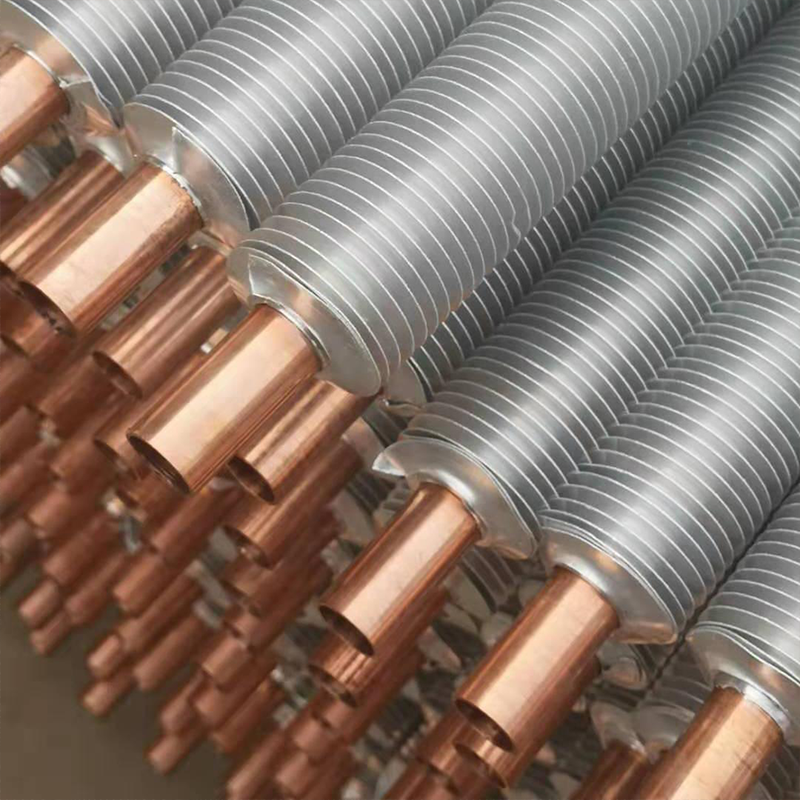
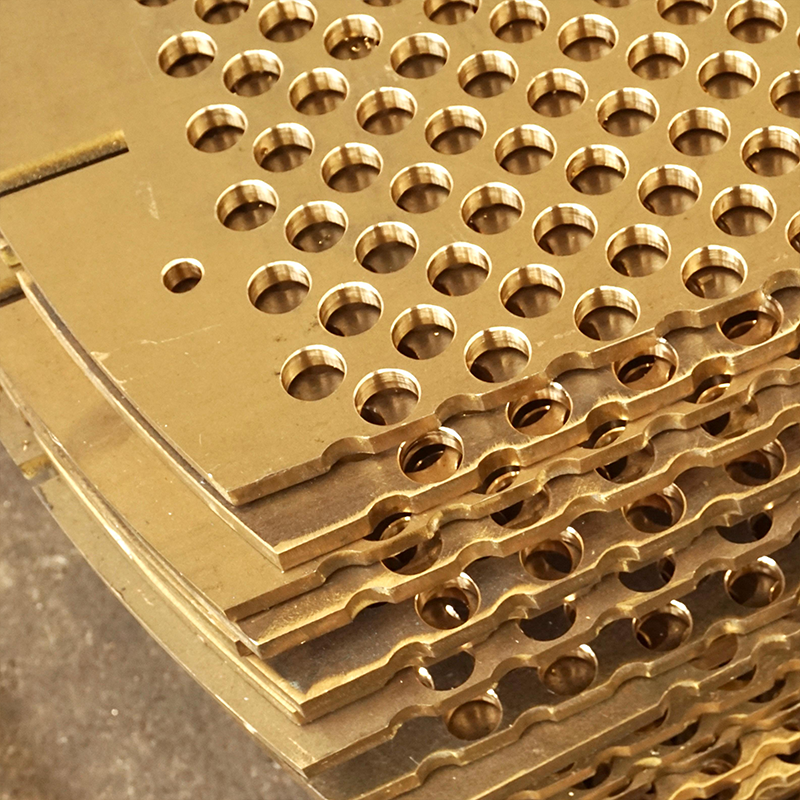
Here it is worth paying attention to the experience of companies specializing in highly efficient heat exchange equipment. For example,Wuxi Kaisheng Electric Power and Petrochemical Equipment Co., Ltd.has deep competencies in the design and manufacture of complex heat exchange systems, including air coolers and waste heat boilers, certified to the stringent international standards of ASME and PED. Although their primary focus is the oil, gas and energy industries, the principles of creating corrosion-resistant apparatus made from titanium, 316 stainless steel or N06625 alloys are directly applicable to plastics industry applications. A reliable chiller for an extrusion line, like a heat exchanger for petrochemicals, must guarantee temperature stability even under extreme loads and aggressive environments. Using C46400 marine brass components or copper-nickel alloys, which Wuxi Kaisheng uses in its products, could significantly extend the life of cooling systems in factories using seawater or reactive coolants.
Automation of raw material supply (vacuum loaders) is a matter of not only convenience, but also production hygiene. Manual loading of bins leads to dust, condensation and human error (forgot to add masterbatch). The central conveyor feeding system with dosing of additives eliminates operator errors and ensures consistency of color and properties of the mixture. Modern dispensers operate with an accuracy of up to 0.1%, which is critical when using expensive additives or foaming agents.
Granulators (crushers) for returning gates and rejects to production must correspond to the type of material being processed. Film requires knives of special geometry to prevent wrapping. For thick-walled pipes - low-speed crushers with high torque. An important nuance: the size of the crusher grid must correspond to the size of the extruder loader neck. If you crush a fraction of 15 mm, and the auger accepts a maximum of 10 mm, you will get a plug in the loading area and the line will stop. Also, pay attention to the noise reduction system. A crusher without a soundproof casing generates noise above 85 dB, which requires personnel to wear PPE and can lead to problems with labor inspection.
In our practice, there was a case at a plant in Tatarstan, where they saved on the melt filtration system by installing a manual mesh filter head instead of an automatic filter changer (screener). When processing recycled HDPE, filters clogged every 40 minutes. The operators had to stop the line, disassemble the head, change the grid and return to the mode. During the shift, the line was idle for a total of 3 hours. The losses amounted to about 600 kg of product and huge energy costs when heating up after inactivity. The installation of an automatic filter changing system paid for itself in 4 months only due to the elimination of downtime and saving on raw materials.
Certification and compliance with standards: GOST, EAC and safety
Working in the legal framework of the Russian Federation and the EAEU countries requires strict compliance with technical regulations. Purchasing equipment without the necessary certificates is a direct path to fines, confiscation of cargo at customs and the impossibility of legal operation. When studying anycatalog of equipment for plastic products factories, first of all, ask for documents of compliance.
The main document is the Declaration of Conformity with the CU TR (Technical Regulations of the Customs Union). For machinery and equipment, this is usually TR TS 010/2011 “On the safety of machinery and equipment”. This document confirms that the machine has passed tests for mechanical safety, protection against noise, vibration and electromagnetic compatibility. Without this declaration, you will not be able to put the equipment on the balance sheet of the enterprise and pass the Rostechnadzor inspection. Please note: the declaration must be issued specifically for the imported batch or serial production, and not be a copy of a document for another model.
For the electrical parts of the equipment (control cabinets, motors, heaters), compliance with TR TS 004/2011 (low-voltage equipment) and TR TS 020/2011 (electromagnetic compatibility) is required. The EAC marking on the machine nameplate is mandatory. The absence of marking or its non-compliance with the documentation is grounds for prohibiting operation.
If you plan to export your products or work with international customers, having a CE (European Conformity) certificate for your equipment will be an advantage, although within the Russian Federation EAC has priority. However, it is important to understand the difference: CE declares compliance with European directives, which in some points (for example, regarding noise levels or requirements for fencing) may differ from our GOSTs. The ideal option is equipment that has double certification or a GOST R certificate of conformity (for voluntary certification confirming increased requirements).
Separately, it is worth mentioning the standards for plastic products themselves. Your equipment must allow you to produce products that comply with relevant GOST standards. For example, for pipes this is GOST 32415-2013 (pressure pipes made of thermoplastics), for film - GOST 10354-82. The design of the extruder (accuracy of temperature control, stability of the pulling device) must ensure compliance with the tolerances specified in these standards. If the machine is unable to achieve ±5% wall thickness accuracy, you will not be able to certify your pipe and sell it to large network customers or utilities.
Also check the availability of the equipment passport in Russian. According to the law, all technical documentation, operating instructions and safety precautions must be provided to the consumer in the official language of the country of use. The absence of Russian management is a violation of consumer rights and a risk to personnel safety.
Economics of Ownership: Payback Calculation and Hidden Costs
The price of the machine indicated in the catalog is just the tip of the iceberg. A professional approach to procurement requires calculating TCO (Total Cost of Ownership) - the total cost of ownership. Let's look at what the costs of a plastic products plant actually consist of in the first 3 years of operation.
The first expense item is energy consumption. An extrusion line with a diameter of 90 mm with a capacity of 400 kg/h consumes about 130-150 kW per hour (including heating, drive and peripherals). When working in 3 shifts (7200 hours per year) and a tariff of 5 rubles per kWh, annual electricity costs will be about 5.4 million rubles. The difference in engine efficiency and the quality of cylinder insulation between a cheap and premium car can be 15%. This is 800,000 rubles in annual savings on electricity alone. Over 5 years, this amount will cover the difference in the initial price of the equipment.
The second item is consumable parts. Augers, cylinders, heaters, heating elements, thermocouples, filter meshes. Cheap equipment often uses non-standardized node sizes. When a worn auger requires replacement a year later, you may find that the original spare part costs half the price of a new machine, and there are no analogues due to its unique design. Choose equipment with standardized components, where the screw can be rebuilt or restored in a specialized workshop, and heaters are standard products available on the market.
The third article is defects and commissioning. Cheap lines require lengthy setup (up to 2-3 weeks) to reach a stable mode. At this time, products are produced that go to waste. Reliable equipment with high-quality automation is up and running in 1-2 days. The loss of 1 ton of raw materials due to process instability is a direct loss. Also consider the cost of the service. If a representative of the manufacturer is located in a different time zone and does not speak Russian, a downtime on the line due to a minor malfunction may take up to a week. Having a service contract with a local engineering company, even at a higher cost per hour, is often more cost-effective than waiting for a specialist from abroad.
Liquidity of equipment also matters. Well-known brands (even first-tier Chinese ones) are easier to sell on the secondary market in 5-7 years than no-name machines that no one knows and doesn’t want to service.
Frequently Asked Questions
What is the minimum budget needed to open a small plastic processing shop?
To organize a minimum viable production (for example, a granulation line for recycled materials or the production of simple profiles) will require from 3 to 5 million rubles. This amount will include a used or new low-cost extrusion line made in China (about 2-2.5 million rubles), the necessary auxiliary equipment (crusher, dryer, chiller - about 1 million rubles), as well as the costs of installation, commissioning and the first purchase of raw materials. Rent of premises and working capital are calculated separately. It is impossible to save on auxiliary equipment, as this will lead to the impossibility of obtaining high-quality granules.
What equipment is best to choose for processing film scrap?
For film scrap, the key element is not the extruder itself, but the raw material preparation system. You will definitely need an agglomerator (to compact the lightweight film) or a hot washing system with a centrifuge if the film is very dirty. The extruder must be equipped with a forced loading (crammer feeder), since the film has a low bulk density and will not flow into the screw by gravity. A screw diameter of 80 mm or more is recommended to ensure sufficient torque. Filtration of the melt must be automatic, since the film often contains contaminants that quickly clog the mesh.
How long does it take to deliver and install a line from China?
The standard production time for equipment at the plant is 30-45 days. Delivery by sea to the port of Vladivostok or Novorossiysk takes another 30-45 days. Customs clearance - from 1 to 3 weeks. Thus, the realistic time frame for receiving the cargo at the buyer’s warehouse is 3-4 months. Installation and commissioning by invited engineers takes from 5 to 10 working days, depending on the complexity of the line. Include in your business plan at least 5 months from the moment of payment to the release of the first commercial product.
Is it possible to use one extruder for different types of plastic (HDPE, PP, PVC)?
Technically this is possible, but it is highly not recommended for industrial production. Converting from HDPE to PVC requires a complete cleaning of the screw and barrel, as HDPE residue can cause PVC degradation at high temperatures, and traces of PVC (and hydrochloric acid released) will ruin the HDPE batch. In addition, the geometry of screws for soft (HDPE, PP) and hard (PVC) materials differs (turn pitch, compression ratio). A universal auger will not work effectively for both materials. The best solution is to have a separate line for PVC or use quick-change screw pairs, which, however, increases the changeover time and the risk of human error.
Conclusion and next steps
Choosing equipment for a plastic products plant is an investment in technology that will become the foundation of your business. A mistake at the stage of studying catalogs can cost you years of unstable work and constant repairs. Remember: a reliable supplier is always open to dialogue, provides detailed drawings, videos of test runs with your raw materials and clear warranty conditions. Don't chase the lowest price in the catalog - chase the lowest cost per kilogram of your finished product in the long term.
We recommend creating a comparison table of 3-5 potential suppliers using the criteria described in this article: screw L/D, material, presence of degassing, energy efficiency class and service conditions. Request their reference list of clients in your area and contact them for feedback.
If you are ready to move from theory to practice and receive an individual commercial offer with productivity calculations for your raw materials,contact us today. Our engineers will help you choose the optimal line configuration, avoiding unnecessary costs and ensuring a margin of reliability.
For further study of the topic, we recommend that you familiarize yourself with our material:complete catalog of proven plastic equipment with prices and characteristics.