Guides to the properties of polypropylene sheets”
2026-09-10
What do reference books on the properties of polypropylene sheets hide: real data versus marketing
Handbooks on the properties of polypropylene sheets often contain average values, which fail in actual operation at temperatures above 80°C or under dynamic load. In our practice of engineering support for chemical engineering projects, we have repeatedly encountered a situation where the customer selected a material solely based on the table of density and tensile strength, ignoring creep and oxidation resistance. The result was deformation of the containers after only 6–8 months of operation, although the passport data promised decades of service. This article doesn't just rehash numbers from GOST or ISO - we analyze what parameters are truly critical to purchasing decisions, how to distinguish a homopolymer from a copolymer in the documentation, and why a "standard" PP sheet may not be suitable for your specific harsh environment.
If you are looking for ready-made answers without understanding the physics of the process, this material will seem too complicated. But if your goal is to avoid production downtime and warranty claims, then analysis of real cases and hidden parameters will become the basis for a competent specification. We will consider mechanical, thermal and chemical characteristics, drawing on experience in installing more than 400 tons of polymer structures in regions with extreme climatic conditions.
Critical Mechanical Parameters: Why Tensile Strength is Just the Beginning
Most technical data sheets include the elastic modulus and yield strength on the first page, creating the illusion of complete information content. However, in real operating conditions, polypropylene sheets do not operate under single rupture, but under long-term static load or cyclic stress. The flexural modulus of elasticity (usually 1300–1500 MPa for a homopolymer) determines the rigidity of the structure, but does not indicate how a 5 cubic meter tank filled with a sulfuric acid solution will behave after three years of continuous operation.
In one of the projects for a mining and processing plant, we replaced a standard 10 mm thick sheet with a reinforced grade with the addition of a nucleator. The price difference was 18%, but the service life of the assembly increased from the predicted 2 years to 7 years without visible signs of material fatigue. The key parameter here turned out to be not so much strength as resistance to slow crack growth (Slow Crack Growth Resistance). Conventional reference books rarely provide data on time to failure at constant stress (Time-to-Failure curves), although it is these graphs that make it possible to calculate the safety margin.
Charpy Impact Strength is another parameter that is often misleading. A value of 3–4 kJ/m² at +23°C looks acceptable, but when the temperature drops to -10°C, which is quite realistic for unheated warehouses in Siberia or the Urals, the material becomes as fragile as glass. If your equipment will be operated outdoors or in a cold workshop, request testing data at subzero temperatures from the supplier. Ignoring this factor led to the fact that one of the transport companies lost a batch of containers already during the first winter transportation - the sheets burst from the vibration of the body.
When choosing sheet thickness, always use a safety factor of at least 1.5 relative to the design load. Thin walls (less than 5 mm) are prone to local buckling during welding, which creates stress concentrators. For capacitive equipment, the optimal range is considered to be 8–15 mm, where a balance is maintained between welding manufacturability and mechanical stability. Do not try to save on material by reducing the thickness - the cost of replacing a failed tank will cover the initial benefit many times over.
Thermal stability and influence of temperature on product geometry
Polypropylene is known for its wide operating temperature range, but the limits of this range are highly dependent on the type of polymer and the presence of stabilizers. Homopolymers (PP-H) retain their shape up to 100–105°C, while block copolymers (PP-B) begin to soften at 90°C. Reference books often indicate a short-term exposure temperature that can reach 120°C, but this value is not applicable for continuous operation. Exceeding the operating temperature by even 10 degrees accelerates the process of thermal-oxidative destruction many times over.
The coefficient of linear thermal expansion (CTE) of polypropylene is about 0.15 mm/(m °C). This means that when a pipe or container 5 meters long is heated by 40 degrees, it will lengthen by 30 millimeters. If the structure is sandwiched between rigid supports without expansion joints, colossal internal stresses will arise, leading to warping or rupture of welds. In our practice, there was a case when designers forgot to take into account thermal expansion when installing a ventilation system for acid vapors. In the summer, when the hood was operating with hot air, the air ducts were bent in an arc, and the tightness of the connections was broken.
The thermal conductivity of polypropylene is low (about 0.22 W/(m K)), which is a plus for thermal insulation, but a minus for processes that require uniform heating or cooling. When welding large areas, heat is removed slowly, which requires strict control of the temperature of the heating element. Overheating of the welding zone leads to degradation of the polymer and the formation of pores, and underheating leads to a lack of diffusion of molecules and low weld strength. Use infrared pyrometers to monitor surface temperatures before starting welding.
For high-temperature applications (above 90°C), we strongly recommend using PP-RCT (third generation crystalline polypropylene) grades or special heat-stabilized compositions. They have an improved crystal lattice structure, which increases the thermal distortion temperature under load (HDT) to 110–115°C. Under such conditions, standard general-purpose sheets quickly lose their rigidity and begin to “float” under the own weight of the liquid.
Chemical resistance: myths about the versatility of polypropylene
Polypropylene is often called the “king of chemical resistance,” and this statement is only partly true. It is truly inert to most acids, alkalis and salts at room temperature. However, there are aggressive environments that destroy its structure in a matter of weeks. Oxidizing agents such as concentrated nitric acid, chromic acid or high concentration sodium hypochlorite cause rapid oxidation of the chain and loss of mechanical properties. In reference books on the properties of polypropylene sheets, these nuances are often hidden behind the general phrase “good resistance,” which is unacceptable for critical applications.
Organic solvents pose a separate threat. Aromatic hydrocarbons (benzene, toluene, xylene) and chlorinated solvents (dichloromethane, trichloroethane) cause swelling and dissolution of polypropylene. Even short-term contact with such substances can lead to irreversible changes in the geometry of the product. We performed immersion tests on PP-H samples in a solvent mixture at 40°C: after 72 hours, the sample had increased in volume by 12% and had lost 60% of its tensile strength. Such data should be mandatory when designing containers for the paint and varnish or pharmaceutical industries.
Ultraviolet radiation is another hidden enemy. Without the addition of stabilizers (carbon black, HALS), polypropylene is destroyed under the sun in one season. The surface becomes chalky, microcracks appear, which quickly turn into through faults. If your sheets will be used outdoors, make sure the specification includes a light resistance grade (eg UV-stabilized grade). An ordinary gray or white sheet without protection will last outdoors for no more than 6–8 months.
When working with food media, it is important to consider not only chemical inertness, but also the migration of substances. Polypropylene is approved for contact with food (PP marking or number 5 in a triangle), but only if temperature conditions are observed. Heating fatty foods above 80°C can trigger the migration of low molecular weight polymer fractions into the product. Always ask the manufacturer for a Declaration of Compliance for a specific brand of raw material.
| Parameter/Environment | Sulfuric acid (up to 90%) | Hydrochloric acid (conc.) | Caustic soda (50%) | Nitric acid (conc.) | Gasoline/Fuel |
|---|---|---|---|---|---|
| Resistance at 20°C | Excellent | Excellent | Excellent | Insufficient | good |
| Resistance at 60°C | good | good | Satisfactory | Destruction | Swelling |
| Recommendation | PP-H standard | PP-H standard | PP-B (for impact strength) | Do not use PP | Check fuel type |
Differences between types of polypropylene: PP-H, PP-B and PP-R
The choice between homopolymer, block copolymer and random copolymer determines the fate of your project. Homopolymer (PP-H) has maximum chemical resistance and rigidity, but low impact strength at low temperatures. It is an ideal choice for chemical baths, corrosive piping and ventilation systems where hardness and scratch resistance are important. However, it is risky to use it on containers that are subject to shock or winter transportation.
Block copolymer (PP-B) contains inclusions of ethylene-propylene rubber, which significantly increases its impact strength. It withstands drops and mechanical stress better than PP-H, but is slightly inferior in chemical resistance to some oxidizing agents and has a lower thermal deformation temperature. This is a material for tanks, bunkers, water tanks and sewer systems, where reliability under possible mechanical stress is important.
Random copolymer (PP-R) is more commonly used in hot water piping systems due to its clarity and ability to withstand high pressures at elevated temperatures. It is less common in sheet form, but is used where high heat resistance and hygiene are needed. The structure of PP-R molecules ensures better weldability and absence of internal stresses after cooling.
Visually distinguishing these types is difficult, so always rely on the manufacturer's labeling and test reports. The density of PP-H is usually higher (0.905–0.915 g/cm³) than that of PP-B (0.895–0.905 g/cm³), but this method is not reliable without laboratory equipment. Request a datasheet from the supplier indicating the type of copolymerization and percentage of ethylene.
Processing and welding: technological limitations that catalogs are silent about
Polypropylene is easy to machine (milling, sawing, drilling), but tends to “smear” when using a blunt tool. To obtain a clean cut, it is necessary to use carbide cutters with a large sharpening angle and high speeds. The shavings should be light and fluffy; if it sticks together into lumps, it means the tool is overheating and melts the material, which deteriorates the quality of the edge for welding.
Welding with an extruder or hot air is the most critical stage. The temperature of the welding rod and the base material must be synchronized. A typical mistake for beginners is overheating the filler rod when the base is underheated. This causes the liquid plastic to lie on the cold surface without penetration, forming a surface film that peels off at the first load. A proper seam must have a diffusion zone where the materials are mixed at the molecular level.
Edge preparation is critical. A V-shaped cut at an angle of 45–60 degrees is required for sheets thicker than 4 mm. Neglect of this rule leads to lack of penetration of the root of the seam. Before welding, the surface must be degreased with a special cleaner based on isopropyl alcohol. The use of acetone or solvents is prohibited, as they can leave microdamages on the surface of the polymer.
Welding speed is also critical. Extruder movement that is too fast does not allow the material to fill the gap; too slow movement causes overheating and burn-through. The optimal speed is selected experimentally for each thickness and type of apparatus, but is usually 0.3–0.6 meters per minute for a manual extruder. After welding, the seam must cool naturally; Forced cooling with water or air creates thermal stresses and reduces the strength of the connection.
Quality standards and certification: what to look for in documents
When importing polypropylene sheets into the EAEU countries, the presence of a certificate of compliance with technical regulations (TR CU) is a mandatory customs requirement. However, the certificate itself does not guarantee the quality of the material. It is important to pay attention to the test reports that are annexed to the certificate. They must indicate the actual values of density, tensile strength and elongation obtained by an accredited laboratory.
International standards ISO 15493 and ISO 15494 regulate the requirements for plastic piping systems, but for sheet metal DIN 16930 (for PP-H) and DIN 16931 (for PP-B) are more often used. German standards are considered among the most stringent in the world. If the manufacturer claims DIN compliance, this is a good sign, but ask to see a copy of the test from an independent institute (eg SKZ or MPA).
ISO 9001 certification confirms that the plant has a quality management system, but does not test a specific batch of goods. It is much more important to have a batch quality certificate (Mill Test Certificate), which indicates the batch number, production date and the results of the incoming inspection of this particular bundle of sheets. The absence of MTC is a red flag indicating possible mixing of varieties or the use of recycled materials.
Recycled polypropylene is often used to reduce the cost of products, but its properties are unpredictable. It may contain impurities of other polymers, dyes or fillers, which sharply reduce chemical resistance and weldability. For critical structures, use only virgin raw materials (Virgin Grade). Visually, recyclables are often distinguished by uneven color or the presence of dark inclusions, but high-quality recycling can look perfect. Only chemical analysis or melt flow test (MFI) will give an accurate answer.
Integration of polymer solutions into complex engineering systems
Selecting polypropylene wisely is only half the success. Real equipment efficiency is achieved only with the correct integration of polymer elements with metal components operating under extreme conditions of pressure and temperature. This is where an integrated approach is needed, combining knowledge about plastic and metal.
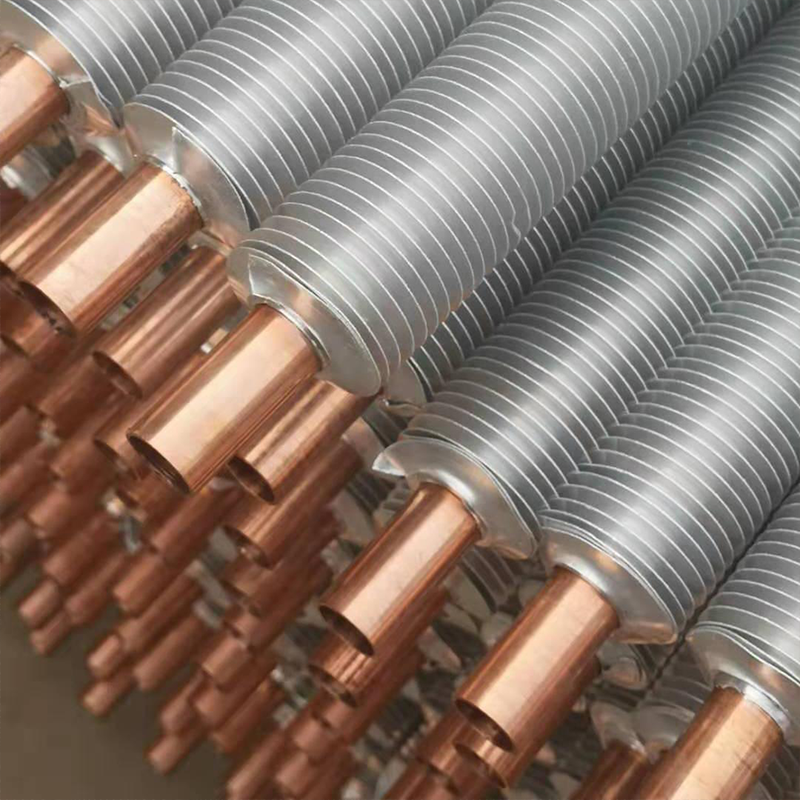
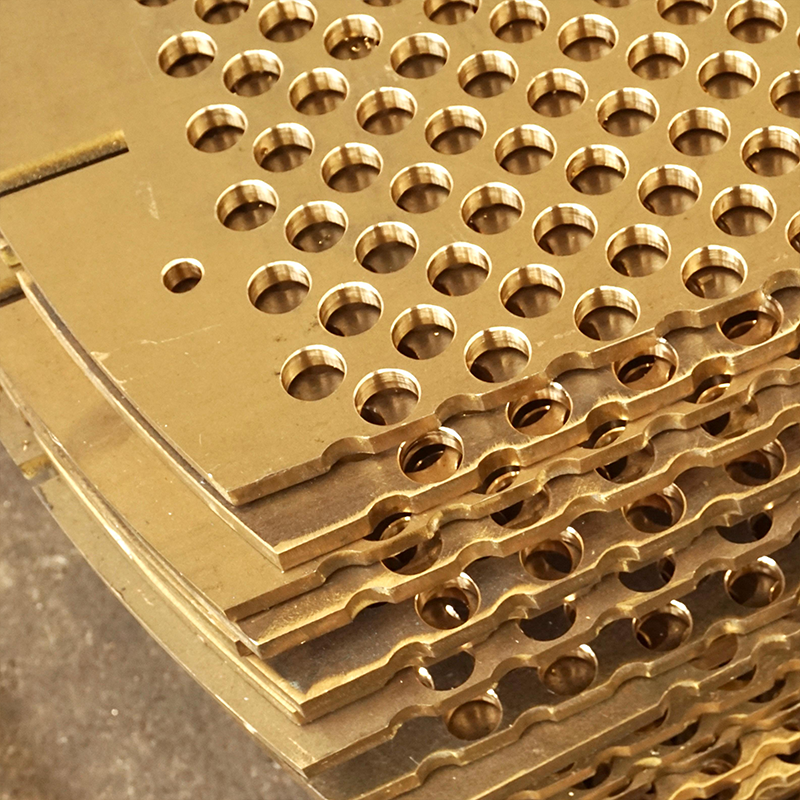
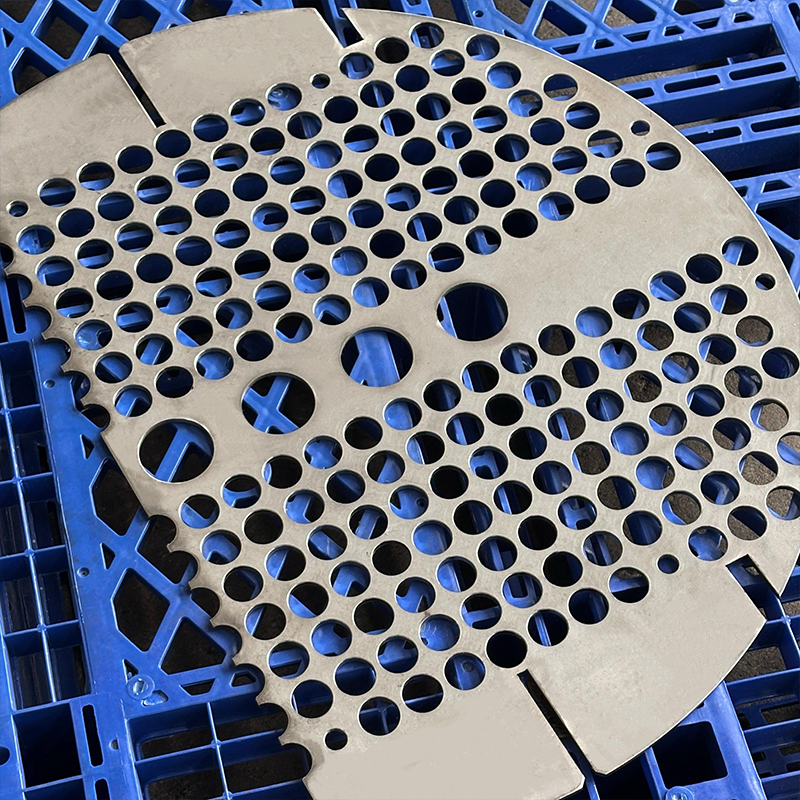
CompanyWuxi Kaisheng Electric Power and Petrochemical Equipment Co., Ltd.specializes in the development and production of highly loaded assemblies, where polymers often act as linings or mating elements. Our experience building titanium shell-and-tube heat exchangers, ASME high-pressure vessels and corrugated alloy tube bundles (316 Stainless Steel, C46400 Marine Brass, Copper-Nickel Alloys, N06625 Nickel) allows us to see the complete picture of the process. We understand how the behavior of polypropylene lining affects the performance of air coolers, recovery boilers and tubesheets in the harsh environments of the oil refining and chemical industries.
Our PED and ASME certified products demonstrate high corrosion resistance and thermal efficiency. Working with customers around the world in the seawater desalination, shipbuilding and energy conservation sectors, we provide tailor-made solutions where each material - be it carbon steel, titanium or polypropylene - is selected based on its real, not rated, characteristics. This systematic approach eliminates errors at the junction of different materials and ensures stable operation of the entire equipment complex.
Frequently Asked Questions
What is the maximum operating temperature of polypropylene sheets?
For standard homopolymer (PP-H), the maximum continuous operating temperature is 100°C. For a short time, the material can withstand temperatures up to 110–115°C, but this reduces its mechanical strength. For copolymers (PP-B) this limit is lower - about 90°C. If you require operation at higher temperatures, consider polyvinylidene fluoride (PVDF) or fluoroplastic options, or select special heat-stabilized PP grades.
Is it possible to glue polypropylene or just boil it?
Polypropylene has very low surface energy, which makes gluing an extremely difficult and unreliable process. Most all-purpose adhesives don't stick to it. There are special two-component epoxy compounds with pre-treatment of the surface with a flame or primer, but the strength of such a connection will never reach 100% of the strength of the base material. The only reliable connection method is thermal welding (extrusion, hot air or butt), ensuring the integrity of the seam.
How to distinguish a high-quality sheet from a cheap analogue?
The primary sign is uniformity of color and the absence of foreign inclusions. The surface should be matte or semi-gloss, without waves or bubbles. Check the geometry: the sheet must be perfectly flat, the deviation in thickness should not exceed ±5-10%. Ask to cut a small piece and try to bend it: high-quality PP bends elastically and does not break, cheap PP with impurities can crunch or turn white at the bend. Also require a Mill Test Certificate for the batch.
Does polypropylene age in the sun?
Yes, ordinary polypropylene quickly degrades when exposed to ultraviolet radiation. Without special additives (UV stabilizers), it loses strength and cracks within 6–12 months of being outdoors. For outdoor use, be sure to order sheets marked “UV stabilized” or add carbon black to the composition (black sheets are the most stable). If you bought ordinary sheets, they must be painted with special acrylic paints for plastic or covered with casings.
What is the minimum bending radius allowed for a sheet?
The minimum cold bend radius depends on the sheet thickness and ambient temperature. At room temperature (+20°C) the safe radius is approximately 10–15 sheet thicknesses. For example, for a 10 mm sheet, the bending radius must be at least 100–150 mm. When heated to 130–140°C (thermoforming), the radius can be reduced to 3–5 thicknesses. Bending of a smaller radius without heating will lead to whitening of the material in the deformation zone and the formation of microcracks, which will become sources of destruction.
Conclusion and recommendations for choosing a supplier
Directories on the properties of polypropylene sheets give only a basic idea of the material, but real effectiveness depends on the correct choice of brand for a specific task. Do not skimp on the quality of raw materials for aggressive environments and load-bearing structures - the cost of a mistake will be many times greater than the cost of the material itself. Consider temperature conditions, type of load and chemical environment when creating specifications.
We recommend that you always request samples before making a large purchase and conduct your own tests to ensure compatibility with your operating environment. Check for complete supporting documentation, including test reports and certificates of origin. A reliable supplier is always open to dialogue and is ready to provide technical advice, and not just send a price list.
If you encounter difficulties in selecting a material, have doubts about the interpretation of data from the reference book, or need a comprehensive solution combining polymer and metal elements (heat exchangers, high-pressure vessels), contact our engineers. We will help you audit your project, select the optimal grade of polypropylene and calculate the required wall thickness taking into account all risk factors, based on global experience in implementing projects in the petrochemical and energy industries.Contact us todayto receive professional advice and commercial proposals.