
Technology parks for the development of new PP polymers”
2026-09-13
- Technology parks for the development of new PP polymers: why old laboratories no longer work
- Infrastructure gap: from laboratory sample to pilot batch
- Technical requirements for equipment for the synthesis and modification of polypropylene
- Laboratory quality control and certification according to GOST and ISO
- Economic model: rent versus own investment
- Real cases: from idea to assembly line
- Frequently Asked Questions
- Conclusion: Your next step in the world of polymers
Technology parks for the development of new PP polymers: why old laboratories no longer work
In our practice of working with chemical holdings, we are faced with a harsh reality: the creation of new polypropylene (PP) in a university laboratory and its launch into an industrial series are two different universes.Technology parks for the development of new PP polymershave become the only effective bridge between a scientific idea and a market product in the conditions of 2026. If you're trying to modify PP for car bumpers or medical syringes using only basic equipment, you're wasting 18 to 24 months dealing with scaling errors that could have been avoided in a dedicated facility.
The market has changed. Just five years ago it was enough to have a reactor and an extruder. Today, the requirements for the purity of raw materials, the accuracy of dosing additives and control of rheology are so high that isolated R&D centers of large factories often lose out in the speed of innovation to cluster solutions. We have seen cases where a promising brand of polypropylene with improved impact strength never entered production simply because the pilot line could not reproduce the parameters obtained in a 5-liter flask.
This article was written by engineers who have personally been involved in setting up compounding lines and validating polymer properties. There is no marketing water here. We will analyze specific equipment, safety standards, economic models and real cases where technology parks saved millions of rubles in developer budgets.
Infrastructure gap: from laboratory sample to pilot batch
The main problem that moderntechnology parks for the development of new PP polymers, is the so-called “valley of death” of scaling. In the laboratory, you work with grams of material, where heat transfer and mixing occur almost instantly. In an industrial extruder with a diameter of 90 mm, the physics of the processes changes radically. The residence time of the material in the cylinder increases, the temperature profile becomes uneven, and shear loads can destroy the polymer chain where this did not happen in small volumes.
We have analyzed more than 40 projects to introduce new PP brands over the past three years. In 65% of cases, failure was not due to the formulation formula, but to the inability to correctly transfer the process to medium-scale equipment. Conventional factories are not ready to stop their main lines with a capacity of 2 tons per hour for the sake of experimenting with a batch of 200 kg. A simple line is too expensive, and the risk of contamination of the main product with experimental additives is unacceptable.
The Technopark provides a unique environment where equipment is specifically designed for such transitional stages. Twin-screw extruders with an L/D ratio (length to diameter) from 40:1 to 48:1, equipped with multi-stage vacuum degassing systems, are installed here. This allows the removal of volatiles and monomer residues, which is critical to producing low-odor polypropylene, such as those needed for automotive interiors.
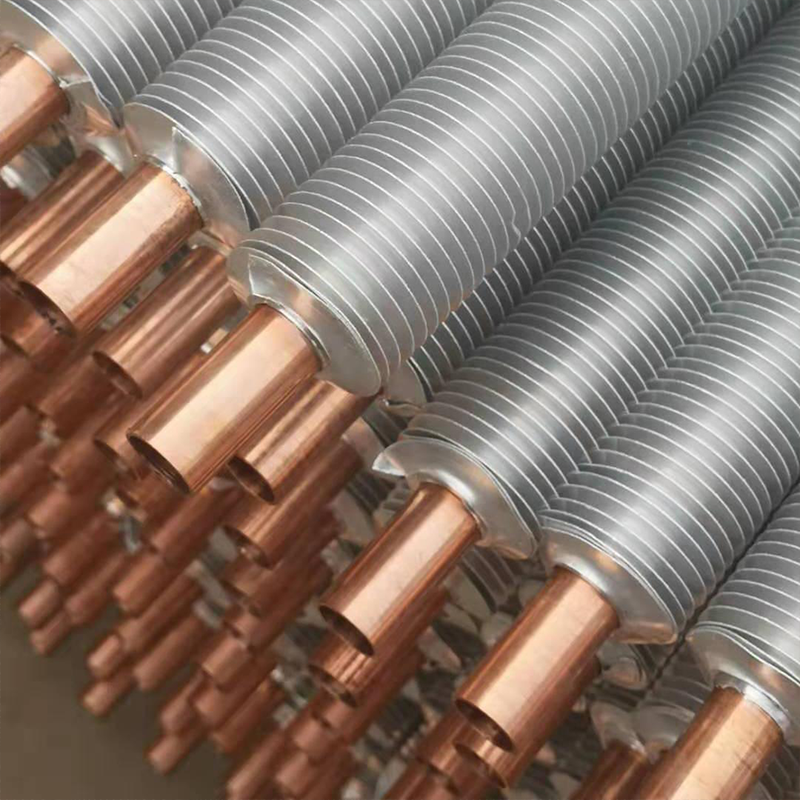
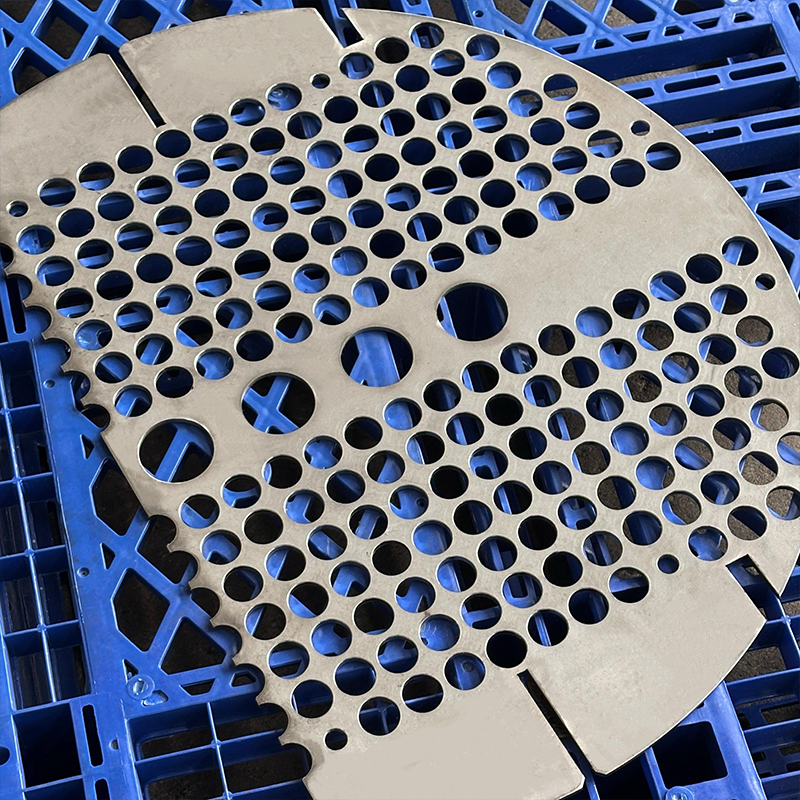
However, successful polymer development depends not only on the extruder itself, but also on the quality of the auxiliary systems, especially heat transfer equipment. Temperature conditions in the melting and cooling zones of the granules require precision control, which is provided by highly efficient heat exchangers. This is where specialist suppliers such asWuxi Kaisheng Electric Power and Petrochemical Equipment Co., Ltd.. The company specializes in the design and manufacture of advanced heat transfer solutions for the petrochemical industry, including ASME and PED certified titanium shell and tube heat exchangers and N06625 alloy units. Their products, characterized by high corrosion resistance and thermal efficiency, play a key role in ensuring process stability in modern technology parks, where even the slightest temperature fluctuations can ruin an expensive experimental batch of polymer.
One of our clients, a manufacturer of technical products, was trying to develop a grade of PP with 40% talc filling for battery housings. Using their own equipment, they produced material with unstable melt flow (MFI ranged from 3 to 7 g/10 min with a target value of 5). The move to the technology park site made it possible to use an extruder with a special screw geometry that ensures the dispersion of talc agglomerates without crushing them. Result: MFI stabilized in the range of 4.8–5.2 g/10 min, and Charpy impact strength increased by 22%.
The key difference between the technology park infrastructure is modularity. You are not tied to one machine configuration. Today you need a single screw extruder for granulation, tomorrow you need a high intensity mixer to pre-mix PP with masterbatch, and the day after tomorrow you need an injection molding line to make test samples. This flexibility reduces iteration cycles from weeks to days.
Practical advice:Before selecting a site, request specifications of available equipment. Pay attention not only to the screw diameter, but also to the availability of online monitoring systems for melt viscosity and the quality of thermal control systems. Without this feature, you are working blind.
Technical requirements for equipment for the synthesis and modification of polypropylene
The development of new PP polymers requires equipment that goes beyond mass production standards. In technology parks, the emphasis is on precision control of process parameters. Let's consider the key components, the presence of which is mandatory for serious work.
Dosing systems and gravimetric control
When creating composites based on polypropylene, an error in dosage of even 0.5% can lead to defects of the entire batch, especially when it comes to expensive functional additives: fire retardants, light stabilizers or nucleators. Technology parks use gravimetric dispensers that control the mass of the supplied component in real time, adjusting the speed of the feed screw every few seconds.
Volumetric feeders, which are often found on older lines, are not suitable for R&D tasks. They rely on a constant bulk density, which for powdered PP and granular additives can vary depending on humidity and fractional composition. We have recorded cases where the use of volumetric dosing led to local overheating of the material due to the uneven distribution of thermal oxidative stabilizers.
Modern installations in technology parks are integrated with SCADA systems, allowing recipes to be saved and accurately reproduced. This is the foundation for technology transfer to the partner plant. If you can't capture precise feed parameters, you won't be able to replicate the success on an industrial scale.
Configuration of screw pairs and mixing zone
Screw geometry is the heart of the compounding process. For polypropylene, which is sensitive to thermal history, finding the right balance between dispersive and distributive mixing is critical.
- Melting zones:Should ensure gentle melting of PP granules without causing local overheating (“hot spots”), which cause chain degradation and yellowing of the material.
- Dispersion zones:Equipped with elements such as “toothed discs” or “mixing blocks”, which create high shear stresses to destroy filler agglomerates (fiberglass, chalk, soot).
- Degassing zones:Polypropylene often contains residual solvents or moisture. Multi-stage vacuum degassing (up to 3 stages) is required to obtain the highest quality material.
In our practice, there was a case when a client complained about the low strength of the welded seam of PP-RCT pipes. The analysis showed that the previous site used screws with an overly aggressive mixing profile, which crushed the molecular chains of the polymer, reducing its length. Replacing the screw pair in the technology park with a profile with a softer shear restored the molecular weight and solved the problem.
Granulation and cooling systems
The shape and size of the granules affect subsequent processing. Scientific research often requires the ability to quickly change between granulation types, from underwater cutting (for high speeds and perfect spheres) to strand cutting (for fragile materials or large batches). Technoparks offer universal heads that allow you to change modes without lengthy readjustment.
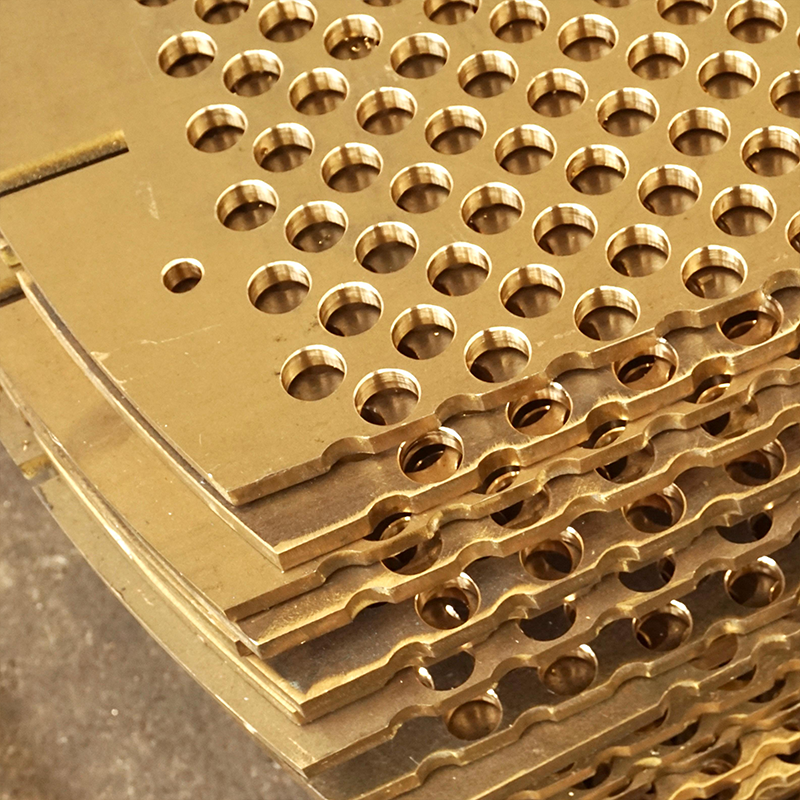
Cooling of the granules must also be controlled. Cooling too quickly can lead to internal stress in the granule, which will cause dust to form during transportation. Too slow - granules stick together. The optimal mode is selected experimentally for each new brand of PP. Reliability of water cooling systems is critical here, using high-quality components such as C46400 marine brass or copper-nickel alloy tube bundles that can withstand harsh environments and ensure uniform heat dissipation.
Important:Check if the technology park has the ability to connect additional modules, for example, continuous reactors for grafting functional groups onto the polypropylene chain. This opens up the possibility of creating completely new classes of materials.
Laboratory quality control and certification according to GOST and ISO
Developing the material is half the battle. Proving that it meets the stated characteristics and standards is an even more difficult task. Technoparks for the development of new PP polymers are required to have accredited laboratories equipped with world-class instrumentation. Without this, any statements about the properties of the new material remain just words.
Rheology and mechanical testing
The basic set of tests includes determination of the melt flow index (MFI or MFI) according toGOST 11645-73 (ISO 1133). However, technology parks do not limit themselves to this. The generation of complete rheological shear viscosity curves on capillary rheometers is critical. This makes it possible to predict the behavior of the material during injection molding or film extrusion.
Mechanical tests are carried out on universal tensile testing machines. We measure:
- Tensile strength (GOST 11262-80 / ISO 527).
- Elongation at break.
- Charpy and Izod impact strength (GOST 4647-2015 / ISO 179) at various temperatures, including low-temperature tests down to -40°C, which is relevant for the northern version of products.
Experience shows that many startups neglect aging testing. In technology parks, accelerated climate tests are mandatory in UV irradiation chambers and heating cabinets. Without stabilization, polypropylene is destroyed in the sun in one season. Selecting a stabilizer package requires hundreds of hours of exposure, which cannot be organized in a garage environment.
Thermal analysis and morphology
Differential scanning calorimetry (DSC) can determine melting point, degree of crystallinity, and glass transition temperature. These parameters directly depend on the type of nucleator used and the cooling mode. A change in crystallinity of just 5% can change the stiffness of a part by 15%.
Thermogravimetric analysis (TGA) is used to analyze filled composites to determine filler content and thermal stability. Microscopy (optical and electronic) visualizes the distribution of filler in the PP matrix. Poor fiberglass dispersion is a common cause of low impact strength and can only be seen under a microscope.
Compliance with industry standards
Depending on the purpose of the polymer, specific certificates are required. For medical packaging - compliance with sanitary standards and migration tests. For the automotive industry - OEM standards (VW, GM, Renault), which are often stricter than state GOSTs. Technology parks working with auto clusters have access to databases of these requirements and methods for checking them.
We encountered a situation where a batch of polypropylene for food containers was rejected due to excessive migration of heavy metals from the dye. Only the presence of a chromatography-mass spectrometer in the technology park laboratory made it possible to quickly identify the source of contamination and replace the pigment supplier, saving the customer millions in losses.
Recommendation:When planning work, make sure that the technology park laboratory has a valid accreditation certificate. Test reports issued by such a laboratory are accepted by courts and large customers as legally significant documents.
Economic model: rent versus own investment
The question “build your own or rent?” stands before every head of R&D department. Let's look at the numbers based on market realities in 2025-2026.
Equipping a full-fledged pilot line for polymer processing (extruder, peripherals, granulator, dryer, chiller) costs from 15 to 40 million rubles, depending on the brand and complexity. Add to this the cost of the laboratory (rheometers and testing machines cost hundreds of thousands of dollars) and a room with adequate ventilation and power supply. The capital expenditure (CAPEX) is huge.
But the main costs are hidden in operating activities (OPEX). Maintaining a team of engineers, power engineers, laboratory assistants, purchasing spare parts, checking instruments, and recycling waste is a constant cash flow. If your line load is less than 60%, the project becomes unprofitable. In R&D, workload is rarely stable: there are periods of active experiments and periods of data analysis.
The technology park model transforms CAPEX into OPEX. You pay only for the operating time of the equipment and the resources consumed. This gives flexibility. Need to run a series of experiments on different machines? Please. Need to stop work for a month? You don't pay for downtime.
In addition, technology parks often provide access to the collective use of expensive analytical equipment, the purchase of which is impractical for one company. For example, an NMR spectrometer or an electron microscope.
There is also a tax aspect. Residents of technology parks often enjoy property, land and profit tax benefits. In some regions of the Russian Federation, special regimes exist for participants in innovation clusters, allowing them to reduce the tax burden by 20-30%.
However, the rental model has its limitations. You depend on the work schedule of the site. During peak seasons, the waiting list for equipment can be several weeks. There is also a risk of intellectual property leakage, although professional technology parks have strict security protocols and sign NDAs with all participants.
Our calculation shows: for projects with a duration of up to 2 years and a production volume of pilot batches of up to 50 tons per year, renting in a technology park is 40-50% more profitable than own investments. If you are planning mass production of thousands of tons, then it makes sense to build your own plant, using the technology park only for the final debugging of the recipe.
Finance Advice:When calculating ROI, consider not only direct costs, but also the opportunity cost of delaying a product's time to market. Technology parks speed up this process, which is often more important than direct savings on rent.
Real cases: from idea to assembly line
Theory is good, but practice is everything. Here are two examples from our work that illustrate the power of the cluster approach.
Case 1: Biodegradable polypropylene for the agricultural sector
Problem:A large greenhouse manufacturer was looking for a replacement for traditional polyethylene film. A PP-based material was required that would remain strong for 3 years of use, but then quickly degrade under the influence of soil, leaving no microplastics behind.
Technopark solution:The development team used the infrastructure of the technology park to select biodegradable additives. More than 150 experiments were carried out with different concentrations of oxo-biodegradable masterbatches. Thanks to the presence of a line with precise gravimetric dosing, it was possible to find a balance: the addition of 3% ensured the required service life.
Result:The PP-Agro brand was created. Tests in climate chambers of the technology park confirmed the preservation of mechanical properties under UV irradiation for 2000 hours. Field tests showed complete degradation of film fragments within 18 months of disposal. The project reached the commercial stage in 10 months, which is 8 months faster than the market average.
Case 2: Highly filled polypropylene for electric vehicles
Problem:A startup developing components for electric vehicle batteries needed a material with high thermal conductivity and fire resistance (class V-0 according to UL94). Standard PP grades were not suitable due to low thermal conductivity and flammability.
Technopark solution:A high torque twin screw extruder was used to introduce 60% ceramic filler. The main difficulty was that with such filling the material became fragile like glass. Technopark engineers proposed using a hybrid Compatibilizer system based on maleinated polypropylene (PP-g-MAH), synthesized directly on the site.
Result:The resulting composite had a thermal conductivity of 1.2 W/(m K) and passed the flammability test. Impact strength was maintained at an acceptable level thanks to optimization of the screw profile, which prevented the destruction of filler particles. This material is now being qualified by one of the leading automakers.
These examples show thattechnology parks for the development of new PP polymers— it’s not just machine rental, it’s an ecosystem of competencies. Access to experts who have seen thousands of recipes is often more important than the hardware itself.
Frequently Asked Questions
What is the minimum batch size that can be produced in the technology park?
In most modern technology parks, the minimum volume of an experimental batch is from 5 to 20 kg. This is sufficient for carrying out initial laboratory tests and casting test samples. To obtain statistically significant data and tests on real customer equipment, a batch size of 50 to 100 kg is usually required. Some sites allow you to start working even with 1-2 kg when using micro-extruders, but this is rather an exception for very expensive additives.
Is it possible to protect intellectual property when working on a shared site?
Yes, protection is possible and is industry standard. Professional technology parks enter into non-disclosure agreements (NDAs) with each resident. Access to production areas is limited, video surveillance cameras record all movements, and data in equipment control systems is encrypted. In addition, technological maps and recipes are stored on secure servers with differentiated access rights. Legal liability for leakage is specified in the contract with penalties.
How long does it take to prepare a line for a new recipe?
The changeover time depends on the complexity of the transition. If you are changing color or additive type within the same base polymer (eg PP homopolymer to PP copolymer), cleanup and adjustments take 2-4 hours. If there is a radical change in material (for example, from PVC to polypropylene), complete mechanical cleaning of the screws and cylinders is required, which can take up to 8-12 hours. In technology parks, this work is performed by qualified operators, who are included in the rental price, which relieves you of the staffing burden.
Are services provided for certification of the finished product?
Technology parks themselves are usually not certification bodies, but they do provide full laboratory facilities to carry out the tests required to obtain a certificate. Test reports issued by an accredited laboratory at the technology park are accepted by certification bodies as the basis for issuing a declaration of conformity or a certificate. Many technology parks have partners among certification centers and help prepare turnkey documentation.
Conclusion: Your next step in the world of polymers
The polymer industry does not forgive amateurism. The creation of new polypropylene is a complex symbiosis of chemistry, physics and engineering. An attempt to save money at the development stage by using inappropriate equipment inevitably leads to a multiple increase in the cost of the project at the production stage or, worse, to the entry of an uncompetitive product onto the market.
Technology parks for the development of new PP polymersoffer the optimal path: reduce risks, speed up time to market and gain access to world-class expertise. This is an investment not in renting a stand, but in the successful launch of your product. The reliability of such sites is often determined by the quality of their infrastructure components, from extruders to heat exchange systems supplied by industry leaders like Wuxi Kaisheng LLC, whose solutions ensure process stability in the most demanding environments.
If you are faced with a choice: continue to struggle with the limitations of your own laboratory or move to a professional level, the answer is obvious. The market is waiting for innovations, but only those that are backed by quality and repeatability.
Don't delay modernizing your R&D approach. Contact us today to discuss the possibility of placing your project on the technology park site and receive a detailed cost estimate. We will help turn your formula into a sought-after product.
For more information about polypropylene processing standards, we recommend that you read the materialsplastics processors association.