
laser processing of thin sheet metal
2026-07-27
- What is thin sheet metal laser processing and why is it a game changer?
- Technical parameters: what determines the quality of cutting thin metal
- Technology comparison: Laser cutting vs stamping and plasma
- Typical defects and methods for their prevention
- Application in industries: real cases and economic effect
- Quality standards and certification: what to look for
- Logistics and cost: how the order price is formed
- Frequently Asked Questions
- Опыт специализированных производств: интеграция лазерных технологий в тяжелое машиностроение
- Conclusion and next steps
What is thin sheet metal laser processing and why is it a game changer?
Laser processing of thin sheet metal is today the uncontested standard for the production of electronics housings, medical devices and high-precision components. Unlike stamping or mechanical cutting, this method allows you to produce parts with complex geometries with a tolerance of ±0.05 mm without subsequent reworking of the edges. We work with metals from 0.3 mm to 6 mm thick, where traditional methods often result in deformation of the workpiece or the formation of burrs that require manual grinding.
The key advantage of the technology is the absence of physical contact between the tool and the material. This eliminates the risk of oil or chips contaminating the surface, which is critical when working with stainless steel for the food industry or aluminum for the aerospace industry. Our engineers have repeatedly encountered situations where customers tried to save money by using outdated equipment with CO2 lasers for cutting copper, and received an unstable cut with burnt edges. Switching to fiber radiation sources solved this problem instantly, increasing the cutting speed by 3-4 times.
In this article, we will analyze the technical nuances of the process that affect the final cost of your batch, and explain how to avoid common mistakes when ordering laser cutting services. You will learn why the “laser power” parameter is not always a determining factor in quality, and what GOST and ISO requirements should be reflected in the supply contract.
Technical parameters: what determines the quality of cutting thin metal
Selecting equipment for cutting thin sheet metal requires an understanding of the physics of the interaction of the laser beam with the material. Many buyers mistakenly believe that the higher the power of the source, the better the result. In practice, for thicknesses up to 3 mm, excess power (over 2 kW) often leads to overheating of the cutting area and the appearance of burrs on the lower edge. The optimal power range for thin metals is 1–1.5 kW, which ensures a clean cut without thermal damage to the material structure.
The wavelength of the radiation plays a decisive role when working with non-ferrous metals. Fiber lasers with a wavelength of 1.07 microns have high absorption in steel and aluminum, but require special parameter settings when cutting copper and brass. In our practice, there was a case when a batch of copper heat exchangers was rejected due to the use of standard gas settings. The operator used oxygen instead of nitrogen, which led to oxidation of the edges and the impossibility of subsequent soldering of parts. Adjusting the high-pressure inert gas supply mode (up to 20 bar) made it possible to obtain a mirror-like edge without an oxide film.
The focal length of the optics is another parameter that directly affects the cutting width and taper angle. For thin metal (less than 1 mm), short-focus lenses are used to provide a minimum focusing spot. This allows micro-cutting of holes with a diameter of less than 0.2 mm, which is impossible to achieve with equipment with long-focus optics designed for thick slabs. If your project involves creating perforated panels with a high hole density, make sure the supplier uses specialized optics for thin materials.
The speed of movement of the machine portal also matters. Modern systems with linear motors achieve acceleration up to 2G, which reduces idle time when cutting parts with complex contours. However, high dynamics require a rigid frame, otherwise vibrations will occur that impair positioning accuracy. When accepting equipment, be sure to request a test report for geometric accuracy in accordance with ISO 230-2.
Recommendation:Before starting a series, request a test cut on your material, providing a sample and measuring the surface roughness Ra. This is the only way to objectively assess the contractor's capabilities.
The influence of auxiliary gas on the economics of the process
The use of the correct assist gas determines not only the quality of the edge, but also the cost of the operation. For carbon steel up to 3 mm thick, oxygen is often used, which supports the exothermic combustion reaction, increasing the cutting speed. However, this method leaves an oxide film that must be removed before painting or welding. For stainless steel and aluminum, the only option is high-purity nitrogen (99.99%), which blows the melt away from the cutting area, leaving a clean, ready-to-use edge.
Gas consumption can account for a significant portion of operating costs. When cutting with nitrogen at a pressure of 16–20 bar, consumption reaches 15–20 m³/hour. Installing your own nitrogen generation station usually pays for itself in 12–18 months with intensive machine load (more than 100 hours per month). If you are planning a long-term cooperation with a plant, check if they have their own gas generating unit or if they purchase gas in cylinders. In the second case, the price per meter of cut will inevitably be higher due to the logistics margins of the gas supplier.
We observed a situation where a client chose a contractor with a low cost per hour of machine operation, but did not take into account that he uses cheap technical grade nitrogen. As a result, micropores and corrosion spots appeared on parts for food equipment after the first wash. Remaking the batch cost three times more than the original savings. Always indicate in the technical specifications the required gas purity and the permissible level of residual oxygen in the cutting area.
Technology comparison: Laser cutting vs stamping and plasma
When choosing a processing method for thin sheets, the customer is often faced with a dilemma: to use a fast and flexible laser or traditional stamping. The answer depends on the circulation and the complexity of the geometry. Stamping is beneficial only in mass production (from 10,000 pieces of one part), where the cost of tooling is distributed over a large batch. For small and medium production runs, as well as prototyping, laser processing is unrivaled in terms of start-up speed and unit cost.
Plasma cutting, although cheaper per hour, does not provide the necessary precision for thin metals. The cutting width with plasma is 1.5–2 mm, which leads to significant losses of material and the impossibility of manufacturing small elements. In addition, the heat-affected zone of plasma is wide, which causes warping of the thin sheet. The laser creates a heating zone less than 0.2 mm wide, maintaining the flatness of the part even with dense contours on the sheet.
| Comparison parameter | Laser cutting (Fiber laser) | Stamping | Plasma cutting |
|---|---|---|---|
| Minimum metal thickness | 0.3 mm | 0.5 mm (risk of deformation) | 1.5 mm (unstable cut) |
| Dimensional accuracy | ±0.05 mm | ±0.1 mm (depending on die wear) | ±0.5 mm |
| Edge quality | Clean, burr-free (Ra 6.3–12.5) | Smooth, burr possible | Rough, needs cleaning |
| Pre-production | Upload CAD file (15 minutes) | Mold making (2–4 weeks) | Program setup (30 minutes) |
| Economic efficiency | High for small and medium series | High only for mass production | Low for thin metal |
| Flexibility of change | Instant (file change) | Impossible without replacing equipment | High |
An analysis of the table shows that for tasks where a quick change of product range or high accuracy is required, laser processing of thin sheet metal is the only correct solution. Stamping remains relevant for the formation of complex reliefs and threaded holes in one cycle, but only under the condition of huge runs. Plasma should be excluded from consideration for thicknesses less than 2 mm, since savings on the cost of an hour of work are offset by scrap and subsequent machining.
Tip:If your project involves the production of a pilot batch of up to 500 pieces with the prospect of growth, start with a laser. Switching to a die is justified only when the laser workshop capacity becomes a production bottleneck.
Typical defects and methods for their prevention
Even with modern equipment, errors are possible that lead to defects. Understanding the nature of these defects will help you competently draw up technical specifications and control quality at the input stage. The most common defect when cutting thin stainless steel sheets with nitrogen is the appearance of burrs (accumulations of molten metal) on the lower edge. This occurs when the gas pressure does not match the thickness of the material or when using a blunt focusing lens.
The second common problem is thermal deformation (“wave”) on large parts. The thin sheet is sensitive to local heating. To avoid this, technologists use a strategy of “micro-joints,” leaving uncut sections 0.2–0.5 mm long that hold the part in the sheet lattice until it cools completely. These jumpers can be easily removed manually or automatically after the cycle is completed. Ignoring this technique leads to the fact that the cut parts are displaced under the influence of thermal stress and fall under the cutting head, causing an accident.
Burns at the corners of the contour are another problem associated with changes in head speed. In corners, the machine slows down and the energy density per unit area increases, burning through the metal. Modern controllers have a feature that automatically reduces power in corners, but this must be properly configured for the specific material. In our practice, there was a case when a batch of aluminum radiators was damaged precisely because of the lack of power correction in the corners, which led to through burnouts and a violation of the tightness of the channels.
Scratches on the sheet surface occur when the nozzle height is adjusted incorrectly or when a damaged protective film is used. For mirror surfaces (for example, decorative stainless steel), it is necessary to use special nozzles with a coating or increased clearance, and also ensure the cleanliness of the working area. Any metal dust caught between the sheet and the support grid can leave a permanent mark when the laser passes through.
Action:Require the supplier to provide a defect map indicating acceptable standards in accordance with GOST or the enterprise’s internal standard before starting work. This will record the acceptance criteria and protect you from controversial situations.
Application in industries: real cases and economic effect
Laser processing is widely used in a wide variety of industrial sectors where weight, precision and aesthetics are important. Let's look at two specific examples from our production practice that demonstrate the effectiveness of the technology.
Case 1: Production of housings for medical electronics.
The customer needed to produce a batch of 2000 cases made of AISI 304 stainless steel with a thickness of 0.8 mm. The key requirement was the absolute tightness of the welds and the absence of any contamination inside the housing. Traditional machining would require multiple drilling and milling operations, increasing the risk of cutting fluid (coolant) contamination.
Solution: Laser cutting using nitrogen produced edges that were ready for laser welding without additional preparation. The use of technology ensured the absence of oxides on the edges, which guaranteed high quality welds. Production time has been reduced from 4 weeks (when ordering stamps) to 5 days. Savings amounted to 35% due to the elimination of degreasing and grinding operations. The scrap rate has dropped to 0.2% versus the usual 3-5% for machining.
Case 2: Ventilation systems and filtration.
The client produced elements of ventilation systems from 1.0 mm thick galvanized steel with a high perforation density (up to 40% of the open area). When punching presses were used, significant deformation of the sheet around the holes and rapid wear of the punches were observed.
Solution: Switching to laser perforation made it possible to change the geometry of the holes from round to slotted without changing the tool, simply by changing the program. The processing speed was 45 m²/hour. The absence of mechanical pressure eliminated the deformation of the sheet. The need for tool replacement has been completely eliminated. The service life of the products has increased due to the absence of microcracks that occur during punching. Unit costs were reduced by 22% due to optimized nesting performed by the CNC algorithm.
These examples show that laser processing of thin sheet metal is not just a matter of replacing one tool with another, but an opportunity to reconsider the entire product design to reduce material and labor costs. Our office engineers regularly audit customer drawings and suggest changes that simplify production without loss of functionality.
Recommendation:If you are designing a new product, involve laser cutting technologists at the design design stage. Their advice on internal corner radii and minimum hole spacing will save you money during production.
Quality standards and certification: what to look for
Working with metal structures, especially for critical applications, requires compliance with strict regulations. In Russia and the EAEU countries, the main document regulating quality requirements is GOST. For laser cutting, the provisions of GOST R ISO 9013 are relevant, which classifies the quality of thermal cutting into four accuracy classes (1–4). Class 1 implies the highest accuracy with minimal perpendicularity deviations and roughness, which can only be achieved with precision equipment.
It is also important that the manufacturer has a certificate of compliance with the ISO 9001 quality management system. This standard ensures that the enterprise has established processes for monitoring incoming raw materials, calibrating equipment and tracking product batches. Without a valid ISO 9001 certificate, it is difficult to guarantee consistency of quality from batch to batch. We recommend that you request a copy of the certificate and check that it is up to date with the certification body's registry.
For exports to Europe, CE marking is required, confirming the safety of the equipment and compliance with EU directives. Although this most likely concerns the machine itself, the presence of equipment with CE marking from the supplier indirectly indicates a high technological level of production. For deliveries to the EAEU countries, a declaration of conformity with the Technical Regulations of the Customs Union (TR CU) is required.
The product documentation must clearly indicate steel grades in accordance with GOST or international analogues (AISI, DIN). A common mistake is to use Chinese steel grades without indicating their analogues, which can lead to inconsistencies in mechanical properties. For example, Q235 steel is often positioned as an analogue of St3sp, but has differences in sulfur and phosphorus content, which affect weldability. Require a metal quality certificate (Mill Certificate) for each batch of blanks.
Check:Before concluding a contract, make sure that the specification contains references to specific clauses of GOST or TU that the product must comply with. The phrases “quality according to generally accepted standards” are legally void and open the way for manipulation.
Logistics and cost: how the order price is formed
The cost of laser cutting consists of several components: depreciation of equipment, consumables (gas, electricity, optics), cost of metal and standard hours of operators. Many companies indicate the price per meter of cut, but this is not always an objective indicator. More transparent is the calculation of the cost per kilogram of finished parts or per sheet, including cutting.
An important factor is the material utilization factor (KIM). Proper nesting of parts allows you to increase KIM to 85–90%, minimizing waste. Poor organization of the process leads to the fact that you pay for metal, which goes to waste. Modern software systems allow you to automatically optimize the layout, taking into account the direction of the metal fibers (if this is important for subsequent bending) and the overall length of the cut.
Order fulfillment times depend on the workload of the workshop and the availability of metal in the warehouse. Стандартный срок для партии до 500 кг составляет 3–5 рабочих дней. Срочные заказы (24 часа) возможны, но тарифицируются с коэффициентом 1,5–2,0. При планировании крупных проектов (несколько тонн) рекомендуется бронировать производственные мощности заранее, заключая рамочный договор с графиком поставок.
Логистика готовой продукции также требует внимания. Тонкий листовой металл легко деформируется при неправильной транспортировке. Детали должны быть упакованы в жесткую тару, разделены прокладками и защищены от влаги. Использование деревянных ящиков или металлических контейнеров обязательно для дальних перевозок. Повреждение геометрии при доставке сводит на нет всю высокую точность лазерной обработки.
Tip:Запрашивайте расчет стоимости с детализацией по статьям расходов. Это поможет понять, где можно оптимизировать затраты: например, закупив свой металл или изменив требования к упаковке для самовывоза.
Frequently Asked Questions
Какова максимальная длина листа, с которым вы работаете?
Стандартный формат рабочего стола большинства промышленных лазерных станков составляет 3000×1500 мм. Однако существуют машины с удлиненным порталом, позволяющие обрабатывать листы длиной до 6000 мм и даже 12000 мм без перехвата. Работа с целыми длинномерами снижает количество стыков в готовых изделиях и ускоряет процесс за счет уменьшения времени на перезагрузку. Если ваш проект требует нестандартных размеров, уточните возможности конкретного парка оборудования поставщика, так как не все цеха имеют станки большого формата.
Можно ли лазером резать закаленную сталь?
Да, лазерная резка подходит для обработки закаленных сталей, но с определенными ограничениями. Высокая твердость материала может при вести к образованию трещин в зоне термического влияния, если режимы резки подобраны неверно. Необходимо использовать импульсный режим работы лазера для минимизации тепловложения. Также важно учитывать, что после резки кромки могут потребовать отпуска для снятия напряжений, если деталь будет работать под нагрузкой. Для толщин свыше 4 мм из закаленной стали рекомендуется предварительная консультация с технологом.
Какой минимальный диаметр отверстия можно получить?
Минимальный диаметр отверстия при лазерной резке тонкого металла (до 1 мм) может составлять 0,1–0,2 мм, что меньше толщины самого материала. Однако соотношение диаметра отверстия к толщине листа не должно превышать 1:1 для обеспечения качественного выхода газа и удаления расплава. Для получения отверстий меньшего диаметра используется технология перфорации с множеством проходов или травление, но это удорожает процесс. В большинстве инженерных задач отверстия диаметром 0,5 мм и более выполняются без проблем за один проход.
Оставляете ли вы перемычки (прихваты) на деталях?
По умолчанию при раскрое тонкого металла мы используем микро-соединения (прихваты) высотой 0,2–0,5 мм для фиксации деталей в листе. Это предотвращает их смещение и падение в зону резки, что гарантирует сохранность оптики и геометрии деталей. Если вам необходимы детали без прихватов (полностью вырезанные), это должно быть указано в заказе отдельно. В таком случае применяется специальная стратегия резки с приоритетом внутренних контуров или использование систем автоматической выгрузки, но это может увеличить время обработки и риск брака.
Как быстро вы можете начать работу после утверждения чертежей?
При наличии металла на складе и свободных мощностях запуск в производство возможен в течение 24 часов после утверждения управляющей программы. Процесс включает импорт CAD-файла (DXF, DWG, STEP), проверку геометрии, создание карты раскроя и генерацию G-кода. Если требуется изготовление новой оснастки для гибки или закупка специфического сорта металла, срок увеличивается до 3–7 дней. Мы рекомендуем присылать чертежи на предварительную оценку технологичности (DFM) еще до размещения официального заказа, чтобы сократить время на согласования.
Опыт специализированных производств: интеграция лазерных технологий в тяжелое машиностроение
Высокая точность лазерной обработки находит свое наиболее критичное применение не только в легкой промышленности, но и в создании сложного энергетического и нефтехимического оборудования. Ярким примером такого подхода является деятельность компании ООО «Уси Кайшэн Электроэнергетическое и Нефтехимическое Оборудование». Специализируясь на разработке и производстве теплообменников высокого давления и котлов-утилизаторов, предприятие успешно интегрирует лазерные технологии в процессы изготовления ключевых узлов.
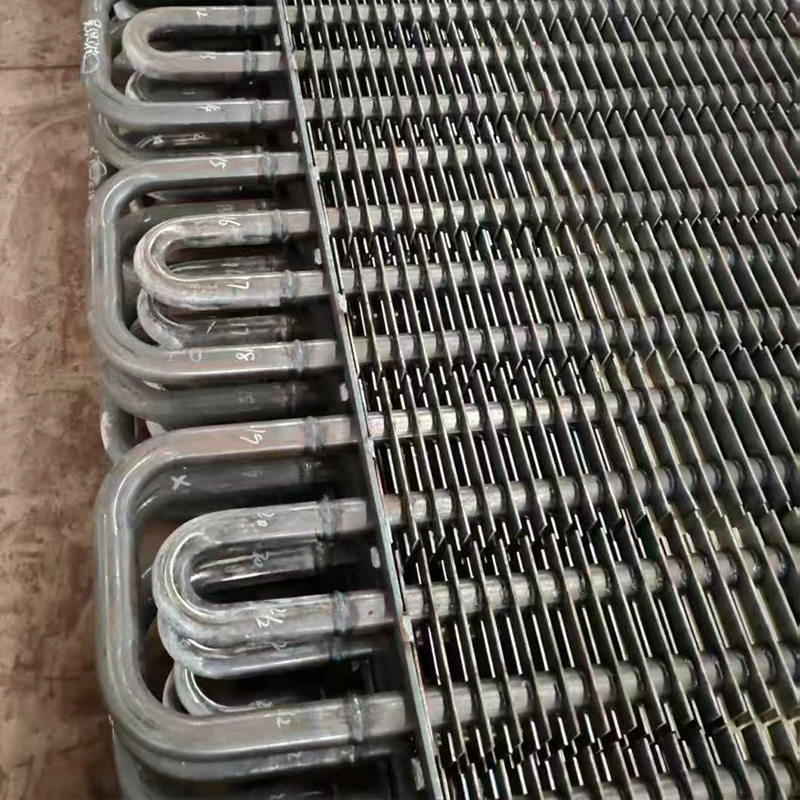
В производстве титановых кожухотрубных теплообменников и аппаратов из никелевых сплавов (таких как N06625) традиционные методы резки часто оказываются недостаточно эффективными из-за высокой вязкости и склонности материалов к наклепу. Лазерная обработка позволяет компании «Уси Кайшэн» изготавливать трубные решетки из нержавеющей стали 321, морской латуни C46400 и медно-никелевых сплавов C70600 с идеальной геометрией отверстий, что критически важно для обеспечения герметичности соединений при экстремальных температурах и давлении.
Использование современных волоконных лазеров в производственном цикле «Уси Кайшэн» позволяет достигать высочайшего качества кромок без необходимости последующей механической доработки, что особенно важно для изделий, сертифицированных по строгим международным стандартам ASME и PED. Гофрированные трубные пучки из нержавеющей стали 316 и другие сложные компоненты, создаваемые компанией, демонстрируют превосходную коррозионную стойкость и теплоэффективность именно благодаря прецизионной подготовке заготовок. Такой подход подтверждает, что лазерная резка является незаменимым звеном в цепочке создания высокотехнологичного оборудования для нефтепереработки, судостроения и опреснения воды, обеспечивая надежность решений для заказчиков по всему миру.
Conclusion and next steps
Лазерная обработка тонкого листового металла открывает широкие возможности для создания сложных, легких и надежных конструкций. От медицинского оборудования до элементов архитектуры и тяжелых теплообменников — эта технология доказала свою эффективность в десятках отраслей. Однако успех проекта зависит не только от наличия станка, но и от компетенции технологов, качества сырья и соблюдения стандартов. Ошибки на этапе выбора поставщика могут стоить дорого, приводя к браку и срыву сроков.
Наша компания обладает полным циклом производства: от лазерной резки и гибки до порошковой окраски и сборки. Мы работаем в строгом соответствии с ГОСТ и ISO 9001, предоставляя полный пакет закрывающих документов. Наш парк оборудования включает современные волоконные лазеры мощностью до 6 кВт, способные обрабатывать любые виды металлов с высочайшей точностью.
Не рискуйте качеством своего продукта. Доверьте обработку металла профессионалам с подтвержденной репутацией. Свяжитесь с нами сегодня для получения бесплатного расчета стоимости вашего заказа и консультации ведущего инженера-технолога. Мы готовы выполнить тестовый рез и предоставить образцы в кратчайшие сроки.
Для изучения наших возможностей подробнее, посетите разделmetal laser cuttingна нашем сайте или ознакомьтесь с примерами выполненных работ в портфолио.