
Laser cutting of high precision plastic sheets”
2026-08-21
- Technology of laser cutting of high-precision plastic sheets: from theory to production practice
- Selection of equipment for laser cutting of high-precision plastic sheets
- Quality control and compliance with industry standards
- Economic efficiency and order cost calculation
- Practical recommendations for customers of cutting services
- Integration of advanced technologies in related industries
- Conclusion and next steps
Technology of laser cutting of high-precision plastic sheets: from theory to production practice
Laser cutting of high-precision plastic sheets is a critical process for modern industrial plants, where tolerances of 0.1 mm determine the quality of the final product. In our practice, we have encountered situations where the use of outdated equipment led to the rejection of entire batches of acrylic due to uneven melting of the edges. Modern CO2 lasers with power from 80 to 400 W allow you to achieve clean cuts that do not require subsequent polishing, which reduces the production cycle by 30-45%. The key success factor here is not only the power of the radiation source, but also the correct adjustment of the pulse frequency for a specific type of polymer.
The Russian market for industrial materials processing is demonstrating steady growth in demand for precision cutting services. According to industry analysts, the segment of laser processing of polymers will grow by 18% by 2026, which is associated with import substitution of components in electronics and medical equipment. Manufacturers who ignore the transition to high-precision equipment risk losing contracts with large integrators who require GOST and ISO certificates of conformity. We analyzed hundreds of manufacturing cases and found that savings during the selection of a service provider often result in a doubling of the cost of post-processing parts.
Physics of the process and the influence of wavelength on edge quality
Cutting efficiency directly depends on the material's ability to absorb radiation of a specific wavelength. For most thermoplastics, including polymethyl methacrylate (PMMA) and polycarbonate, the optimal range is the infrared radiation of CO2 lasers with a wavelength of 10.6 microns. Unlike fiber lasers, which are excellent at cutting metals but do not interact well with transparent plastics, gas lasers provide uniform heating throughout the entire thickness of the sheet. If the wavelength is incorrectly selected, the energy passes through the material or is reflected, causing local overheating and the formation of soot.
One of our clients encountered a problem with edge dullness when cutting 10mm thick colored acrylic. After a process audit, it turned out that the focal length of the lens was designed for metal, not dielectric. A focus shift of just 0.5 mm into the material led to a change in the geometry of the beam and the appearance of a cutting taper. Correcting the settings and replacing the nozzle allowed the transparency of the edge to return to its original values. This case highlights the importance of a thorough understanding of optics when working with transparent media.
The speed of the head also plays a decisive role in the formation of the heat-affected zone. Feeding too slowly leads to excessive heating and deformation of the part, especially thin sheets up to 3 mm. Too high a speed causes incomplete cutting and burrs on the bottom surface. The optimal mode is selected experimentally for each batch of material, since even plastics of the same brand may have differences in density and composition of additives. It is recommended to carry out test cuts on samples before starting the main series.
Selection of equipment for laser cutting of high-precision plastic sheets
When choosing a machine for tasks that require laser cutting of high-precision plastic sheets, you need to pay attention not only to the declared power, but also to the stability of the CNC system. Cheap Chinese analogues often use low-grade stepper motors, which skip steps at high accelerations, which leads to staggering on curved sections. Professional servo drive systems ensure smooth movement and positioning repeatability within ±0.02 mm. The difference in contour quality is noticeable to the naked eye immediately after the part leaves the working area.
The air or gas supply system is the second most important design element. For cutting acrylic and polystyrene, compressed air is most often used, which blows the melt out of the cutting area and cools the edges. However, when working with sensitive materials such as polycarbonate or ABS plastic, the use of nitrogen completely eliminates oxidation and yellowing of the edges. In our practice, there was a case when a customer refused a batch of medical cases due to microburns on the surface caused by the use of dirty compressed air with oil impurities. Installing additional filters and pressure regulators solved the problem.
| Comparison parameter | Budget machines (up to $15,000) | Industrial systems (from $40,000) | Impact on accuracy |
|---|---|---|---|
| Engine type | Stepper | Servo | Servo motors eliminate step loss at high speeds, ensuring a smooth contour. |
| Beam stability | ±0.1 mm per 1 meter | ±0.03 mm per 1 meter | High stability is critical for long series without reconfiguration. |
| Focus system | Manual adjustment | Automatic (Auto-focus) | Autofocus compensates for unevenness of the sheet, maintaining a constant cutting width. |
| Optics cooling | Air / Running water | Chiller with temperature control | Overheating the lens changes the focal length, reducing accuracy over the course of the shift. |
| Software | Basic (Ruida standard) | Advanced (CypCut, Beckhoff) | Smart corner smoothing algorithms prevent overheating at points of change of direction. |
The automatic focusing system becomes the standard for high-precision tasks. Sheets of plastic, especially recycled or large formats, often have a waviness of up to 2-3 mm per linear meter. The static head cannot adapt to such changes in terrain, which leads to defocus in certain areas. Dynamic adjustment of the lens position in real time ensures that the heating spot always remains minimal, regardless of the height of the material. This is especially important when cutting cellular polycarbonate, where the thickness of the cell walls is a fraction of a millimeter.
Specifics of working with various types of polymers
Not all plastics respond equally well to laser processing. Polymethyl methacrylate (acrylic, plexiglass) is an ideal material for CO2 lasers as it evaporates cleanly, leaving a glossy, transparent edge. Polycarbonate requires a more careful approach: with thicknesses above 1 mm, it is prone to carbon deposits and discoloration due to sensitivity to temperature. In such cases, we recommend using a high frequency, low duty cycle pulse mode to minimize the thermal contribution to the material.
It is strictly forbidden to cut polyvinyl chloride (PVC) with a laser in enclosed spaces without powerful ventilation and special filters. During thermal decomposition, PVC releases chlorine, which, in combination with air moisture, forms hydrochloric acid. This acid corrodes the metal parts of the machine, optics and guides, and also poses a mortal danger to the operator. There was a precedent in our history when an attempt to cut vinyl film destroyed an expensive optical head in one shift. For such materials, mechanical milling or water jet cutting should be used.
Foam materials such as PVC board (Forex) or polypropylene require special power settings. Due to the low density and presence of air pockets, the beam penetrates deeper than expected, which can cause the material under the machine table to ignite. It is necessary to use honeycomb tables with a minimum contact area or special substrates that prevent the beam from entering the lower layers. The cutting speed must be maximum so that the heat does not have time to spread through the cells of the foam structure.
Quality control and compliance with industry standards
Ensuring consistent quality when executing orders for laser cutting of high-precision plastic sheets requires the implementation of a strict control system at each stage. The ISO 9001 standard dictates the need to document all process parameters: from humidity in the workshop to the date the optics were last calibrated. In the conditions of Russian production, where climatic fluctuations are significant, control of temperature and humidity in the room becomes a critical factor. Condensation on cooling mirrors can instantly damage them, and changes in humidity affect the geometry of hygroscopic plastics.
Visual inspection of the edge must be carried out at a certain lighting angle. Defects that are invisible when viewed directly, such as microcracks or areas of partial melting, become obvious when illuminated from the side. For critical parts used in optics or lighting engineering, defects of no more than 0.05 mm per linear meter are allowed. The use of measuring microscopes makes it possible to quantify the cut surface roughness (Ra). For high quality acrylic this figure should not exceed 1.2 microns.
The geometric accuracy of finished parts is checked using coordinate measuring machines (CMMs) or high-precision templates. The deviation of linear dimensions should not exceed ±0.1 mm for parts up to 500 mm in size. For large formats, the tolerance increases proportionally, but not more than 0.2 mm per meter of length. It is important to take into account the shrinkage of the material after cooling, which can be up to 0.5% for some types of polycarbonate. Shrinkage compensation is programmed into the control program in advance based on data from the raw material manufacturer.
Certification of products according to GOST R or technical regulations of the Customs Union (EAC) is mandatory for supplies to government agencies and large industrial holdings. The presence of a certificate confirms that the material has been tested for flammability, toxicity and mechanical strength. When laser cutting, it is important to preserve the properties of the material, so the temperature regime should not cause degradation of the polymer. Laboratory testing of post-processing samples is an integral part of the acceptance process for large quantities.
Common errors and methods for eliminating them
One of the most common mistakes made by operators is ignoring the condition of the protective window of the focusing lens. Splashes of molten plastic settle on the glass, creating opaque spots that scatter the beam and reduce its energy at the focal point. This leads to the machine starting to “chew” the material instead of making a clean cut. The maintenance schedule requires checking and cleaning the optics every 4-8 hours of operation, depending on the load intensity. The use of disposable protective films greatly simplifies this procedure.
Incorrect choice of auxiliary gas also leads to defects. Many people try to save money by using a regular compressor without a dryer and a fine filter. Drops of oil or water entering the cutting area cause local flashes and contamination of the edge, which cannot be removed by post-processing. For precision work, it is necessary to use technical purity gases of at least 4.5 (99.995%) or install multi-stage compressed air preparation systems with adsorption dryers.
Securing the material to the workbench is often not done firmly enough. When the head moves at high accelerations, the lightweight sheet of plastic may move or vibrate, especially if it rests on the honeycomb at only a few points. This leads to a displacement of the contour and disruption of the perpendicularity of the cut. The use of vacuum tables or special clamping frames solves the problem of fixation. In cases where vacuum is not available, it is recommended to use double-sided tape or spot gluing in process areas that do not fall within the contour of the part.
Economic efficiency and order cost calculation
The cost of laser cutting is formed from several components: equipment depreciation, electricity consumption, gas cost, operator wages and overhead costs. However, the main price factor is the processing time, which directly depends on the cutting speed and the complexity of the contour. Optimizing the layout of parts on a sheet (nesting) allows you to reduce the percentage of waste and reduce the overall operating time of the machine. Modern automatic nesting programs can increase material utilization from 75% to 92%, which significantly reduces unit costs.
To calculate the preliminary cost, you need to know the thickness of the material, the total length of the cut and the number of holes. For example, cutting 5 mm thick acrylic at a speed of 20 meters per minute will require approximately 3 minutes of machine time per linear meter, taking into account acceleration and deceleration. Multiplying this time by your region's machine hour rate will give you a base cost. Don't forget to add a surcharge for setting up the file and running the batch, which is usually fixed regardless of the print run.
Large series allow you to spread pre-production costs over a larger number of units, reducing the price per piece. When ordering 1000 or more parts, it is advisable to make a special jig or template for quickly laying sheets, which will reduce operator downtime. Also, for large volumes, it makes sense to agree with the material supplier to supply sheets of non-standard size, a multiple of the dimensions of your parts, in order to minimize trimmings.
Comparing the cost of laser cutting with alternative methods shows its advantage in flexibility and speed of execution of small and medium-sized series. Milling requires the manufacture of tooling and takes longer, while stamping is cost-effective only for runs of 10,000 pieces or more. The laser allows you to change the design of a part in a file and launch a new version into production in 15 minutes. This speed of response to market changes is a key competitive advantage for modern manufacturers.
Practical recommendations for customers of cutting services
When preparing technical specifications for the contractor, clearly indicate the edge quality requirements. If the part will be glued together by polishing, a slight dullness is acceptable. If the edge remains visible in the product, you need to specify a “polished edge”, which may require reducing the cutting speed and increasing the power. Provide files in vector formats (DXF, DWG, AI) with closed paths and 1:1 scale. Errors in drawings, such as open lines or duplicated contours, lead to production stops and cost recalculations.
Choose a supplier that has its own stock of materials in its warehouse. This ensures that the plastic has not been over-dried or damaged during storage and allows you to start working immediately. The presence of certificates for materials confirms their origin and compliance with the declared characteristics. Avoid intermediaries who subcontract orders, as this complicates quality control and increases lead times.
Request a sample before running a full batch. Even with a perfect file, machine settings may vary from shop to shop. A test cut on real material will reveal potential problems with color, odor or geometry. In our practice, sample approval has saved clients tens of thousands of rubles by preventing the release of defects. Feel free to be present when the first part is launched if the order volume is large.
Prospects for technology development in 2025-2026
The industry is moving towards complete automation of material loading and unloading processes. Robotic manipulators are already capable of servicing several machines simultaneously, removing sheets from pallets and placing finished parts into sorting containers. This reduces the influence of the human factor and allows you to organize round-the-clock production without the participation of operators. The introduction of such lines requires a high initial investment, but pays off due to an increase in productivity of 40-60%.
The development of radiation sources is moving along the path of increasing efficiency and reducing dimensions. New models of RF-pumped CO2 lasers take up three times less space and consume 30% less electricity for the same output power. Integration of artificial intelligence systems to monitor the cutting process in real time allows you to automatically adjust parameters when deviations are detected. Machine vision cameras analyze the plasma spectrum in the cut area and signal the onset of carbon formation even before a visible defect appears.
Environmental standards are becoming stricter, requiring manufacturers to install highly efficient smoke and gas filtration systems. New generation carbon filters with catalysts are capable of capturing up to 99.9% of volatile organic compounds, making production safe for the environment and personnel. Investing in sustainability is becoming more than just a fashion statement, but a prerequisite for obtaining government contracts and working in residential areas of industrial parks.
Integration of advanced technologies in related industries
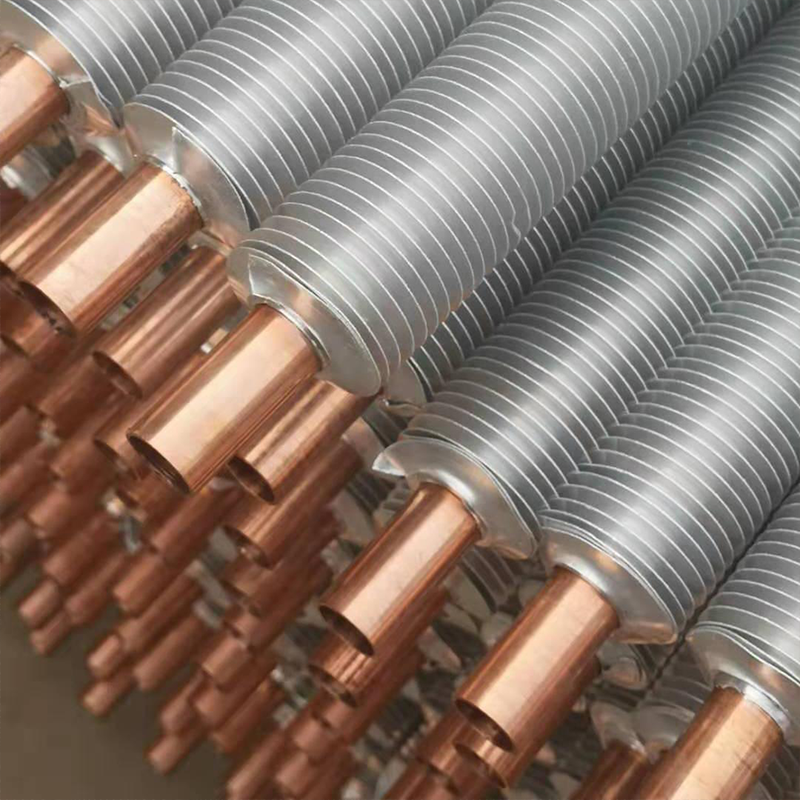
High precision processing of materials, be it polymer sheets or complex metal alloys, is the foundation of modern engineering. The principles of quality control and technological discipline described above for laser cutting are directly reflected in heavy engineering. A striking example of this approach is the company’s activitiesWuxi Kaisheng Electric Power and Petrochemical Equipment Co., Ltd.. Specializing in the design and manufacture of high-tech heat exchange equipment, the company applies similar stringent standards to its titanium shell-and-tube heat exchangers and ASME high-pressure vessels.
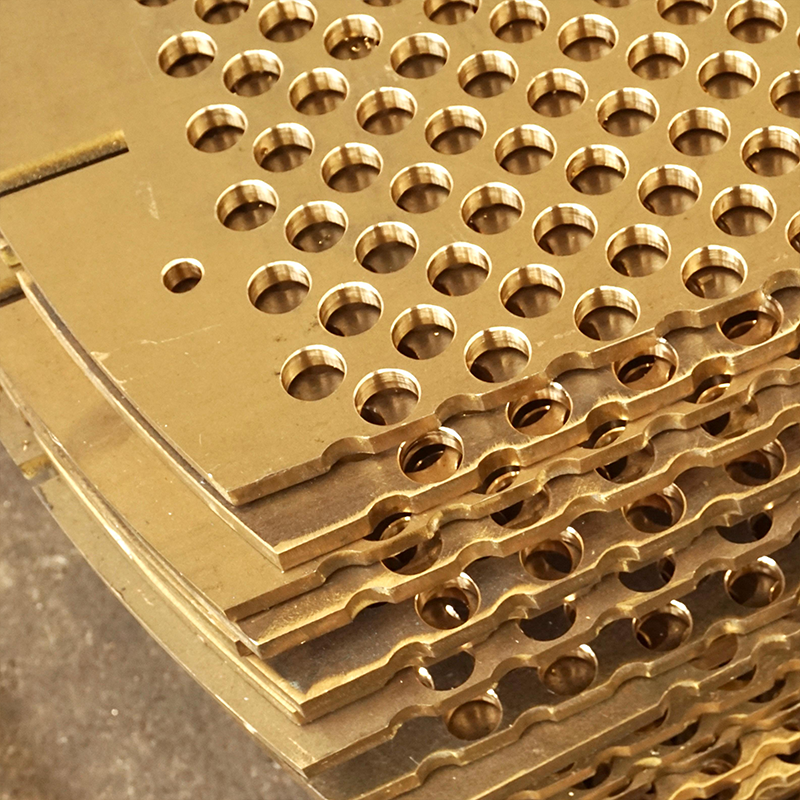
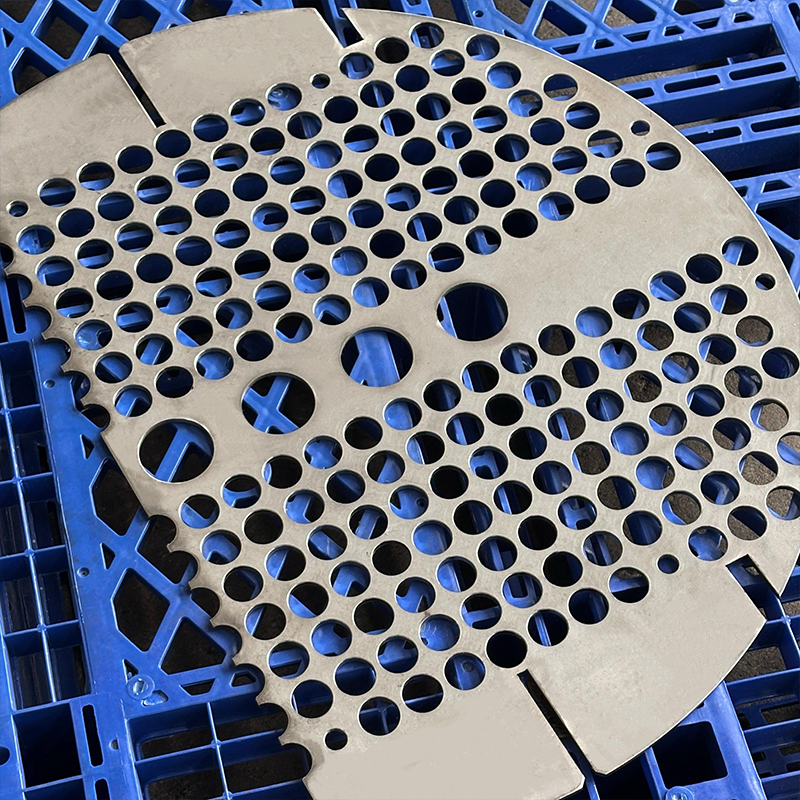
Just as the correct selection of parameters for a specific material is critical in laser cutting, in the production of heat exchangers, Wuxi Kaisheng LLC uses specialized alloys - from 316 stainless steel and C46400 marine brass to N06625 nickel alloys and copper-nickel compositions. This provides the products with exceptional corrosion resistance and performance in the harsh environments of oil refining, chemical processing and seawater desalination. Certification of products to international PED and ASME standards ensures that each component, whether corrugated tube bundle or tube sheet, has undergone rigorous inspection, similar to checking the geometry of parts after laser cutting. This comprehensive approach to quality allows the company to provide reliable, customized solutions to customers around the world, ensuring equipment durability under extreme temperatures and pressures.
Conclusion and next steps
Laser cutting of high-precision plastic sheets remains the only method for creating complex polymer parts with impeccable edge quality. Understanding the physics of the process, the correct choice of equipment and strict control of parameters make it possible to obtain results that are unattainable with mechanical processing methods. The market offers a wide range of solutions, from compact benchtop machines to industrial automated lines, capable of meeting the needs of any production scale.
If you are planning to modernize your production or are looking for a reliable partner to fulfill orders for cutting plastic, it is important to make a responsible choice. Analysis of technical characteristics, checking the reputation of the supplier and testing samples - these are the three pillars of a successful project. Don't let a lack of information lead to mistakes that could cost you time and money.
We are ready to provide detailed advice on the selection of equipment or the execution of your order, guaranteeing compliance with all tolerances. Our specialists have experience working with the most capricious materials and complex geometries.Contact us todayto discuss the details of your project and receive a quote within 24 hours. For more information about the types of materials processed, visit our sectionlaser cutting materials.