
Manuals for designing PP chemical baths”
2026-09-10
- Why ready-made manuals for designing PP chemical baths save budget and time
- Key sections of technical documentation for polypropylene containers
- Typical mistakes when designing yourself and their consequences
- Compliance with GOST standards and international safety standards
- Practical application: from drawing to installation
- Economic rationale for the use of professional documentation
- Integrated approach: integration of polymer and metal solutions
- Frequently Asked Questions
- Conclusion and next steps
Why ready-made manuals for designing PP chemical baths save budget and time
Development of documentation for chemical equipment is not just a bureaucratic formality, but the foundation for the safety of the entire production cycle.Manuals for designing PP chemical baths(polypropylene) contain critical data on calculating wall thickness, selecting grades of raw materials and configuration of stiffeners, which cannot be found in open sources without a deep dive into the industry. In our practice, we have repeatedly encountered a situation where the lack of detailed technical specifications led to the deformation of containers under load after just 6 months of operation. The use of proven methodological materials allows us to reduce the project approval stage from 4 weeks to 3-5 days and eliminate errors, the cost of correcting which often exceeds the price of the product itself.
Polypropylene has become the de facto standard for plating lines and pickling areas due to its inertness to aggressive environments. However, the material is capricious: its mechanical properties change sharply at temperatures above 80°C and under prolonged static load. Professionaldesign manualstake these nuances into account, providing engineers with ready-made calculation algorithms adapted to real workshop conditions, rather than idealized laboratory data. If you are planning to purchase or manufacture such containers, the availability of such documentation from the supplier is the first indicator of its competence.
Key sections of technical documentation for polypropylene containers
Any good design instruction begins with a clear classification of the initial data. We structure our methodological materials so that an engineer can consistently go through the process from choosing a plastic grade to the final calculation of welds. Errors at the material selection stage cannot be compensated for by strengthening the structure later - this is an axiom that we have confirmed with dozens of unsuccessful competitor projects.
Selection of polypropylene grade and analysis of chemical resistance
The first section of any manual is devoted to the selection of a specific type of polypropylene. There is no “universal” PP for all acids. For sulfuric acid concentrations up to 90% at 60°C, PP-H homopolymer is suitable, while for alkaline environments with shock loads, PP-B copolymer or PP-R block copolymer is required. Our documents contain tables of chemical resistance, verified with data from leading raw material manufacturers (Borealis, Sabic, Basell). We indicate not only the name of the reagent, but also the permissible temperature range and maximum contact time.
It is important to understand the difference between chemical resistance and stress cracking resistance. The manuals must contain a section devoted to the interaction of surfactants (surfactants) and organic solvents with polypropylene. Even traces of oils in the pickling solution can cause catastrophic failure of the bath wall within a few months. We recommend that you always request a chemical resistance certificate from your supplier specifically for your work environment, rather than relying on general “acid resistance” claims.
Calculation of wall thickness and reinforcement system
Geometric parameters are the heart of design documentation. A standard mistake for beginners is using formulas for metal containers, which leads either to an overconsumption of material by 40-50%, or to insufficient rigidity. Correctmanuals for designing PP chemical bathsare based on the theory of plates and shells taking into account polymer creep. Polypropylene is subject to creep: under constant load it slowly deforms even at stresses below the yield strength.
In the thickness calculation section, we use a safety factor of at least 2.5 for static loads and up to 4.0 for dynamic loads. The hydrostatic pressure of the liquid column, which increases linearly with depth, must be taken into account. For bathtubs with a depth of more than 1.2 meters, simply increasing the thickness of the sheet becomes economically impractical. This is where the methods of external and internal reinforcement come into force. The manuals offer ready-made layouts of stiffeners (steps of 300-500 mm) and pipe frame profiles. We also provide examples of calculations for bathtubs with volumes from 0.5 m³ to 50 m³, showing how the approach to strengthening a structure changes depending on the scale.
Welding technology and seam quality control
The weld seam is the weakest point of any plastic container. Up to 80% of emergency situations are associated with welding defects, and not with rupture of the base material. Therefore, a significant part of the methodological recommendations is devoted to the technology of connecting parts. We describe in detail the parameters of extrusion welding: air flow temperature (280-320°C), filler rod feed speed, nozzle angle and clamping force.
Particular attention is paid to edge preparation. A V-shaped cut at an angle of 45-60 degrees is required for sheets with a thickness of more than 6 mm. The manuals show multilayer surfacing schemes, where each subsequent layer overlaps the previous one with a certain offset to relieve internal stresses. A separate subsection is devoted to quality control: visual inspection, checking the geometry of the seam and, if necessary, ultrasonic testing or testing in a vacuum chamber with a soap solution. We insist that each welder be qualified for the specific type of connection described in the project.
Typical mistakes when designing yourself and their consequences
The lack of professional documentation often pushes businesses down the path of trial and error. The cost of such experiments on an industrial scale is measured in millions of rubles and downtime of production lines. Below we examine the three most common errors that are identified during the audit of projects completed without the use of specialized manuals.
Ignoring thermal expansion
The coefficient of linear thermal expansion of polypropylene is approximately 0.15 mm/m °C, which is 10-15 times higher than that of steel. When the bath is heated from 20°C to 80°C, the linear meter of the wall lengthens by 9 mm. If the structure is rigidly fixed to the foundation or has insufficient expansion joints, colossal internal stresses arise. The result is bulging of the walls (“barreling”) or destruction of corner joints.
Our manuals provide installation diagrams for sliding supports and expansion gaps. We calculate the required gap depending on the length of the bath and the operating temperature range. Ignoring this factor is the most expensive mistake, since it is almost impossible to correct it after the fact without completely overhauling the tank.
Incorrect choice of filler material
Often designers or welders use the first rod they come across, believing that “plastic is plastic.” This is a gross violation. The filler material must match the base metal not only in polymer type (PP-H to PP-H), but also in melt flow index (MFI). A difference in MFI of more than 2-3 units leads to the seam becoming brittle or, conversely, too soft, creating stress concentrators.
The manuals contain compatibility tables for brands and requirements for incoming control of raw materials. We describe a simple weldability test on samples before starting the main work. Neglecting this stage leads to delamination of the seams under vibration load from pumps or mixers.
Underestimation of dynamic loads
Static calculation of fluid weight is the basis, but actual operation is full of surprises. The fall of heavy parts (cathode rods, baskets with products) creates a shock load. The operation of the mixers causes resonant vibrations of the walls. Vibration from an on-board pump can “fatigue” destroy the mount within a few months.
Professional design includes dynamic factors. In the manuals, we provide recommendations for installing additional local reinforcements in loading and equipment fastening areas. One of our clients encountered a crack in the bottom of the bath precisely because of the regular dropping of heavy titanium anodes from a height of 0.5 meters. Reinforcing the bottom with a second sheet and installing a shock-absorbing gasket solved the problem, but required stopping the line for a week.
Compliance with GOST standards and international safety standards
The design of industrial equipment in Russia and the CIS countries is regulated by a number of strict regulatory documents. Qualitymanuals for designing PP chemical bathsdo not exist in a vacuum - they are tied to existing standards. This ensures not only technical reliability, but also legal protection of the enterprise during inspections by supervisory authorities.
The main document regulating the safety of machinery and equipment is the Technical Regulations of the Customs Union TR CU 010/2011 “On the safety of machinery and equipment”. Although polypropylene baths are often positioned as containers, they are part of a production line and must meet requirements for stability, tightness and service safety. The manuals help to create a package of documents for declaring conformity.
It is also important to consider building codes when placing large containers inside workshops. The load on the floors from a filled bath of 10 m³ is more than 10 tons. The design documentation must contain a calculation of the load distribution on the supporting structures of the building. We recommend using standards series 2.01.07-85* “Loads and Impacts” for these calculations. Ignoring building codes can lead to accidents resulting in loss of life.
For export-oriented industries or enterprises with foreign investors, European standards such as DIN 16952 (welding of thermoplastics) or recommendations of the DVS association are relevant. Our teaching materials are harmonized with these requirements, which allows the use of equipment in international projects without additional adaptation. The presence of references to specific points of standards in the project increases customer confidence and speeds up the object acceptance procedure.
| Comparison parameter | Design without manuals (Handicraft approach) | Design according to professional manuals |
|---|---|---|
| Thickness calculation accuracy | Method of analogies (“let’s do it like our neighbors”), high risk of error +/- 40% | Engineering calculation taking into account creep and hydrostatics, accuracy +/- 5% |
| Product service life | Unpredictable, often 1-3 years before deformities appear | Guaranteed period of 10+ years subject to operating conditions |
| Material consumption | Overestimated due to excess safety margins or underestimated with the risk of defects | Optimal balance, saving raw materials up to 15-20% without loss of reliability |
| Security | High risk of depressurization and chemical spills | Compliance with TR CU and industrial safety requirements |
| Time for approval | Lengthy disputes with technologists and the OT service, rework | Fast approval thanks to supporting calculations |
Practical application: from drawing to installation
Having a theoretical basis is only half the battle. The real value of the manuals is revealed at the stage of implementing the project in metal (or rather, in plastic). We will look at the implementation process using the example of modernizing a galvanic section, where it was necessary to replace old lined baths with monolithic polypropylene ones.
Stage 1: Adaptation of a standard project to specific conditions
No workshop is perfect. The dimensions of the openings, the height of the ceilings, the location of communications dictate their conditions. Using basicmanuals for designing PP chemical baths, engineers carry out adaptation. For example, if the lifting height of the faucet is limited, it is necessary to change the design of the bathtub side, making it removable or reducing the overall height with an increase in the surface area of the solution. The manuals contain modular assembly options that allow you to bring a large container into the workshop in parts and assemble it on site.
At this stage, it is critical to check the accessibility of the welding areas. It often happens that a bathtub designed “on paper” has internal corners where a welding extruder simply cannot fit. Experienced designers immediately establish rounding radii of at least 50 mm in all internal corners, which greatly simplifies welding and reduces stress concentrations.
Stage 2: Production control and incoming audit
Once you transfer a project to production, you can’t relax. The manuals serve as a checklist for the technical control service (QC). Every operation is checked: from cutting sheets (tolerances for shrinkage during cooling) to finishing the seams. Particular attention is paid to the cleanliness of the surface before welding - any contamination (dust, moisture, grease stains) is unacceptable. We recommend using special alcohol-based degreasers that do not leave a film.
An important point is the marking of welds. Each joint must have the mark of the welder who performed it. This ensures traceability and personal accountability. If a defect is detected during hydraulic tests, the cause and performer can be accurately determined.
Stage 3: Installation and commissioning
Installing a finished bathtub requires compliance with the slinging rules. Polypropylene is sensitive to point loads. The slings should be soft (textile) and cover the entire width of the container, preferably using wooden or rubber spacers. Lifting over the sides or protruding elements is strictly prohibited, unless this is provided for by special attachments designed for such a load.
After installation, the bath is leveled. Uneven support will lead to misalignment and local stresses in the bottom. Hydraulic tests are then carried out with water for 24 hours. Only after confirmation of tightness is it possible to fill with the working solution. The manuals contain a test report, which is signed by the commission and becomes part of the as-built technical documentation of the facility.
Economic rationale for the use of professional documentation
Many managers ask the question: why pay for the development or purchase of high-quality documentation if you can download a free drawing from the Internet? The answer lies in the total cost of ownership (TCO). A cheap project leads to expensive repairs.
Let's look at an example. A bathtub with a volume of 5 m³ costs about 150,000 – 200,000 rubles. The cost of design work according to the manuals is about 15,000 - 25,000 rubles (or included in the price of a quality product). Savings on the project - 20,000 rubles. Now let’s imagine an accident scenario in a year: a seam rupture, draining an expensive electrolyte (nickel, gold, copper), a downtime line (loss of production), cleaning the workshop, waste disposal, buying a new bathtub. The total losses easily exceed 1,000,000 rubles. The risk is not justified.
In addition, optimization of the design, embedded in a competent design, allows you to save on the material itself. Reducing the wall thickness from 15 mm to 12 mm, where this is permissible by calculation, saves plastic by 20%. For a large batch of bathtubs, this is a significant amount that more than covers the cost of engineering research.
Integrated approach: integration of polymer and metal solutions
Although this article focuses on polypropylene containers, modern chemical and petrochemical production facilities rarely consist of the same type of equipment. The efficiency of a production line depends on the coordinated operation of all components: from corrosion-resistant baths to high-pressure heat exchangers. This is where the experience of companies capable of providing comprehensive engineering solutions is important.
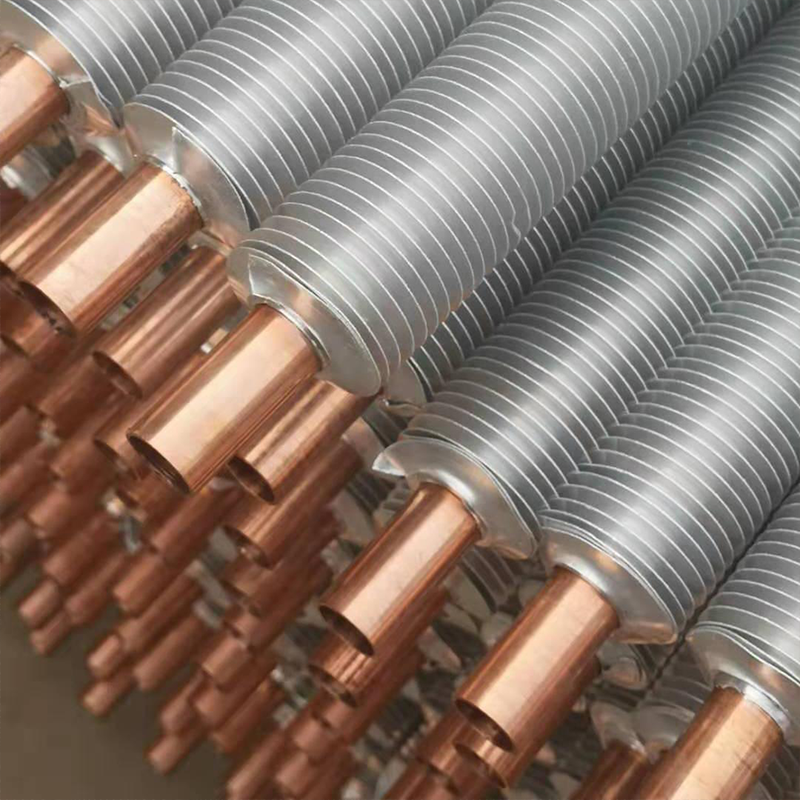
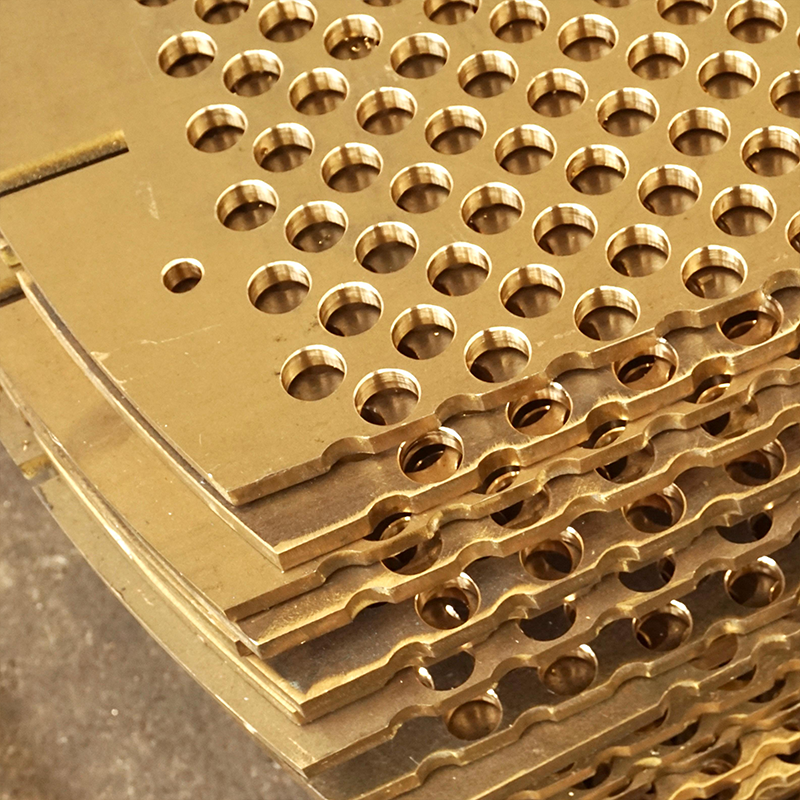
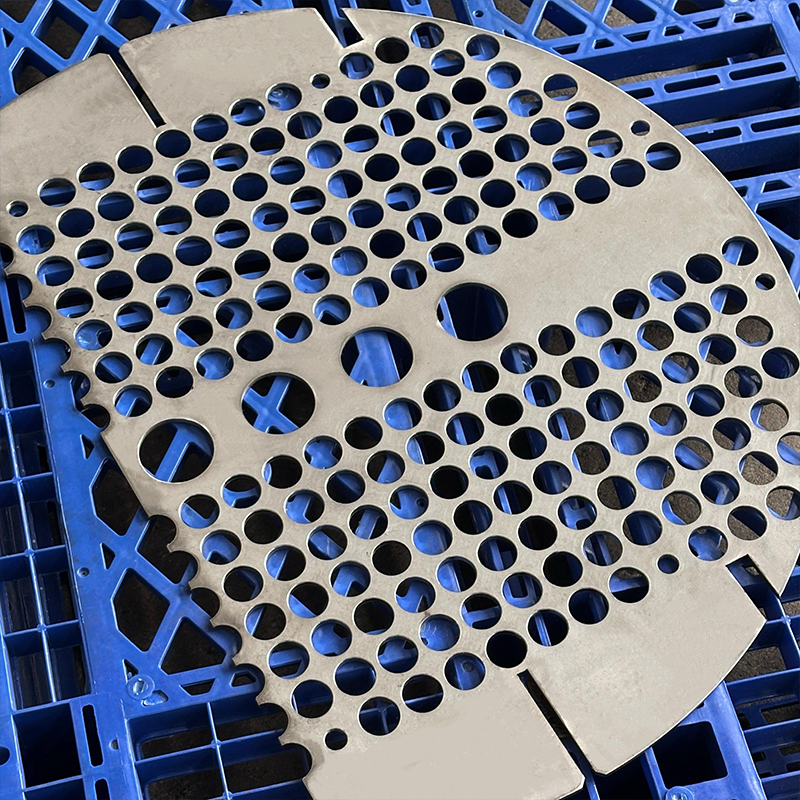
A striking example of this approach is the company’s activitiesWuxi Kaisheng Electric Power and Petrochemical Equipment Co., Ltd.. Specializing in the development and production of complex heat transfer and petrochemical equipment, the company successfully combines expertise in working with various materials. Their portfolio includes not only standard solutions, but also unique products made from titanium, nickel alloys (N06625), marine brass C46400 and copper. Products such as titanium shell-and-tube heat exchangers, 316 stainless steel corrugated tube bundles and air coolers are certified to stringent international ASME and PED standards.
Wuxi Kaisheng's experience in creating equipment resistant to extreme pressures, temperatures and aggressive environments (used in oil refining, water desalination and shipbuilding) directly correlates with the principles of quality design described in our manuals. Understanding metallurgy and the properties of alloys allows their engineers to create reliable hybrid systems where polypropylene baths work in conjunction with highly efficient heat exchangers made of special alloys. This ensures that the customer receives stable, durable equipment adapted to the harshest operating conditions around the world.
Frequently Asked Questions
What is the maximum operating temperature for polypropylene bathtubs?
Standard PP-H homopolymer retains its mechanical properties when briefly heated to 100°C, but the recommended long-term operating temperature should not exceed 80-90°C. At temperatures above 90°C, the elastic modulus of the material drops and the risk of deformation under load increases exponentially. For environments above 90°C, we recommend considering polyvinylidene fluoride (PVDF) or using polypropylene with a reinforced outer metal frame to compensate for the loss of plastic rigidity. The manuals show graphs of the dependence of permissible pressure on temperature for different grades of raw materials.
Is it possible to repair polypropylene bathtubs on your own?
Yes, repairs are possible, but require strict adherence to technology. Small cracks and holes can be welded using a hand extruder or a hair dryer with a filler rod. However, before repairing, it is necessary to completely drain the bath, dry the repair area with hot air and thoroughly clean the edges of the defect. It is important to use the same grade of filler material as the bath base. For large-area through damage (more than 50 mm), installation of a patch with double-sided welding is required. We strongly do not recommend using adhesives or cold welding to repair containers containing harsh chemicals - these methods will not provide a long-lasting seal in such conditions.
How often should bathtubs be inspected?
The maintenance schedule depends on the aggressiveness of the environment and the intensity of operation. For standard galvanic lines, an annual visual inspection and measurement of the wall thickness in the most loaded areas (bottom, lower part of the walls) using an ultrasonic thickness gauge is recommended. If the bath operates with hot concentrated acids or alkalis, the frequency of inspections should be reduced to once every six months. Particular attention should be paid to the condition of the welds: the appearance of whitish stripes (coating effect) or microcracks signals the beginning of destruction of the material. Timely identification of such signs allows for preventive repairs without stopping production.
What is the difference between PP-H, PP-B and PP-R sheets?
PP-H (homopolymer) has maximum chemical resistance and rigidity, but low impact strength at low temperatures. It is an ideal choice for most chemical baths. PP-B (block copolymer) has improved impact strength due to polyethylene inclusions, but is slightly inferior in chemical resistance and thermal stability. PP-R (random copolymer) is more commonly used in hot water piping and less commonly in chemical engineering. To design baths subject to mechanical shock (loading heavy parts), it is sometimes advisable to use combined solutions or choose modified PP-H grades with additives that increase impact strength while maintaining high chemical inertness.
Conclusion and next steps
Designing polypropylene chemical baths is a task that requires a balance between chemical physics, strength materials and welding technology. Attempts to solve it “on the knee” inevitably lead to financial losses and risks for staff. Professionalmanuals for designing PP chemical bathsact as a guarantee that your equipment will last for decades, not months. They transform the chaotic process of creating containers into a streamlined, predictable and safe production flow.
We are ready to provide a full set of technical documentation and consulting support for your project. Our experts will help you adapt standard solutions to the specifics of your production, perform verification calculations and train personnel in the correct welding and inspection methods. Don’t risk your safety and budget—entrust the design to professionals.
Contact us todayfor consultation and access to a database of technical solutions. We will help you choose the optimal equipment configuration that will become a reliable link in your process chain.