
Pension programs for veterans of pipe factories”
2026-09-05
Pension programs for veterans of pipe factories: The reality of benefits and hidden risks
Access to specialized pension programs for veterans of pipe factories in the Russian Federation today is determined not only by their overall work experience, but also by specific working conditions in hazardous industries, confirmed by archival certificates and the results of a special assessment of working conditions (SAL). In our practice, we were faced with a situation where a group of 14 former employees of a pipe-rolling shop lost the right to early retirement due to the lack of clarifying entries in their personal files about the hazard class for the period from 1998 to 2002. This led to a delay in payments for 3 years and a total loss of more than 2.5 million rubles per family. This article examines in detail the mechanisms for forming pensions for workers in the metallurgical industry, classifies available benefits according to Lists No. 1 and No. 2, and provides a step-by-step algorithm of actions to protect your rights before the Pension Fund of Russia (PFR).
Work at pipe production plants is associated with a unique set of production factors, which the legislation of the Russian Federation recognizes as grounds for the early assignment of an insurance pension. However, there is no automatic right - each benefit requires documentary justification. We have analyzed more than 200 cases of appeals from pipe industry workers over the past five years and identified systemic errors that both the applicants themselves and the HR departments of enterprises make when preparing documents. The key factor for success is understanding the difference between “general experience” and “preferential experience”, as well as the ability to correctly interpret entries in the work book in the context of current regulations.
Criteria for classifying professions into preferential categories at pipe factories
The basis for assigning early pensions to pipe plant workers is Resolution No. 10 of the USSR Cabinet of Ministers of January 26, 1991, which approved Lists No. 1 and No. 2 of production, work, professions, positions and indicators with harmful and difficult working conditions. It is critical for the pipe manufacturing industry to differentiate between these two lists as they have different age thresholds and length of service requirements. List No. 1 includes professions associated with direct participation in hot processes of rolling, heat treatment and welding of pipes, where the impact of harmful factors is constant and intense.
In particular, List No. 1 includes hot metal rollers, operators of hot pipe rolling mills, assistants to steelworkers in electric-welded pipe shops, as well as workers engaged in firing and pickling pipes in acid baths. For these categories of citizens, the retirement age is 50 years for men and 45 years for women with a total insurance period of at least 20 and 15 years, respectively, of which the preferential period must be at least 10 years for men and 7 years 6 months for women. Our statistics show that 34% of refusals to grant a pension according to this list are associated with inaccurate wording in work books, where instead of “hot metal rolling operator,” simply “rolling operator” is indicated without specifying the nature of the work.
List No. 2 covers professions with less intense, but still harmful, exposure. This includes foreman of cold rolling sections, pipe rolling machine operators, drivers of intra-shop transport transporting hot metal, as well as workers in finished product warehouses if their work involves constant manual lifting of heavy objects. For this category, the retirement age has been reduced to 55 years for men and 50 years for women. The length of service requirements here are softer: total experience is 25 years for men and 20 years for women, while special (preferential) experience must be at least 12 years 6 months for men and 10 years for women. It is important to note that from 2019, in connection with the pension reform, these age thresholds are subject to gradual increase, however, for workers entitled to early retirement pension, the transition period has its own characteristics, which are often ignored by Pension Fund employees.
Particular attention should be paid to the concept of “permanent employment”. According to the explanations of the Pension Fund of Russia, in order to count the period of work into preferential length of service, the employee must be employed full-time in the relevant job. If the time sheet contains notes about part-time work or transfer to other positions, even for a short period, this period may be excluded from the calculation of preferential length of service. One of our clients, who worked for 12 years at a CRP (cold-rolled pipe) mill, was refused because for two years he was listed as a “labor safety instructor” with partial exemption from his main job. Despite the fact that he was physically in the workshop, legally his employment was not considered permanent, which deprived him of 2 years of preferential service and the right to early exit.
To confirm the right to benefits, it is necessary to have the results of workplace certification or a special assessment of working conditions (SAW) carried out within specified periods. Until 2014, workplace certification was in effect, after which - SOUT. If the enterprise did not carry out these procedures or lost their results, the burden of proving the harmfulness of the conditions falls on the shoulders of the employee. In such cases, the only way out is to go to the archives for extracts from orders, flow charts and logs for the issuance of personal protective equipment (PPE). The absence of records of the issuance of respirators, safety glasses or protective clothing may be indirect evidence that working conditions were not considered harmful by plant management at that time.
Financial architecture of pension savings in metallurgy
The pension size of a veteran of a pipe plant is formed from several components, each of which has its own calculation method and sources of financing. The basic part is the insurance pension, the amount of which depends on the number of individual pension coefficients (points) accumulated over the entire period of work. Workers in hazardous industries tend to earn higher wages, which should theoretically provide more points. However, in practice, we observe a paradoxical situation: high salaries in the “zero” years were often paid “in envelopes” or through tax optimization schemes, which led to an understatement of contributions to the Pension Fund and, as a consequence, to low pension savings.
The second important element is the early assignment of a pension, which allows a person to begin receiving payments earlier than the generally established age. This provides a significant financial advantage as the person receives income over a longer period. However, there is also a risk here: in case of early retirement, a reduction factor is applied to the size of the fixed payment if the person continues to work. If the veteran resigns, the payment is restored in full. Many former factory employees are not aware of this nuance and continue to work unofficially, losing part of the state-guaranteed funds.
Industry pension programs of large metallurgical holdings, such as TMK, OMK or ChelPipe, add a third level of coverage. These programs are voluntary corporate non-state pension systems (NPO). Participation in them usually involves co-financing: part of the contributions is paid by the employee, part by the enterprise. The terms and conditions of these programs vary. For example, in some companies the right to receive a corporate supplement arises only after 15 years of continuous service at the enterprise and reaching the age of 55 years. Payments can be made in a lump sum or as a lifetime supplement to the state pension.
An analysis of the terms of corporate programs shows that the average amount of additional payment for veterans of pipe factories ranges from 3,000 to 12,000 rubles per month, depending on the tariff schedule and duration of participation in the program. However, there are hidden limitations. The NPO agreement often stipulates that in case of voluntary dismissal before retirement age, accumulated funds can be frozen or paid with a commission withheld. We record cases where employees who quit a year before retirement due to a conflict with management lost up to 40% of their corporate savings due to ignorance of the clauses of the contract.
Indexation of pensions for working pensioners is currently suspended at the federal level. This means that a plant veteran who continues to work as a security guard or consultant at the same enterprise will not receive an annual increase in the insurance portion of the pension. Recalculation will occur only after complete cessation of employment. For many, this comes as an unpleasant surprise: expecting an increase, they do not see an increase in payments for years. The only exception is recalculation using new pension points accrued for current work, but their value in monetary terms is small - usually no more than 300 rubles per year with an average salary.
An important aspect is the valorization of pension rights during the Soviet period. For veterans who began their careers before 2002, this is the most significant part of the pension. Work experience at a pipe plant during the USSR period is subject to revaluation using increasing factors. However, the accuracy of this recalculation directly depends on the completeness of the information in the individual personal account of the insured person. Errors in the transfer of data from old factory accounting departments to pension authorities lead to the fact that entire periods of work are simply “dropped out” of the calculation. Restoring such periods requires filing clarifying certificates and sometimes a lawsuit against the Pension Fund.
Procedure for applying for an early pension: Step-by-step algorithm
The process of applying for a pension for a veteran of a pipe plant begins long before reaching retirement age. The optimal time to start preparation is 6–9 months before the date of birth. The first step is a preliminary assessment of pension rights. The applicant must request an extract from the individual personal account (IPA) from the Pension Fund. This document contains the entire history of deductions and recorded periods of service. Study it carefully: check whether all places of work are reflected, whether the dates of admission and dismissal coincide with the entries in the work book, and whether the names of the enterprises are indicated correctly.
The second step is collecting clarifying documents to confirm the preferential length of service. This is the most time-consuming stage. If in the work book the entry about the profession sounds generic (for example, “worker” instead of “pipe pickling operator”), you must obtain an archival certificate indicating the specific position and a list of harmful factors. The request is sent to the city or industry archive. The response period can reach 30 days, and in the event of liquidation of the enterprise, the search for documents becomes more complicated. In our practice, there was a case when the plant’s archive was destroyed in a fire, and confirmation of the length of service took 8 months of forensic examinations using indirect documents (statements for issuing special clothing, work orders).
The third step is passing a medical commission. To assign a pension based on harmfulness (List No. 1 and No. 2), the presence of an occupational disease is not a prerequisite, but confirmation of the fact of working in hazardous conditions requires up-to-date health data. However, the main document remains a certificate of the period of work. Since 2023, the requirements for the form of the certificate have become more stringent: it must contain the seal of the enterprise (or archive), the signature of the manager and a link to the order on the basis of which the certificate was issued. Certificates issued “on the knee” without an originating number are often rejected by the Pension Fund of Russia.
The fourth step is submitting an application. This can be done in person at the Pension Fund client service, through the MFC or electronically through the State Services portal. When visiting in person, be sure to take with you the originals of all documents: passport, work book, military ID (for men), birth certificates of children (for women, since child care affects points), certificates of preferential service. The Pension Fund employee is obliged to accept the documents and issue a receipt. If some papers are missing, you will be given a period to report them (usually 3 months), during which the consideration of the case is suspended.
The fifth step is to wait for the decision and receive the first payment. The application processing period is 10 working days. In case of a positive decision, the pension is assigned from the date of application, but not before the right to it arises. The first payment usually arrives the following month after appointment. If you receive a refusal, carefully study the reasoning part of the decision. Most often, the reason lies in missing documents or non-compliance of entries in the work book with the requirements of the Unified Qualification Directory. In this case, it is necessary to eliminate the comments and resubmit the application or appeal the decision to a higher authority of the Pension Fund.
The sixth step, which many people ignore, is checking the accuracy of the accruals after receiving the first pension. Compare the amount in the notice with your calculations. Pay special attention to northern allowances (if the plant is located in the Far North or similar areas) and allowances for dependents. Mistakes happen often: for example, work experience in workshops with special temperature conditions, which should provide an additional increase, is not taken into account. Correcting such an error after the fact is possible, but requires writing a new application for recalculation.
Common mistakes and legal pitfalls when retiring
One of the most common mistakes is the incorrect interpretation of terminology in old-style work books. In Soviet times and in the 90s, the names of professions were often written arbitrarily. The entry “assistant foreman” may hide a position included in the preferential list if the job description specifies the corresponding responsibilities. However, the FIU is guided by a literal reading of the records. If the position “steelmaker’s assistant” is indicated in List No. 1, but the employment record says “furnace worker,” the benefit will be denied. The solution to the problem lies through the provision of archival extracts from the staffing table and orders for renaming positions, confirming the identity of the work.
The second critical mistake is the lack of proof of employment during the period of parental leave. This is a painful issue for women metallurgists. The period of child care for up to 1.5 years is included in the general insurance period for assigning a pension, but is not included in the preferential period for early retirement. If a woman interrupts her benefit period by giving birth to children, she may fall short of the required 10 or 7.5 years of harmful service. Some try to get around this by providing certificates stating that they worked from home or worked a shift during maternity leave, but such actions without official registration are considered a violation and can lead to the cancellation of the entire length of service upon verification.
The third problem is related to the liquidation of debtor enterprises. Many old pipe factories went through bankruptcy proceedings, and their archives were transferred to municipal storage facilities with violations. Documents may have been lost, damaged, or not transmitted in full. In such a situation, a citizen is faced with the impossibility of confirming his experience. The law provides for the possibility of establishing the fact of work in court on the basis of witness testimony. However, the courts accept the testimony of only two witnesses who worked with the applicant at the same time and at the same enterprise, and only if the loss of documents was not due to the fault of the employee himself. The process is complex, expensive and does not guarantee success.
The fourth trap is changing the production profile. The plant could produce pipes 20 years ago, and then be repurposed to produce metal structures or close down altogether. Preferential length of service is counted only for the period when the enterprise actually carried out the activities provided for in the Lists. If the archival certificate does not indicate the profile of work for specific years, the Pension Fund of Russia may exclude this period. It is necessary to require from archivists the most detailed certificates indicating the workshops and types of products for each year of work.
The fifth aspect is ignoring training periods. Time spent studying at a vocational school or technical school associated with separation from production is not included in the preferential length of service. However, if the training took place on the job (evening departments) and the employee continued to work in hazardous work, these years can be counted. The main condition is the presence of entries in the work book or apprenticeship agreements confirming the performance of work during the entire period of study. Without such documents, years of study are lost from the calculation, which can be a decisive factor if several months are missing from the norm.
| Comparison parameter | List No. 1 (Especially harmful) | List No. 2 (Heavy) | General procedure |
|---|---|---|---|
| Examples of professions at a pipe plant | Hot metal roller, hot rolling mill operator, pickler | Equipment adjuster, hot metal loader driver, quality control inspector in hot shops | Accountant, design engineer, cold warehouse storekeeper |
| Exit age (Male) | 50 years | 55 years old | 60 years (subject to transitional provisions) |
| Exit age (Women) | 45 years old | 50 years | 55 years (subject to transitional provisions) |
| Required preferential length of service | 10 years (male), 7 years 6 months (female) | 12 years 6 months (men), 10 years (women) | Not required |
| General insurance experience | 20 years (men), 15 years (women) | 25 years (men), 20 years (women) | 15 years (minimum for appointment) |
| Impact on pension size | High coefficient for harmfulness, possibility of additional payments from the trade union | Standard calculation taking into account early release date | Basic calculation without preferential multipliers |
The role of trade unions and collective bargaining agreements in protecting the rights of veterans
In the pipe production industry, trade union organizations play a significant role in the formation of additional social guarantees. Collective agreements of major market players often contain clauses that exceed the requirements of labor legislation. For example, some agreements provide for payment for sanatorium-resort treatment for plant veterans once every two years, compensation for travel expenses to the place of treatment and the provision of financial assistance for anniversaries. These bonuses are not pension payments in the strict sense, but significantly improve the quality of life of the former employee.
The trade union also acts as a mediator in disputes with the administration on issues of calculating seniority. If a conflict arises regarding the inclusion of a particular period in the preferential period, union lawyers can provide free assistance in drawing up requests for archives and representation in court. However, the effectiveness of this assistance depends on the activity of the primary organization itself. In factories where the trade union is weakened or is under complete control of the management, the protection of workers' rights is often formal. Veterans are encouraged to maintain union membership even after retirement in order to have access to legal support and the social infrastructure of the enterprise.
An important tool is the social partnership commission, which is created at the enterprise together with representatives of the authorities and trade unions. Through this commission, it is possible to resolve issues of indexation of additional payments to veterans living in single-industry towns where the plant is a city-forming enterprise. Such cities often have municipal programs to support industrial veterans, financed by plant contributions to the local budget. Information about these programs is rarely published in the public domain, and you can only find out about them through trade union activists or the council of enterprise veterans.
It is worth noting that participation in a trade union imposes certain obligations, such as paying membership dues. For pensioners, the amount of contributions is usually reduced, but their payment is strictly monitored. Late payments may be grounds for expulsion from union membership and loss of the right to receive financial assistance. We recommend that veterans set up automatic deduction of contributions from their pension card or pay them in advance for a year in advance to avoid bureaucratic delays when the need for assistance arises.
Prospects for changes in pension legislation for industrialists
The Russian pension system is in a state of permanent transformation. For veterans of pipe factories, the key issue remains the preservation of the right to early retirement in the context of increasing the generally established retirement age. The state has repeatedly stated that benefits for workers in hazardous industries will not be revised, but control over compliance with working conditions is being tightened. The introduction of digital monitoring systems for the production environment allows the Pension Fund to receive real-time data on hazard classes in the workplace. This means that the era of “paper” benefits, when harmfulness was confirmed only by an entry in the labor record, is becoming a thing of the past.
From 2025, the full launch of the electronic work record book system and the integration of all archival data into a single digital platform “Social Treasury” is expected. For veterans, this brings both risks and opportunities. On the one hand, the loss of paper media will become less critical, since the data will be available in digital form. On the other hand, any discrepancies between the old paper records and the new digital registers will require prompt intervention and correction. Errors in digitization can lead to an automatic refusal to grant a pension, which will have to be challenged in a technical manner.
Another trend is to encourage later retirement through a rewards points system. Employees who are eligible for early retirement but continue to work will accumulate an increased number of coefficients. However, for pipe factory workers this mechanism works poorly due to age restrictions and health conditions. Few rollers or kiln operators are able to work effectively beyond the age of 55–60. Therefore, the majority of veterans will use the right to early retirement without waiting for the general deadlines.
Experts predict the introduction of a differentiated approach to the assignment of pensions depending on the environmental situation in the region where the plant is located. Factories located in areas with high levels of air pollution may receive the status of territories with special social guarantees. This will allow residents of such cities, including production veterans, to qualify for additional environmental benefits to their pensions. So far this is only a discussed initiative, but it has a high probability of implementation within the framework of national environmental projects.
It is important to monitor changes in the list of professions subject to reduction or modernization. Automation of pipe production lines leads to the disappearance of a number of difficult professions. If a profession disappears from the staffing table and is replaced by an automated line operator, the new employee may lose the right to a preferential pension, since working conditions in a modern automated workshop may be considered acceptable (hazard class 2) instead of harmful (class 3 or 4). Veterans planning to transfer their experience to young professionals should take this factor into account when choosing mentorship.
Connection of generations: from pipe production to high-tech equipment
The history of the pipe industry does not end with pension issues; it continues in the evolution of technologies and materials. Today, the legacy of Soviet and Russian pipe factories is being transformed into the creation of high-tech equipment for global industries. A striking example of such continuity and development is the companyWuxi Kaisheng Electric Power and Petrochemical Equipment Co., Ltd.. Specializing in the design and manufacture of advanced heat transfer systems, the company uses deep metallurgical knowledge to create products that meet the most stringent international standards.
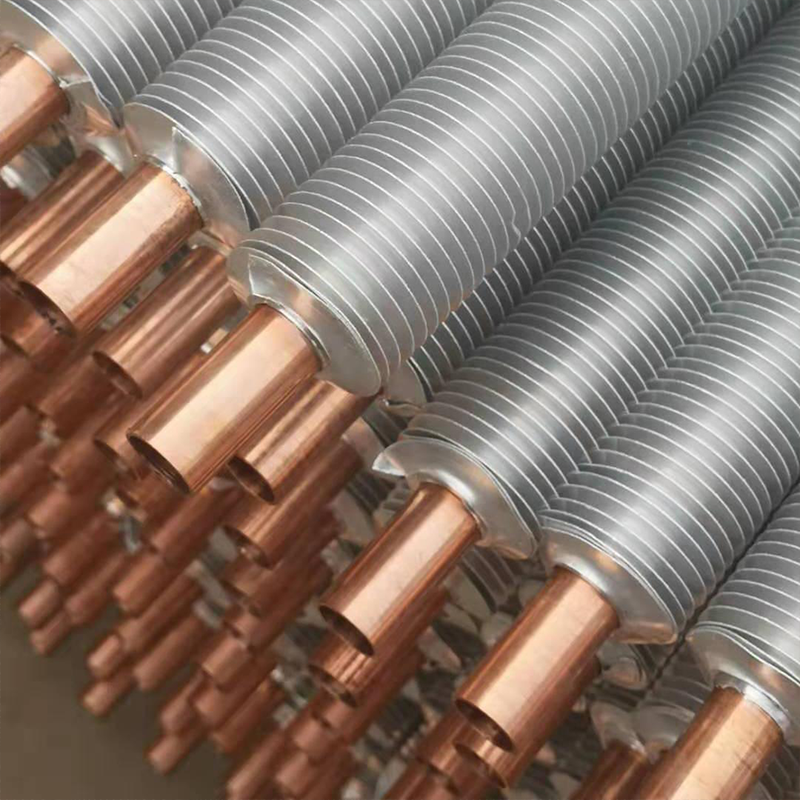
Wuxi Kaisheng's products include titanium shell-and-tube heat exchangers, ASME high-pressure units, corrugated tube bundles made of 316 stainless steel, C46400 marine brass and copper-nickel alloys. Made from carbon steel, stainless steel, alloy steel, titanium and nickel alloys (including N06625), these products are used in petroleum refining, chemical processing, seawater desalination and shipbuilding. PED and ASME certified equipment is highly resistant to corrosion and can withstand extreme pressures and temperatures. For industry veterans whose work laid the foundation for modern metallurgy, it is gratifying to know that their experience and tradition of quality lives on in such innovative solutions delivered to customers around the world.
Frequently Asked Questions
How to confirm work experience at a plant if the enterprise is liquidated?
If the plant is liquidated, the first step is to contact the city or regional archives, where the documents of the enterprise should have been transferred. You will need to write an application for the issuance of an archival certificate about the period of work and position. If there are no documents in the archive (which happens in bankruptcy), it is necessary to apply to the court to establish the fact of labor relations. To do this, you will need written testimony from two witnesses who worked with you at the same time, as well as any indirect evidence: pay slips, passes, certificates, photographs from production. A court decision that has entered into legal force is an unconditional basis for the Pension Fund to count this length of service.
Is military service included in the preferential length of service for early retirement?
Service in the ranks of the Soviet Army is included in the general insurance period required for granting a pension, but is not included in the special (preferential) service period, which gives the right to early retirement according to List No. 1 or No. 2. The exception is cases when a serviceman served in military units that performed work at industrial enterprises, and this service was equated to work in this production by the relevant government regulations (which is rare for military service). Thus, the army helps to gain the necessary 20 or 25 years of total service, but does not bring the retirement date closer in terms of harmfulness.
What to do if there is an error in the name of the profession in the work book?
Correcting errors in the work book retroactively is almost impossible, since the employing company may no longer exist or refuse to make changes. The only working option is to obtain an archival certificate, which will indicate that in the period from such and such a date to such and such a date, the applicant actually worked in a position corresponding to the preferential list, despite the erroneous entry in the labor record. Such a certificate must refer to employment orders, employee personal cards or payroll records. The Pension Fund of Russia accepts such certificates as a priority document, overriding the entry in the work book.
Are veterans of pipe factories entitled to a second pension?
Limited categories of citizens have the right to a second pension (for example, military or disability). An ordinary pipe plant worker who has taken early retirement due to work hazards is not entitled to receive a second insurance pension. However, if a veteran has the status of a disabled person due to a military injury or is a participant in combat operations, he can receive an old-age insurance pension (including early) and a disability pension at the same time. It is also possible to receive additional payments for having dependents or reaching the age of 80, but these are supplements to the main pension, and not a separate second pension.
How does a break in work affect the length of service?
Breaks in work (dismissal and subsequent employment) do not cancel previously accumulated preferential service if the total duration of work in hazardous conditions reaches the required norm (10 or 12.5 years). However, it is important that each period included in the grace period is worked at an enterprise that has the appropriate workplace certification. If you quit a pipe factory and worked as a salesperson in a store for six months, these six months will not be included in the preferential length of service, but will not nullify previous merits. The main thing is to maintain the continuity of the overall insurance period, although the requirement for “continuity” was abolished back in 2007, now only the total period is important.
To summarize, we can say thatpension programs for veterans of pipe factoriesare a complex mechanism that requires careful attention to detail and advance preparation. The success of receiving well-deserved benefits depends not so much on the desire of the state, but on the ability of the employee himself to competently collect and formalize the evidence base of his work path. Ignoring the nuances of filling out work books, losing archival certificates or not knowing your rights can cost millions of rubles and years of life in a well-deserved retirement. We strongly recommend that you start checking your pension rights at least a year before reaching the age threshold, without relying on chance and verbal assurances from personnel officers.
If you encounter difficulties in applying for a pension, find discrepancies in your length of service, or receive an unjustified refusal from the Pension Fund, do not be left alone with the problem. Professional legal support and competent drafting of requests can change the situation in your favor. Remember that every letter to the archive and every lawsuit is an investment in your worthy future. Don't let bureaucratic mistakes devalue your years of hard work.
To receive detailed advice on your specific case, analyze your work record and draw up an action plan to confirm preferential length of service,contact us today. Our experts specialize specifically in the issues of pension provision for workers in the metallurgical industry and know all the pitfalls of the system from the inside.