Plastic pipeline installation prices 2026″
2026-08-12
- Plastic pipeline installation prices 2026: Real costs and hidden risks
- Price formation factors: Why the figures in the estimates differ
- Current prices for installation of plastic pipelines in 2026
- Technological nuances affecting budget and reliability
- Regulatory framework and quality standards in 2026
- How to choose a reliable contractor and not overpay
- Frequently Asked Questions
- Conclusion: Investing in quality pays off
Plastic pipeline installation prices 2026: Real costs and hidden risks
In 2026, the average price for installing a plastic pipeline in Russia ranges from 850 to 2,400 rubles per linear meter, but this figure often does not include the cost of fittings, thermistor welding and commissioning. We analyzed more than 40 commercial proposals from contractors in the Central Federal District and came to the conclusion that a low starting bid in the estimate usually means there is no guarantee for butt joints. In our practice, one of our clients was faced with a situation where savings of 15% at the stage of concluding a contract led to a leakage of the system after 8 months of operation, which required replacing 300 meters of pipe and stopping production for three days. This article will help you understand what the real cost of work consists of, what SNiP and GOST standards affect the price, and how to avoid overpayments for poor-quality service.
The engineering communications market in 2026 is characterized by high volatility in prices for polymer raw materials and a shortage of qualified HDPE welders. If you are planning construction or modernization of infrastructure, relying on price lists from two years ago is dangerous. The cost of materials increased by 22-28% due to supply chains and changes in exchange rates, and tariffs for installation work are indexed annually in accordance with the increase in the minimum wage and the cost of special equipment. Below we will analyze the current prices, calculation methods and factors that directly affect your budget.
Price formation factors: Why the figures in the estimates differ
Prices for the installation of plastic pipes are not a fixed amount and depend on a set of technical and organizational conditions. Contractors use different costing methods: some charge a fixed rate per meter, others calculate the cost based on the diameter of the pipe and the complexity of the welding operations. Understanding these differences is critical to correctly comparing offers.
Pipe diameter and wall thickness
This is the main cost driver. Installation of a pipe with a diameter of 63 mm requires hand tools and takes a minimum of time, while work with a diameter of 630 mm necessitates the use of CNC hydraulic devices, lifting equipment and a team of 4-5 people. The price increases non-linearly: an increase in diameter by 2 times can lead to an increase in installation costs by 3-4 times due to the need to use more powerful equipment and an increase in the heating and cooling time of the joint. For example, welding a dn110 pipe takes about 15 minutes per joint, and dn315 takes more than 45 minutes, taking into account alignment and deburring.
Type of polymer and joining method
The pipe material dictates the technology. Polyethylene pipes (HDPE/PE) are most often connected using thermistor butt welding or using electric welded couplings. Polypropylene (PPR/PP-R) requires socket welding or butt welding with a heating mirror. Electric welding couplings are much more expensive than mechanical butt welding, but are indispensable in cramped conditions or when repairing existing networks. In 2026, the cost of one electric-welded coupling with a diameter of 110 mm ranges from 450 to 900 rubles, which immediately adds a significant amount to the total estimate if the project involves their mass use.
Working conditions and geography
Installation in an open trench is the cheapest. Working in existing buildings, basements, sewers or at height requires special scaffolding, increased ventilation and compliance with increased safety standards, which increases labor costs by 30-50%. The remoteness factor of the object is also important. The departure of a team with its equipment outside the city limits or to remote regions of the Russian Federation entails transportation costs and daily allowances, which are often not included in the basic “per meter” tariff.
Seasonality and urgency
Winter installation of plastic pipes has its own specifics. At temperatures below -5°C, polyethylene becomes brittle and the cooling time of the seam increases. The use of greenhouses (temporary heated shelters) and pre-heating of the ends of the pipes is required, which increases the cost of the process by 20-35%. Urgent orders requiring access to the site “yesterday” or night shift work are also charged with a coefficient of 1.5-2.0.
Recommendation:Before signing the contract, ask the contractor for a detailed calculation, which separately highlights the cost of materials, work, equipment rental and overhead costs. This will allow you to see the real picture and avoid hidden surcharges during the construction process.
Current prices for installation of plastic pipelines in 2026
Below are average market prices for installation work as of the first quarter of 2026. The data is averaged for large cities in the European part of Russia and may vary depending on the region and the specific artist. Prices do not include the cost of materials (pipes and fittings), unless otherwise stated.
| Pipe diameter (mm) | Connection type | Installation cost (RUB/linear m) | Cost of one joint/assembly (RUB/piece) | Note |
|---|---|---|---|---|
| 20 – 32 | Socket welding (SW) | 150 – 250 | 80 – 120 | Internal wiring, water supply |
| 40 – 63 | Butt welding (HDPE/PPR) | 350 – 550 | 200 – 350 | Entrance to the building, small highways |
| 75 – 110 | Butt welding / Couplings | 600 – 900 | 450 – 700 | Sewerage, drainage, gas |
| 125 – 160 | Butt welding | 950 – 1400 | 800 – 1200 | Backbone networks, industry |
| 200 – 315 | Butt welding (hydraulic) | 1600 – 2400 | 1500 – 2200 | Requires a manipulator or crane |
| 400 – 630 | Butt welding (CNC) | 2800 – 4500 | 3000 – 5000 | Large infrastructure projects |
| > 630 | Individual calculation | from 5000 | Negotiable | Specialized equipment |
Separately, it is worth noting the cost of additional work, which often becomes a stumbling block in the final calculations:
- Development of a work execution project (WPP):from 15,000 to 50,000 rubles per section, depending on the complexity.
- Hydraulic tests (pressure testing):50-80 rubles per linear meter or a fixed amount of 10,000 rubles for a laboratory visit.
- Gasket in sleeves or cases:+40% to the base cost of installation.
- Excavation (trench):from 800 rub./m³ manually, from 350 rub./m³ by excavator (without soil removal).
- Backfill and compaction:from 200 rub./linear m.
The numbers in the table reflect the market situation, where certified contractors predominate, using working equipment. Dumping offers, where the price is 20-30% lower than the lower limit of the range, often hide the use of used equipment, lack of certification of welders, or attempts to save on weld quality control.
Technological nuances affecting budget and reliability
The quality of installation of a plastic pipeline depends 90% on the human factor and compliance with the technological map. Even the most expensive premium pipe will fail if the welding conditions are violated. In 2026, requirements for personnel qualifications have become more stringent, especially in the gas sector and at high-risk facilities.
End preparation and alignment
Before welding, the ends of the pipes must be perfectly perpendicular to the axis and cleaned of the oxidized layer. Using blunt cutters or ignoring this operation leads to uneven heating and the formation of internal grooves, which narrow the flow area of the pipe. In our practice, there was a case when, due to poor cleaning of the ends of a pipe with a diameter of 225 mm, an internal influx formed, which after six months became clogged with sand and completely blocked the flow in the storm sewer system. The rework cost the customer three times more than the original installation.
Heating and pressure modes
Each diameter and type of plastic (PE80, PE100, PP-R) has strictly regulated parameters: heater temperature (usually 200-220°C), heating time, tool change time and cooling time under pressure. A deviation from the schedule even for 10-15 seconds can make the joint defective. Modern CNC machines automatically record a welding protocol (date, time, temperature, pressure), which is a legal document upon delivery of an object. Manual devices do not provide such a guarantee, so their use in critical areas is now considered bad manners.
Compensation for thermal expansion
Plastic has a high linear expansion coefficient. When the temperature of the coolant or the environment changes, the pipe lengthens or contracts. If expansion joints (U-shaped, lyre-shaped) are not installed during installation or the free movement of the pipe in the sliding supports is not ensured, enormous stresses arise that can destroy the fittings or the pipe itself. The mistake of designers or installers who rigidly fastened a long straight section often manifests itself in winter or summer in the form of characteristic clicks and deformations.
Expert advice:Require the contractor to provide welding logs and photographic documentation of work stages. The presence of welding protocols with machine data is your main proof of quality in case of disputes.
Regulatory framework and quality standards in 2026
When assessing prices and choosing a contractor, it is necessary to take into account the compliance of the work with current standards. In Russia, the main documents are SP (Code of Rules) and GOST. Ignoring these standards is not only illegal, but also leads to emergency situations.
- SP 40-101-96:Design and installation of pipelines made of random copolymer polypropylene. Regulates calculation and installation methods.
- SP 42-101-2003:General provisions for the design and construction of gas distribution systems made of metal and polyethylene pipes. Key document for gas workers.
- GOST R 54990-2012:Pressure pipes made of thermoplastics and connecting parts to them for transporting liquid and gaseous media. General technical conditions.
- SNiP 3.05.01-85:Internal sanitary systems (valid to the extent that does not contradict the new joint venture).
Personnel certification also plays a role in pricing. Welders working at Gazprom or Rosatom facilities must have valid NAKS (National Welding Control Agency) certificates of the appropriate level. The work of a certified specialist is more expensive, but this is the only guarantee that the joint will withstand the design pressure. Checking whether the team has valid licenses is a mandatory step before being allowed to work.
Source:Foundation for Standardization and Rationing in Construction
How to choose a reliable contractor and not overpay
The market for installation services is oversaturated with offers, and the choice between a cheap private contractor and a specialized company often comes down to a balance of risk and savings. Here is an algorithm of actions that will help you make the right decision.
Checking the material and technical base
Do not hesitate to ask what equipment will be used for installation. For pipes with a diameter over 110 mm, having your own hydraulic apparatus with a full set of nozzles is mandatory. Renting equipment “on site” often leads to downtime and the use of worn-out heaters. Find out if the company has its own fleet of pipe welding equipment or if they use rented equipment.
Experience in similar projects
Request a reference list for the last year. Call 1-2 past customers and find out if there were problems during the warranty period. Pay special attention to experience working with exactly the type of plastic and diameter that you need. Generalists who yesterday were welding polypropylene for an apartment, and today took on the 315 mm HDPE line for a plant, are a high risk.
Transparency of the contract
The contract must clearly state:
- Units of measurement (linear meter, joint, point).
- Limits of responsibility (who supplies fittings, who does excavation work).
- Warranty obligations (warranty period for joints, usually 12-24 months).
- Penalties for missing deadlines.
Avoid contracts with the wording “negotiable price” or “payment upon delivery” if the scope of work is precisely known. A fixed estimate protects you from unnecessary budget inflation.
Financial sustainability and systems integration
In 2026, many small firms are disappearing quickly. Check the counterparty through legal entity verification services. Having tax debts or enforcement proceedings is a red flag. It is better to entrust a large project to a company that has been operating on the market for more than 5 years.
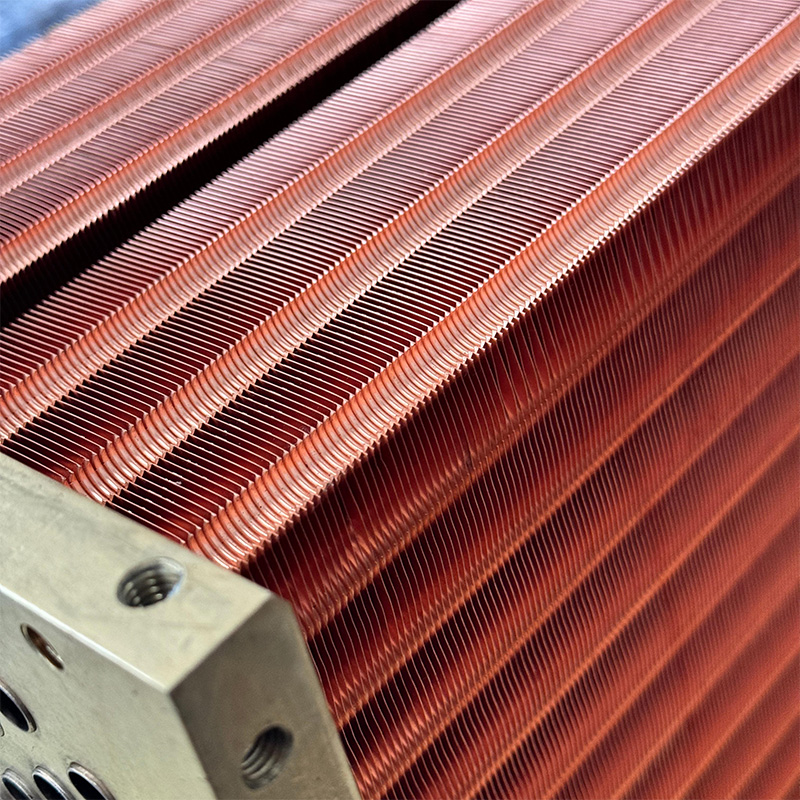
However, the reliability of the contractor is important not only for pipe installation, but also for ensuring uninterrupted operation of the entire technological cycle of the enterprise. Modern industrial facilities require an integrated approach, where piping systems are closely integrated with heat exchange and power equipment. For example, a companyWuxi Kaisheng LLC, specializing in the development and production of high-tech equipment for the oil, gas and energy industries, demonstrates a benchmark approach to quality. Their products, including titanium shell-and-tube heat exchangers, ASME high-pressure units and corrosion-resistant alloy tube bundles (nickel N06625, marine brass C46400), are certified to international PED and ASME standards. The experience of such manufacturers shows that the use of materials with high resistance to pressure and temperature, as well as strict control at all stages of production, are the key to the durability of the entire engineering infrastructure. When choosing partners for large-scale projects, it is worth paying attention to those who, like Wuxi Kaisheng, provide individual solutions and guarantee the stability of equipment under the most severe operating conditions - from oil refining to seawater desalination.
Action:Request a quote from three different companies using the same terms of reference. Compare not only the total amount, but also the scope of work, brands of equipment offered and deadlines.
Frequently Asked Questions
Does the installation cost include the price of the pipes themselves?
In the vast majority of cases, prices in price lists are indicated only for work (installation). The cost of pipes, fittings, fasteners and consumables is paid separately. Some companies offer a turnkey service, where they purchase the material at a 15-25% markup. This is convenient from a single responsibility point of view, but is usually more expensive than purchasing from a dealer yourself. Always clarify: “Is the price indicated with or without material?”
Is it possible to cook plastic pipes outside in winter?
Yes, you can, but subject to strict restrictions. According to manufacturers' technologies, HDPE welding can be carried out at temperatures down to -10°C (some sources indicate -15°C) provided that the welding site is protected from wind and precipitation (using warming tents) and the ends of the pipes are preheated. At lower temperatures, plastic becomes brittle and the risk of cracks in the seam increases many times over. Winter installation is always more expensive than summer installation due to heating costs and slower pace of work.
What is the service life of a properly installed plastic pipeline?
Manufacturers of polyethylene pipes (PE100) claim a service life of at least 50 years, subject to temperature and pressure conditions. Polypropylene systems are also designed for 50 years of operation. However, this period is achieved only under the condition of high-quality installation (correct welding modes) and the absence of mechanical damage during operation. Violation of welding technology shortens the life of the joint to several years or even months.
Do I need to do an x-ray or ultrasound of the seams on plastic pipes?
Classic X-rays are not used for plastic pipes due to the low density of the material. Quality control is carried out visually (inspection of the shape and size of the joint), by measuring the geometric parameters of the joint and, if necessary, by destructive testing (cutting witness samples for tensile tests). At critical facilities (gas, hazardous industries), it is required to maintain welding logs linked to joint numbers and machine protocols.
Conclusion: Investing in quality pays off
Plastic pipeline installation prices for 2026 show an upward trend, which is due to rising costs of resources and increased requirements for personnel qualifications. Trying to save money at the installation stage by choosing the cheapest contractor or skipping important technological operations is a false economy. The cost of eliminating the accident, production downtime and re-laying communications many times exceeds the price difference between high-quality and mediocre installation.
When choosing a contractor, focus not on the minimum figure in the estimate, but on the availability of modern equipment, certified specialists and transparent terms of the contract. A reliable water, gas or heat supply system is the foundation for the uninterrupted operation of your enterprise or the comfort of your home for decades to come. Как показывает практика лидеров отрасли, таких как производители высококлассного теплообменного оборудования, только комплексный подход к качеству материалов и исполнения гарантирует долгосрочную эффективность инвестиций.
Если вы планируете масштабный проект и нуждаетесь в профессиональной оценке стоимости или консультации по выбору материалов, свяжитесь с нашими инженерами. Мы поможем рассчитать точную смету с учетом всех нюансов вашего объекта и подберем оптимальное техническое решение.
Contact us todayдля получения детального коммерческого предложения и консультации экспертов.