Projects for the installation of PPH bathtubs”
2026-09-11
- Projects for the installation of PPH baths: the foundation for the reliability of chemical production
- Regulatory framework and safety requirements for the installation of PPH containers
- Foundation preparation technology and foundation work
- The process of welding and assembling the body: step-by-step algorithm
- Quality control and test methods for finished structures
- Typical installation errors and ways to prevent them
- An integrated approach: from polymer containers to high-pressure heat exchangers
- Operation and Maintenance: Extending Service Life
- Frequently Asked Questions
- Conclusion and next steps
Projects for the installation of PPH baths: the foundation for the reliability of chemical production
Developing a competent work plan (WPP) for the installation of polypropylene homopolymer (PPH) baths is not a bureaucratic formality, but a critically important stage that determines the service life of your equipment. In our practice, we have repeatedly encountered situations where the lack of detailed PPR led to the deformation of containers after just 6 months of operation due to uneven shrinkage of the foundation or errors in welding seams. For chemical production in Russia and the CIS countries, where climatic conditions vary from -50°C to +40°C, and the loads of aggressive environments are maximum, standard solutions do not work. This article is a detailed guide based on real experience in installing more than 300 pieces of tank equipment ranging from 1 m³ to 200 m³.
We will consider not just theory, but specific engineering solutions that allow you to avoid fatal mistakes. You will learn how to correctly calculate the foundation for dynamic loads, why extrusion welding requires strict control of the nozzle temperature, and which regulatory documents (GOST, SNiP, SP) are mandatory for compliance in 2026. If you are planning to purchase or install capacitive equipment, this material will save your budget on repairs and downtime.
Regulatory framework and safety requirements for the installation of PPH containers
Any project for the installation of PPH bathtubs begins not with a foundation drawing, but with an analysis of regulatory documentation. Ignoring this stage is a direct road to refusal to accept the object by supervisory authorities and cancellation of the manufacturer’s warranty. In the Russian Federation and the EAEU countries, the installation of polymer equipment is regulated by a set of strict rules that are frequently updated. The main document on which we rely is SP 70.13330.2012 “Load-bearing and enclosing structures”, adapted to the specifics of polymers, as well as GOST 15150-69 for UHL (moderate and cold climates).
Particular attention in the PPR is paid to fire safety. Although polypropylene PPH has high chemical resistance, it is a flammable material (flammability group G4). According to the requirements of Federal Law-123, the welding area must be equipped with primary fire extinguishing means, and the extruder welding process itself requires fire-resistant screens. We have seen cases where a spark from a grinder, when preparing edges, fell on the unprotected surface of a sheet, causing a local fire, which was extinguished only thanks to the vigilance of the foreman. Therefore, in the “Occupational Safety and Health” section of our standard PPR there is always a ban on carrying out related work within a radius of 5 meters from the welding zone.
Another critical aspect is environmental regulations. Welding PPH produces volatile organic compounds, although to a lesser extent than when working with PVC. The design should include a plan for ventilation of the work area, especially if the installation is carried out in a confined space or inside an existing workshop. We recommend using local suction directly at the weld seam formation site. This is not only a requirement of SanPiN, but also concern for the health of welders, which directly affects the quality of the weld: a tired operator or poisoned by fumes causes defects 3 times more often.
For facilities subject to industrial safety review (ISA), the PPR must be agreed upon with Rostechnadzor. It is important to understand the difference between pressure vessels and atmospheric baths. For the latter, the procedure is simplified, but the requirements for the quality of welded joints remain high. The project must indicate non-destructive testing methods (VIC - visual measurement testing) that will be applied to each joint.Source: Updated version of SNiP 3.05.05-84clearly regulates the tolerances for edge displacement, which should not exceed 10% of the wall thickness.
At the end of each safety section, we include a checklist for the site manager. Before starting the shift, he is required to check the serviceability of the extruders, the availability of PPE (personal protective equipment) and the compliance of weather conditions with the regulations. If the air temperature is below +5°C, work in the open air without the installation of greenhouses is prohibited. This action prevents the material from becoming cold during welding.
Foundation preparation technology and foundation work
The foundation for a PPH bathtub is not just a concrete slab, it is a complex engineering system that compensates for the thermal expansion of the polymer. An error in calculations here costs the most: the cracked bottom of the container cannot be repaired locally; a complete replacement of the product is required. Unlike steel tanks, PPH has a high coefficient of linear thermal expansion (about 0.15 mm/m °C). This means that a bath with a volume of 50 m³, when the temperature of the contents changes from 20°C to 60°C, will change its geometric dimensions by several centimeters. If the foundation rigidly fixes the container, colossal internal stresses will arise.
The first step in the PPR is a geodetic survey of the site. The permissible height difference for installing a large bathtub is no more than 3 mm over the entire support area. We use the latest generation laser levels to mark axes. Often customers try to save on screed leveling by relying on “linings” under the bottom. This is a grave mistake. Point loads from the pads lead to creep of the material (creep) and the formation of failures over time. The base must be monolithic, smooth and have a slope of no more than 1% towards the drainage hole, if this is provided for by the technology.
The foundation design usually includes a reinforced concrete slab with a thickness of 200 mm (depending on the mass of the liquid) with waterproofing of the top layer. However, the key element is the damping layer between the concrete and the bottom of the bathtub. We use sheets of high-density polyethylene foam or special rubber mats 5-10 mm thick. This layer dampens vibrations of pumping equipment and compensates for micro-irregularities in concrete. In one of our projects at a petrochemical plant, the absence of such a layer led to the fact that after a year of operation, microcracks formed at the bottom of the bath at the points of contact with the concrete protrusion.
When constructing the foundation, it is necessary to provide embedded parts for securing the container if it is subject to wind loads or seismic activity. For ground-based installations in the northern regions (Yakutia, Murmansk), we design additional windbreaks or deepening the tank into a pit. Fastening is carried out not by rigid welding to the reinforcement, but through elastic clamps made of the same PPH or stainless steel AISI 304/316 with a rubber gasket. This allows the bottom to “breathe” through temperature cycles.
The most important stage is acceptance of the base before installation. We perform a waterproof test on the concrete bowl itself (if it serves as a secondary container) and check that the surface is clean. The presence of oil, bitumen or construction dust is unacceptable, as this will impair the adhesion of the contact layers or lead to slippage. After signing the certificate of readiness for the foundation, the most important stage begins - assembling the body.
The process of welding and assembling the body: step-by-step algorithm
The quality of the weld determines the tightness of the entire structure. PPH welding technology differs from working with metal or other plastics in that it requires precise control of the melting temperature and contact pressure. Overheating leads to destruction of the polymer and loss of strength, underheating leads to a lack of diffusion of molecules and leakage. In our PPR, this process is scheduled in minutes and operations to eliminate the human factor.
- Preparation of edges and geometry.PPH sheets are cut taking into account welding allowances. The edges are processed with a special milling cutter or scraper at an angle of 45° (V-shaped cutting) to ensure penetration of the root of the seam. The surface is degreased with a specialized solvent that does not leave a film. Important: do not use acetone or aggressive solvents, which can cause swelling of the surface layer. We use only manufacturer-recommended cleaners. The operator visually checks the edge for chips and dirt.
- Setting up the welding extruder.This is the heart of the process. The temperature of the air stream is set in the range of 280-310°C depending on the brand of raw material and the flow rate. The temperature of the extrudate itself (the melted rod) should be about 240-260°C. We use devices with digital display and automatic temperature stabilization. Before starting work, a test penetration must be carried out on a sample of the same batch of material. If the rod lays flat, without bubbles or scorch marks, and when broken, a tear occurs along the body of the material, and not along the seam, the setting is correct.
- Tack and fixation.Assembly begins from the bottom. The sheets are laid on the prepared base with a gap of 2-3 mm between the edges. First, tacks 30-50 mm long are made every 300 mm. This fixes the geometry but allows the material to move during the final weld. The use of clamps is allowed only through wooden or Teflon gaskets, so as not to damage the surface of the sheet. It is prohibited to place metal clamps directly to the PPH - dents will remain, which will become stress concentrators.
- Basic seam welding.Welding is carried out in two passes. The first pass is the root pass, done with light pressure to fill the cut. The second pass is a facing pass, which forms the reinforcement of the seam. The extruder speed should be uniform, approximately 0.5-0.8 m/min. The operator must constantly monitor the nozzle angle (usually 45° to the seam plane) and the pressure of the pressure roller. The roller should go immediately behind the nozzle, compacting the melt. Skipping this step will result in a porous seam.
- Welding corners and joints.The most difficult nodes are the transition from the bottom to the wall and the internal corners. Here we use lock welding technology or using fillet seams. The transition radius must be smooth, at least twice the wall thickness, to avoid turbulence in the fluid flow and stress concentration. In these areas, reinforcement with an additional layer of polypropylene or installation of stiffeners is often used.
A common mistake made by beginners is trying to speed up the process by increasing the temperature or bar feed speed. This leads to overheating of the heat-affected zone. The material becomes fragile, like glass. We recorded a case where such “time saving” led to a seam rupture during the first hydraulic test. Another common mistake is ignoring grain direction when extruding sheets. PPH has anisotropic properties; Welding along and across the direction of extrusion produces different shrinkage. In PPR, we always indicate the orientation of the sheets relative to each other.
After welding is completed, the seams should cool naturally. It is forbidden to cool them with water or compressed air - this will cause hardening and cracking. Only after complete cooling to ambient temperature is it possible to remove the fixing elements and proceed to quality control.
Quality control and test methods for finished structures
No work project is considered complete without a test report. For PPH baths we use a multi-level control system combining visual, instrumental and hydraulic methods. You cannot trust only the welder’s eyes - statistics show that up to 15% of defects are not visible without special equipment.
Primary control is visual (VIC). Every millimeter of the seam is inspected for undercuts, sagging, pores and lack of fusion. The width of the seam should be symmetrical, the reinforcement should be uniform. We use 5x magnification loupes to identify microcracks. Any deviation from the geometry that exceeds GOST tolerances is subject to correction. Correction is made by removing the defective area with a milling cutter and re-welding. The number of overcookings in one area should not exceed two, otherwise the properties of the material in this zone degrade irreversibly.
The second stage is vacuum testing or penetrant flaw detection (color flaw detection). For critical seams, we apply a bright-colored penetrant, let it penetrate into possible pores, wash off the excess and apply a developer. If there is a through defect, it will appear as a clear red line. This method reveals even microscopic fistulas that are invisible to the eye. An alternative for flat seams is a vacuum chamber with a soap solution. A vacuum of 0.2 atm creates a pressure difference, and air bubbles will immediately indicate the location of the leak.
The final and most important test is hydraulic testing. The container is filled with water gradually, in layers of 0.5 meters, holding at each stage for 30-60 minutes. This is necessary so that the foundation has time to settle and the container material adapts to the load. The pressure of the liquid column is controlled by pressure gauges. The holding time at full level is at least 24 hours. During this time, we conduct a thorough inspection of all seams from the outside for the appearance of drops of moisture or fogging. Even one drop is a reason to drain, repair and retest.
The results of all tests are entered into the as-built documentation, which is transferred to the customer along with the product passport. The document indicates the numbers of batches of raw materials, full names of welders (with the numbers of their NAKS certificates or internal plant certificates), welding parameters and hidden work reports. Without this package of documents, the operation of the tank at a hazardous production facility is not legally possible.
Typical installation errors and ways to prevent them
Over 15 years of work in the industry, we have identified a number of system errors that even experienced teams make if they do not follow strict operational procedures. Knowing these “rake” will help you avoid financial losses.
Mistake #1: Ignoring thermal expansion when designing piping.
Often the bathtub is installed perfectly, but steel pipes are connected to it rigidly, without compensators. When the contents are heated, the bath expands, but the steel pipe does not. The result is separation of the pipe from the bathtub body or destruction of the flange connection.
Solution:The project must include the use of bellows expansion joints or U-shaped loops on the inlet and outlet pipelines. The connection of the pipe to the body must be made of the same material (PPH) using resistance welding or using a free-rotating flange.
Error No. 2: Violation of the storage conditions for raw materials before welding.
PPH sheets brought from freezing temperatures (-20°C) and immediately put to work behave unpredictably. Hidden stresses arise within the material, which are released during welding, causing warping of the seam (“wave”).
Solution:Strict adherence to acclimatization rules. The material must lie in a warm room (not lower than +15°C) for at least 24 hours before cutting and welding. In the PPR we include a logbook for recording the storage temperature of materials.
Mistake #3: Saving on the quality of welding wire (rod).
Using a bar of unknown origin or an inappropriate grade (eg PP-B instead of PP-H) results in a weld that has a different chemical resistance and softening point than the base sheet. In an aggressive environment, the seam dissolves faster than the body.
Solution:Use only certified filler material from the same manufacturer and grade as the sheets. Require a quality certificate for each coil of rod. We never mix materials from different brands in one seam.
Error No. 4: Incorrect access to the inside of the container.
When installing large bathtubs, welders often work inside. Lack of proper ventilation and lighting leads to defects. In addition, shoe prints on the bottom of the bathtub can become corrosion spots under the deposits.
Solution:Arrangement of temporary flooring inside the container, use of shoes with replaceable soft soles, forced supply and exhaust ventilation with control of oxygen and harmful gases.
An integrated approach: from polymer containers to high-pressure heat exchangers
Successful implementation of a chemical production project is rarely limited to the installation of storage tanks. A modern enterprise is a complex organism that requires the integration of various types of equipment, from reagent storage tanks to heat exchange and energy saving systems. This is where choosing a reliable partner who can cover the entire range of needs is important.
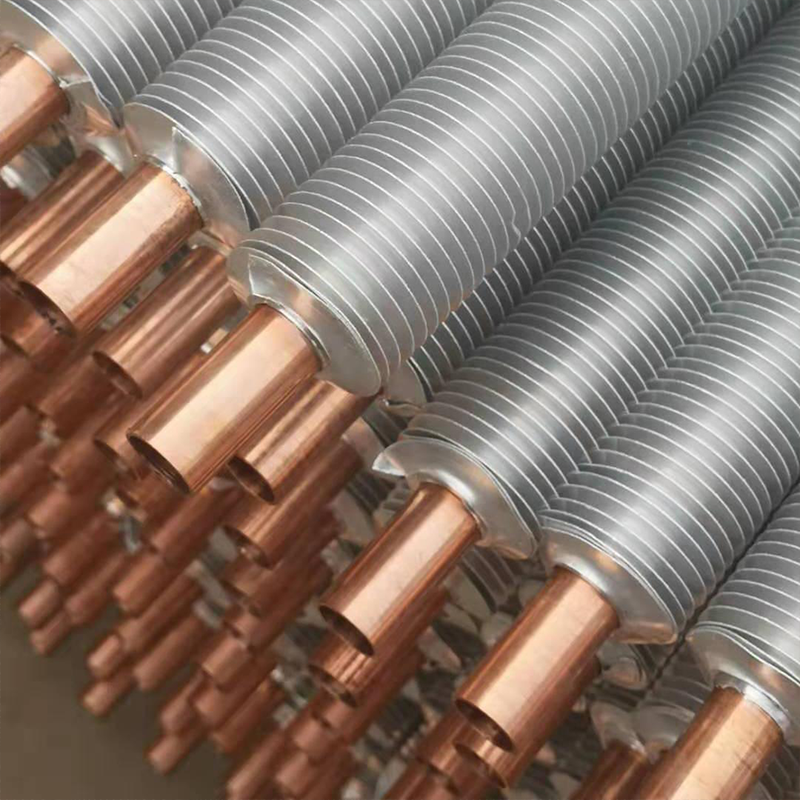
Wuxi Kaisheng Electric Power and Petrochemical Equipment LLC specializes in the development, production and supply of comprehensive solutions for the oil, gas and chemical industries. Our experience allows us to see the whole picture: while we discuss the nuances of installing PPH baths, our engineers can simultaneously offer optimal solutions for the heat exchange circuits of your production. The company's main products include titanium shell-and-tube heat exchangers, ASME high-pressure heat exchangers, 316 stainless steel corrugated tube bundles, and C46400 marine brass, copper-nickel alloy and N06625 nickel alloy products.
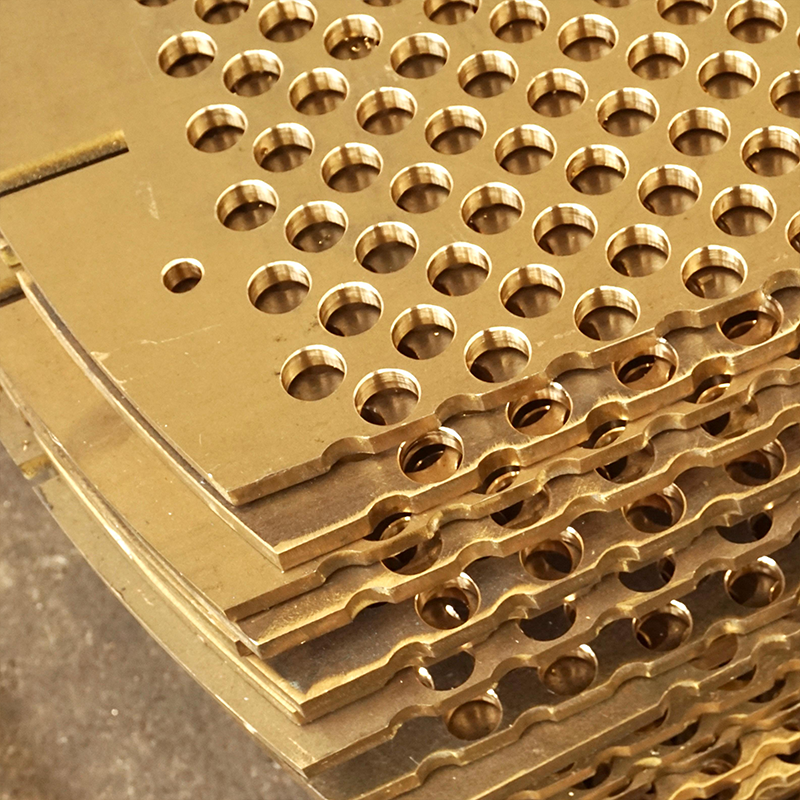
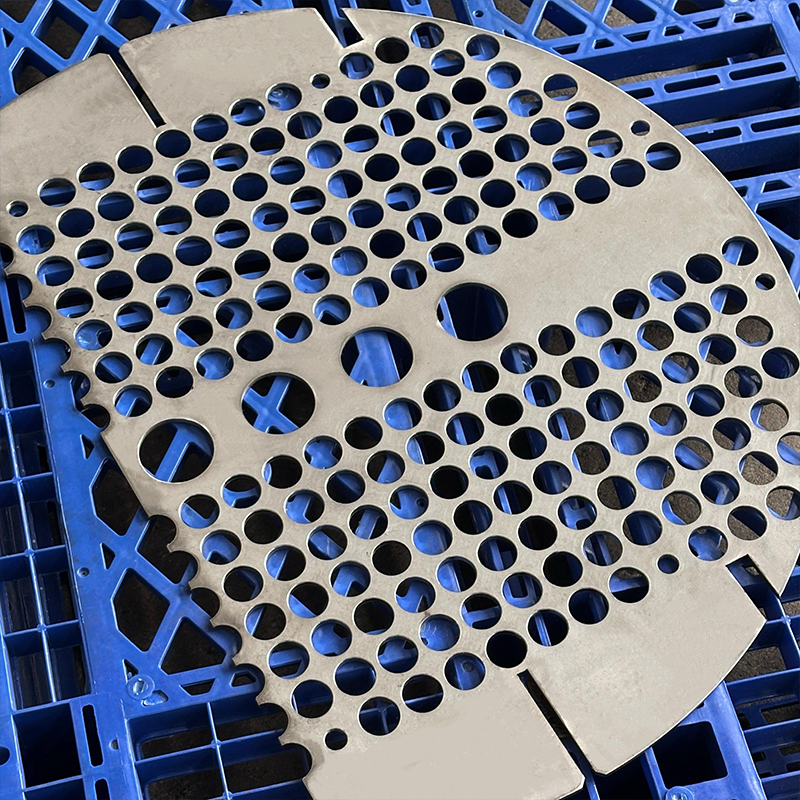
We understand that the reliability of a chemical process depends on every element in the chain. That's why we also include air coolers, recovery boilers, and critical components such as 321 stainless steel, C46400 brass, and C70600 alloy tube sheets. All products are made from carbon, stainless, alloy steel, titanium, copper and nickel alloys, undergoing strict quality control. Our products are certified to international PED and ASME standards, ensuring high corrosion resistance, heat transfer efficiency and resistance to extreme pressures and temperatures.
Whether it is seawater desalination, shipbuilding, energy conservation or complex oil refining processes, Wuxi Kaisheng Co., Ltd. provides stable equipment and customized solutions to customers around the world. Cooperation with us means that you get not just a separate unit, but a harmoniously integrated system, where polymer containers and metal heat exchangers work as a single mechanism, ensuring the uninterrupted operation of your production.
Operation and Maintenance: Extending Service Life
Installing a bathtub is just the beginning of the equipment's life cycle. In order for the investment to pay off, it is necessary to comply with the operating regulations. PPH is a reliable material, but not omnivorous. The main threat to it is ultraviolet radiation and mechanical shocks.
If the container is installed outdoors, it must either be painted with special compounds with UV filters, or covered with a casing. Under the influence of the sun, polypropylene ages, becomes brittle and loses impact strength. The service life of an open PPH container in the south of Russia without protection is reduced from 20 years to 5-7 years. We recommend that you conduct an annual inspection of the surface for chalking (the appearance of a white coating) and cracks.
An internal inspection is carried out at each production stop (every 1-3 years). It is necessary to check the condition of the seams, especially in the liquid level area, where the most intense chemical exposure and cyclic loads occur. The wall thickness is controlled by an ultrasonic thickness gauge. If the residual thickness is 10-15% less than the calculated thickness, the container must be replaced or repaired (patched).
Cleaning the container from sediment should be carried out using gentle methods. The use of metal scrapers or brushes is strictly prohibited - they leave scratches that become centers for crystallization of cracks. High pressure washers with plastic nozzles and PPH compatible chemicals are used.
Frequently Asked Questions
What is the maximum operating temperature for PPH baths?
Standard homopolymer polypropylene (PPH) is designed for long-term operation at temperatures up to +90°C...+100°C. It can withstand up to +110°C for a short time. However, when designing, we always include a margin and recommend not exceeding +80°C to ensure a 20-year service life. At higher temperatures, the creep rate of the material increases sharply, which requires increasing the wall thickness or using reinforced composites.
Can I repair cracks in a PPH bathtub myself?
Minor surface scratches can be polished out. However, any through cracks or seam damage require professional repair using a welding extruder. Do-it-yourself repairs with glue or epoxy resin are ineffective because PPH is chemically inert and adhesives do not stick to it. Repairs must be performed by a certified welder using stripping and fusion technology.
What is the production and installation time for a large bathtub (50-100 m³)?
The production time for a set of sheets at the factory is usually 2-3 weeks. Installation on site by a team of 4-6 people takes from 10 to 20 working days, depending on the complexity of the shape, the number of pipes and weather conditions. In winter, the time period may increase by 30-40% due to the need to install hot houses and heat the welding area.
Will PPH withstand a vacuum?
Conventional rectangular or cylindrical PPH baths are not designed to operate under vacuum (external pressure). The walls may collapse. If the technology requires operation under vacuum, it is necessary to use containers with stiffening ribs, stiffening rings, or choose a “vessel in a jacket” type design. This should be reflected in the design at the strength calculation stage.
Conclusion and next steps
Projects for the installation of PPH bathtubs are a document that saves your budget and reputation. A well-made container made of polypropylene lasts for decades, without requiring painting or corrosion protection, but only if installation technology is strictly followed. We have seen on hundreds of objects: savings at the stage of design and foundation preparation always result in multiple costs for emergency repairs.
Don't risk the safety of your production. Entrust the development of PPR, installation and supply of related equipment to professionals who know the specifics of working with polymers and metals in harsh conditions. The Wuxi Kaisheng LLC team is ready to audit your site, offer the optimal technical solution - from polymer tanks to complex heat exchange systems - and perform a full cycle of turnkey work with a quality guarantee.
Contact us todayto obtain advice from a process engineer and calculate the cost of the project. We will help you choose the brand of material, wall thickness, type of heat exchanger and configuration that is ideal for your tasks.
Read also our materials on the topic:Production of polypropylene containersandChemical Storage Solutions.