
Development of ultra-strong tanks made of composites”
2026-08-29
- Why composites have become the standard for extreme-duty tanks
- Engineering Material Selection: Matrix and Reinforcement
- Production technologies: From coiling to autoclaving
- Structural analysis and load modeling
- Quality control and certification according to international standards
- Economic efficiency and life cycle
- Frequently Asked Questions
- Complete solutions for the energy and petrochemical sectors
- Conclusion and next steps
Why composites have become the standard for extreme-duty tanks
The development of ultra-strong composite tanks has ceased to be an experimental niche and has become a basic requirement for industries where equipment failure spells disaster. In 2026, we see the final paradigm shift: traditional steel gives way to fiberglass reinforced plastic (GRP) and carbon fiber reinforced plastic (CFRP) where weight, corrosion resistance and maintenance-free life are critical. Our experience shows that the key mistake customers make is trying to simply replace the wall material without changing the engineering approach to calculating loads. The composite behaves differently than an isotropic metal, and ignoring the anisotropy of properties leads to delamination already at the stage of hydraulic tests.
We work with projects where containers must withstand aggressive environments at temperatures from -60°C to +120°C and pressures up to 25 bar. Standard solutions don't work here. For example, one of our clients in the oil and gas sector lost three months of downtime because the supplier used a standard vinyl ester resin instead of a modified version for a specific solvent type. The result is the penetration of the chemical through the gelcoat and destruction of the structural layer. Developing ultra-strong composite tanks requires a deep understanding of chemical compatibility at the molecular level, rather than simply choosing “bigger wall thickness.”
In this article we will analyze the full cycle of creating such containers: from choosing a matrix and reinforcement to automated winding and non-destructive testing. You will learn why ISO 9001 certifications are not enough to guarantee quality in extreme conditions and what hidden parameters affect the actual durability of a product. We draw on our own testing data and failure statistics from the last 5 years to give you practical guidance, not a marketing brochure.
Engineering Material Selection: Matrix and Reinforcement
The foundation of the reliability of any composite tank lies in the correct selection of the “matrix-reinforcement” pair. An error at this stage cannot be corrected at subsequent stages of production. In our practice, we see that 70% of premature failures are not associated with a violation of winding technology, but with the wrong choice of a chemical system for a specific environment.
Selection of polymer matrix
The polymer matrix is responsible for transferring loads between fibers and protecting them from the external environment. For heavy-duty tanks, we rarely use plain polyester resins due to their low chemical resistance and brittleness. The main players are vinyl ester and epoxy systems.
Vinyl ester resins strike the sweet spot between cost and performance. They are highly resistant to acids and alkalis due to the absence of ester groups in the polymer backbone, which are susceptible to hydrolysis. However, when designing tanks to operate at temperatures above 80°C or under high mechanical stress, vinyl esters may exhibit creep. This is where we move to epoxy resins. Epoxy provides excellent fiber adhesion and minimal cure shrinkage, which is critical to maintaining the geometric accuracy of large containers.
One of our projects for a chemical plant in Siberia required the development of a special hybrid matrix. Standard epoxy compounds became too brittle at -50°C. We incorporated thermoplastic additives into the epoxy base, which increased impact strength by 40% while maintaining temperature resistance. This solution allowed the tank to survive the winter start-up without the formation of microcracks, which usually become sources of corrosion.
When selecting a resin, always ask the manufacturer for Tg (glass transition temperature) data. If the operating temperature of your environment approaches the Tg of the resin, the elastic modulus of the material drops significantly and the tank loses its load-bearing capacity. The rule is simple: Tg should be at least 20-25°C above the maximum operating temperature.
Recommendation:Don't rely solely on chemical resistance charts. Ask your resin supplier for a long-term immersion report of samples in your specific process environment at operating temperature for 30 days.
Reinforcing elements: Glass vs Carbon fiber
The reinforcement bears the main mechanical load. For medium-pressure tanks (up to 10-12 bar), fiberglass (E-glass or more resistant C-glass/E-CR glass) is most often used. E-CR glass has superior corrosion resistance to acids and is the industry standard for the chemical industry.
However, the term “heavy-duty” in the title of our article obliges us to consider carbon fiber (Carbon Fiber). Carbon composites have an elastic modulus 3-4 times higher than that of fiberglass. This makes it possible to create tanks with extremely high pressures (25-70 bar) with minimal wall thickness. But there's a catch: carbon fiber is electrically conductive. In tanks storing flammable liquids, this creates a risk of static electricity. In such cases, we use hybrid winding: an inner layer of glass fiber for chemical protection and a dielectric barrier, and outer power layers of carbon fiber.
A critical parameter is the fiber content (Fiber Volume Fraction - FVF). In manual forming it is difficult to exceed 45-50%, while automatic winding allows you to reach 65-70%. A 15% difference in fiber content gives an almost 2-fold increase in strength. Therefore, for heavy-duty structures, the hand lay-up method is completely excluded.
We were faced with a situation where the customer insisted on using cheap roving with low quality impregnation (sizing). As a result, despite compliance with the winding technology, the interlayer shear occurred at a pressure of only 60% of the calculated one. The bond between the resin and fiber was broken at the chemical level. This proves that saving on raw materials in composite production is unacceptable.
Action:When ordering raw materials, request a quality certificate indicating the filament size (tex) and the type of sizing agent compatible with your selected resin.
Production technologies: From coiling to autoclaving
Materials are only half the equation. The second half is the technology of combining them into a monolithic structure. The development of ultra-strong composite tanks is impossible without strict control of the molding process. We mainly use two methods: automatic winding (filament winding) and vacuum infusion (VIP), depending on the geometry and surface quality requirements.
Automatic winding (Filament Winding)
This is the dominant method for cylindrical tanks and pressure vessels. Robotic heads lay the impregnated thread on a rotating mandrel at strictly specified angles. The main advantage is the highest repeatability and the ability to accurately calculate the trajectory of fiber placement for specific loads.
The process begins with the creation of an internal barrier layer (liner). This is usually a thermoplastic insert (HDPE, PP) or a layer of resin-enriched fabric that guarantees 100% sealing and chemical resistance. The robot then winds up the structural layers. The winding angle varies from 15° (to absorb hoop stresses from internal pressure) to 90° (longitudinal strength). For heavy-duty tanks, we use multi-axis winding, combining angles to create a quasi-isotropic structure where needed, such as in choke areas.
Thread tension control is a critical parameter. Too little tension will result in porosity and low resin content, too much tension will squeeze the resin out of the tow, leaving dry fibers. Our machines are equipped with laser sensors that adjust the tension in real time with an accuracy of 1 N. A deviation of just 5% can reduce the strength of the product by 10-15%.
It is important to note a limitation of the method: winding is not well suited for complex non-axisymmetric shapes. If your tank has many built-in partitions or a complex bottom shape, a clean winding will not provide high-quality impregnation of all areas. Here we combine methods.
Tip:Make sure the manufacturer uses an automatic thread cutting system as it passes through the hole areas to avoid excess material buildup and stress imbalance.
Vacuum Infusion Process
For large tanks with complex shapes or rectangular tank panels, we use vacuum infusion. Dry materials (fabrics, mats, cores) are placed in a mold, covered with a vacuum bag, and the resin is drawn in due to the pressure difference.
The advantage of VIP over hand molding is a stable resin/fiber ratio and the absence of air bubbles. We achieve voids content (porosity) of less than 1%, which is critical to prevent delamination under cyclic loads. In addition, this process is much safer for personnel, since the release of styrene is minimized.
However, infusion infrastructure requires high capital costs. We need powerful pumps, perfect tightness of the equipment and careful planning of resin supply routes. One small vacuum leak can ruin the entire batch. In our workshop we carry out a pressure drop test before each start: if the pressure rises by more than 5 mbar within 15 minutes, the cycle stops.
For heavy-duty structures, we often use sandwich panels during the infusion process. A core of PVC foam or balsa is laid between the layers of fiberglass. This increases the flexural rigidity of the structure without significantly increasing weight. For tanks operating under external pressure (vacuum tanks) or experiencing wind loads, this is the only correct solution.
Attention:When designing infusion routes, avoid dry spots in corners and around embeddings. Use spiral channels to distribute the resin.
Heat treatment and post-cure
The process does not end after removing the product from the mold. Most high-performance resins require a post-cure cycle to achieve maximum physical and mechanical properties. Heating the product to 80-120°C for several hours completes the polymerization reaction, increasing Tg and chemical resistance.
Skipping this step is a common mistake in small workshops. A tank that is not post-cured will work, but its life will be reduced by 30-40% and its solvent resistance will be less than advertised. We use programmable ovens with uniform air circulation to eliminate local overheating, which can lead to geometry deformation.
Step:Require the supplier to provide a heat treatment schedule and temperature sensor records for each unit produced.
Structural analysis and load modeling
It is impossible to develop heavy-duty tanks from composites blindly, “by eye.” Material anisotropy requires the use of composite mechanics and finite element analysis (FEA) methods. We do not use safety factors adopted for steel, since the nature of destruction of composites is fundamentally different.
Classical Lamination Theory (CLT)
The basis of our calculation is the Classical Lamination Theory. It allows you to predict the behavior of a multilayer plate under load, taking into account the orientation of each layer, its thickness and material properties. We calculate the stiffness matrices [A], [B], and [D] to understand how the structure will respond to tension, bending, and torsion.
Particular attention is paid to interlayer stresses. Unlike metal, a composite can delaminate within a stack of layers even if there is no visible damage on the outside. When designing internal pressure tanks, we make sure to check the Tsai-Hill or Tsai-Wu failure criteria for each layer separately. If at least one layer exceeds the tensile strength, the entire structure is recalculated.
In one of the projects for an offshore platform, we simulated the impact of a shock wave from a possible explosion. Standard static pressure calculations showed a safety factor of 3.0, but dynamic modeling revealed the risk of brittle failure of the upper dome due to stress concentration in the hatch area. We reinforced this area with additional carbon fiber reinforcement rings, changing the winding pattern from purely annular to spiral-annular in 15-degree increments.
Accounting for creep and fatigue
The polymer matrix is subject to creep - slow deformation under constant load. For tanks that sit full for years, this is critical. We include in the calculation the coefficient of reduction of the elastic modulus over time. The data for this is taken from long-term testing of samples (more than 10,000 hours).
Cyclic loads (filling and emptying) cause material fatigue. The fatigue strength of composites depends on the ratio of the minimum and maximum stress in the cycle (R-ratio). Our algorithms take into account the accumulation of microdamages in the matrix and at the interface with the fiber. We recommend limiting the maximum operating voltage to 20-25% of the static strength to ensure a service life of over 20 years.
Practice:When ordering a tank, provide the manufacturer with a complete load profile, including fill cycle rates and potential water hammer, not just static pressure.
Stress concentration in interface zones
The weak point of any vessel is the insertion points of fittings, hatches and supports. Here the power flow lines are bent, creating stress peaks. In metal, this is solved by thickening the wall or overlays. In composites, we use local reinforcement with embedded elements and a special fiber bypass scheme.
The embedded elements (flanges) must be integrated into the wall structure, and not simply glued on top. We use a co-bonding or co-curing method where the flange and wall are cured together as one unit. The geometry of the transition from the cylinder to the flange is made as smooth as possible, with a rounding radius of at least 5-10 mm to avoid undercutting the fibers.
We have seen cases where flanges came off along with a piece of wall due to the fact that the manufacturer skimped on the length of the overlap area. The length of the reinforcement zone should be calculated based on the shear lag length, which depends on the shear modulus of the resin and the thickness of the package.
Rule:Never place fittings in areas of maximum membrane stress (for example, exactly in the middle of a high pressure shell) without significant local reinforcement.
Quality control and certification according to international standards
Trust in composite tanks is built on transparent quality control. Since defects are often hidden within the material, visual inspection is not sufficient. Our QC system includes incoming inspection, process and final acceptance stages based on strict international standards.
Non-destructive testing (NDT)
For heavy-duty tanks we use a set of NDT methods:
- Ultrasonic flaw detection (UT):Allows you to identify delaminations, impurities and inclusions of foreign bodies within the wall thickness. We use phased array imaging (PAUT) to obtain C-scan images of the internal structure.
- Thermography:Active thermography helps detect areas with different thermal conductivity, which indicates the presence of voids or delamination from embedded elements.
- Acoustic Emission (AE):During the first hydraulic tests, we hang AE sensors on the tank. They “hear” the sound of crackling microcracks. If the emission activity exceeds the threshold values at a certain pressure, the test is stopped and the design is considered defective.
Barcol test (hardness measurement) is carried out regularly to monitor the degree of curing of the resin. Readings below normal mean that the heat treatment cycle was disrupted and the product did not reach its design strength.
Certification and Standards
Operating in international markets requires compliance with specific regulations. In Europe and Russia, the key document isGOST R 57393-2017(Polymer composites. Test methods) and European standardEN 13121(Fiberglass containers made by winding). EN 13121 divides tanks into quality classes (A, B, C) depending on the aggressiveness of the environment and the consequences of failure. For heavy-duty tanks, we always aim for Class A (the highest level of control).
For pressure vessels, compliance with the PED (Pressure Equipment Directive) in the EU or TR CU 032/2013 in the EAEU is critical. This requires not only testing of samples, but also an audit of the production quality system. The presence of the CE or EAC mark on the tank nameplate is a prerequisite for legal operation.
We also follow the standardASME RTP-1(Reinforced Thermoset Plastic Corrosion-Resistant Equipment) for projects working with American partners. This standard details tolerances on geometry, surface quality and qualification procedures for welders (in this case, winding operators).
It is important to understand: the ISO 9001 certificate only means that the plant has documents. It does not guarantee the quality of a particular product. The guarantee is provided by test reports of a specific batch and the presence of an accredited inspection body (Notified Body), which signed the product passport.
Action:Before concluding a contract, request copies of current PED/TR CU certificates and examples of ultrasonic testing protocols for similar products from the manufacturer.
Economic efficiency and life cycle
Many buyers reject composite tanks at the budget stage, comparing only the purchase price (CAPEX). This is a strategic mistake. The development of heavy-duty composite tanks is focused on minimizing the total cost of ownership (TCO) over a 20-30 year horizon.
Reduced installation and logistics costs
The weight of a composite tank is 15-20% of the weight of a steel counterpart of the same strength. This radically changes logistics. Shipping a 100 m³ steel tank often requires heavy equipment and reinforced roads. The composite container can be delivered on a standard manipulator. Moreover, installation does not require heavy cranes. Installation is often done manually or using a light winch.
At one of the sites in a remote area of the North, savings on crane rental and foundation preparation amounted to 40% of the cost of the tank itself. A steel foundation for a lightweight composite container is also cheaper and simpler.
No corrosion and zero maintenance
Steel tanks require regular painting, replacement of cathodic protection and repair of corroded areas. The average service life of painted steel in an aggressive environment is 7-10 years before major repairs. A composite tank lasts 50 years or more without anti-corrosion treatment.
Calculations show that by the 7th year of operation, the total costs of a steel tank (purchase + 2 paintings + downtime for repairs) exceed the cost of a composite analogue. Further, the savings become the net profit of the enterprise.
In addition, the smooth internal surface of the composite (especially when using a thermoplastic liner) reduces hydraulic resistance and prevents sediment from pouring. This reduces energy costs for pumping fluid and the frequency of cleaning.
Recycling and ecology
There is a myth about the difficulty of recycling composites. Yes, recycling is more difficult than steel, but modern technologies make it possible to grind waste tanks and use the crumbs as a filler in concrete or road construction. In addition, a long service life means that the issue of disposal will not arise soon, and the absence of toxic corrosion products during the entire service life is a significant plus for an environmental audit of an enterprise.
Conclusion:Consider the project budget for 20 years in advance, and not at the time of shipment. The composite wins where reliability and lack of downtime are important.
Frequently Asked Questions
What is the maximum size of a composite tank that can be produced?
There are practically no technological restrictions on size; they are dictated by logistics. We produce tanks with a diameter of up to 4.5 meters and a length of up to 14 meters for transportation by road. For large volumes, it is possible to manufacture in sections at the installation site (field fabrication) with subsequent joining. In our practice, there were projects of tanks with a volume of more than 2000 m³, assembled directly on the customer’s foundation using the vacuum infusion method.
Do composite tanks withstand fire?
Standard polyester and vinylester resins are flammable. However, for critical objects we use special fire-retardant additives (fire retardants) or use phenolic resins, which have inherent fire resistance. When heated, phenolic composites form a coke layer that protects the structure and emit a minimum of smoke. Such tanks are tested for fire resistance according to ISO 22899 standards (oil spill fire). It is important to remember that even a fire-resistant composite will lose strength if exposed to an open flame for a long time, so a fire extinguishing system remains mandatory.
Can a composite tank be repaired if damaged?
Yes, maintainability is one of the advantages of the material. Local damage (through holes, cracks) is eliminated by applying patches from similar materials directly at the site of operation. The repair technology is simple: cleaning the area, applying resin, laying layers of fabric, vacuuming and curing. We supply customers with patch kits with instructions. Deep structural damage requires factory repair with repeated pressure testing.
How does the composite behave at subzero temperatures?
Unlike steels, which become brittle in the cold, composites retain their mechanical properties at extremely low temperatures (down to -60°C and below). The coefficient of thermal expansion of composites is close to zero or even negative along the fibers, which eliminates thermal stresses due to temperature changes. The only limitation is the choice of resin: it must have a low glass transition temperature and high impact strength. The right composite is ideal for cryogenic applications and northern applications.
How long does it take to produce a tank?
Production time depends on complexity and volume. A standard 50 m³ tank is produced in 4-6 weeks. This includes time for tooling production (if new), winding, heat treatment and testing. Large custom projects can take 3-4 months. This is faster than manufacturing unique steel tanks with a high degree of anti-corrosion protection, where welding and painting take a lot of time. Automation of winding processes allows us to scale production without a linear increase in terms.
Complete solutions for the energy and petrochemical sectors
Although this article focuses on composite tanks, modern industrial facilities require the integration of various types of high-tech equipment. The reliability of the entire system often depends on the coordinated operation of storage tanks and heat exchange units. This is where companies that can provide a full range of solutions for extreme operating conditions come into the picture.
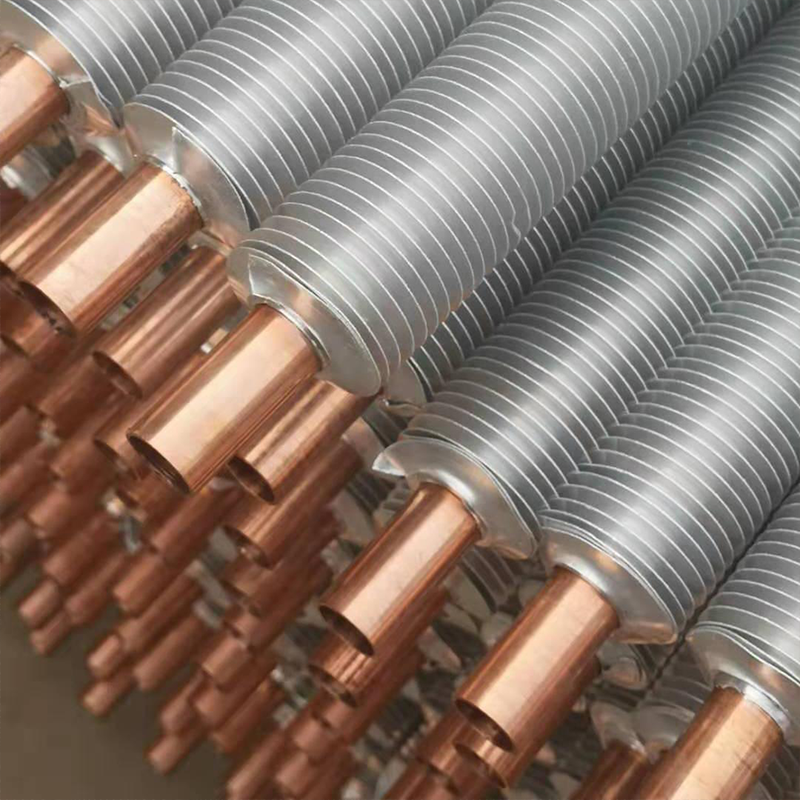
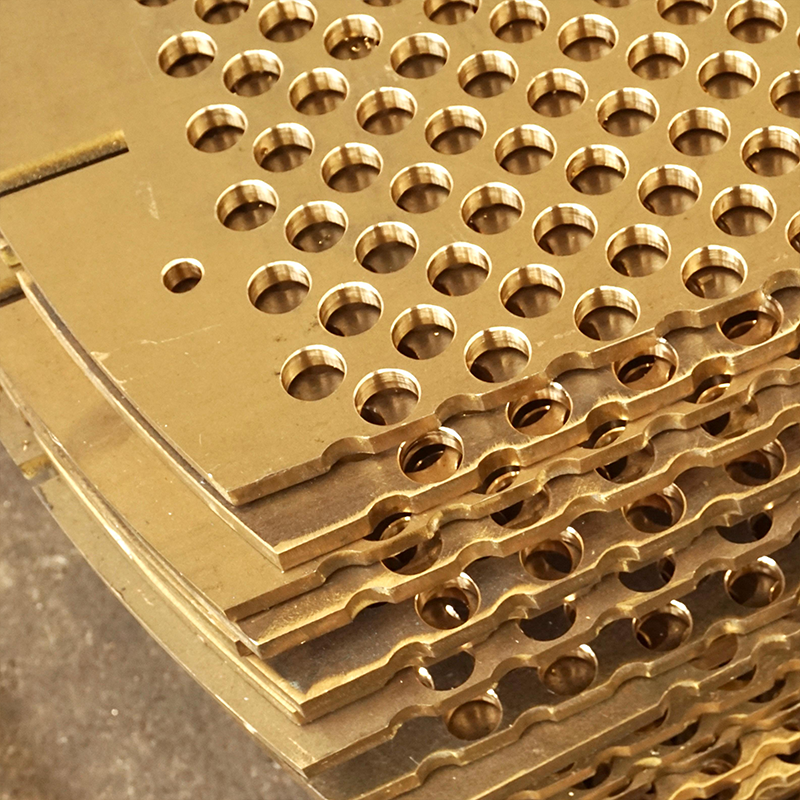
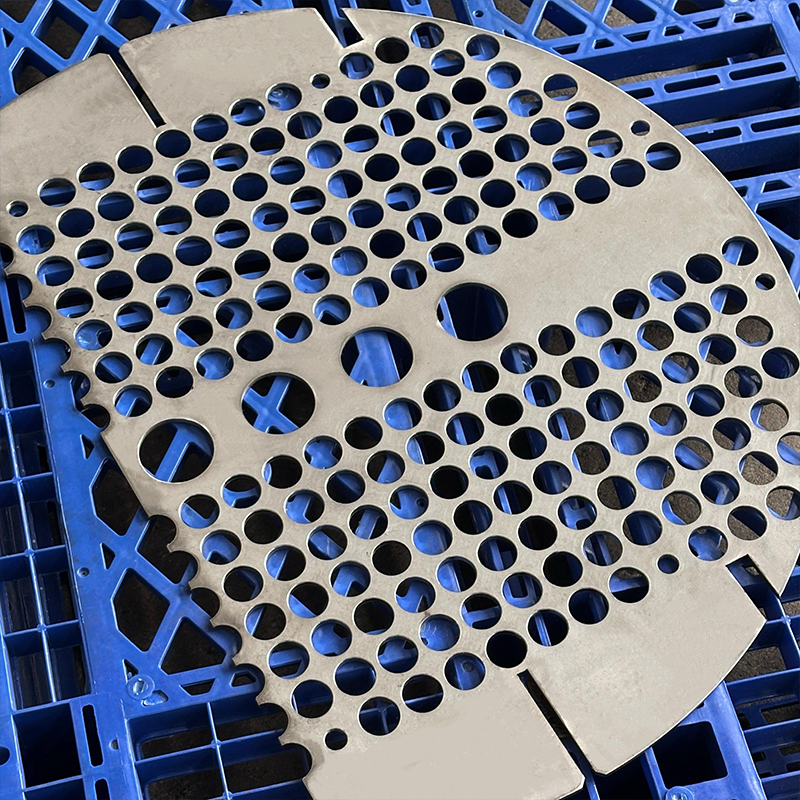
A striking example of this approach isWuxi Kaisheng Electric Power and Petrochemical Equipment Co.,Ltd" Specializing in the design and manufacture of mission-critical equipment, the company successfully combines competencies in working with composites and advanced metal alloys. Their portfolio includes not only tanks, but also complex heat exchange systems: titanium shell-and-tube heat exchangers, ASME high-pressure units, 316 stainless steel corrugated tube bundles, as well as C46400 marine brass, copper-nickel and N06625 nickel alloy solutions.
Wuxi Kaisheng products are made from a wide range of materials - from carbon and alloy steel to titanium and special alloys, which allows them to meet the needs of a wide variety of industries: from oil refining and the chemical industry to seawater desalination and shipbuilding. Particular attention is paid to certification: equipment meets strict international PED and ASME standards, guaranteeing resistance to high pressure, extreme temperatures and aggressive environments. This integrated approach allows customers around the world to receive not just individual pieces of equipment, but stable, custom-designed solutions that keep their businesses running smoothly for decades.
Conclusion and next steps
Developing heavy-duty composite tanks isn't just about replacing metal with plastic. This is the introduction of a high-tech engineering product that requires competencies in chemistry, mechanics and automated production. As we have shown, the benefits of corrosion resistance, lightness and durability outweigh the higher initial cost, especially in the context of the equipment life cycle.
The market is moving towards the use of composites in the most critical areas. Those who ignore this technology today will face increased costs tomorrow to maintain aging steel assets. The key to success is a partnership with a manufacturer who owns the full cycle: from in-house R&D and laboratory testing to certified production and installation supervision.
If you are faced with the challenges of storing aggressive media, working under high pressure or operating in extreme climates, standard solutions may become your weak link. We are ready to audit your technical specifications and offer an optimized solution based on composite materials that will last for decades.
Contact us todayto discuss the details of your project and receive a preliminary estimate of costs and time frames. Our engineers will help you choose the optimal configuration of materials and design for your specific requirements.
For a more in-depth look at the topic, we recommend checking out our technical guide tochoosing the type of composite tankand implementation cases in the oil and gas industry.