Ventilation systems for acid tanks”
2026-08-18
- Why Standard Ventilation Doesn't Work for Acid Tanks
- Key GOST requirements and safety standards for design
- Technical parameters and calculation of system performance
- Air purification systems: scrubbers and emission neutralization
- Typical installation and operation errors
- Cost of ownership and business case
- Frequently Asked Questions
- Conclusion and recommendations for choosing a supplier
Why Standard Ventilation Doesn't Work for Acid Tanks
Ventilation systems for acid tanks are more than just a collection of pipes and fans, but are a critical safety element in chemical production. In our practice, we have repeatedly encountered situations where enterprises tried to save money by installing conventional industrial hoods designed for dust or neutral vapors. The result was always predictable: corrosion of the fan casing occurred after only 3-4 months of operation, and in one case at a sulfuric acid plant, the destruction of the impeller led to an emergency release of vapors and a line shutdown for two weeks. Losses amounted to more than 15 million rubles due to downtime alone, not counting the costs of replacing equipment and fines from environmental services.
The main mistake is not understanding the chemical aggressiveness of the environment. Acidic vapors, whether hydrochloric, sulfuric or nitric acid, are highly penetrating and reactive. Regular galvanized steel or even some grades of stainless steel cannot withstand prolonged contact with condensation that forms inside the air ducts due to temperature changes. When you select a system, you are essentially choosing between safe production and the constant struggle with leaks and breakdowns. A properly designed system must take into account not only the volume of air removed, but also the dew point, the concentration of acid aerosols and the material of the structural components at the molecular level.
In this article, we will look at the technical nuances that distinguish professional solutions from amateur approaches. We rely on real experience in installing and servicing hundreds of facilities in Russia and the CIS countries, where climatic conditions vary from moderate to extremely cold. You will learn why the power reserve factor is important specifically for acidic environments, how to choose the right air duct material, and what mistakes 90% of customers make when drawing up technical specifications. Our goal is to give you specific decision-making tools that will protect your business from unexpected costs and ensure compliance with stringent health and safety regulations.
Key GOST requirements and safety standards for design
The design of ventilation for containers with acids is regulated by a strict set of rules, ignoring which leads to legal liability for the management of the enterprise. In the Russian Federation, the main document is SP 60.13330.2020 “Heating, ventilation and air conditioning”, which directly indicates the need to use corrosion-resistant materials for systems that remove explosive or chemically active substances. In addition, it is necessary to be guided by GOST 12.4.021-75, which defines the requirements for ventilation systems for work areas. These standards are not advisory; they represent a minimum threshold for entry into the industry, below which operation of the facility is prohibited.
One of our clients, a large fertilizer manufacturer, encountered a problem when passing the Rostekhnadzor inspection. Their ventilation system formally met the design air flow rates, but the inspector identified the lack of spark-safe design of the electric motors in the area of possible accumulation of hydrogen compounds. This led to an order to completely shut down the workshop. The situation was aggravated by the fact that the project was made five years ago, when the standards were interpreted differently, but current legislation requires bringing facilities into compliance with current standards. We helped them audit and upgrade the system by installing Ex-rated motors and replacing sections of ductwork with polypropylene, allowing them to pass the re-inspection the first time.
When calculating the system, it is important to take into account not only the MPC (maximum permissible concentration) of substances, but also the air exchange rate, which for acidic areas often exceeds standard values. For example, for acid storage rooms the frequency can reach 8-10 times per hour, while for conventional warehouses it is 1-2 times. This creates an increased load on the equipment, requiring precise aerodynamic calculations. An error in calculating the network resistance by even 10% can lead to the fact that the fan will not be able to provide the required flow, and the vapor concentration will exceed a safe level. Therefore, we always recommend computer simulation of air flows before purchasing equipment.
Another critical aspect is the organization of air intake points. According to the standards, suction points must be located directly above the source of emissions, that is, above tank hatches or drainage areas. The distance from the source to the bell should not exceed certain values, otherwise the vapors will have time to dissipate throughout the room before being removed. In practice, we have seen cases where, due to improper placement of umbrellas, system efficiency dropped by 40-50%, despite powerful fans. Correcting such an error often requires not just replacing equipment, but rebuilding part of the production lines, which is extremely expensive.
Documentation for the ventilation system must include a passport indicating the corrosion resistance class of materials and certificates of conformity for all components. The absence of these documents makes it impossible to legally operate the facility. When ordering equipment from a supplier, be sure to request that materials be tested for resistance to specific types of acids used in your production. Universal certificates “for all occasions” do not work in this area, since resistance to hydrochloric acid does not guarantee resistance to hydrofluoric acid. Checking whether the documentation matches the actual work environment is your first line of defense when accepting work.
Materials: Polypropylene vs Stainless steel
The choice of material for ducts and fan housings is a fundamental decision that determines the lifespan of the entire system. Two main options dominate the market: polypropylene (PP) sheets and AISI 304 or 316 stainless steel. Each has its own advantages and limitations, and the choice depends on your specific production technology. Polypropylene has absolute chemical inertness to most inorganic acids, including hydrochloric, sulfuric and phosphoric, over a wide range of concentrations and temperatures. It is not subject to electrochemical corrosion, is easier to install due to hot air welding and is about 30-40% cheaper than stainless steel.
However, polypropylene has a significant drawback - low mechanical strength and sensitivity to ultraviolet radiation. If air ducts are laid outdoors without protection from the sun, the material will begin to degrade within 2-3 years, becoming brittle. In addition, at temperatures above 80-90°C, polypropylene loses its rigidity and can be deformed under its own weight or air pressure. In one project in northern Russia, we encountered a situation where a polypropylene duct in an open area cracked during a heavy snowstorm due to a combination of low temperatures (although PP is frost-resistant, shock loads at -40°C are critical) and accumulated snow. This highlights the need for careful analysis of operating conditions.
Stainless steel, especially AISI 316 with molybdenum, offers high mechanical strength and fire resistance. It is able to withstand high gas temperatures and is not afraid of external mechanical influences. However, the cost of such a system is much higher, and welding requires qualified specialists and argon protection of the seams. The main problem with stainless steel in acidic environments is the risk of pitting (pitting) corrosion at welds if the welding technology has been violated. Even a microscopic defect in a seam becomes a source of destruction, which can lead to through corrosion of the pipe within six months. We strongly recommend requiring the contractor to carry out certification of welds and check their quality.
For particularly aggressive environments, such as hydrofluoric acid, which corrodes even glass and many metals, the only viable option is specialized polyvinyl chloride (PVC) or fluoroplastic coatings. Steel in contact with fluorine is destroyed almost instantly. In such cases, composite solutions are often used: a supporting frame made of steel for strength and an internal lining made of chemically resistant plastic. This approach allows you to combine structural reliability with chemical protection, but increases the complexity of installation and the cost of work. When selecting a material, always request a chemical resistance chart from the manufacturer and check it against the actual composition of your processes.
It is also important to consider fire safety. Polypropylene belongs to flammable materials (group G2-G3), therefore, when laying transit air ducts through fire hazardous areas or other premises, the installation of fire-retarding valves and fire-retardant coatings is required. Stainless steel is preferable in this regard, as it is a non-flammable material. The decision on the choice of material must be made at the intersection of the requirements of technologists, ecologists and fire inspectors. Compromises are unacceptable here, since the cost of a mistake is measured in human lives and the integrity of the enterprise.
Technical parameters and calculation of system performance
Calculating ventilation system performance for acid tanks is a complex engineering process that cannot be reduced to simple textbook formulas. The main parameter is the volumetric air flow (Q), measured in cubic meters per hour (m³/h). It is determined based on the mirror surface area of the acid in the tank, the intensity of evaporation and the permissible concentration of vapors in the working area. The formula is simple: Q = S × V, where S is the surface area and V is the speed of air moving over the surface. However, in practice, the value of V varies from 0.5 to 1.5 m/s depending on the volatility of the acid and the presence of convection currents in the room.
A critical factor that is often overlooked is the aerodynamic drag of the network. Every turn of the duct, adapter, filter and muffler creates a loss of pressure. For acid systems, this resistance is usually higher than for conventional systems due to the need to install additional cleaning elements (scrubbers) and the use of smaller diameter ducts to maintain high flow rates (to prevent condensation deposition). The pressure loss in the system can reach 1000-1500 Pa, which requires the selection of fans with high static pressure. The use of household or general industrial fans designed for 200-300 Pa in such conditions will lead to zero effect.
The speed of air movement in the ducts also plays a key role. To remove acid vapors, it is recommended to maintain a speed of at least 10-12 m/s in the main channels and at least 0.7-1.0 m/s in the branches. Low speed leads to condensation inside the pipes, which accumulates at the lowest points and begins to corrode the material from the inside. High speed, in turn, increases noise and power consumption. Balancing a system is the art of finding the golden mean. We use specialized hydraulic calculation software that allows us to accurately determine the diameter of each pipe section and pressure loss, eliminating the "estimate" method.
The operating temperature of the equipment also requires attention. Acid processes are often accompanied by the release of heat, which changes the air density and, therefore, the actual performance of the fan. A fan selected according to characteristics for cold air (20°C) when working with gases at a temperature of 60°C will produce 15-20% less mass flow, although the volume flow will remain the same. This may result in insufficient removal of contaminants. Therefore, in the technical specifications, always indicate the maximum operating temperature of the medium. In addition, seal and bearing materials must be rated for this temperature range.
System energy efficiency is another important parameter that affects operating costs. Acid ventilation operates 24 hours a day, and the electricity consumption of the motors can be a significant budget item. The use of frequency converters (VFDs) allows you to adjust productivity depending on the operating mode of the tanks (for example, reduce speed during downtime or repairs). This gives energy savings of up to 30-40%. However, VFDs must have the appropriate protection class and harmonic filters so as not to cause interference in the plant network. Investments in automation usually pay off in 1.5-2 years due to lower electricity bills.
Selection of ventilation equipment: types and features
The heart of any ventilation system is the fan. Not all types of structures are suitable for acidic environments. The most common solution is radial (centrifugal) fans in a corrosion-resistant design. They are capable of generating the high pressure required to overcome the resistance of scrubbers and long duct runs. The impeller of such fans is made of polypropylene or fiberglass, and the housing is made of the same materials or painted steel with an internal lining. It is important to pay attention to the design of the shaft seal: it must prevent aggressive vapors from entering the engine compartment where the electric motor is located.
Duct fans are also used, especially in cramped conditions when there is no space to install bulky radial machines. However, their use is limited by pressure and temperature. For acidic environments, duct fans must be made entirely of plastic or have a special coating. The weak point of such devices is often the bearing units, which are located outside the air flow, but require reliable insulation. In our practice, there was a case when a cheap duct fan failed after a month because vapors penetrated through the seals and oxidized the motor winding contacts, despite the declared IP54 protection.
Roof fans are convenient because they allow polluted air to be released directly into the atmosphere without long horizontal sections of air ducts where condensation could accumulate. However, for acidic emissions, this solution requires the installation of a scrubber directly in front of the fan or the integration of a neutralization system into the unit itself. Simply releasing acid fumes on the roof is prohibited by environmental regulations. In addition, maintenance of rooftop installations is difficult in winter, especially in regions with heavy snowfall. Access to equipment must be provided for by the project in advance.
When selecting a motor, it is necessary to take into account the explosion protection class if explosive mixtures may be formed during the process (for example, when working with certain organic acids or hydrogen). The Ex d IIB T4 or equivalent marking indicates that the motor is safe for use in such areas. Conventional sparking engines are strictly prohibited. It is also worth paying attention to the insulation class of the windings (preferably F or H), which will provide a margin of safety during overloads and high ambient temperatures. Saving on engine class in an aggressive environment is a false economy, leading to frequent replacements.
Air purification systems: scrubbers and emission neutralization
Removing acid fumes from a room is only half the task. The second, no less important part is cleaning the exhaust air before entering the atmosphere. Direct release of acid aerosols is prohibited by health regulations and can result in severe fines and lawsuits from neighboring businesses or nearby residents. The main cleaning device is a wet scrubber (gas scrubber). The principle of its operation is based on the contact of a contaminated gas stream with an irrigating liquid (usually water or an alkaline solution), which absorbs acidic vapors.
Packed scrubbers are considered the most effective for acidic environments. Inside the body there is a special nozzle (Raschig rings, Berl saddles, etc.), which increases the contact area of gas and liquid. Gas is supplied from below, liquid is sprayed from above. Passing through the packing layer, the gas is intensively washed by the liquid, and the acid goes into solution. The efficiency of such devices reaches 95-99% with the correct selection of the nozzle layer height and irrigation density. However, they create significant aerodynamic drag, which must be taken into account when selecting a fan.
Venturi scrubbers are used to capture fine aerosols and mists that are difficult to remove in nozzles. In the Venturi tube, the gas accelerates to high speeds, crushing the liquid into tiny droplets, which ensures excellent contact. Such systems are compact, but consume more energy due to high hydraulic resistance. A combination is often used: first a packed scrubber to remove the bulk of the vapor, then a Venturi scrubber to remove the final mist. This two-stage scheme guarantees compliance with the most stringent MPE (maximum permissible emission) standards.
An important element of the cleaning system is the circulation tank and pump group. The liquid in the scrubber gradually becomes saturated with acid and loses absorption efficiency. A system for automatically controlling pH and dosing a neutralizing reagent (usually caustic soda NaOH or lime) is required. Discharge of the used solution must also be organized in accordance with environmental requirements - either into the industrial wastewater system of the enterprise (if it has its own treatment), or into special containers for subsequent disposal. You can’t just pour the acidic solution down the drain.
The scrubber material must be even more resistant than the air ducts, since a direct interaction of concentrated acid, alkali and water occurs inside the device simultaneously. Polypropylene is again the leader here. Scrubber bodies are often extruded from 10-20mm thick sheets to ensure mechanical strength. All internal elements, including nozzles and distribution grids, must also be plastic. Metal elements, even coated ones, do not last long in such an aggressive “mess”.
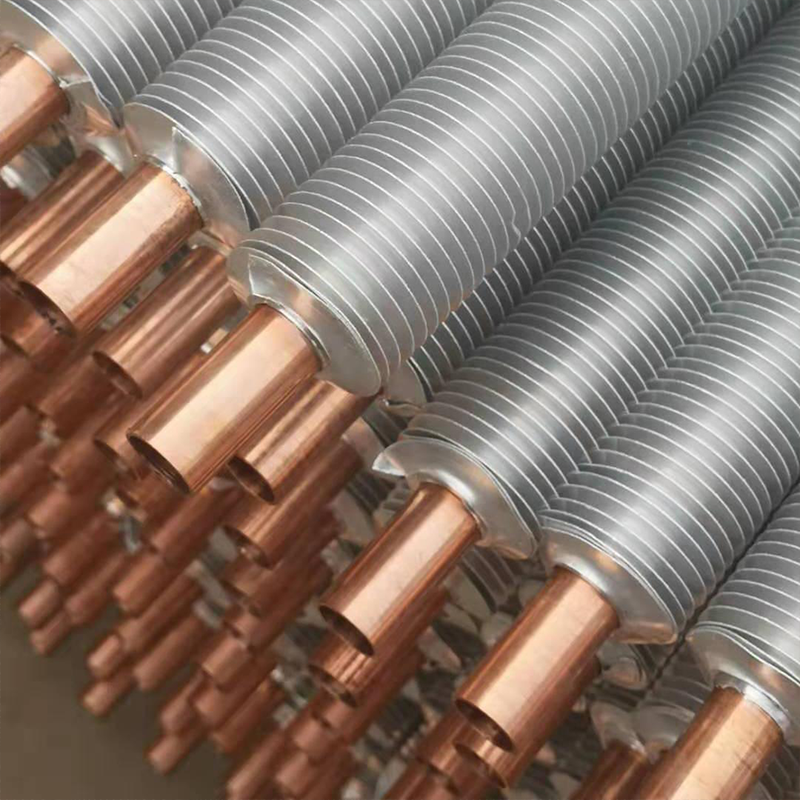
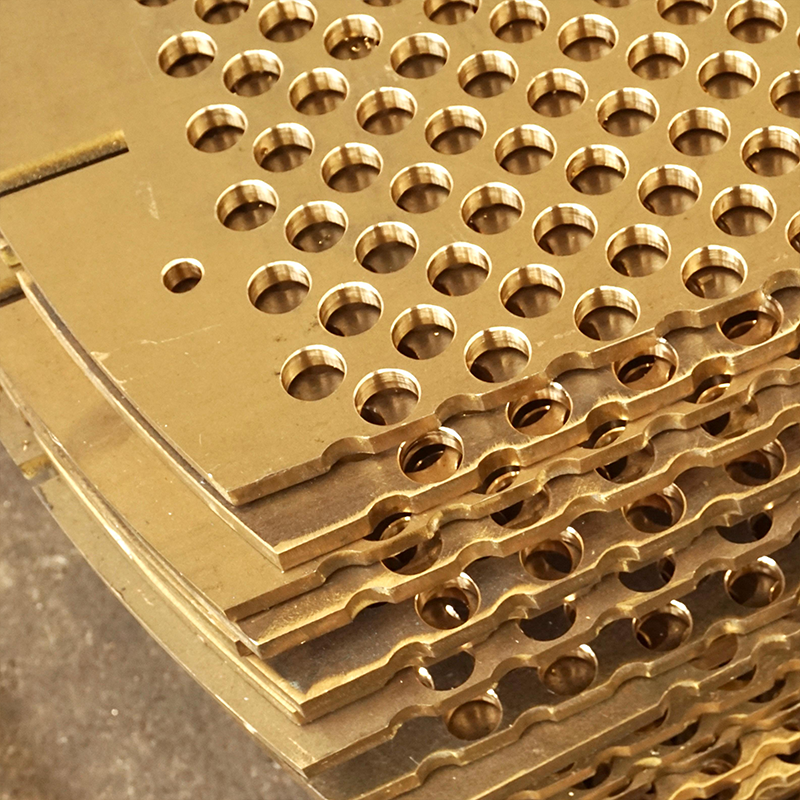
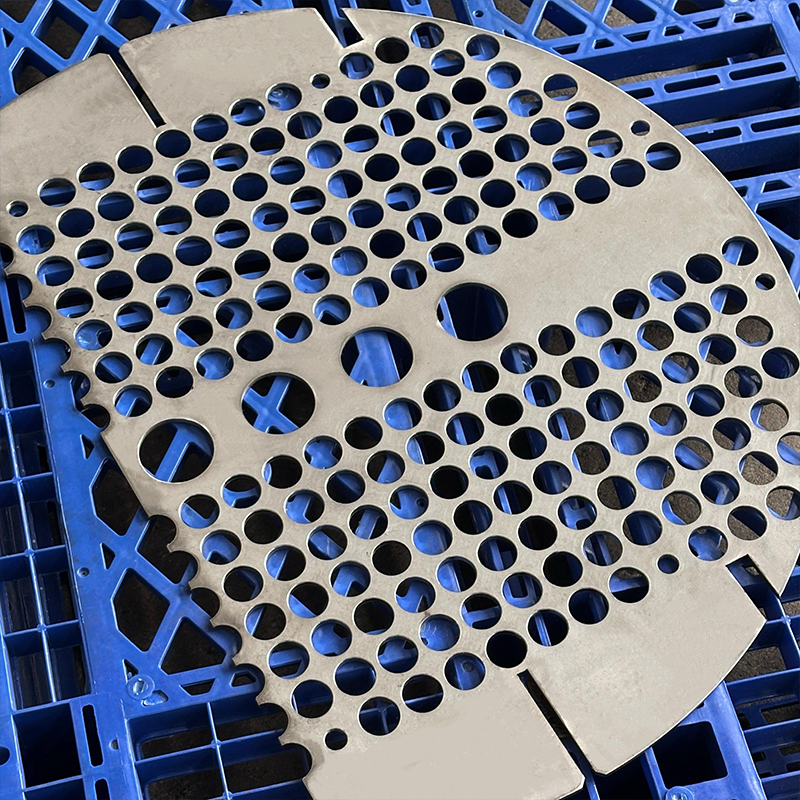
It is the question of choosing materials with exceptional corrosion resistance that links the efficiency of ventilation with the reliability of the entire technological cycle of the enterprise. Here you cannot skimp on the quality of raw materials. For example, a companyWuxi Kaisheng Electric Power and Petrochemical Equipment Co., Ltd.specializes in the development and production of high-tech components for aggressive environments, whose experience directly intersects with the tasks of acid ventilation. While their core products include titanium shell-and-tube heat exchangers, air coolers and waste heat boilers, a key competency is working with materials that can withstand extreme conditions: nickel alloys (N06625), C46400 marine brass, cupro-nickel alloys and various grades of stainless steel (316, 321). Certification to ASME and PED standards ensures that their products have the same resistance to high pressure, temperature and chemical corrosion required for long-lasting gas cleaning systems. Understanding the properties of these alloys used in the petroleum refining and chemical industries worldwide helps engineers make informed choices not only for heat exchange equipment, but also for critical ventilation system components where metal meets acid.
Typical installation and operation errors
Even a perfectly designed system can be ineffective or dangerous due to installation errors. One of the most common problems is a violation of the tightness of air duct joints. Acid vapors have a high penetrating ability and find the smallest cracks. The use of conventional rubber seals is unacceptable, as they quickly collapse. It is necessary to use specialized acid-resistant sealants and flange connections with the correct bolt torque. In our practice, there was a case when, due to a leaky flange in the ceiling of the office extension to the workshop, condensate leaked, which led to damage to the finish and corrosion of building structures.
Improper organization of the slope of air ducts leads to stagnation of condensate. Pipelines must have a slope of at least 2-3% towards condensate collection (pockets or scrubber). Horizontal sections without a slope turn into reservoirs of aggressive liquid, which over time burns through the bottom of the pipe. Pockets for collecting condensate should be equipped with convenient fittings for regular draining. Ignoring this requirement is a direct road to an accident. Condensate should be removed automatically or according to regulations, but not by gravity in an unknown direction.
The lack of vibration isolation between the fan and the air duct transmits vibration to the entire network, which leads to the destruction of fasteners and the appearance of cracks in plastic elements. Vibration also accelerates fatigue failure of metal in supporting structures. Installation of flexible inserts made of acid-resistant rubber or fabric is required. In this case, it is necessary to ensure that the material of the insert matches the chemical composition of the medium. Ordinary rubber in an acidic environment will crumble into crumbs in a couple of months.
In operation, the main mistake is the lack of regular maintenance. Scrubbers need to constantly check the liquid level, reagent concentration and cleanliness of the nozzles. Clogged nozzles reduce cleaning efficiency to zero, although the fan continues to operate. Pressure sensors on filters and scrubbers must be in good working order and calibrated. We recommend keeping a maintenance log recording all parameters every shift. Preventative repairs are always cheaper than disaster recovery after a blowout or fire.
Cost of ownership and business case
When purchasing a ventilation system for acid tanks, many customers look only at the price of the equipment “here and now.” This is a strategic mistake. Cost of Ownership (TCO) includes purchase price, installation price, lifetime energy consumption, maintenance costs, repairs and possible penalties. A cheap system made from low-quality materials will fail in a year, requiring complete replacement. An expensive, but well-designed system made of high-quality polypropylene lasts 15-20 years without major repairs. The difference in initial costs is leveled out already in the third year of operation.
Energy efficiency plays a huge role. Fans consume electricity 24/7. The difference in engine efficiency and impeller aerodynamics between a budget and premium model can be 10-15%. For a powerful installation, this is tens of thousands of kilowatt-hours per year. The use of frequency control and heat recovery (where possible) further reduces operating costs. When calculating the project budget, be sure to forecast energy costs 5 years in advance. It often turns out that more expensive equipment with high efficiency pays for itself faster due to savings on electricity.
Maintenance costs also depend on the quality of the system. Reliable scrubbers with automation require minimal operator intervention. Cheap analogues require constant manual adjustment, adding reagents and cleaning clogged nozzles. Production downtime due to ventilation failure costs the enterprise millions of rubles per day. The risk of production interruption must be built into the economic model as a potential loss. Insurance companies also pay attention to the state of security systems: the presence of modern certified ventilation can reduce the property and liability insurance rate.
Investment in quality ventilation is an investment in the company’s reputation. Modern environmental standards and public oversight make it impossible to hide emissions. An enterprise that cares about the environment and employee safety looks more attractive to investors and partners. Fines for violations of environmental legislation are growing every year, and in 2025-2026 control over industrial emissions is expected to become stricter. It is better to spend money on preventing problems than to pay huge fines and compensate for damage to people's health.
Frequently Asked Questions
What is the service life of a polypropylene ventilation system?
With proper operation and absence of mechanical damage, the service life of a polypropylene ventilation system is 15-20 years. Polypropylene does not rust and is not susceptible to chemical corrosion in acidic environments. However, the service life is affected by installation conditions (UV protection, thermal expansion) and the quality of welds. Regular maintenance and avoidance of temperature overloads also extend the life of the equipment. Unlike metal systems, which can rot in 3-5 years, plastic retains its properties for decades.
Can regular galvanized vents be used for weak acids?
No, the use of galvanized steel for any acidic vapors is strongly discouraged. Even weak acids (for example, acetic acid) in the form of condensate cause rapid corrosion of the zinc coating. Once the zinc layer is destroyed, the steel itself begins to corrode, leading to holes and leaks. The service life of such a system in an acidic environment rarely exceeds 6-12 months. Saving on material will result in multiple replacement costs and the risk of accidents. The only exception is dry acidic dusts under certain conditions, but this does not apply to vapors.
How often should the scrubber solution be changed?
The frequency of replacement or regeneration of the solution in the scrubber depends on the intensity of the system and the volume of the tank. In automated systems, replacement occurs continuously or in batches based on a signal from the pH sensor. Typically, a complete solution renewal cycle takes from several hours to a day with intensive work. In manual mode, control is carried out daily. The solution should not be allowed to become saturated, as this sharply reduces the cleaning efficiency. The replacement schedule must be approved in the enterprise regulations based on specific technological processes.
Is it necessary to coordinate the ventilation project with supervisory authorities?
Yes, the design of a ventilation system for hazardous production facilities is subject to an industrial safety review and approval by Rostechnadzor. It is also required to obtain permits from Rospotrebnadzor (for compliance with sanitary standards) and environmental authorities (for emissions). Unauthorized installation or modernization without a project entails administrative and criminal liability. The project must be carried out by an organization that has the appropriate SRO approvals. This ensures that the system is safe and legal.
Conclusion and recommendations for choosing a supplier
Selecting a ventilation system for acid tanks is a task that requires a comprehensive engineering approach, and not just the purchase of hardware. The safety of people, the safety of equipment and the environmental reputation of your business depend on the right decision. Do not take risks by entrusting installation to untested teams without experience working with chemically aggressive environments. Mistakes in this area are too expensive. Contact specialists who can provide not only equipment, but also a full range of services: from audit and design to installation supervision and commissioning.
We recommend starting cooperation with a detailed technical audit of your facility. Only understanding the specifics of your processes will allow you to choose the optimal solution. Avoid universal sentences “for all occasions”, as there are no nuances in chemistry. Request a reference list from the supplier of properties similar to yours, and don't hesitate to contact their clients for feedback. Real operating experience in Russian conditions is the best guarantor of quality. As with the selection of suppliers of complex heat transfer equipment, where every detail of the alloy and certification is important, the approach to ventilation must be equally careful.
If you are considering upgrading an existing system or building a new site, contact us today for a consultation. Our engineers are ready to visit the site, take measurements and offer the most effective and economically sound solution. Remember that proper ventilation is not an expense, but an investment in the stability and safety of your production.Contact us todayto discuss the details of your project and receive an individual commercial offer.