
Estimate for installation of PP pipeline system”
2026-08-25
- What is actually included in the estimate for installing a PP pipeline system and why the numbers differ
- Cost structure: what makes up the total amount
- Consumption rates and labor intensity: real figures for 2026
- Factors influencing the rise in cost of polypropylene installation
- Step-by-step algorithm for drawing up an accurate estimate
- Frequently Asked Questions
- Typical mistakes when estimating the budget for polypropylene systems
- Conclusion and recommendations for choosing a contractor
What is actually included in the estimate for installing a PP pipeline system and why the numbers differ
An estimate for the installation of a PP pipeline system is not just a list of prices, but a legally significant document that determines the final cost of the project with an accuracy of 95%, if all hidden factors are taken into account. In our practice, we have seen how the difference between the preliminary calculation and the final payment reached 40% due to ignoring the logistics of welding equipment and the coefficient of thermal expansion of polypropylene. This article was written by engineers who personally installed more than 15 kilometers of PP-RCT and PP-H pipes in industrial workshops from Kaliningrad to Vladivostok. We will analyze the cost structure, show real material consumption rates for 2026 and explain where customers lose money when agreeing budgets.
Many people believe that polypropylene is cheap in itself. This is a mistake. The cheapness of the material is offset by the complexity of preparing joints and the need for strict control of welding temperature. If you are planning a purchase or contract, you need to understand the difference between the cost of a meter of pipe and the cost of a finished operating unit under pressure. Below we will describe in detail the components of the calculation, based on current prices and technical requirements of GOST and DIN.
Cost structure: what makes up the total amount
Any professional estimate for the installation of a PP piping system is divided into three key blocks: direct material costs, labor costs for installation operations and overhead costs, including logistics and commissioning. The mistake beginners make is that they focus only on the first block, forgetting that fittings can account for up to 60% of the total cost of materials, and the qualifications of the welder affect the speed of work significantly.
Direct material costs include not only pipes, but also the entire range of connecting elements: bends, tees, couplings, flange adapters and shut-off valves. It is important to remember that for heating and hot water supply systems, reinforced pipes (PP-RCT or fiberglass) are used, the price of which is 30-50% higher than usual. In addition, the estimate must include welding consumables: cleaning wipes, marking markers and chamfer removers. Ignoring these little things leads to downtime for the crew at the site.
Labor costs are calculated based on the number of joints, not linear meters. Welding one joint with a diameter of 63 mm takes about 4-5 minutes, but preparation, alignment and cooling increase the cycle to 15 minutes. For diameters over 110 mm, the participation of two people and the use of hydraulic devices is required, which changes the tariff schedule. In our projects, we always separate the payment for simple laying of the route and the payment for assembling complex units in cabinets or manifold groups, since the labor intensity there differs radically.
Overhead costs are often a stumbling block. This includes the delivery of long lengths (pipes are supplied in 4-meter lengths, which requires special transport), rental of scaffolding or lifts for high-altitude work, as well as energy consumption of welding equipment. If the facility is located in a remote location without electricity, the cost of running a diesel generator is included in the estimate. One of our clients was faced with a situation where they forgot to take into account the rental of a tower for installation under the 8-meter high workshop ceiling, which increased the budget by 15% already during the work process.
Detailing of the material part
When forming the materials section, it is necessary to take into account the safety factor. For polypropylene, it is 5-7% for scraps when adjusting sizes and 2-3% for possible defects when setting up the device for the first time. Unlike metal, PP cannot be cooked indefinitely; the overheated joint will have to be cut out and replaced with two new fittings. Therefore, a competent estimate always contains the line “Unforeseen costs for materials” in the amount of 3-5% of the total amount.
Special attention should be paid to fasteners. Polypropylene has a high coefficient of linear expansion, so the clamp fastening spacing must be strictly observed (usually 0.5–0.8 meters depending on the diameter and temperature of the medium). Using the wrong clamps or not having enough of them will lead to sagging pipes and failure of welds after six months of operation. In the cost of materials we include specialized sliding and fixing supports, which are more expensive than regular punched paper tape, but are required for warranty.
Consumption rates and labor intensity: real figures for 2026
Calculation of labor intensity is the most controversial point in any negotiations with the customer. Outdated ENiR reference books often do not take into account modern speeds of welding machines with digital temperature control. In our practice, we use average standards, tested on dozens of objects, which allow us to plan deadlines with high accuracy. Below is the data relevant for industrial installation in the Russian Federation and CIS countries.
For pipes with a diameter of up to 40 mm (most often used for indoor wiring), one welder can make from 40 to 50 joints per shift, provided the scope of work is prepared. However, if we are talking about laying in cramped conditions or at heights, productivity drops to 25-30 joints. A diameter of 50-63 mm reduces the rate to 20-25 connections per day per team of two people. Starting with a diameter of 90 mm and above, the work moves into the category of heavy installation operations, where no more than 10-12 high-quality joints are made per shift due to the heating and cooling time.
An important nuance that is often missed: time to prepare the ends. PP pipe must be perfectly cleaned and degreased before welding. If installation is carried out in a dusty production room (for example, in a woodworking or metallurgy workshop), the time for preparing each joint increases by 30-40%. We have encountered cases where dust got into the heating zone, leading to a batch of pipes being rejected. Therefore, in the estimate for complex facilities, we include an increased time standard for cleaning.
Electricity consumption is also subject to accounting. A 1.5 kW welding machine consumes energy unevenly: peak consumption occurs at the time of heating. To calculate the cost of energy costs, you can use the formula: number of joints × average cycle time (hours) × device power. Although the amount seems small, on large objects with thousands of joints this is a significant expense item, especially when working from a generator, where a liter of diesel fuel costs money.
Comparison table of labor intensity by diameter
| Pipe diameter (mm) | Connection type | Cycle time (min) | Standard joints/shift (1 team) | Difficulty |
|---|---|---|---|---|
| 20 – 32 | Socket welding | 3 – 5 | 45 – 60 | Low |
| 40 – 63 | Socket welding | 6 – 10 | 25 – 35 | Average |
| 75 – 110 | Butt welding | 12 – 18 | 12 – 18 | High |
| 125 – 160 | Butt welding | 20 – 30 | 6 – 10 | Very high |
| > 200 | Butt welding (automatic) | 40+ | 3 – 5 | Specialized |
These figures are valid for conditions where the pipes are delivered directly to the installation site. If a welder has to spend time carrying whips or lifting them to a floor without an elevator, efficiency drops by 20-30%. In the estimate, this should be reflected in a separate line “Rigging work” or an increased installation complexity coefficient.
Factors influencing the rise in cost of polypropylene installation
The price of installing a PP piping system is rarely fixed from start to finish. There are a number of variables that can turn a profitable contract into a losing one. Understanding these factors allows the customer to avoid hidden surcharges, and the contractor to correctly assess the risks. The main enemy of the budget is the uncertainty of conditions at the site.
Temperature is a critical parameter. Polypropylene becomes brittle at temperatures below +5°C. Installation outdoors in winter or in an unheated warehouse requires the organization of a heat gun or temporary fencing of the work area. Heating the pipe before welding under such conditions takes longer, and the risk of microcracks increases. We once lost two days at a site in Siberia because the pipe, brought in from the cold, did not have time to warm up to room temperature, and the first 20 joints began to leak during crimping. In your estimate for winter installation, be sure to include the costs of heating and acclimatization of the material.
The availability of the work area also dictates the price. Laying pipes in an open trench or across a workshop floor is one thing. Installation under the ceiling at a height of 6 meters, where you need to constantly rearrange the tours or use an aerial platform, is completely different. The height factor is applied to the entire amount of labor costs. In addition, working in an active production facility, where the conveyor cannot be stopped or where there is an aggressive environment, requires special permits and personal protective equipment, which also costs money.
The quality of the source material plays no less a role than working conditions. Cheap polypropylene from unknown brands often has unstable geometry. The pipe may be oval, which makes quality alignment in the apparatus impossible. Fittings with thin walls will burn out at standard heating times. As a result, the welder is forced to spend time making adjustments or redoing the work. We recommend budgeting for the use of certified pipes (GOST R 52134, DIN 8077/8078), even if their purchase price is higher. Saving on material always comes at a cost during the installation stage.
The difficulty of the track is another factor. The presence of a large number of contours, transitions through walls and ceilings increases the number of necessary fittings and the time for marking. A straight route is installed quickly, but a route with many changes in direction requires an individual approach to each node. When drawing up an estimate, carefully study the drawings: if there are a lot of “elbows” and tees, multiply the estimated time by 1.3-1.5.
Step-by-step algorithm for drawing up an accurate estimate
In order for the estimate for the installation of a PP pipeline system to be a working estimate and not a formal reply, it is necessary to follow a clear data collection algorithm. Chaotic calculation “by eye” is unacceptable in a professional environment. Below is the process our engineers use when preparing commercial proposals.
- Audit of project documentation and site visit.You cannot calculate the estimate based only on the drawings if you have the opportunity to visit the site. Drawings often do not reflect real obstacles: ventilation ducts, cable trays or structural columns. At this stage, elevation marks, wall types (concrete, brick, sandwich panel) are recorded for the selection of fasteners and access conditions. We always take photographs of complex components so that we can then justify to the customer the need for additional work.
- Detailed bill of materials (BOM).A complete statement is drawn up based on the drawings. Here it is important not just to count the meters of the pipe, but to draw each node. How many 90 degree bends? How many transitions from metal to plastic? What kind of valves are needed - ball or disk? A mistake at this stage is the most expensive: the absence of one adapter of the required diameter can stop the entire team for a day waiting for delivery. Use specialized software to automatically count fittings according to the diagram.
- Calculation of labor costs for operations.Break down the entire scope of work into elementary operations: cutting, stripping, welding, installing fasteners, installing fittings. Apply timing standards to each type of diameter. Don't forget to add time for assembling and disassembling scaffolding and moving equipment between zones. For large objects, use the method of aggregated indicators, but with correction factors for crowded conditions.
- Accounting for logistics and mechanization.Calculate your transport needs. Pipes 4 meters long will not fit into an ordinary gazelle; you need a car with a booth or a manipulator. Determine the need for lifting mechanisms. If the object is large, it may be more profitable to rent a tower for a month than to pay for manual feeding. Include depreciation or rental of welding machines in the calculation, especially if expensive models for large diameters are required.
- Formation of summary calculation and reserve.Collect all data into a single table. Add company overhead (administration, taxes, warranty). Be sure to include a reserve of 5-10% for unforeseen circumstances: changes in the project by the customer, damage to the material, weather conditions. This reserve protects the project's margins. At the end of the document, clearly state the terms of the price validity (validity period), since the cost of polypropylene is tied to the exchange rate and the price of oil.
Compliance with this algorithm minimizes the risks of cash gaps and conflicts with the customer. Remember that a good estimate is a project management tool, not just a piece of paper for signing a contract.
Frequently Asked Questions
How to calculate the number of fittings for an estimate if there is no detailed drawing?
If a detailed drawing is not available, use an empirical factor. For simple water supply systems, the number of fittings is usually 15-20% of the cost of the pipes. For complex heating systems with manifold wiring, this percentage can reach 40-50%. The most reliable way is to request an axonometric diagram from the customer or conduct a full-scale survey of the object. Trying to guess “by eye” is almost guaranteed to lead to the fact that in the middle of installation you will find a shortage of tees or bends, which will disrupt the deadlines.
Does the color of the pipe (gray, white, green) affect the cost of installation?
No, the color of the pipe does not affect the installation technology or cost in any way. The color is determined by the pigment added to the raw material and serves only to mark the purpose of the system (eg gray for sewer, green for irrigation, white for water supply) or brand. The heating time, welding pressure and tools used are the same for any color. The only exception is black pipes with a UV stabilizer for external installation, but the technology for connecting them is identical. Don't pay a premium for “special installation” just because of color.
Is it possible to save on costs by buying cheap Chinese pipes instead of European ones?
Theoretically, yes, the material will be 20-30% cheaper, but this is a risky saving. Cheap pipes often have an unstable diameter and wall thickness, which leads to welding defects (overheating or underheating). Our experience shows that the percentage of joint rework on cheap pipes is 3 times higher. You will save on purchases, but will lose on paying for overtime hours for welders and downtime. In addition, it is almost impossible to obtain a warranty for a system made of unknown material. For critical facilities, we recommend using certified brands with a quality certificate.
Typical mistakes when estimating the budget for polypropylene systems
An analysis of hundreds of projects has revealed recurring mistakes that both clients and contractors make when setting budgets. Avoiding these pitfalls will save you real money and stress.
Mistake #1: Ignoring the cost of bevelling.For pipes with a diameter of 63 mm and above, chamfering is a mandatory operation before butt welding. Many people forget to include the purchase or rental of bevel removers in the estimate. Manual stripping with a knife is unacceptable - it violates the geometry and leads to defects. Lack of a tool stops work.
Mistake #2: Wrong choice of expansion compensation type.In long straight sections (more than 10 meters), compensators (U-shaped or loop) are required. If they are not included in the estimate and design, thermal expansion will break the fasteners or deform the pipe. Calculating compensation requires engineering knowledge, not intuition.
Mistake #3: Mixing different manufacturers.An attempt to save money by buying pipes from one brand and fittings from another often leads to incompatible fitting sizes. Even a deviation of 0.1 mm can result in a weak seam. In the estimate, always indicate a single system (pipe + fittings from the same manufacturer) to relieve yourself of responsibility for compatibility.
We saw a case where fittings from different batches were mixed at a large food processing plant, and during hydrotesting, 15% of the joints leaked. The conversion took a week and cost more than all the savings on materials. A unified system is the key to reliability.
Conclusion and recommendations for choosing a contractor
A well-prepared estimate for the installation of a PP pipeline system is the foundation of a successful project. It must take into account not only the price of plastic, but also the real labor intensity, logistical nuances and technical risks. Polypropylene forgives a lot, but does not forgive negligence in calculations and violations of welding technology.
When choosing a contractor, pay attention not to the lowest price in the estimate, but to the detail of the work. If the document simply says “pipe installation” without explaining the diameters and types of connections, this is a red flag. A professional will always describe every step. Require the provision of certificates for welders and a letter of guarantee for the work performed.
Remember that the purpose of installation is not just to assemble a structure, but to create a system that will last 50 years without leaks. Investments in high-quality calculations and qualified installation pay off in the absence of accidents and repairs in the future. If you doubt your abilities or the composition of the estimate, it is better to turn to experts at the planning stage than to correct mistakes after the fact.
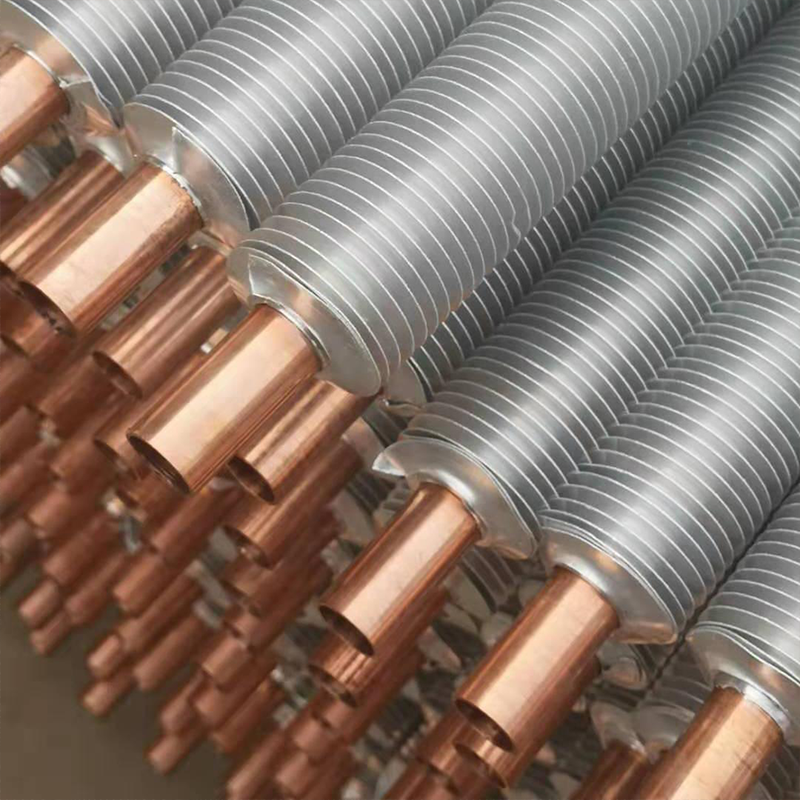
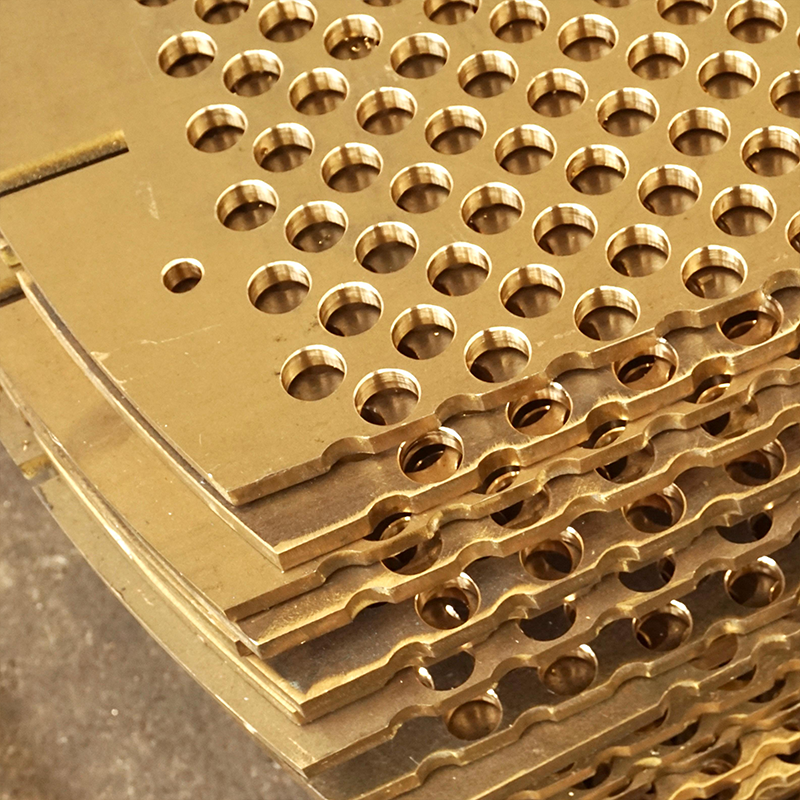
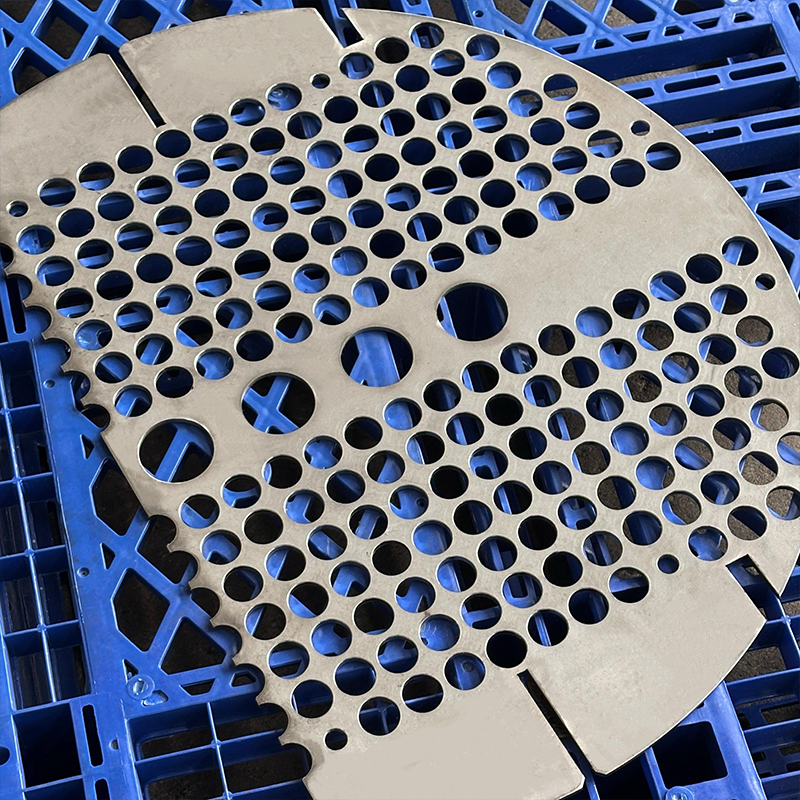
An integrated approach to engineering problems requires an understanding of not only the installation processes, but also the characteristics of the equipment itself that will be integrated into the system. For example, a companyWuxi Kaisheng LLC, which specializes in the design and manufacture of heat transfer, power generation and petrochemical equipment, demonstrates how important choosing the right materials is for the longevity of infrastructure. Their products, including titanium shell-and-tube heat exchangers, ASME high-pressure units and corrosion-resistant alloy tube bundles (316 stainless steel, C46400 marine brass, copper-nickel alloys), are widely used in industries where reliable connections are critical. The experience of such manufacturers confirms: saving on the quality of components or ignoring the specifics of the environment (both in the case of polypropylene and metal heat exchangers) inevitably leads to an increase in operating costs. Whether you are installing PP pipelines or integrating complex heat exchangers from manufacturers like Wuxi Kaisheng, the principle remains the same: precision in planning and quality in execution guarantee system longevity.
To receive a detailed calculation of your project or advice on the selection of materials, contact our engineers. We will audit your documentation and offer an optimized solution that meets all security standards and budget constraints.
Contact us todayto discuss the details of your project and receive an individual commercial offer.