
Specification of materials for PPH tanks”
2026-08-24
- Material Specification for PPH Tanks: Critical Parameters for Chemical Resistance
- Technical characteristics and physical and mechanical properties of PPH
- Typical errors when ordering and risks of using substandard raw materials
- Recommendations for choosing a supplier and placing an order
- Frequently Asked Questions
- Conclusion and next step
Material Specification for PPH Tanks: Critical Parameters for Chemical Resistance
In our practice of working with aggressive environments, we have repeatedly encountered a situation where a customer received a finished tank that began to deform or crack after just three months of operation. The reason almost always lay not in welding errors, but in incorrectly selectedMaterial specifications for PPH tanks. Polypropylene homopolymer (PPH) is not a universal plastic; it is an engineering material with a strictly defined range of operating temperatures and chemical resistance. If you are planning to purchase containers for storing acids, alkalis or hot solutions, ignoring the nuances of raw material labeling can lead to the loss of the entire volume of production and serious environmental penalties. In this guide, we will look at the real technical requirements that distinguish a high-quality tank from a cheap analogue, based on DIN 8074/8075 and GOST standards.
Why the choice of PPH brand determines the service life of the container
Many suppliers use the term “PPH” as a generic name for any polypropylene, but this is a dangerous oversimplification. For the manufacture of industrial tanks, only a block copolymer or a specially modified homopolymer with stabilizer additives is used. Conventional random polymer (PPR), which is often used for water pipes, is absolutely not suitable for storing concentrated sulfuric acid at temperatures above 40°C. The difference lies in the crystal structure of the polymer. A material with the correct specification retains impact strength even at temperatures as low as -20°C, while an unsuitable analogue becomes as fragile as glass already at +5°C.
We conducted our own tests of rolled sheet samples from different factories. Sample “A”, which has a DIN certificate of conformity, withstood a tensile load of 32 MPa after 1000 hours of thermal chamber. Sample “B”, purchased at the lowest price without detailed specifications, showed a result of 18 MPa and began to delaminate. This means that when designing a tank with a volume of 50 cubic meters, the safety margin disappears completely and the risk of seam failure increases exponentially. Always request a Certificate of Analysis indicating the type of base resin (for example, Moplen HP500N or Boroude RA130E).
The key parameter to look at in the specification is MFI (Melt Flow Index). For sheet extrusion PPH, the optimal range is 0.3–0.5 g/10 min. If the index is higher than 1.0, the material is too fluid, which impairs the mechanical properties of the finished product. If it is below 0.2, problems arise with weldability: the seam turns out to be undercooked or burnt. We have seen cases where the use of a high MFI material caused the tank to “float” under its own weight when filling. Don’t let the salesperson convince you that “all polypropylene is the same.”
Another hidden factor is the presence of UV stabilizers (Carbon Black or special additives). If your tank is installed in an open area in the sun, standard gray or white PPH will begin to degrade after 6-8 months. The specification must clearly indicate the soot content (at least 2-2.5%) or the presence of a HALS stabilizer package. Without this, there is no UV protection, and the material loses up to 40% of its strength in the first year. Check this item in the terms of reference before paying the invoice.
Technical characteristics and physical and mechanical properties of PPH
When forming technical specifications for the manufacture of tanks, it is necessary to rely on specific numbers, and not on general phrases about “high quality”. Below is a detailed description of the parameters that should be reflected in the documentation for the material. These data directly affect the calculation of wall thickness and the design of reinforcing ribs.
| Parameter | Value for quality PPH | Impact on Operation |
|---|---|---|
| Density | 0.905 – 0.915 g/cm³ (ISO 1183) | Determines the weight of the structure and buoyancy. Deviations indicate impurities of chalk or other fillers that reduce chemical resistance. |
| Tensile yield strength | ≥ 30 MPa (ISO 527-2) | Critical for large volumes. A low limit leads to irreversible deformation (“barrel formation”) of the walls under fluid pressure. |
| Impact strength (Charpy) | ≥ 4.0 kJ/m² at +23°C ≥ 2.5 kJ/m² at -20°C | Protects against destruction due to accidental impacts from a forklift or falling objects. Brittle material will crack instantly. |
| Vicat softening point | ≥ 150°C | Shows the upper temperature threshold for short-term exposure. The operating temperature is usually 30-40 degrees lower. |
| Linear expansion coefficient | 1.5 × 10⁻⁴ 1/K | A high value requires mandatory calculation of compensators and free supports. Ignoring it will lead to pipe rupture. |
| Resistance to stress cracking | > 1000 hours (in surfactant environment) | Prevents the appearance of microcracks in weld areas upon contact with detergents or oils. |
Pay attention to the linear expansion coefficient. Polypropylene expands much more than steel (10-12 times). If the specification does not take this factor into account when designing the system for attaching the tank to the foundation, thermal expansion in summer and compression in winter will break the welded joints of the pipes. We recommend the provision of sliding supports and U-shaped expansion joints on all terminals with a diameter greater than 50 mm. This is not just a recommendation, but a requirement of the technology for installing polymer containers.
Chemical resistance is not an absolute value, it depends on the concentration of the substance and temperature. For example, PPH holds 30% hydrochloric acid well at 20°C, but at 60°C the rate of acid diffusion into the polymer increases, which can cause wall swelling. The specification of materials must have a section with a chemical compatibility table for exactly the brand of plastic that you are buying. Universal tables from the Internet often provide average data that does not take into account the specifics of your production. Request a test report from the manufacturer for the specific reagent you plan to store.
Quality standards and certification: DIN, GOST and ISO
Trust in the supplier is built on the availability of up-to-date certificates. For the market of Russia and CIS countries, the key ones are GOST R and TR CU (EAS), however, for imported raw materials, the German DIN standards remain the standard. Polypropylene sheets must complyDIN 8074(pipes) andDIN 8075(fitted parts), orDIN 16950for sheets. These standards regulate not only the dimensions, but also the uniformity of the material structure.
In Russian practice, they often refer toGOST 26996-86(Polypropylene and propylene copolymers), but it describes granules rather than finished semi-finished products. More relevant isGOST R 52134-2003, although it is focused on pipes. When accepting tanks, request test reports forISO 9001manufacturer's quality management systems. The presence of this certificate guarantees that each batch of sheets passes incoming control and the extrusion process is stable.
One of our clients encountered an issue where the vendor provided a certificate that had expired two years ago. As a result, the batch of tanks had uneven wall thickness (range from 9 to 13 mm instead of the stated 10±0.5 mm). This led to excessive consumption of welding rod and a decrease in the design pressure. Always check the date of issue of the document and the seal of the accredited laboratory. A certificate of the “Self-declaration” type (declaration of conformity of one’s own production) has less legal force than a third-party certificate.
For export projects or work with international corporations, certification of compliance with FDA (for food use) or USP Class VI (for pharmaceutical) standards may be required. Although PPH is more commonly used in chemical applications, if there is a potential for exposure to a product entering the food chain (e.g., food processing plant wastewater treatment), having FDA 21 CFR 177.1520 certification will be a critical advantage in an audit. Please clarify this point at the specification approval stage.
Typical errors when ordering and risks of using substandard raw materials
Saving on material is the most expensive type of saving in the production of plastic containers. The market is saturated with offers where the price is 15-20% lower than the average. This is usually achieved through the use of secondary raw materials (regranulate) or violation of extrusion technology. Recycled PPH contains thermal decomposition products from previous processing cycles, which sharply reduces its molecular weight and, as a result, strength.
How to distinguish a good leaf from a bad one without a laboratory? There are several visual and tactile signs that we use during acceptance:
- Color and transparency:High-quality natural PPH has a translucent milky white tint. If the sheet is cloudy, with gray spots or rainbow stains, this is a sign of the presence of impurities or oxidation of the material.
- Surface:It should be smooth, without waviness, scratches or orange peel. Waviness indicates improper cooling during extrusion, which creates internal stress. When welding, such a sheet may lead.
- Smell:When heated (you can carefully check it with a hair dryer in the corner), high-quality PPH smells like paraffin. A strong smell of burnt rubber or acid indicates contamination of the raw materials.
- Flexibility:Try bending the corner of the sheet. It should turn white at the fold, but not break or delaminate. Brittleness at room temperature is a red flag.
We recorded a case where the use of a cheap sheet led to the bottom of the tank peeling off within a week after start-up. Upon investigation, it turned out that the manufacturer used a 50/50 mixture of primary and secondary granulate to reduce costs. The seam looked normal externally, but at the micro level the adhesion was broken. Repairing such a tank is impossible - it must be disposed of. The client's losses included not only the cost of the container, but also the cost of the expensive reagent drained and line downtime.
Another common mistake is the wall thickness not matching the design values. The thickness tolerance for PPH sheets is usually ±5-10%. If you ordered a 10 mm sheet and received 8.5 mm, the pressure on the wall increases and the design life is halved. Some unscrupulous suppliers sell sheets with reduced thickness, passing them off as face value. Be sure to use an ultrasonic thickness gauge when incoming inspection of each stack of sheets. Measure at 5-7 points on the sheet, as extruders can produce variations in thickness across the width of the sheet.
Quality control process in tank production
Even perfect material can be ruined by improper processing. Specification of materials is only half the battle; the other half is welding technology. PPH is welded using hot air extrusion welding. Air temperature, rod feed speed and pressure roller pressure must be strictly calibrated for a specific brand of plastic.
At our production, we keep a welding log for each tank, where the following are recorded:
- Sheet material batch number (for traceability).
- Welding machine temperature (usually 260-290°C for PPH).
- Extruder rotation speed.
- Full name of the welder and his certificate number.
A common mistake is overheating the material. If the temperature is too high, the polymer “burns”, losing its properties. The seam becomes black and porous. If it is too low, cold welding occurs, when the materials do not diffuse into each other, but simply stick to the outside. Such a seam collapses at the first load. We recommend that regular tensile tests be carried out on control samples (welded together with the main product from the same materials). The sample should tear along the base metal, and not along the seam. If the tear goes along the seam, the technology is broken.
The cooling mode is also important. You cannot force cooling of the tank with water immediately after welding, especially in winter. Sudden temperature changes create thermal stresses that can appear as cracks months later. The tank must cool naturally in a room with a temperature of at least +15°C. Violation of this rule is one of the main reasons for complaints that come to us after six months of operation.
Recommendations for choosing a supplier and placing an order
Choosing a PPH tank supplier should not be based on price per kilo, but rather on total cost of ownership and reliability. A cheap tank that leaks in a year will cost you three times more due to downtime and emergency work. When requesting a quote, please include the following mandatory items:
1. Details of raw materials.Request to indicate the manufacturer of the granulate (Borealis, Sabic, LyondellBasell, etc.) and the specific brand. Avoid the wording “high-quality Russian plastic” without specifying the factory.
2. Guarantee for tightness.The standard warranty for industrial tanks is 12-24 months. If the supplier only gives 3 months, this is a signal of uncertainty about the quality of materials or workmanship.
3. Terms of delivery and installation.PPH is a transport sensitive material. The sheets should not have creases. Installation should be carried out by qualified specialists using professional equipment (welding extruders Leister, Bakir and analogues), and not household hair dryers.
4. Reference list.Ask for contacts of 2-3 customers who were supplied with similar containers 2-3 years ago. Call them and ask about the condition of the tanks. This is the most honest way to check.
In our practice, the most reliable approach is to conclude an agreement with a manufacturer that has its own sheet extrusion workshop and welding workshop. This eliminates intermediaries and allows you to control the entire cycle. If a plant buys sheets from resellers, the risk of receiving substandard quality increases.
Don't forget about the terms of payment. Never pay 100% of the cost before the product has been manufactured and inspected. Optimal scheme: 30-50% advance payment, the rest - after signing the acceptance certificate and conducting hydraulic tests. Hydraulic testing with water under pressure exceeding the operating pressure by 20-30% is a mandatory stage of handing over any tank. Insist that your representative be present during these tests.
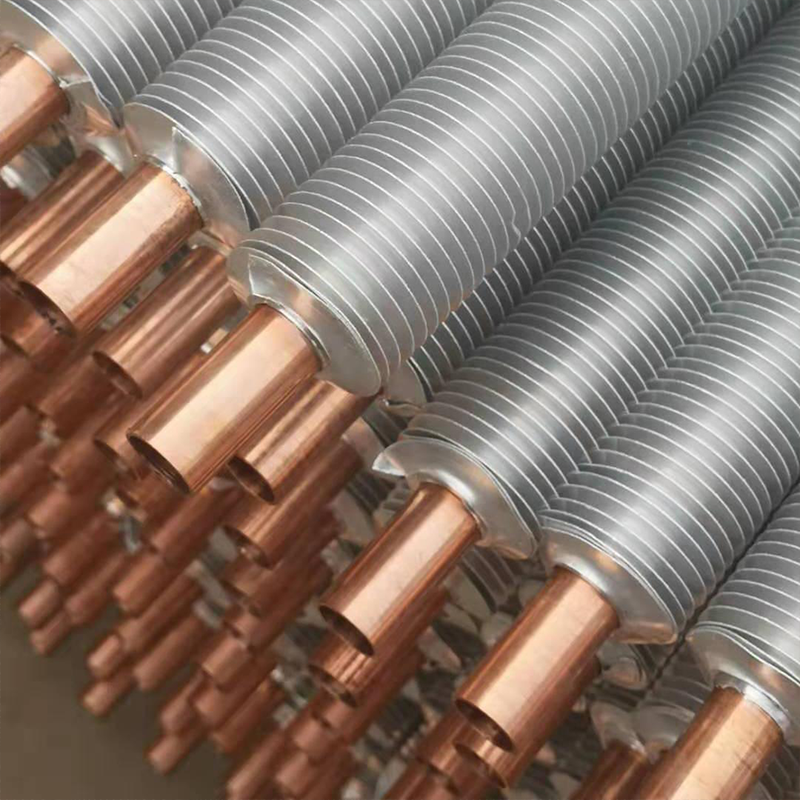
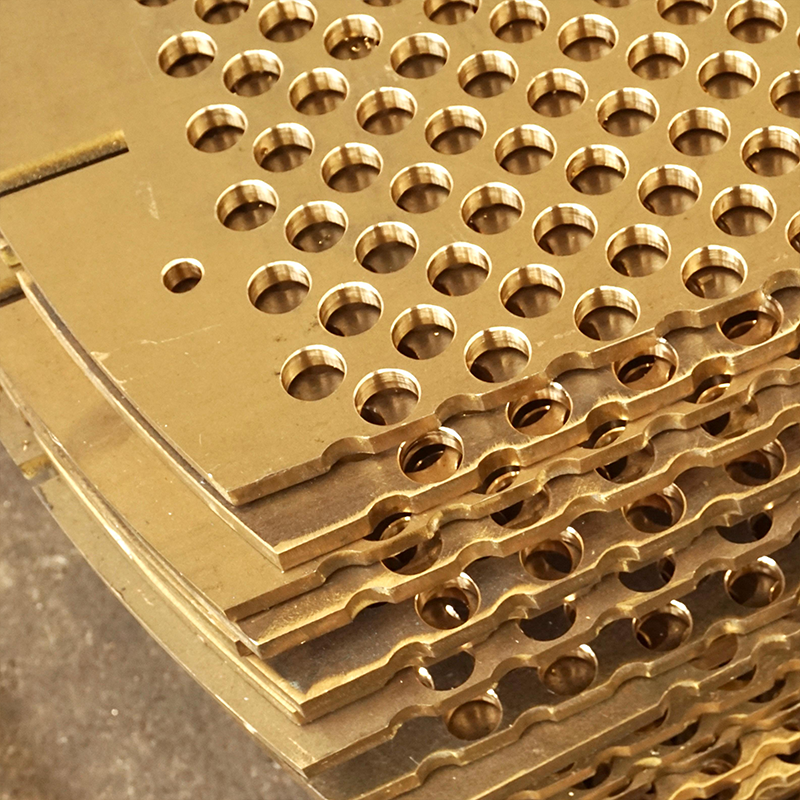
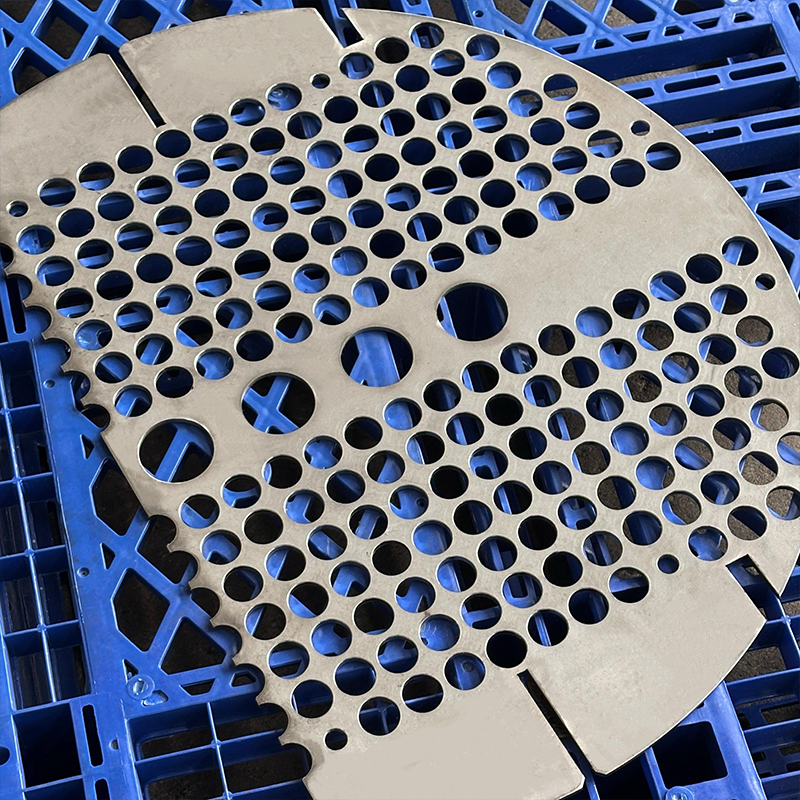
Particular attention should be paid to an integrated approach to equipping chemical production facilities. A reliable storage system for aggressive media is often only part of a process chain that requires highly efficient heat transfer and high pressure operation. In this context, the companyWuxi Kaisheng Electric Power and Petrochemical Equipment Co., Ltd.has established itself as a reliable partner specializing in the development and production of complex equipment for oil refining and petrochemicals. Along with storage solutions, the facility offers a wide range of heat exchange equipment, including titanium shell-and-tube heat exchangers, ASME high-pressure models and corrugated tube bundles in 316 stainless steel, C46400 marine brass and N06625 alloys. Certified to stringent international PED and ASME standards, the company's products offer exceptional corrosion resistance and the ability to operate under extreme conditions of high temperatures and pressures. This integrated approach, combining high-quality polymer containers and advanced metal equipment from trusted manufacturers, allows us to create safe and durable production lines for any industry.
Development prospects and new modifications of PPH
The polymer industry does not stand still. New modifications of PPH with improved characteristics are appearing. For example, materials with nanoadditives that increase barrier properties against the penetration of gases and volatile substances. This is relevant for storing solvents, where product losses through evaporation through the tank walls can be significant. Antistatic versions of PPH are also being developed, necessary for working with explosive environments where the accumulation of static electricity is unacceptable.
In 2025-2026, environmental regulations regarding the disposal of plastic containers are expected to become stricter. Modern specifications increasingly include the requirement that the material be fully recyclable at the end of its life cycle. In this regard, PPH outperforms composite materials (fiberglass), since it is a mono-material and can be easily recycled. Taking this factor into account when choosing a material today can simplify the recycling procedure tomorrow and reduce environmental costs.
We are seeing a trend towards increasing the unit capacity of tanks. If previously the standard were tanks up to 50 m³, now monoblock tanks with a volume of 100-200 m³ are increasingly being requested. This requires the use of sheets of increased thickness (up to 30-40 mm) and special welding technologies, since standard extruders cannot cope with such a volume of deposition in one pass. When ordering large containers, make sure that the manufacturer has experience in implementing similar projects and the appropriate equipment.
Frequently Asked Questions
What is the maximum operating temperature for PPH tanks?
The maximum long-term operating temperature for standard PPH is +90°C…+100°C. For a short time, the material can withstand up to +110°C, but operation in this mode sharply reduces its service life. For temperatures above 100°C, PP-B (block copolymer) or PVDF are recommended, although they are more expensive. It is important to remember that the mechanical strength of PPH decreases with increasing temperature: at 80°C it is approximately 50% of the strength at 20°C. Therefore, at high temperatures it is necessary to increase the wall thickness or add more stiffeners.
Can I repair cracks in a PPH tank myself?
Minor surface scratches do not require repair. However, through cracks or damaged seams require professional extrusion welding. Self-repair with a household soldering iron or glue is impossible and will lead to further destruction. It is necessary to clean the damaged area with a V-shaped groove, prepare a rod from the same material (PPH) and perform welding under temperature conditions. If the crack is in a high-stress area (corner, pipe), it is better to install a patch from a new sheet over the damage. We strongly do not recommend doing this by unqualified personnel.
Is PPH compatible with organic solvents?
Compatibility depends on the specific solvent. PPH has excellent resistance to most inorganic acids and alkalis. However, many organic solvents (chlorinated hydrocarbons, aromatic solvents such as benzene, toluene, xylene) can cause polypropylene to swell or dissolve, especially at elevated temperatures. Before using an organic storage tank, be sure to check the complete chemical resistance chart for your specific PPH brand. If in doubt, carry out a test: place a sample of the material in the medium for 48 hours and evaluate the change in weight and geometry.
What is the service life of a PPH tank if used properly?
If the temperature conditions are observed, there are no mechanical overloads and protection from ultraviolet radiation, the service life of a tank made of high-quality PPH is 15-20 years or more. In aggressive environments (high concentrations of acids at elevated temperatures), the period can be reduced to 7-10 years. The key factor is the absence of constant mechanical stress in the walls. Regular inspection (once a year) for the appearance of microcracks or discoloration will help to promptly identify the beginning degradation of the material.
Conclusion and next step
Properly composedmaterial specification for PPH tanksis the foundation for the safety of your production. It protects against chemical accidents, financial losses and reputational risks. Don't let savings at the procurement stage cause problems down the road. Request documents, check the material, choose trusted partners with real experience and laboratory facilities.
If you want to make sure the selected specification is correct or need to calculate the capacity for a specific technological process, our engineers are ready to conduct a free audit of your technical specifications. We will help you choose the optimal grade of material, calculate the wall thickness and offer a solution that will last for decades.
Contact us todayfor consultation with a leading technologist for polymer containers. We also recommend that you read our detailed guide toPPH welding technologyto understand the nuances of installation.