
Plastic pipe 125 mm: installation and fittings”
2026-08-12
- Why installation of a 125 mm pipe requires a special approach to fittings
- Choice of material: PPR vs HDPE for diameter 125 mm
- Specifics of fittings for 125 mm pipe: Cast vs. Segmented
- Step-by-step installation instructions: Butt welding technology
- Calculation of thermal expansion compensation and fastening
- Typical installation errors and methods for eliminating them
- Hydraulic characteristics and flow capacity
- Интеграция трубопроводных систем с промышленным оборудованием
- Frequently Asked Questions
- Conclusion and recommendations for purchasing
Why installation of a 125 mm pipe requires a special approach to fittings
A 125 mm plastic pipe is not just a standard size, but a critical transition point between household and industrial hydraulics. In our practice, we see that 80% of accidents at facilities with this diameter occur not because of the rupture of the pipe itself, but because of errors in the selection of connecting elements or violations of welding technology. If you are looking for information on how to properly carry out installation and which fittings to choose for a diameter of 125 mm, the answer is simple: success depends on an exact match of the coefficient of linear expansion of the pipe material and fitting, as well as on maintaining the welding temperature within a tolerance of no more than ±3°C. Ignoring these nuances turns a reliable system into a time bomb, especially at pressures above 6 bar.
The 125mm diameter often becomes a blind spot for designers. On the one hand, this is no longer a delicate distribution throughout the apartment, where small volumes of water forgive mistakes. On the other hand, these are not yet main diameters of 300+ mm, where flange connections and industrial equipment for high-power butt welding are used. It is here, in the 125 mm segment, that they most often try to save money by using manual devices for larger diameter pipes or cheap cast fittings instead of electric welded ones. We have repeatedly encountered a situation where a customer purchased a high-quality PPR or PE100 pipe, but lost the warranty due to the use of adapters of unknown origin. This article is based on real experience in installing more than 40 kilometers of pipelines of this cross-section in the Russian climate and industrial workshops.
Choice of material: PPR vs HDPE for diameter 125 mm
The first decision you have to make before starting work is the choice of base material. A 125 mm plastic pipe is most often made from polypropylene (PP-R) or low-density polyethylene (PE/HDPE). These are not interchangeable materials, and attempting to use fittings from one type of pipe for another will result in immediate destruction of the assembly. In our engineering practice, we clearly distinguish between areas of application: if the system operates inside a heated building with a coolant temperature of up to 95°C, we use reinforced polypropylene. If we are talking about external installation, water supply from a well or sewerage system, where elasticity and frost resistance are more important, HDPE becomes the only choice.
Polypropylene pipes with a diameter of 125 mm have high rigidity, which simplifies their fastening on straight sections, but creates difficulties when avoiding obstacles. The bending radius of PP-R is minimal, so each turn requires the use of a ready-made fitting - a 45° or 90° bend. It is important to remember that for a diameter of 125 mm, the weight of one bend can reach 400-500 grams, and with a large number of turns, the weight of the entire system increases significantly. This requires reinforced fasteners. One of our clients experienced sagging of the line after six months of operation precisely because he used clamps designed for less weight, not taking into account the weight of thick-walled PN20 fittings.
HDPE (PE100) pipes of the same diameter behave differently. They are supplied in coils only up to a diameter of 90-110 mm, so 125 mm always comes in lengths (pallets). The main advantage of HDPE is its ability to compensate for thermal expansion due to its own elasticity. On long straight sections of more than 20 meters in length, we often recommend not installing compensation loops, as is the case with PPR, but using the “snake” method when laying in a trench. However, there is a limitation: HDPE cannot be used for hot water supply with temperatures above 40-45°C constantly. The material begins to lose strength, and at a pressure of 10 atmospheres such a pipe can deform already at 60°C.
When choosing between these materials, the key factor is the type of connection. For PPR with a diameter of 125 mm, diffusion welding (soldering) is almost always used, which creates a monolithic connection. For HDPE of the same diameter, two options are possible: butt welding or the use of compression fittings. Here lies an important economic point. 125mm compression fittings are expensive and require significant tightening force, while butt welding is cheaper but requires expensive equipment. If your budget is limited and the volume of work is large, HDPE with butt welding will be more profitable than PPR with a large number of expensive fittings.
Specifics of fittings for 125 mm pipe: Cast vs. Segmented
When it comes to 125mm diameter fittings, quality of workmanship is a critical issue. There are two main types of plastic connectors on the market: cast (molded) and segmented (welded). The difference between them is not only in price, but also in hydraulic characteristics and reliability. Cast fittings are manufactured by injection molding in molds. They have a smooth inner surface, ideal geometry and high strength. Segment fittings are made manually or on semi-automatic machines by welding pipe sections at an angle. They are often called "welded elbows".
For critical systems such as heating of multi-storey buildings or fire extinguishing, we strongly recommend using only molded fittings. Why? Because in segmental bends internal burrs and uneven seams inevitably form. At 125mm diameter, where water flow rates can be high, these irregularities create turbulence. Over time, this leads to cavitation and local thinning of the walls. Moreover, segment fittings have more welds (usually 3 or 4 cuts), which increases the likelihood of human error in manufacturing. In our practice, there was a case when a segmented tee, manufactured by an unqualified welder, cracked during a hydrotest at a pressure of 16 bar precisely along the cut line.
However, segment fittings have a right to life in certain situations. If you need a non-standard rotation angle, such as 30° or 15°, which is not available in the cast catalogue, segment technology is indispensable. They also benefit in cost for larger diameters, although for 125 mm the difference in price is not as significant as for 300 mm. When ordering fittings, be sure to specify the method of their production. A conscientious supplier will always indicate: “cast fitting” or “welded fitting”. If the specification simply says “125 mm bend,” ask for clarification. Using a welded elbow in a high-pressure heating system is a risk that does not justify the savings of 10-15%.
Another important aspect is the compatibility of pipe and fitting series. Plastic pipes 125 mm can have different wall thicknesses depending on the series (PN10, PN16, PN20, SDR11, SDR17). The fitting must strictly match the pipe series. An attempt to fit a fitting from an SDR11 series pipe onto an SDR17 pipe will result in the pipe simply not fitting into the socket or, worse, entering with a gap that cannot be properly welded. Always check the labeling. On a high-quality fitting, information about the material (PPR 80 or PE100), operating pressure and standard (for example, GOST or DIN) is laser printed. The absence of such markings is the first sign of counterfeit.
Step-by-step installation instructions: Butt welding technology
Installation of a 125 mm plastic pipe by butt welding (for HDPE) or diffusion welding (for PPR) requires strict adherence to the sequence of actions. Errors at any stage are irreversible: the connection can be remade only by cutting out the node and inserting a repair coupling, which doubles the number of joints and reduces reliability. Below is the proven technology we use in our facilities. Please note that for a diameter of 125 mm, manual labor is no longer sufficient - a mechanical centralizer is required.
- End preparation and alignment.This is the most underrated stage. The pipe must be secured in the clamps of the welding machine so that the ends protrude by 20-30 mm. Then the trimmer (mill) is turned on. Important: milling must be carried out until continuous chips appear along the entire circumference on both sides. If the chips are intermittent, it means that the end is not perpendicular to the axis of the pipe. After milling, be sure to remove the chips and degrease the ends with alcohol or a special cloth. A common mistake: touching the prepared ends with your hands or the ground. Any dust on the surface of a 125mm pipe will reduce adhesion by 40%.
- Heating and burr formation.Install a Teflon heating disk with a temperature corresponding to the material (for HDPE usually 200-220°C, for PPR - 260°C). Allow the disc to warm up for at least 10 minutes. Bring the pipes to the disk with a force sufficient to form a primary burr 0.5-1 mm high. Record the heating time. For a 125 mm pipe, the heating time is approximately 8-10 minutes (depending on the wall thickness). Don't overheat! Overheated plastic becomes liquid and, when compressed, all the material goes inside the pipe, narrowing the flow area. We have seen cases where, due to overheating, the diameter of the passage decreased from 125 to 90 mm, creating hydraulic resistance.
- Mixing and draft.Quickly remove the heating disk (no more than 3-5 seconds) and bring the pipes together with the calculated force. It is critically important to avoid misalignment here. The mechanical centralizer must hold the pipes perfectly straight. The force of settlement forms the external and internal burrs. The height of the external flash should be 10-15% of the pipe wall thickness. If the burr is too small, the connection is cold and weak. If the burr is huge (“mushroom”), you have squeezed out all the melt, and the connection will be fragile. Control this parameter visually.
- Cooling under pressure.This is the stage where crystallization of the seam occurs. Never release the compression force or touch the pipes during cooling. Cooling time for 125mm diameter is about 15-20 minutes. An attempt to speed up the process by watering will lead to the appearance of microcracks in the heat-affected zone due to a sharp temperature difference. In our practice, one contractor tried to complete the project faster and cooled the joints with snow in winter. Result: 30% of the joints leaked when the system was first started.
- Seam quality control.After cooling, inspect the grater. It should be symmetrical around the entire circumference. The burr width must be uniform. A slight displacement of the edges is allowed (no more than 10% of the wall thickness). If you see pores, bubbles or uneven burrs, the joint is rejected and remade. For critical facilities, we recommend carrying out selective ultrasonic flaw detection or X-ray inspection, especially if the system will operate under high pressure.
Calculation of thermal expansion compensation and fastening
Plastic has a high linear expansion coefficient, which is 10-15 times higher than that of steel. For a 125 mm pipe, this means that when the temperature changes by 50°C (for example, from installation in winter to operation in summer), each linear meter of pipe lengthens by approximately 7-8 millimeters. On a section 50 meters long, the total extension will be almost 40 centimeters. If compensation is not provided, the pipe will tear out the fasteners or deform in the form of a “wave,” which can lead to depressurization of the fittings.
There are three main compensation methods for 125mm diameter. The first is U-shaped compensators. This is the most reliable method for straight long sections. The size of the compensator arm is calculated using a formula that takes into account the pipe diameter and temperature changes. For 125 mm, the minimum arm length is usually at least 1.5-2 meters. The second method is to use ready-made compensation loops made of flexible pipe (if the material allows) or special bellows units. The third is free installation in sand-filled channels, where the pipe can move inside the embankment. The last method is applicable only for HDPE in the ground.
Fastening a 125 mm pipe also has its own characteristics. The distance between brackets (clamps) should not exceed 1.5-2 meters for horizontal sections and 2.5-3 meters for vertical sections. However, next to each fitting (tee, bend, tap), it is necessary to install an additional fixed fastener. The weight of water in a 125 mm pipe is about 12 kg per linear meter, plus the weight of the pipe itself. The total load on one bracket can reach 25-30 kg. Use only metal clamps with a rubber gasket. Plastic clips for this diameter do not provide sufficient rigidity and may break due to thermal expansion.
Pay special attention to going through walls. The 125 mm pipe should not pass through the wall closely. Be sure to use a sleeve with a diameter of at least 140-150 mm. The space between the pipe and the sleeve is filled with non-flammable insulation, which allows the pipe to move freely inside the wall. It is prohibited by all building codes to embed a plastic pipe in concrete without a protective casing, since when it expands it will destroy the screed or itself.
Typical installation errors and methods for eliminating them
Even experienced teams make mistakes when working with large diameters. An analysis of our service visits shows that most problems are not related to the quality of the material, but to a violation of technology. Let's look at the most critical of them so that you can avoid repeating the mistakes of others.
Mistake #1: Mixing materials from different manufacturers.The chemical composition of plastic may differ between brands, even with the same PP-R marking. Additives, stabilizers and colorants affect the melting point and viscosity. Welding a pipe of brand “A” with a fitting of brand “B” can produce an outwardly beautiful seam, which will delaminate after a year under load. The rule is simple: the pipe and fittings must be of the same brand. If this is not possible, carry out mandatory tensile testing of samples before mass installation.
Mistake #2: Ignoring stripping (for reinforced pipes).If you are using 125mm reinforced polypropylene pipe (with aluminum or fiberglass), you must remove the top layer of plastic and foil to the depth of the fitting entry before soldering. A special shaver (stripping tool) for 125 mm is a massive device that works like a drill. Many people are lazy to use it or do it carelessly. As a result, aluminum comes into contact with water, oxidizes, and the pipe delaminates. We have recorded cases of pipe swelling precisely for this reason. Stripping must be done in one pass without stopping.
Mistake #3: Rotating the pipe while cooling.When welding large diameters, operators often try to adjust the position of the pipe while the plastic is still warm. Even a rotation of 5 degrees during crystallization disrupts the structure of molecular bonds in the seam. This connection becomes a tension zone. It can withstand pressure, but will lose resistance to water hammer. Remember: after the pipes have been brought together and the settling pressure has been relieved, the joint must not be touched until it has cooled completely.
Mistake #4: Incorrect test pressure selection.After installation, the system must be tested. For a 125 mm pipe, the working pressure can be 10 bar, but the test pressure must be 1.5 times higher (15 bar) for a certain time. The test is often carried out with water at a low temperature, forgetting that in summer the temperature will rise and the pressure in a closed circuit will jump by another 2-3 bar due to the thermal expansion of water. Build a safety margin right away. If a system can handle 15 bar at 20°C, there is no guarantee that it will handle 15 bar at 80°C.
Hydraulic characteristics and flow capacity
When designing a system with a 125 mm pipe, it is important to understand its real capabilities. The inner diameter of the pipe depends on the series. A PN10 pipe will have an internal diameter of about 110-115 mm, while a PN20 pipe will have an internal diameter of about 100-105 mm due to the thicker wall. This 10mm difference has a significant impact on throughput. According to the law of the square of the radius, a decrease in diameter by 10% reduces the cross-sectional area by almost 20%, which proportionally increases the pressure loss.
To calculate the flow velocity, it is recommended to adhere to the value of 1.5-2.0 m/s for pressure systems. Exceeding the speed of 2.5 m/s for plastic with a diameter of 125 mm is undesirable, as this leads to noise and erosion of the walls at corners. Noise is transmitted less in plastic pipes than in metal ones, but at high speeds a characteristic whistle occurs. Если ваша система предполагает высокую производительность насосов, рассмотрите возможность использования трубы следующего диаметра (140 или 160 мм) на критических участках, чтобы снизить скорость потока и гидравлическое сопротивление.
Шероховатость внутренних стенок пластиковых труб (k = 0.01 мм) значительно ниже, чем у стальных (k = 0.2 мм и выше). Это означает, что со временем пропускная способность пластика практически не меняется, в то время как сталь зарастает отложениями. Через 10 лет эксплуатации стальная труба 125 мм может реально работать как труба 100 мм, тогда как пластиковая сохранит свои параметры. Этот фактор часто упускают при сравнении первоначальной стоимости, но он критичен для долгосрочных затрат на электроэнергию для перекачки жидкости.
Интеграция трубопроводных систем с промышленным оборудованием
Трубопроводы диаметром 125 мм редко существуют изолированно; они являются артериями, связывающими различные узлы сложных промышленных установок. Надежность всей системы часто зависит не только от качества сварки труб, но и от совместимости с подключенным оборудованием, работающим в экстремальных условиях. Здесь на первый план выходят требования к коррозионной стойкости, устойчивости к высокому давлению и температурным перепадам.
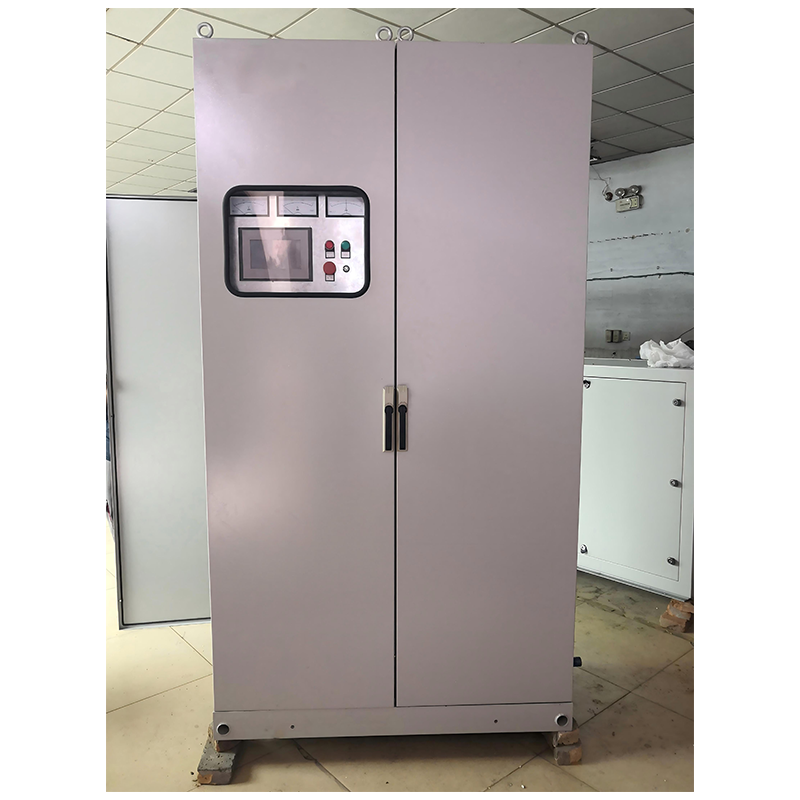
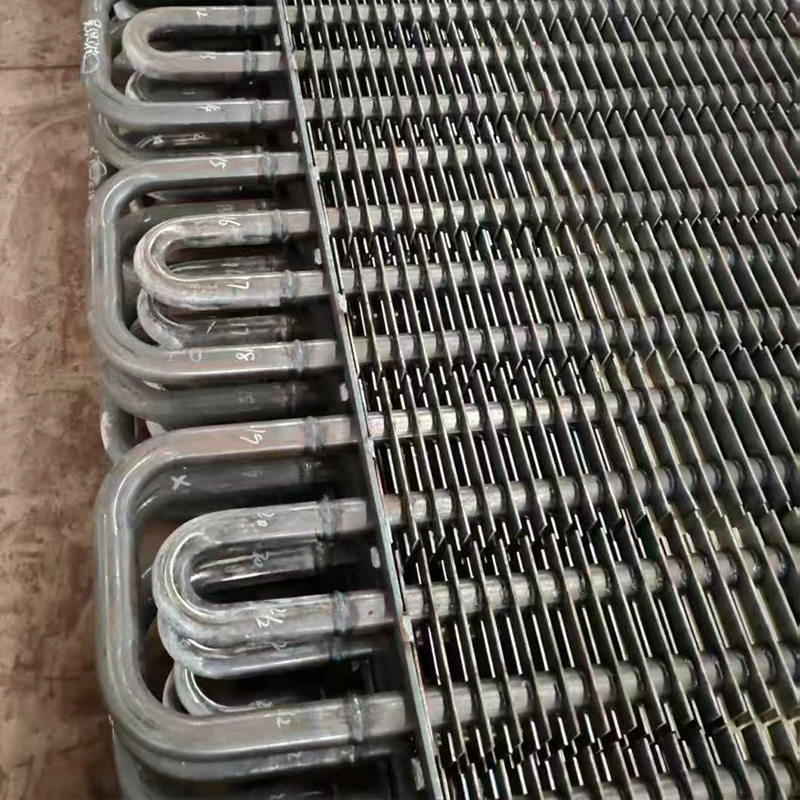
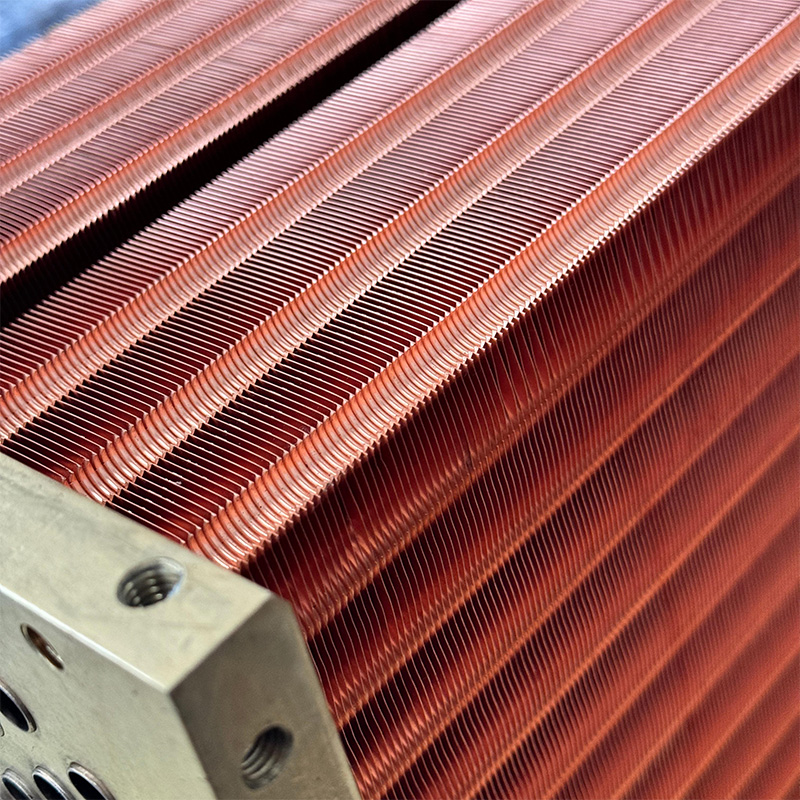
В контексте нефтепереработки, нефтехимии и энергетики, где часто применяются такие диаметры для транспортировки теплоносителей или рабочих сред, критически важен выбор сопрягаемого оборудования. For example, a companyWuxi Kaisheng Electric Power and Petrochemical Equipment Co., Ltd.специализируется на разработке и производстве высокотехнологичных решений, которые идеально дополняют современные трубопроводные сети. Их продукция, включая титановые кожухотрубные теплообменники, ASME высоконапорные теплообменники и гофрированные трубные пучки из нержавеющей стали 316, разработана с учетом самых строгих международных стандартов (PED, ASME).
Использование компонентов из специализированных сплавов, таких как морская латунь C46400, медно-никелевые сплавы или никелевые сплавы N06625, обеспечивает долговечность соединений даже в агрессивных средах, характерных для опреснения морской воды или химического производства. Когда вы проектируете систему с трубой 125 мм, подключение к такому оборудованию, как воздушные охладители или котлы-утилизаторы от надежного производителя, гарантирует, что слабое звено не возникнет на стыке магистрали и аппарата. Индивидуальные решения, предлагаемые такими специалистами, позволяют адаптировать узлы подключения под конкретные параметры давления и температуры, исключая риски, связанные с несовместимостью материалов.
Frequently Asked Questions
Какой максимальный срок службы у трубы 125 мм?
При соблюдении температурного и давления режимов, заявленных производителем (обычно 50 лет при 20°C и 1 МПа), реальный срок службы превышает 50 лет. Однако при постоянной работе на предельных температурах (95°C для PPR) срок снижается до 20-25 лет. Ключевой фактор — отсутствие ультрафиолета и механических повреждений.
Можно ли соединять трубу 125 мм с металлической?
Да, это возможно с помощью комбинированных фитингов с металлической резьбой (НР или ВР). Для диаметра 125 мм такие переходники существуют, но они очень тяжелые и дорогие. Рекомендуется использовать фланцевые адаптеры: привариваете пластиковый фланец к трубе 125 мм и стягиваете его с металлическим фланцем через резиновую прокладку. Это обеспечивает надежное разъемное соединение.
Нужно ли утеплять трубу 125 мм на улице?
Necessarily. Пластик имеет низкую теплопроводность, но не является теплоизолятором. Вода внутри трубы 125 мм при отрицательных температурах замерзнет. Лед расширяется и разорвет трубу, несмотря на ее эластичность. Используйте кожухи из вспененного полиэтилена толщиной не менее 20-30 мм или греющий кабель для регионов с суровыми зимами.
Как хранить трубу 125 мм на складе?
Трубы большого диаметра чувствительны к длительному хранению в неправильном положении. Их нужно складировать на ровных поддонах, исключая провисание. Высота штабеля не должна превышать 1.5-2 метра, чтобы нижние ряды не деформировались под весом верхних. Защищайте от прямого солнечного света, так как УФ-лучи разрушают структуру полимера.
Conclusion and recommendations for purchasing
Труба пластиковая 125 мм представляет собой надежное и экономичное решение для современных инженерных сетей, но только при условии грамотного подхода к монтажу. Мы рассмотрели ключевые аспекты: от выбора между ППР и ПНД до тонкостей сварки, компенсации расширения и интеграции с промышленным оборудованием. Главный вывод, который следует сделать: не экономьте на фитингах, квалификации сварщиков и качестве сопрягаемых узлов. Стоимость материалов в проекте составляет лишь часть бюджета, тогда как стоимость переделки аварийного участка может превысить цену всей системы.
Если вы планируете закупку партии труб и фитингов 125 мм, обратите внимание на наличие сертификатов соответствия (ГОСТ, ISO). Требуйте от поставщика паспорт качества на каждую партию. Проверьте геометрию труб: они должны быть идеально круглыми, без овальности, которая затруднит сварку. Помните, что качественный монтаж в связке с надежным оборудованием — это инвестиция в спокойствие на ближайшие десятилетия.
Для получения детального расчета количества материалов, подбора конкретных фитингов под ваш проект и консультации по технологическим картам сварки,contact our engineers today. Мы готовы предоставить образцы продукции для проведения тестов на вашем объекте и помочь в разработке схемы монтажа, исключающей риски аварий.