
Smart tanks with IoT control sensors”
2026-08-29
- Why conventional tanks will no longer work in 2026
- System architecture: from sensor to cloud
- Real application scenarios and economic benefits
- Technical risks and how to avoid them
- Comparison of monitoring technologies: What to choose?
- Integration with existing control systems
- The role of quality equipment in system reliability
- Frequently Asked Questions
- Conclusion and next step
Why conventional tanks will no longer work in 2026
In our practice of working with industrial facilities, we are faced with a harsh reality: traditional methods of monitoring fluid levels and temperatures lead to losses of up to 15% of raw materials annually. Smart tanks with IoT control sensors are not a marketing term, but a specific technical solution that transforms the storage of liquids from the category of “passive waiting” into an active digital process. If you still rely on visual inspections or monthly operator reports, your business is already losing money on spoiled batches, overfills and equipment downtime.
Today we will look at exactly how the implementation of such systems changes the economics of an enterprise. We will not speak in general terms about “digitalization”. Instead, we will look at specific communication protocols, explosion protection requirements, and real cases where replacing one type of sensor saved a plant millions of rubles. This article was written by engineers who installed these systems in the Siberian winter and desert heat, not by copywriters in an office.
System architecture: from sensor to cloud
Any monitoring system begins not with a beautiful control panel, but with the physical level of data collection. An error at this stage renders all subsequent analytics useless. Smart tanks with IoT control sensors require careful selection of primary converters that match the aggressiveness of the environment and operating conditions.
It is based on three key components: a sensor unit, a data gateway and an analytics platform. Sensors measure physical parameters: fill level, temperature, pressure and sometimes liquid density. The gateway aggregates data and transmits it via LPWAN networks (LoRaWAN, NB-IoT) or 4G/5G cellular networks. The platform processes the flow of information, identifying anomalies in real time.
We often see a situation where customers skimp on the protection class of sensors. This is a fatal mistake. For chemical production, the explosion protection standard Ex ia IIC T4 Ga is mandatory. If the sensor does not have the appropriate GOST or ATEX certificate, its installation in a hazardous area is illegal and deadly. In one project at an oil refinery, an attempt to use a household Wi-Fi sensor led to a three-day shutdown of the workshop due to security requirements. Losses from downtime exceeded the cost of professional equipment by 50 times.
The choice of data transmission technology depends on the geography of the object. For remote oil fields where there is no cellular coverage, the only correct solution is a satellite channel or radio modems with a range of up to 15 km. NB-IoT is ideal for urban fuel warehouses, providing deep signal penetration inside metal containers. It is important to understand: the metal body of the tank acts as a Faraday cage, shielding the signal. The gateway antenna must always be taken outside using IP68 sealed leads.
Action: Check your current tank data sheets for explosion hazard zone classification before selecting a sensor type.
Critical Sensor Selection Parameters
When selecting equipment to integrate into smart tanks with IoT monitoring sensors, engineers should pay attention to five critical parameters. Ignoring any of them leads to unstable operation of the system.
- Measurement accuracy:For commercial accounting of oil and gas, an accuracy of at least ±1 mm is required. For technological buffer tanks, an error of ±5-10 mm is permissible. Non-contact radar level sensors provide the best accuracy, but are more expensive than hydrostatic sensors.
- Operating temperature range:Standard electronic components fail at -20°C. To operate in the Far North, sensors with an extended range up to -50°C or -60°C are required, as well as built-in electronics heaters.
- Housing and sensing element material:Aggressive acids require the use of Hastelloy or tantalum as the membrane material. 316L stainless steel may not withstand contact with some chlorides. We have seen cases of membrane corrosion within 3 months due to incorrect selection of material.
- Power consumption:Autonomous battery-powered sensors must operate for at least 3-5 years without replacing the battery. This dictates the choice of low-power protocols and sleep modes, where the device only wakes up to send a data packet.
- Output Interface:The 4-20 mA analog output is reliable but requires cabling. Digital interfaces (HART, Modbus RS-485, IO-Link) allow you to transmit diagnostic information about the state of the sensor itself, which is critical for predictive maintenance.
Real application scenarios and economic benefits
Theory is good for textbooks, but money is made in production. Let's look at two specific cases from our practice, where the implementation of a monitoring system solved acute business problems. These examples show how smart tanks with IoT monitoring sensors are transforming operational processes.
Case 1: Fuel and lubricants warehouse of a logistics center (Central Russia)
Problem:A large logistics hub was faced with regular shortages of diesel fuel. Monthly reconciliations showed discrepancies between the invoice data and the actual balance within 3-4%. With a turnover of 500 tons per month, this meant direct losses of several million rubles annually. In addition, manual level measurement with a tape measure in winter was hazardous and took the operator up to 40 minutes for each of the 12 tanks.
Solution:We have implemented a system based on radar level meters with a LoRaWAN interface. The sensors were installed on tank covers without the need to cut into the walls, which eliminated the risk of leaks during installation. The gateway collected data every 15 minutes and transmitted it to the cloud platform. Temperature compensation algorithms were set up, as fuel volume changes depending on heating during the day and cooling at night.
Result:After 3 months of operation, discrepancies in accounting were reduced to 0.4%. The system automatically detected an unauthorized discharge from one of the tanks at night, recording a sharp drop in level outside the shipment schedule. The savings from preventing theft paid for the project in 4 months. The operator’s time for taking readings has been reduced to zero - now he receives a ready-made report on a tablet.
An important note: in this project we used sensors with IP67 protection, but we encountered the problem of antenna icing at temperatures below -25°C. It was necessary to additionally install simple canopies over the antennas, which was not specified in the original specification. This experience taught us to always take into account the local microclimatic features of the site.
Case 2: Chemical plant (Volga region)
Problem:The production of polymers required strict adherence to the temperature regime for storing reagents in the range of 18-22°C. A deviation of more than 2 degrees led to the onset of irreversible polymerization right in the container, spoiling a batch worth 2 million rubles. The existing automated process control system did not have a backup warning channel, and the operator could notice the accident only when walking around once every 4 hours.
Solution:Introduction of wireless resistance thermal converters (Pt100) with data transmission via the WirelessHART protocol. The system was integrated with existing SCADA via an OPC server. A key function was the creation of a multi-level alert system: a warning to the engineer if there was a deviation of 1 degree, an emergency stop of the pumps and an SMS notification to the production director if there was a deviation of 1.5 degrees.
Result:During the first year of operation, the system prevented two potential accidents caused by a heating circuit failure during the night shift. A quick reaction made it possible to save raw materials worth 4.5 million rubles. In addition, automatic data collection allowed us to pass the ISO 9001 audit without any issues with temperature logging.
Action: Calculate the potential losses from one defective batch or one theft at your site - this will be the budget for your digitalization project.
Technical risks and how to avoid them
Implementing IoT is not just about buying hardware. This is a change in the enterprise infrastructure. There are a number of pitfalls that vendors often remain silent about, wanting to close the deal faster. We want to be honest: smart tanks with IoT monitoring sensors can become a headache if you ignore the following aspects.
The problem of “dead zones” and reflections.Radar sensors installed too close to the tank wall or above internal structures (inlet pipes, ladders) begin to give false readings due to signal reflection. We recommend conducting a virtual simulation of the installation before purchasing. If the tank has a complex geometry, it is better to choose strain gauge scales for the tank supports rather than deal with the echo inside the tank.
Cybersecurity.Connecting industrial facilities to the Internet opens the door to hackers. Standard default passwords (admin/admin) are an invitation to attack. In our projects, we insist on the use of VPN tunnels for data transfer and network segmentation: the IoT circuit should never have direct access to the corporate network of accounting or mail. Use devices that support AES-128 or AES-256 encryption in hardware.
Dependence on the telecom operator.When using SIM cards, you are dependent on the coverage of your cellular operator. In the event of an operator bankruptcy or a change in frequency plans (as happens when switching to new communication standards), the fleet of devices may become dumb. A strategically correct solution is to use multi-SIM cards with roaming between several operators or choose technologies that are not tied to one provider (for example, your own LoRaWAN base station).
One of our clients was faced with a situation where the sensor manufacturer went bankrupt a year after delivery. The cloud service that was built into the device went offline, and thousands of dollars turned into a pile of metal. Always choose solutions with open protocols (MQTT, HTTP, Modbus) to be able to change analytics platforms without changing field devices.
Comparison of monitoring technologies: What to choose?
There are many solutions on the market, and the choice depends on the specific task. Below is a comparative table of the main technologies used to create smart tanks with IoT control sensors.
| Technology | Accuracy | Communication range | Energy consumption | Implementation cost | Best use |
|---|---|---|---|---|---|
| Radar level meters (LoRaWAN/NB-IoT) | High (±1-3 mm) | Up to 15 km (LoRa), Operator coverage (NB-IoT) | Low (battery life 3-5 years) | Medium/High | Petroleum products, chemistry, food industry. Ideal for large tank parks. |
| Hydrostatic sensors (4-20 mA + RTU) | Average (±0.25% of range) | Limited by cable length (up to 1 km without amplifiers) | High (requires external power) | Low (cheap sensors, expensive cabling) | Water supply, sewerage, tanks with simple geometry. |
| Ultrasonic sensors | Medium (sensitive to steam and foam) | Up to 10-15 meters | Average | Low | Open channels, water, non-aggressive liquids. Not suitable for vacuum or highly foaming media. |
| Capacitive sensors | Low/Medium | Short distance | Low | Low | Control of limit levels (dry running/overflow), bulk materials. |
| Strain gauge scales (under supports) | Very high (cash transfer) | Depends on the controller | Average | High (difficult installation) | Commercial accounting of expensive products, small and medium containers. |
The table shows that there is no universal solution. For a commercial oil metering task, a radar sensor will pay for itself in terms of accuracy. To monitor the water level in a fire tank, a cheap ultrasonic sensor is sufficient. The main thing is not to try to save on a sensor where the cost of an error is high.
Integration with existing control systems
Smart tanks with IoT monitoring sensors should not exist in a vacuum. Their value is revealed only when integrated with ERP systems (1C, SAP) and dispatch centers. Level and temperature data should automatically generate replenishment requests or block shipments when levels are low.
The de facto standard for data exchange in industrial IoT is the MQTT protocol. It is lightweight, works even with an unstable communication channel and allows you to transfer data in JSON format. Modern SCADA systems (Ignition, WinCC, MasterSCADA) have ready-made drivers for connecting IoT gateways. If your system is old and only supports Modbus TCP, use intermediate gateway converters that translate MQTT to Modbus.
It is important to configure the data processing logic on the server side, and not just on the device. The device must send “raw” data, and the server must apply calibration coefficients, take into account the tank calibration table (certificate capacity) and compensate for the temperature. Storing a calibration table in the sensor's memory is a bad practice, as this data may be lost or incorrectly transferred when the sensor is replaced.
Action: Request API documentation from your IT department for your current ERP system to evaluate integration complexity before purchasing hardware.
The role of quality equipment in system reliability
Even the most advanced monitoring system is useless if the physical infrastructure of the tanks and heat exchange loops does not meet high reliability standards. In aggressive environments typical of the oil refining and chemical industries, equipment material becomes a critical factor in durability.
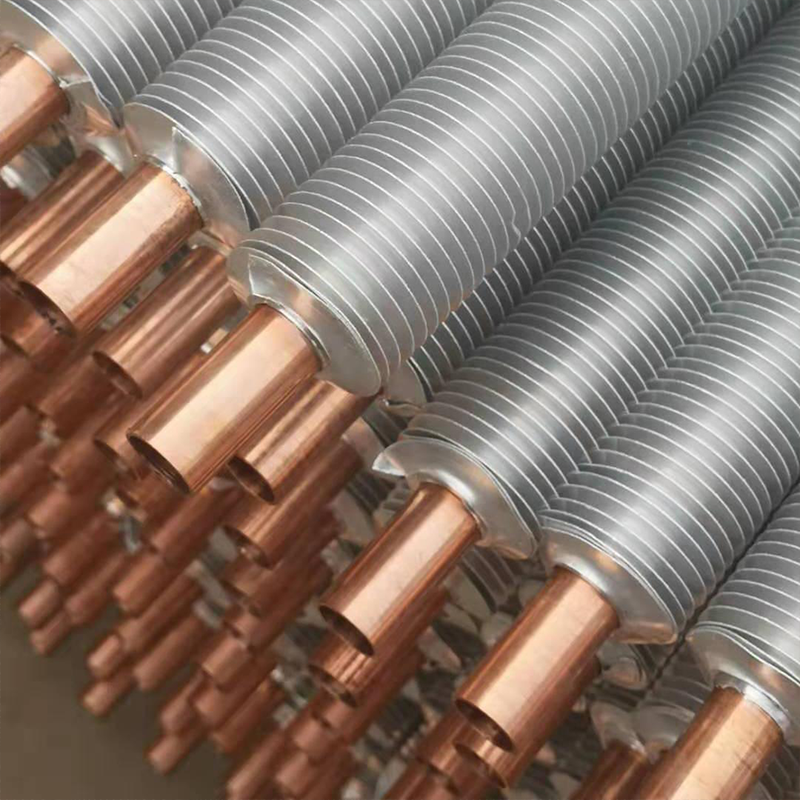
This is where specialized solutions come to the rescue, such as the company's productsWuxi Kaisheng Electric Power and Petrochemical Equipment Co., Ltd.. The company specializes in the design and manufacture of high-tech equipment, including titanium shell-and-tube heat exchangers, ASME high-pressure systems and 316 stainless steel corrugated tube bundles. Particular attention is paid to materials with enhanced corrosion resistance: C46400 marine brass, C70600 copper-nickel alloys and N06625 nickel alloys.
Why is this important for smart tank owners? Because sensors are often installed directly on tanks or in associated heat exchange circuits. If the tank shell, tubesheet (321 steel or brass), or the heat exchanger itself is corroded, it will cause leaks, pressure variations, and sensor data corruption. Wuxi Kaisheng products, certified to strict international PED and ASME standards, ensure the stability of the physical parameters of the environment. High thermal efficiency and resistance to extreme pressures and temperatures ensure that the data collected by your IoT sensors reflects the actual process rather than the effects of hardware degradation. This is especially true for projects in shipbuilding, seawater desalination and energy conservation, where the reliability of each component in the chain directly affects the safety of the entire production.
Frequently Asked Questions
How long do batteries last in IoT sensors?
Battery life directly depends on the polling frequency and the quality of the radio signal. When configured to send data once every 30-60 minutes and use LoRaWAN or NB-IoT networks, modern lithium-thionyl chloride batteries provide operation for 5-7 years. However, if the signal is weak, the sensor increases the transmitter power, which dramatically shortens the life of the battery. In our practice, there were cases when, with poor coverage, the battery ran out within 1.5 years. We recommend choosing sensors with standard replaceable D or C size batteries, rather than built-in batteries that cannot be replaced in cold weather.
Can these systems be used in hazardous areas?
Yes, but only if you have the appropriate certificate. For Russia, this is the certificate TR TS 012/2011 “On the safety of equipment for working in explosive environments.” The marking must contain a code for the type of explosion protection (for example, 0Ex ia IIC T4 Ga). Ordinary civilian IoT sensors are strictly prohibited from being used in zones of class 0 and 1. The use of uncertified equipment entails huge fines from Rostekhnadzor and cancellation of insurance in the event of an accident. Always request a copy of the certificate from the supplier before paying.
What to do if the connection is lost?
High-quality industrial gateways have a data buffering function. If communication with the server is lost, the device stores readings in internal non-volatile memory (usually up to 30-60 days). As soon as the channel is restored, the gateway automatically transmits the entire accumulated archive with timestamps. Thus, there are no data holes in the system. However, for critical processes (for example, monitoring pressure in a reactor), buffering alone is not enough - a backup alarm system via GSM/SMS is needed, which will work even in the absence of the Internet.
Is it difficult to scale a system from 5 to 500 tanks?
The LoRaWAN-based architecture scales linearly and very easily. One gateway can serve up to 100-200 sensors, depending on the building density and radio environment. To increase your fleet from 5 to 500 units, you just need to add 2-3 more gateways and register new sensors in the network. No new cables or major infrastructure changes are required. This is the main advantage of wireless solutions over wired analogues, where adding each new point requires costs for cable routing and installation work.
Conclusion and next step
The transition to smart tanks with IoT control sensors is an evolutionary step that separates modern efficient production from market outsiders. This is not just a matter of convenience, it is a matter of business survival in the face of rising prices for raw materials and tightening environmental standards. Technologies of 2026 allow you to achieve complete transparency of processes with minimal capital costs, provided that reliable basic equipment is used, such as solutions from leading petrochemical equipment manufacturers.
We have proven it at hundreds of facilities: those who implement monitoring today receive a competitive advantage tomorrow in the form of reduced costs and the absence of emergency downtime. Don't wait for a problem to become a disaster. Start by auditing your tank fleet and calculating the potential economic impact.
If you are ready to discuss the details of the project at your site,contact our engineers. We will conduct a free preliminary analysis of your situation and propose the optimal equipment configuration based on your budget constraints and technical requirements. Remember: the right sensor, installed in the right place, pays for itself faster than any marketing campaign.
For more information about connection standards and integration examples, visit our sectionindustrial solutions for liquid storage.