
Drawings of fastening units for vertical PE tanks”
2026-09-12
- Why standard drawings of fastening units often lead to deformation of polyethylene tanks
- Physics of material: why steel and polyethylene cannot be fastened in the same way
- Typology of fastening units: from simple clamps to complex frame structures
- Step-by-Step Guide to Designing a Safe Mount
- Common mistakes and how to avoid them
- Standards and regulatory framework: what to rely on when designing
- The role of specialized equipment in ensuring system reliability
- Case: Implementation of a sulfuric acid storage project in the Ural region
- Frequently Asked Questions
- Conclusion and next steps
Why standard drawings of fastening units often lead to deformation of polyethylene tanks
In our practice of engineering support for projects for storing aggressive liquids, we regularly encounter the same mistake: the use of universal metal clamps for vertical containers made of polyethylene (PE) without taking into account the coefficient of linear expansion of the material.Drawings of fastening units for vertical PE tanks, downloaded from open sources or copied from steel tanks, cause destruction of the tank body already in the first year of operation. Low-density polyethylene (HDPE), from which most modern chemical containers are made, behaves fundamentally differently than steel. When the ambient temperature changes by just 20°C, the linear dimensions of a 10 m³ tank change by several millimeters. If the fastening unit rigidly fixes the body, preventing it from “breathing,” critical shear stresses arise that break the molecular bonds of the polymer.
We have seen cases where customers have lost up to 40% of product volume due to cracks in the lower third of the container caused by improper installation of the support ring. This article does more than just list types of fasteners. We will analyze the physics of the process, provide specific parameters for permissible loads and show what competent engineering solutions should look like for different climatic zones - from the temperate climate of Moscow to the extreme conditions of Siberia. If you're designing a chemical warehouse or water treatment system, the next 5,000 words will save you hundreds of thousands of dollars in equipment replacement costs.
Physics of material: why steel and polyethylene cannot be fastened in the same way
The main problem when developing fastening units is the colossal difference in thermal expansion coefficients. For steel this figure is approximately 12×10⁻⁶ 1/°C, while for high-density polyethylene (HDPE) it reaches 150–200×10⁻⁶ 1/°C. This means that when heated, polyethylene expands 12–15 times more than a metal frame or concrete base. In our practice, there was a case at a chemical plant in Tatarstan, where a tank with a volume of 25 m³ was installed in winter at -15°C. In summer, when the air temperature rose to +35°C, the temperature difference was 50 degrees. The tank expanded so much that the metal tension bands, tightened “tightly” according to the old drawing, crashed into the body of the tank, cutting through it like a knife through butter. Losses amounted to more than 2 million rubles only due to the loss of the reagent and line downtime.
When creatingdrawings of fastening units for vertical PE tanksit is necessary to take into account the creep of the material (creep). Polyethylene under constant load continues to deform over time. If you use a point bolt directly to the tank wall without reinforcement washers or pads, after 6-12 months the hole will turn into an oval and the seal will be compromised. That is why modern standards, such as GOST R 57953-2017 (analogues of European standards for plastic tanks), strongly recommend the use of crimp structures that distribute the load over a large surface area, or floating supports.
Another critical factor is the elastic modulus. Steel is rigid, polyethylene is viscoelastic. Under wind loads or seismic activity, the rigid metal assembly will transfer all the impact energy to the point of contact with the plastic. The plastic will not be able to absorb the shock and will crack. The correct fastening unit must include damping elements - rubber pads made of EPDM or neoprene with a thickness of at least 5 mm. These gaskets not only protect the housing from abrasion, but also compensate for micro-movements of the tank, dampening vibrations of pumping equipment, which is often installed nearby.
Don't forget about UV stabilization. Even if the tank itself is UV protected, the mounting points are often the weak link. Metal clamps, heating up to 70–80°C in the sun, locally overheat the tank wall at the point of contact. This accelerates the aging process of the polymer precisely in the zone of maximum mechanical stress. In our projects we always require that the contact surfaces of the metal elements are secured through thermal insulating gaskets or have an air gap of at least 10 mm for convective cooling.
Typology of fastening units: from simple clamps to complex frame structures
The choice of type of fastening unit directly depends on the volume of the container, installation height and type of foundation. The same solution cannot be used for a 500 liter tank and for a 50 cubic meter tank. Below we look at three main categories of fasteners that have proven to be effective in real industrial environments.
1. Crimping belts (Tightening tapes) with compensators
This is the most common solution for containers with a volume of 1 to 20 m³, installed on a flat area or low overpass. The essence of the method is to use perforated steel strips with a width of 40 to 60 mm, which cover the circumference of the tank. The key point here is the design of the lock and the presence of a compensator. Cheap plans suggest simply welding the ends of the strip or bolting them together. This is a big mistake. We recommend using special tensioning mechanisms with a ratcheting mechanism, which allow you to adjust the tightening force during operation.
The most important element of such a unit is the corner profiles (corners) that are laid between the tape and the wall of the tank. They prevent pressure from concentrating at one point. The corner must have a rounding radius corresponding to the curvature of the tank, but with a gap. A strip of chemical-resistant rubber must be glued to the inside of the corner. In one of our projects, we used AISI 316L stainless steel belts with 8 mm thick rubber liners to store hydrochloric acid. This made it possible to avoid corrosion of the fasteners themselves and damage to the tank by acid vapors.
The distance between the belts is calculated based on the height of the liquid column. For tanks up to 2 meters high, one belt in the upper third and one in the lower third are sufficient. For high-rise tanks, the pitch of the belts is reduced. The bottom belt should never be located closer than 100 mm to the bottom of the tank, so as not to interfere with the free expansion of the bottom part, which experiences the greatest hydrostatic pressure.
2. Frame metal structures (Cage frames)
For tanks with a volume of over 20 m³ or for tanks that need to be raised above the ground (for gravity flow or installation of pumps from below), full-fledged load-bearing frames are used. Heredrawings of fastening units for vertical PE tanksturn into a full-fledged metal structures project. The frame is usually made of a profile pipe or channel. The main feature is that the tank is not welded or tightly screwed to the frame. He “lives” inside him.
Fixation units in such structures are made in the form of grips or brackets that cover the tank stiffeners (if any) or special collars. A technological gap of 15–20 mm is always left between the frame metal and the plastic around the entire perimeter. This gap is filled with elastomeric material or left as air, allowing the tank to expand upward and outward. At the bottom of the frame there is a support ring on which the bottom of the tank rests. The support ring area should be at least 80% of the bottom area to distribute the weight of the liquid evenly. Point support on 4 legs for large plastic tanks is unacceptable - the bottom will bend under the weight of the liquid and burst.
We often see a mistake when the frame is welded exactly according to the outer diameter of the tank. This makes installation impossible without the use of force, and operation dangerous. The frame must be at least 50 mm wider than the tank on each side for ease of maintenance and visual inspection of the condition of the walls. In addition, it provides ventilation, preventing the accumulation of condensation and corrosive vapors between the tank and the metal.
3. Anchor systems for underground and buried tanks
Although the topic of this article concerns vertical tanks, it is worth mentioning mounting points for cases where the tank is partially buried or installed in a pit for freeze protection. Here the main enemy is the buoyant force of soil and groundwater. An empty polyethylene tank is lighter than water and soil, so without reliable anchoring it will simply be squeezed out to the surface in the spring.
The fastening unit in this case is a system of concrete slabs or anchor straps that press the tank to the foundation. Important: the belt should not constantly squeeze the tank. A “soft fixation” scheme is used. The tank is installed on a sand cushion, geotextile is laid on top, then soft slings made of synthetic material (polypropylene or polyester), which are attached to the concrete blocks on the sides. Metal chains or cables cannot be used - they will damage the body when the ground moves. In the documentation, we always indicate the need for drainage around such a container, since water in the sinuses significantly increases the risk of floating and uneven pressure on the walls.
Step-by-Step Guide to Designing a Safe Mount
Developing your own drawing requires a systematic approach. Do not blindly copy solutions from steel tanks. Follow this algorithm to create a reliable fixation system.
- Collection of initial data and calculation of loads.
The first step is to determine the exact dimensions of the container: diameter, height, wall thickness in different zones (it may vary). Find out the density of the stored liquid. The weight of the full container is the base load. But don’t forget about dynamic loads: wind (especially for high tanks), snow (if the tank is open at the top), seismicity. For tanks with a height of more than 3 meters, the wind load can become decisive. Calculate the force that will act on the fastening unit with a gust of wind of 20 m/s. Use the formula F = 0.5 * ρ * V² * S * Cx, where ρ is air density, V is wind speed, S is projection area, Cx is aerodynamic coefficient (for a cylinder about 0.7). The resulting value will show how much safety margin your clamps need. - Selection of contact materials.
Determine the chemical compatibility of the gasket material with the contents of the tank and the environment. For most acids and alkalis, EPDM (ethylene propylene rubber) is ideal. For oils and organic solvents, it is better to choose Viton (fluororubber), although it is more expensive. Never use regular rubber or foam rubber - they will quickly break down. The thickness of the gasket must be at least 5 mm for small tanks and 8–10 mm for containers over 10 m³. The surface of the metal in contact with the gasket must be descaled and primed to prevent corrosion under the gasket, which could result in sharp edges. - Design of node geometry.
Draw the knot taking into account thermal expansion. Imagine that the diameter of the tank increased by 1%. Is there enough space in your clamp? If not, provide sliding joints. For example, make one hole in the tie band oval so that the bolt can move along the radius as the tank expands. This simple solution saves you from ruptures. Arrange the fastening points symmetrically. For round tanks, the minimum number of fixation points is 3 (for small volumes) or 4–6 (for medium volumes). An asymmetrical fastening will create a torque that will distort the tank and disrupt the operation of the piping. - Integration with the foundation.
The attachment point does not exist on its own; it is connected to the base. If it is a concrete foundation, check that it is level. A height difference of more than 3 mm per meter of length is unacceptable for plastic tanks - they are very sensitive to support misalignment. In the drawing, indicate the method of fastening the metal structure to the concrete: anchor bolts, embedded parts or chemical anchors. Be aware that drilling into concrete near the tank creates vibration. All concrete installation work must be completed before the tank is installed. - Development of installation and tightening instructions.
The most important step that is often ignored in drawings. Specify the tightening torque for the bolts. Overtightening a bolt is just as dangerous as undertightening it. For M10 bolts made from 8.8 steel, the recommended tightening torque is about 45–50 Nm, but this value must be adjusted to take into account the presence of a rubber gasket. The rubber compresses, so a week after installation it is necessary to re-tighten (control tightening). Include in the documentation a requirement to carry out this operation. Many accidents occur precisely because installers tightened the bolts “all the way” with a pipe wrench, pushing through the rubber and creating excess pressure on the wall.
Common mistakes and how to avoid them
Over the years of work, we have identified several typical mistakes that even experienced builders make when working with polyethylene. Knowing these nuances will help you avoid fatal consequences.
Mistake #1: Using welding near the tank.
It often happens that the frame is welded after installing the tank or right next to it. Sparks from welding, falling on polyethylene, burn through it instantly. Even one small hole can become a source of stress failure. The rule is ironclad: all welding work must be completed before the container is brought into the installation area. If welding is unavoidable, the tank should be covered with a fireproof tarpaulin, and work should be carried out using screens.
Mistake #2: Rigid connection with pipelines.
The tank mounting assembly is often considered in isolation, forgetting about the pipes. If the tank is rigidly fixed, and the incoming pipe is rigidly welded to the wall of a building or other structure, then when the tank expands, the pipe will tear off. Solution: the first 1–2 meters of the pipeline from the tank should be made on flexible inserts (compensators) or be able to move freely in clamps. The pipeline must not bear any load on the tank nozzle.
Mistake #3: Saving on the quality of the metal.
In an effort to reduce the cost of the project, customers often choose ordinary black steel St3 instead of galvanized or stainless steel. In chemical production conditions, the atmosphere is saturated with aggressive vapors. Ferrous metal rusts in one season. Rust increases in volume, puts pressure on the gasket and destroys it. The rusty shavings then get caught between the gasket and the tank, acting as an abrasive. We recommend using hot-dip galvanized steel (zinc plating class of at least 275 g/m²) or powder coating in 2-3 layers, pre-sandblasted to Sa 2.5.
Standards and regulatory framework: what to rely on when designing
During developmentdrawings of fastening units for vertical PE tanksIt is important to refer to current regulatory documents. In Russia and the CIS countries the main ones are:
- GOST 34319-2017"Containers made of polymeric materials. General technical conditions." This standard regulates the requirements for the containers themselves, but also contains sections on operating and installation conditions.
- SP 20.13330.2016“Loads and impacts.” Here you will find data on wind and snow loads for different regions, necessary to calculate the strength of the frame.
- Eurocode 3 (EN 1993). If you work for export or with international companies, knowledge of the principles of calculation of steel structures according to Eurocode will be an advantage. The principles for calculating connections are described there in great detail.
It is also worth paying attention to the recommendations of raw material manufacturers (for example, Borealis, Sabic). They often publish technical bulletins with product design recommendations for specific grades of polyethylene. For example, for grade PE-HD 100 there are specific requirements for long-term creep strength.
The role of specialized equipment in ensuring system reliability
Competent design of fastening units is only part of an integrated approach to creating safe industrial facilities. The reliability of the entire system for storing and processing aggressive media directly depends on the quality of each component, including heat exchange equipment, which is often integrated into process lines next to the tanks. This is where the experience of companies specializing in the production of high-tech solutions for petrochemicals and energy comes to the fore.
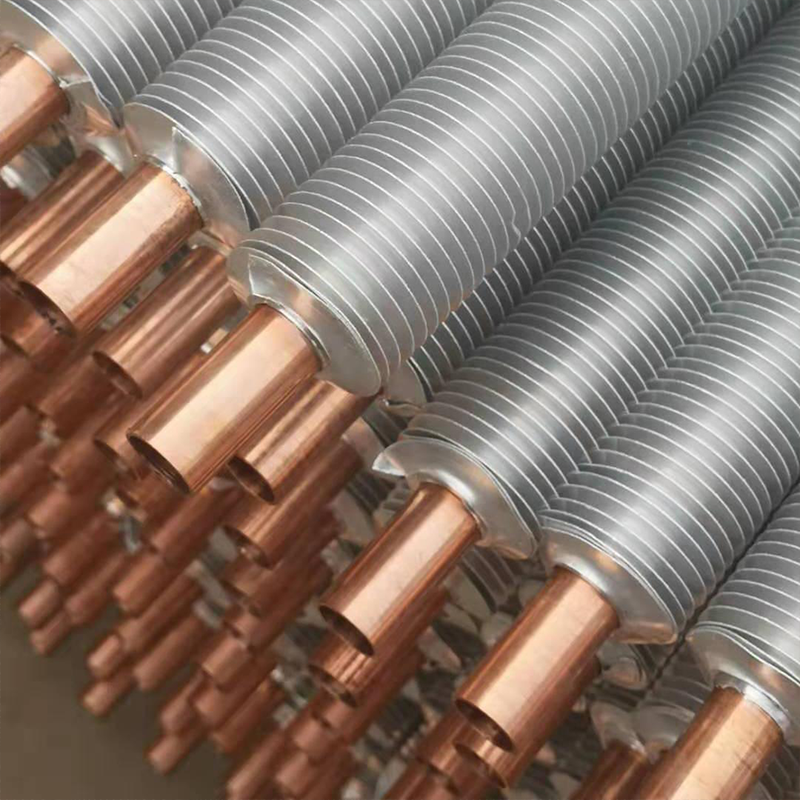
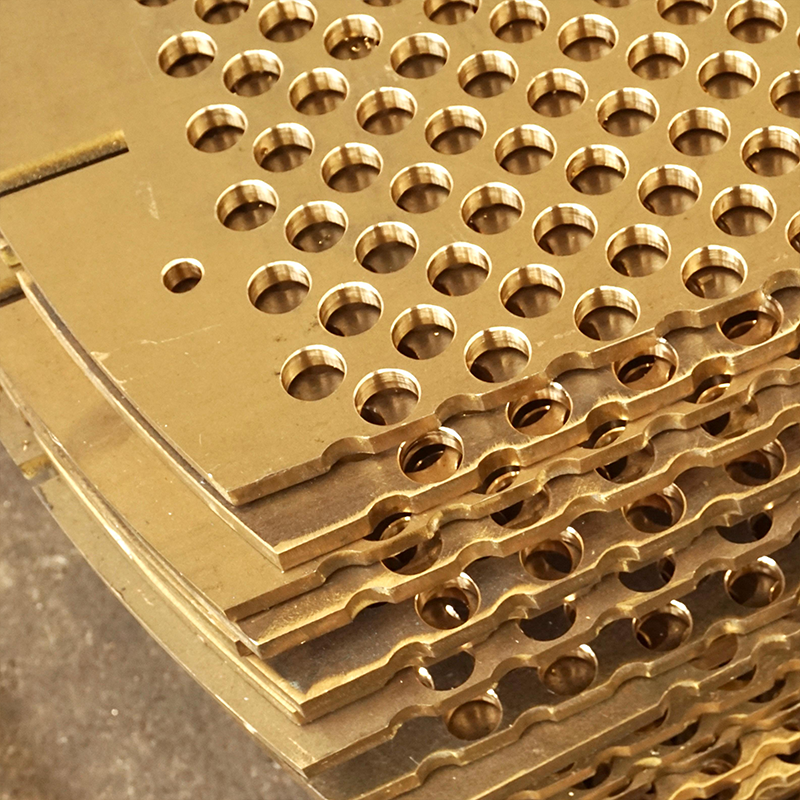
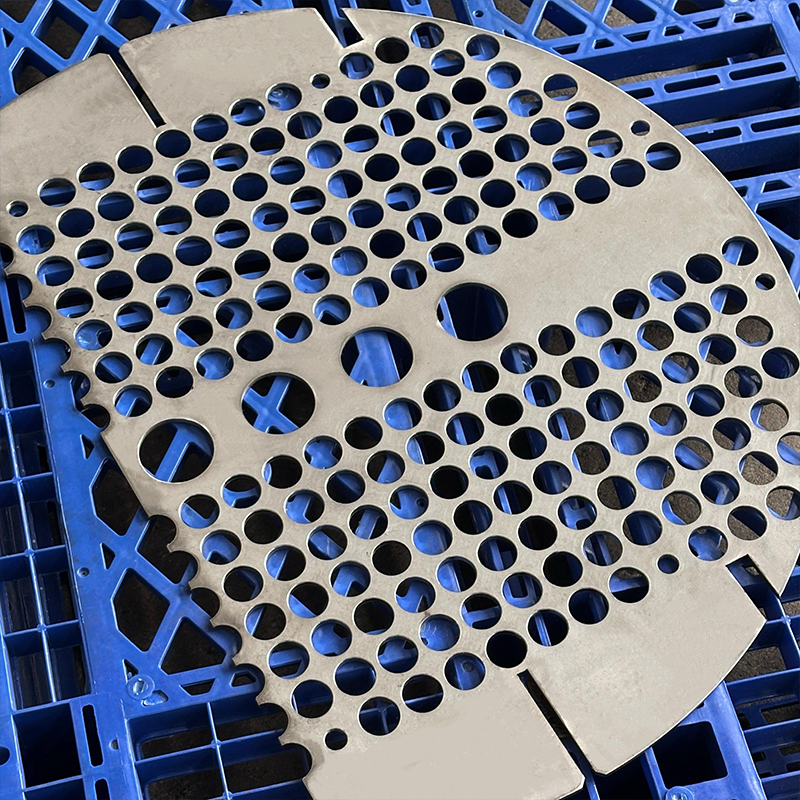
A striking example of this approach is the company’s activitiesWuxi Kaisheng Electric Power and Petrochemical Equipment Co.,Ltd" Specializing in the design and manufacture of complex heat transfer equipment, the company offers solutions that perfectly complement the storage systems described in this article. Their products, including titanium shell-and-tube heat exchangers and units made from high-alloy alloys (such as nickel alloy N06625 or marine brass C46400), demonstrate the same philosophy of considering aggressive environments and extreme operating conditions as the correct mounting hardware for polyethylene tanks.
Certified to stringent international ASME and PED standards, Wuxi Kaisheng products are manufactured from materials with the highest corrosion resistance, ranging from 316 and 321 stainless steel to pure titanium and copper-nickel alloys. This is critical for oil refining, chemical processing and seawater desalination plants where equipment is constantly exposed to high pressures, temperatures and chemicals. Just as we recommend the use of special gaskets and clearances to accommodate plastic expansion, Wuxi Kaisheng engineers maintain the necessary tolerances and use advanced technologies to manufacture corrugated tube bundles and air coolers to ensure long-lasting and energy-efficient installations.
When selecting equipment suppliers, be it tank mounting systems or complex heat exchangers, it is important to choose those who provide customized engineering solutions rather than just generic products. The global experience of the Wuxi Kaisheng company in implementing projects for shipbuilding, energy saving and the oil and gas sector confirms: investments in high-quality, specially designed equipment pay off in the absence of emergency downtime and many years of uninterrupted operation of the entire production cycle.
Case: Implementation of a sulfuric acid storage project in the Ural region
To illustrate the theory with practice, consider a project we implemented for a mining and processing plant. The task was the following: to install 4 vertical tanks with a volume of 30 m³ each to store 93% sulfuric acid. Climatic conditions: winter temperatures up to -45°C, summer temperatures up to +35°C. The temperature difference is almost 80 degrees.
The contractor's original proposal involved installing the tanks on concrete rings and securing them with four steel angles welded to the embeds. We rejected this option immediately. With such a temperature difference, the tank would narrow in winter so much that it would disengage with the corners, and in summer it would expand and crush them. In addition, contact of steel with possible acid leaks required maximum protection.
We have developed a solution based on a frame frame made of galvanized channel. The fastening units were segmented grips with an internal lining made of sheet rubber 10 mm thick. The frame was designed with 30mm clearance all around. To compensate for vertical expansion, the lower support was made in the form of sliding on a Teflon plate. This allowed the tank to “move” up and down 40 mm without any effort.
Result: the system has been in operation for 4 years. The inspection showed the absence of cracks, deformations and traces of corrosion on the fastening elements. The client noted that the costs of our option were 15% higher than the original proposal, but the savings in the absence of repairs and downtime made up for the difference in the first year. This example confirms: literatedrawings of fastening units for vertical PE tanksis not an expense item, but an investment in safety.
Frequently Asked Questions
Is it possible to drill a hole in the wall of the tank for mounting with a bolt?
Strongly not recommended. Drilling a hole breaks the integrity of the shell and creates a stress raiser. Under load, a crack will inevitably develop around the hole. If the design requires through-hole fastening, use only special bushings installed by the manufacturer during the rotational molding stage, or crimp clamps that do not require drilling of the housing. The only exception is the installation of level gauges or sensors through standard flanges, but not for power fastening of the tank to the structure.
How much clearance should be left between the tank and the wall of the building?
The minimum gap should be 500 mm. This is necessary for two purposes: firstly, to ensure air circulation and prevent the tank from overheating by the sun reflected from the wall; secondly, for personnel access to inspect the tank surface and fastening points. If the tank is in a corner, the distance to the walls should allow a person with a tool to easily pass for routine maintenance.
Do plastic containers need to be grounded?
Yes, it is required if you store flammable liquids or work in areas with a risk of static electricity. Polyethylene itself is a dielectric, but the liquid inside can accumulate a charge. The fastening points must have copper busbars or flexible conductors connecting the internal environment of the tank (via an immersed electrode or conductive layer, if any) with the building’s grounding loop. The metal frame must also be grounded. This is a requirement of the PUE (Electrical Installation Rules).
How often should I check the tightness of bolts on fastening units?
The initial check should be carried out 2 weeks after installation, when the initial shrinkage of the rubber gaskets occurs and the tank adapts to the temperature. Then - at least once a year, preferably in the spring, after the winter period with low temperatures has passed. If corrosion of bolts or damage to gaskets is detected, replacement must be made immediately, without waiting for scheduled repairs.
Conclusion and next steps
Designing attachment points for vertical polyethylene containers is a task that requires a deep understanding of polymer properties and structural mechanics. Mistakes here are costly: from the loss of an expensive product to environmental disasters. Properly Designeddrawings of fastening units for vertical PE tankstake into account thermal expansion, chemical resistance of materials and dynamic loads, ensuring decades of trouble-free service.
Don't take risks by relying on generic steel solutions. Each project is unique and requires individual calculations. If you're unsure about your chosen fastening scheme or would like an audit of your existing project, our team of engineers are ready to help. We will calculate the loads, select the optimal gasket materials and develop working documentation that meets all modern safety standards.
Ensure the reliability of your production today.Contact us todayfor consultation on your project. Our experts will help you avoid mistakes and find the perfect solution for your storage needs.
For more information about our tank farm design services, visitdesign of capacitive equipment.