Ergonomics of workplaces on PP winding lines”
2026-09-08
- Why does the ergonomics of workplaces on PP winding lines determine the profitability of production?
- Anatomy of typical mistakes: where profits are lost in the winding section
- Key parameters of an ergonomic operator workstation
- Technical solutions to reduce physical activity
- The influence of environmental factors and lighting on product quality
- Compliance with safety standards: GOST, ISO and EAC
- Business case for investing in ergonomics
- An integrated approach to the reliability of production lines
- Frequently Asked Questions
- Conclusion and next steps
Why does the ergonomics of workplaces on PP winding lines determine the profitability of production?
Ergonomics of workplaces on PP winding linesis not just a matter of operator comfort, but a critical factor in production efficiency, directly affecting cycle speed, defect rates and employee turnover. In our practice, we have repeatedly encountered a situation where a polypropylene extrusion line produced ideal technical parameters, but the overall output remained low due to personnel fatigue and errors in roll readjustment. We see how an incorrect table height or lack of a rotating mechanism forces the operator to make hundreds of unnecessary movements per shift, which over the course of a year results in losses of tens of thousands of euros.
Many equipment buyers focus solely on extruder speed (kg/hour) and motor power, ignoring the human factor. This is a fundamental mistake. The winding line is the interface between machine and man. If this interface is poorly designed, the operator becomes a bottleneck. In this article, we'll look at the specific engineering solutions, safety standards, and business cases that transform an ordinary workplace into a high-performance hub. We rely on real experience in modernizing lines in Russia and the CIS countries, where climatic conditions and GOST standards impose special requirements on equipment.
Anatomy of typical mistakes: where profits are lost in the winding section
Let's face it: most shops producing packaging films and polypropylene bags operate by inertia. Equipment is often arranged as the space allowed 15 years ago, and not as required by the technological process.One of our clients encounteredchronic injuries to the wrists and back of operators. The audit revealed that winding shafts weighing up to 40kg had to be lifted manually from the floor to a height of 1.2 meters more than 200 times per shift. This is not just a safety violation; this is a direct loss of money due to sick leave and a decrease in the pace of work in the second half of the shift.
The second common problem is poor visibility of the quality control area. The operator must visually assess the winding density and the absence of fabric defects. If the control panel or inspection area is outside the natural viewing angle (approximately 15 degrees below horizontal), the worker is forced to constantly bend or turn the body. Over an 8-hour shift, this creates a colossal static load on the spine. We have recorded cases where, due to an awkward position, the operator missed the moment when the thread or film broke, which led to damage to the entire roll and the line stopping for 15–20 minutes for refilling.
The third mistake concerns the organization of space around the line. Often finished product carts block access to emergency buttons or tension adjustment panels. In an emergency, seconds are everything. In addition, if the operator has to go through extra steps to obtain consumables (cases, scissors, markings), his attention is scattered.Ergonomics of workplaces on PP winding linesrequires everything you need to be within arm's reach, without the need for squatting or bending.
We are also seeing a lighting problem. Polypropylene film is often transparent or translucent. Defects such as gel particles or uneven thickness are only visible at a certain angle of incidence of light. Standard shop ceiling lighting often creates glare on the shaft surface, blinding the operator. The lack of local illumination of the winding area leads to the fact that the defect goes to the client, and this already leads to reputational risks and fines.
Quantifying losses
To help you understand the scale of the problem, here is a calculation based on industry averages. Let's assume the line operates in two shifts. Due to inconvenient ergonomics, the shaft replacement time increases by 40 seconds. For a year (250 working days) this amounts to:
- 40 seconds × 200 replacements × 2 shifts × 250 days = 4,000,000 seconds.
- This is approximately1111 hoursnet equipment downtime per year.
- If the cost of an hour of line operation is $50, direct losses amount to$55,550.
And this is just a direct waste of time. Add to this the cost of treating injuries, compensation, and lost profits from an unfulfilled plan. Investments in ergonomic equipment typically pay for themselves within 6–9 months precisely because these hidden costs are eliminated.
Key parameters of an ergonomic operator workstation
Designing the ideal location for winding line maintenance starts with anthropometry. In Russia and the EAEU countries, we focus on data on population growth, but also take into account international ISO standards. The workplace must be adaptable, since people of different heights and physical fitness can work on the same shift. Let's look at the main elements that require immediate attention when upgrading or purchasing a new line.
Adjusting the height of the working area
The central element is the axis of the winding shaft. Its height should allow the operator to work without raising his shoulders or slouching. The optimal axle height for loading/unloading heavy shaft operations is in the range of 700–900 mm from floor level. However, since the height of operators varies, a permanent installation is not acceptable. We recommend the use of hydraulic or pneumatic lift tables, which allow the height of the platform with the sleeve to be varied between 300–500 mm.
An important nuance: the adjustment must be carried out with a pedal or button located so that the operator does not let go of the shaft. If lifting requires a lever, the operator will instinctively try to lift the load with his back, negating the benefit of the mechanism. In our practice, we have seen cases where complex electronic lift control panels were ignored by workers, and they continued to lift weights by hand because “it’s faster.”
Reach zone and location of controls
All controls that are used more than once an hour (start, stop, counter reset, tension adjustment) must be in the “golden zone”. This is the space in front of the operator at elbow level (with arms bent at 90 degrees). The horizontal distance is no more than 40 cm from the central axis of the body. Control panels that require frequent intervention should not be placed above eye level or below waist level.
For PP winding lines, quick access to the web trimming mechanism is critical. The knife must be secured at a safe distance from moving parts, but in close proximity to the operator's hand. The use of stationary knives with protective covers is mandatory. We strongly recommend the implementation of automatic threading devices that eliminate the need to stick your hands into the danger zone of the shaft.
Flooring and shoes
This factor is often ignored, but it plays a huge role. The winding line operator spends most of his time standing. The concrete floor of the workshop is hard and cold. Working on such a floor without special mats leads to varicose veins and foot pain after just 2–3 hours of a shift. Installing anti-fatigue mats with a shock-absorbing effect reduces the load on joints by 30–40%.
In addition, the surface around the line should be non-slip. Polypropylene granules scattered on the floor turn into a skating rink. An operator falling near a running winder can result in serious injury. We require high friction coatings to be used within a 2 meter radius of the line, even in the presence of an oil film or granules.
Technical solutions to reduce physical activity
Modernergonomics of workplaces on PP winding linesimpossible without the integration of specialized mechanical assistants. Manual labor should be kept to a minimum, especially when it comes to moving loads over 15 kg (the maximum permissible limit for women according to the hygiene standards of the Russian Federation, and the recommended limit for men for repeated operations).
Systems of manipulators and balancers
To remove finished rolls with a diameter of up to 1000 mm and a weight of up to 80 kg, the use of manual force is unacceptable. The ideal solution is pneumatic balancers or vacuum manipulators. These devices allow the operator to move a heavy roll with one finger as the system compensates for the weight of the load. The operator only sets the direction of movement.
Unlike traditional hoists or overhead cranes, which require time to hook the slings and swing the load, the manipulator allows you to remove the roll from the shaft and install it on the trolley in 10-15 seconds. This not only speeds up the process, but also eliminates the risk of the roll falling on your feet. In one project for a big-bag manufacturer, the introduction of a vacuum gripper reduced the bale removal cycle time from 45 to 12 seconds and completely eliminated back pain complaints.
Automation of liner changes (Core Loading)
Loading empty cardboard or plastic sleeves onto the shaft is a monotonous task that causes carpal tunnel syndrome due to repetitive hand movements. Automatic core loaders solve this problem. The operator simply loads a pack of cartridges into the magazine, and the mechanism itself puts them on the shaft in the desired position.
This solution also improves winding accuracy. The human factor leads to the fact that the sleeves are placed with a slight offset, which causes shaft runout at high speeds (above 300 m/min). Automation ensures perfect centering. For lines operating at high speeds, this is a requirement, not a luxury.
Rotating devices for shafts
When winding wide webs (more than 2 meters), the alignment of the edge of the web (edge guiding) requires constant adjustment. If the shaft is rigidly fixed, the operator has to run from one end of the line to the other. Rotating arms, which allow the shaft to be slightly tilted or moved axially from a remote control, save thousands of steps per shift. Some modern systems allow you to control the position of the shaft remotely without leaving the central control station.
The influence of environmental factors and lighting on product quality
Ergonomics is not only about mechanics, but also about sensory perception. The operator must see what the machine is doing. Polypropylene is a material with a specific optical structure. At certain lighting angles, it becomes practically invisible, or, conversely, blinds with reflected light.
Specifics of lighting for PP
The standard lighting requirement in industrial workshops is 300–500 lux. However, this is not enough for the quality control area on the winding line. We recommend installing local LED lights with adjustable angles directly above the contact area of the web with the shaft. The light should fall at an angle of 30-45 degrees to the surface of the film to reveal irregularities, streaks and inclusions.
It is important to use luminaires with a high color rendering index (CRI > 80) so that the operator can correctly evaluate the color of the product (especially important for color masterbatches). Flickering of lamps (stroboscopic effect) is unacceptable, since at high shaft rotation speeds it can create the illusion of object immobility, which is deadly.
Microclimate and noise
Extrusion and winding lines generate significant amounts of heat. The temperature in the operator's area should not exceed 24–25°C. Overheating leads to decreased concentration and increased errors. Local airflow or air conditioning systems for the operator's station are necessary, especially in the summer.
The noise level from gearboxes, fans and the winding process itself often exceeds 80 dB. Prolonged exposure to such noise causes fatigue and reduces the ability to respond to audible alarms. Using noise-absorbing motor enclosures and providing quality earplugs or headphones is an essential part of an ergonomic program. We have noticed that in quiet areas, operators notice a change in engine sound (a warning sign of failure) much earlier.
Compliance with safety standards: GOST, ISO and EAC
When designing or modernizing lines, the regulatory framework must be strictly observed. Ignoring standards not only results in fines, but also creates legal risks when investigating accidents.
Russian and international standards
- GOST 12.2.003-91“SSBT. Production equipment. General safety requirements." This document regulates the general principles of protection against moving parts, requirements for controls and emergency stops.
- GOST R EN 14502-1“Cranes. Equipment for lifting loads." Applicable if built-in manipulators or hoists are used.
- ISO 14122(standard series) “Machine safety. Permanent means of access to machines.” Applies to service platforms, stairs and fences.
- TR TS 010/2011“On the safety of machines and equipment.” Technical regulations of the Customs Union, mandatory for certification of equipment in the EAEU. Marking with the EAC mark confirms compliance with these requirements.
Particular attention should be paid to the emergency stop system. The “Mushroom” buttons must be red on a yellow background, located at every point where the operator can be located and ensure that all dangerous movements are stopped in less than 1 second. In our practice, there was a case when the button was covered with a protective dust cover, which led to loss of time in an emergency. Dust protection is important, but it should not prevent immediate access.
Certifying equipment to these standards is not a bureaucracy, but a guarantee that the manufacturer has taken into account the basic risks. When purchasing a line, always request a declaration of conformity with TR CU 010/2011. If the supplier cannot provide it, this is a red flag indicating that ergonomics and safety have likely been sacrificed for a cheaper design.
Business case for investing in ergonomics
Executives often ask, “Is it worth spending an extra $5,000–$10,000 on a line for some convenience?” The answer lies in the pure mathematics of ROI (return on investment). Let's look at the benefit structure.
Reduced operating expenses (OPEX)
As we calculated above, time savings on loading/unloading cycles add up to tens of thousands of dollars per year. But there are other articles:
- Reduction of defects:A tired operator is less likely to notice defects. Reducing scrap by even 0.5% on a line with a turnover of $1 million per year saves $5,000.
- Reduced staff turnover:Heavy physical labor causes experienced operators to quit after 1–2 years. Training a new employee is expensive (loss of productivity during the training period, rookie mistakes). An ergonomic location keeps staff engaged.
- Reduced payments for injuries:One serious case of back injury can cost a company more than the cost of the entire line, factoring in settlements, lawsuits, and rising insurance premiums.
Increased throughput
If the operator is less tired, he can maintain maximum line speed for longer. At many enterprises, the actual average speed is 70–80% of the nominal speed precisely because of the human factor (frequent micro-stops, slow changeover). Raising this figure to 90-95% is equivalent to purchasing an additional line without the capital costs of a new building and foundation.
We recommend conducting an ergonomic audit before every major equipment purchase. Ask your supplier for a video of the line operating in a real workshop, pay attention to the operator’s movements. Have your employee test load the shaft. If he's uncomfortable after 15 minutes, imagine how he'll feel after 8 hours.
An integrated approach to the reliability of production lines
Although this article focuses on the ergonomics of polymer lines, the principle of creating an efficient and safe workplace is universal throughout heavy industry. Equipment reliability depends not only on operator comfort, but also on the quality of key components that ensure process stability. This is where the experience of companies such asWuxi Kaisheng Electric Power and Petrochemical Equipment Co., Ltd..
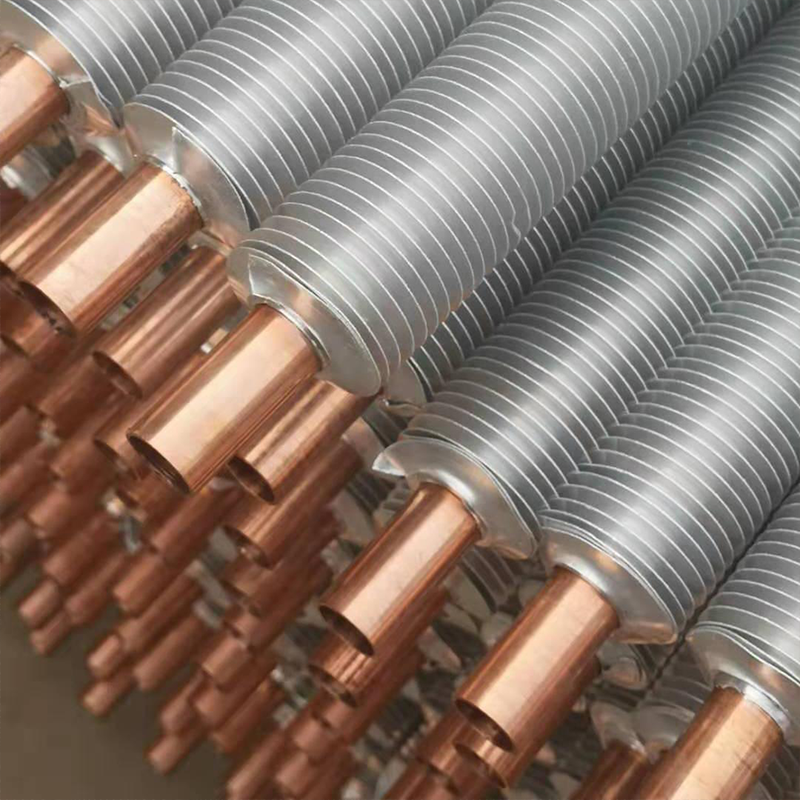
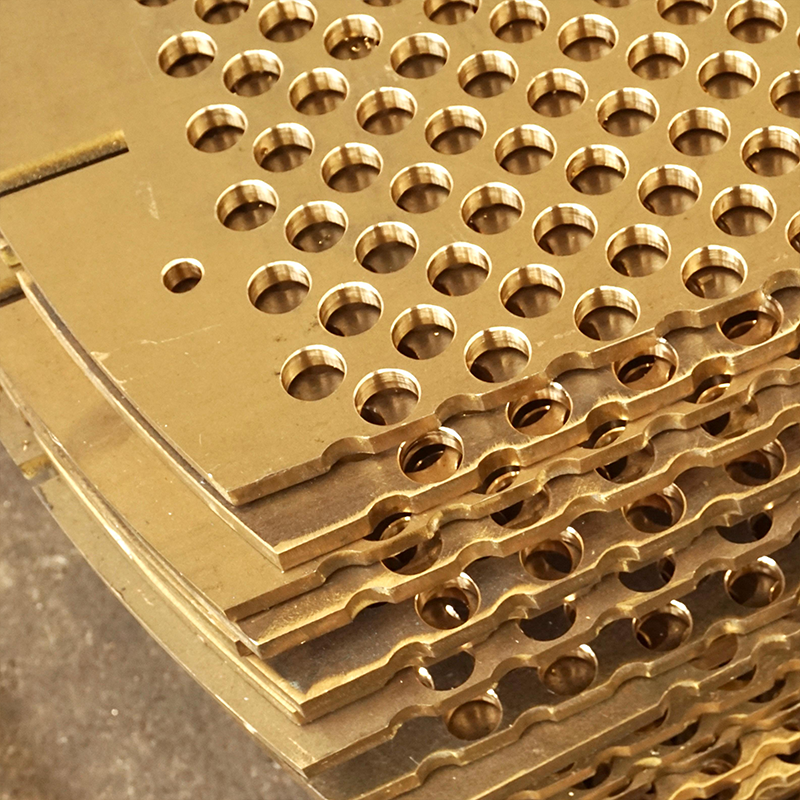
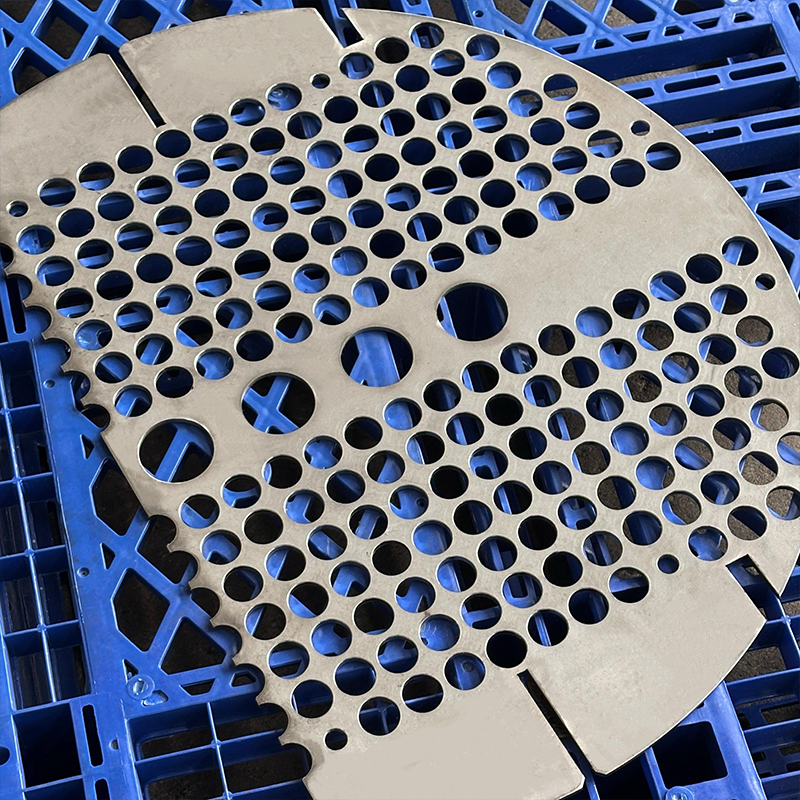
Specializing in the development and production of high-tech equipment, the company offers solutions that become the foundation for the smooth operation of enterprises. Wuxi Kaisheng LLC's portfolio includes titanium shell-and-tube heat exchangers, ASME-standard high-pressure units, as well as corrugated tube bundles made of 316 stainless steel, C46400 marine brass and copper-nickel alloys. These PED and ASME certified products offer exceptional corrosion resistance and the ability to operate in extreme high pressure and temperature environments.
The same meticulous attention to detail that goes into creating ergonomic work stations for winding operators is also required when selecting heat exchange equipment for oil refining, chemical processing or desalination applications. The use of quality 321 stainless steel or N06625 nickel alloy tubesheets minimizes downtime for repairs and maintenance, just as proper space management reduces employee fatigue. The company provides customized solutions to customers around the world, ensuring that every element of the system - from the operator control panel to the sophisticated heat exchanger - works towards overall production efficiency and profitability.
Frequently Asked Questions
What is the optimal work surface height for a winding line operator?
The optimal height depends on the type of surgery. For precise assembly and quality control (hand work), the height should be 5–10 cm below the standing operator's elbow (approximately 90–100 cm from the floor for an average height person). For operations with heavy loads (lifting shafts), the height should be reduced to 70–80 cm so that the center of gravity of the load is closer to the worker's body, minimizing leverage on the lower back. The best solution is to use tables with adjustable heights in the range of 700–1100 mm.
Is it necessary to use manipulators for shafts weighing less than 25 kg?
Yes, if the repetition rate of the operation is high. According to hygienic standards, the maximum permissible load weight when lifting and moving heavy objects constantly during a work shift is 15 kg for men, and 10 kg for women. The shaft weight of 25 kg exceeds these standards. Even if formally the law allows lifting up to 50 kg occasionally, when working in conveyor mode (hundreds of times per shift) this is guaranteed to lead to occupational diseases. A manipulator or at least a simple lifting table is required.
What lighting is best for inspecting transparent PP film?
For transparent films, the best results are obtained from a combination of transmitted and reflected light. Use LED linear lights with a frosted diffuser mounted behind the canvas (in the light) to identify inclusions and bubbles, and a 45-degree directional light at the front to identify scratches and uneven surfaces. The color temperature should be neutral (4000K) so as not to distort the perception of shades. Avoid point light sources that create harsh shadows.
Can an old line be retrofitted to improve ergonomics?
Absolutely yes. In 80% of cases, replacement of the entire line is not required. You can install external lift tables, replace control panels with remote wireless panels, add local lighting and anti-fatigue mats. Installing external manipulators next to the old line is also possible. Often, upgrading an existing equipment fleet provides greater economic benefits than purchasing a new machine, since it requires less capital investment.
Conclusion and next steps
Ergonomics of workplaces on PP winding linesceased to be a matter of “good manners” and became a necessary condition for the competitiveness of production. In the context of a shortage of qualified personnel and increasing requirements for packaging quality, a company that protects the health of its operator receives a direct advantage in the form of process stability and lack of downtime. Investments in the correct table heights, manipulators and lighting pay off faster than many marketing campaigns.
Don't wait for an accident or mass layoff to address this issue. Start small: time the operations on your current line, measure noise and light levels, survey operators about what hurts them at the end of their shift. This data will become the basis for the technical specifications for modernization.
If you're considering purchasing new equipment or upgrading existing lines, make sure the supplier pays attention to ergonomic details, not just engine specifications. A properly organized workplace is the foundation for long-term profits, just as choosing reliable components from trusted manufacturers such as Wuxi Kaisheng LLC guarantees the stability of your process chains.
Do you need advice on selecting ergonomic equipment for your production or an audit of your current line?Contact us todayto discuss the details of your project and receive an individual commercial offer. We will help you choose solutions that meet your budget and production goals.
For more information about our extrusion and coiling solutions, visitequipment for polymer processing.