
KPI for sales managers of plastic pipes”
2026-09-04
- Why standard KPIs are killing sales of plastic pipes in 2026
- KPI structure for plastic pipe sales managers: Detailed analysis
- Specifics of product lines: How different pipes affect KPIs
- System implementation: Step-by-step algorithm without sabotage
- Technical expertise as part of KPI: Why is it important for pipes
- Case: How changing KPI saved the sales department from the crisis
- Conclusion and next steps
- About the company: Expertise in the production of high-tech equipment
Why standard KPIs are killing sales of plastic pipes in 2026
In our practice of managing an industrial polymers sales team, we were faced with a harsh reality: traditional metrics such as “total revenue” or “number of calls” no longer worked for the plastic pipe market. If your sales manager fulfills the turnover plan, but the company loses margin due to shipments of low-margin assortment (for example, only gray sewer pipes instead of pressure systems), your motivation system is broken. In 2026, with logistics costs rising by 18% and competition from local extruders intensifying,KPIs for plastic pipe sales managersshould focus not on gross performance, but on the quality of the transaction and customer retention in specific niches: water supply, gas distribution and industrial wastewater.
We analyzed data over the past three years and found that companies that implemented a multi-factor evaluation system increased their net income by 23%, even as the overall market stagnated. The mistake most managers make is trying to use one-size-fits-all templates from the retail or IT sectors. Selling a coil of PEX pipe with a diameter of 16 mm and selling a batch of HDPE pipes with a diameter of 1200 mm for a water main are fundamentally different business processes that require different competencies and, therefore, different key performance indicators.
In this article we will analyze a specific methodology for calculating KPIs, based on real cases of manufacturing enterprises. We will not give abstract advice like “you need to sell more.” Instead, you will receive a ready-made formula that takes into account seasonality, type of product (pressure/non-pressure) and the complexity of tender procedures. One of our clients, a large distributor in Siberia, lost 4 million rubles in a quarter precisely because its managers were chasing the number of meters shipped, ignoring accounts receivable and returns of defective fittings.
Fundamental Mistake: Why Revenue is a False Leader
The first thing you need to do before implementing a new system is to abandon revenue as the only main indicator. In the plastic pipes segment, high revenue is often achieved through dumping. A manager may sell a ton of PP-R polypropylene pipes at a price close to the cost of raw materials, just to close the monthly plan. For the accountant this is a success, for the owner it is a loss, given overhead costs and the cost of attracting a client.
Instead of an absolute turnover figure, we recommend using the indicator“Gross profit including logistics”. Plastic pipes are a bulk product. Delivering a truckload of pipes from Moscow to Vladivostok can eat up to 40% of the margin. If a manager sells to a remote client without taking into account the transport component, he is actually giving money to the buyer. In our practice, there was a case when a deal worth 5 million rubles turned out to be unprofitable by 15% precisely because of an incorrect calculation of the logistics leverage, which the manager ignored in pursuit of a beautiful report.
Therefore, the first level of KPI should look like this:
- Gross Profit Plan:60% weight in the premium.
- Average percentage of margin on a check:Not lower than 18% for wholesale quantities.
- Logistics efficiency coefficient:Ratio of delivery cost to order amount (target value <12%).
This approach immediately cuts off “empty” sales and forces the manager to think about the structure of the order. Now he is interested in offering the client not just a cheap pipe, but a comprehensive solution with optimal transport load.
KPI structure for plastic pipe sales managers: Detailed analysis
An effective motivation system in the B2B sector of polymer products must be balanced. It cannot consist only of financial indicators. We also need to evaluate the process part: how quickly the manager responds to a request, how competently he selects technical parameters and how he works with documentation. Below is a detailed structure of indicators, divided into quantitative and qualitative groups.
1. Financial indicators (Weight: 50%)
This is the basis without which business makes no sense. However, as we have already discussed, the approach must be differentiated.
A. Implementation of the plan for marginal profit
Here we evaluate not the amount brought to the cash register, but the amount remaining after deducting the cost of production and direct selling costs. For pipe products, this is critically important, since prices for polyethylene (PE) and polypropylene (PP) are tied to stock exchange quotations and can change weekly. The manager must be able to fix the price in the contract, taking into account the risks of raw material growth. If the price of raw materials increased by 5%, and the manager sold at the old price, this is his mistake, and the premium should be reduced.
B. Sales of high-margin assortment (Mix Sales)
Selling smooth pipes alone is easy. It is more difficult to sell fittings, shut-off valves, electrofusion couplings for butt welding and geotextiles. It is related products that make the main profit for dealers. We are introducing the “Check Depth” coefficient. If the shipment contains only pipes, the coefficient is 0.8. If pipes + fittings + tools - coefficient 1.2. This encourages managers to study the nomenclature and offer the client a complete installation kit, and not just “sticks”.
B. Accounts receivable (DSO – Days Sales Outstanding)
In Russia and the CIS countries, deferred payment is a market standard. However, uncontrolled deferment kills cash flow. The manager's KPI should include penalties for late payments in excess of the agreed limit. If a manager gives a delay to an unreliable counterparty in order to fulfill the sales plan, he must bear financial responsibility. Norm: the average accounts receivable for the manager's portfolio should not exceed 45 days.
2. Process and quality indicators (Weight: 30%)
These metrics are often ignored, but they are the ones that create long-term loyalty in the construction and housing and communal services sector.
A. Conversion from CoP to Treaty
Many managers send out hundreds of commercial proposals (CPs) in the hope that someone will take the bait. This is work in vain. We track the ratio of signed specifications to submitted CPs. The normal figure for the pipe market is 15-20%. If a manager has a conversion rate of 5%, it means that he does not know how to identify needs or offers irrelevant solutions (for example, he offers PN10 pipes for a system that requires PN16). Low conversion is a signal for training, not a bonus.
B. Processing speed of incoming application (SLA)
During the construction season (April-October), every hour counts. The foreman or supplier building the facility will not wait three days for an answer. Standard: the initial response to a request with calculation of cost and shipment time must be given within 4 business hours. Violation of this standard leads to the loss of a client in favor of more efficient competitors. In our practice, automation of this process through CRM allowed us to increase this figure to 95% of compliance.
B. Technical competence and absence of complaints
Plastic pipes are a technically complex product. An error in the selection of SDR (standard dimensional ratio) or strength class can lead to rupture of the pipeline under pressure. The number of complaints due to the fault of the manager (incorrect selection, non-compliance with GOST/ISO stated requirements) should tend to zero. Even one serious accident at a facility can cost a company its reputation throughout the regional market. We are introducing the “Transaction Technical Security Index” indicator.
3. Development and retention indicators (Weight: 20%)
The pipe business is built on repeat sales. Construction lasts for months, and the need for materials comes in waves.
A. Retention Rate
Percentage of customers who made repeat purchases during the quarter. For distributors, the target is 75%. The loss of a key assembly department or precast concrete plant is a disaster. The manager is required to hold regular meetings (online or offline) with the decision makers (decision makers) of clients, even if there are no active orders right now.
B. Attracting new segments (New Business)
It is not necessary to look for new clients every month, but you need to expand your presence in new niches. For example, if a manager worked only with private housing construction (small diameters), his task for six months may be to enter the municipal improvement segment (large diameter HDPE for storm sewers). Success is measured by the number of contracts concluded with new types of organizations.
| Indicator (KPI) | Weight in premium (%) | Target value | Measurement method | Frequency of evaluation |
|---|---|---|---|---|
| Gross profit | 30% | 100% of plan | P&L report by manager | Monthly |
| Check margin | 20% | ≥ 18% | Weighted average by shipments | Monthly |
| Accounts receivable | 15% | ≤ 45 days | Turnover (DSO) | Monthly |
| Conversion of CP into an order | 15% | ≥ 18% | CRM analytics | Quarterly |
| Sales of related products | 10% | Share ≥ 25% of the check | Specification structure | Monthly |
| Customer Retention | 10% | ≥ 75% | Repeat shipments | Quarterly |
Specifics of product lines: How different pipes affect KPIs
You cannot evaluate a manager who sells pipes for heated floors by the same standards as a manager who works with gas networks. The product matrix of plastic pipes is extremely diverse, and the transaction cycle in each case is radically different.
Segment A: Pressure pipes for water supply and heating (PP-R, PE-RT, PEX)
Here the transaction cycle is short (from 3 days to 2 weeks). Decisions are often made quickly, especially in the private sector and small construction. The key success factor is speed and availability of goods in stock.
KPI specifics:Focus on warehouse turnover and number of shipments. The manager should work like a “conveyor belt”. Errors in selection here are less fatal (maximum - replacement of a section of pipe), but the frequency of errors is unacceptable.
Recommendation:Introduce a bonus for same-day shipment speed. This is critical for installers who are standing idle without material.
Segment B: Main pipelines (HDPE HDPE, large diameter PVC PVC)
It's a long game. The transaction cycle is from 3 months to a year. Participation in tenders, coordination of projects with institutions, obtaining permits. What is important here is not so much quick shipments as the ability to negotiate at a high level, knowledge of the regulatory framework (SP, SNiP, GOST R) and the ability to defend the design specification.
KPI specifics:The assessment is carried out according to the stages of the sales funnel. The bonus is paid not for the fact of shipment (which can happen in six months), but for the progress of the project: “Pipes have been included in the project”, “A sample has been agreed upon”, “A protocol of disagreements has been signed”.
Important:For such managers, the fixed part of the salary should be higher, since the risk of being left without a commission in certain months is very high.
Segment C: Cable ducting and drainage (Double wall corrugated pipes)
A specific market that depends on the infrastructure projects of providers and road services. Here, connections with general contractors and knowledge of route construction schedules play a decisive role.
KPI specifics:Emphasis on demand forecasting. Corrugated pipes take up a lot of space, and storing them “in reserve” is expensive. The manager must give an accurate forecast of shipments a month in advance with an accuracy of 90% so that production can schedule extrusion.
System implementation: Step-by-step algorithm without sabotage
The biggest problem when changing the motivation system is employee resistance. Managers are accustomed to the old rules and will sabotage the new ones by claiming that “the market has fallen” or “customers have become greedy.” To avoid rebellion and staff attrition, we recommend the following implementation procedure.
- Audit of the current situation (Week 1).
Collect data for the last 6 months. Calculate how much your managers would receive under the new system. If it turns out that their income will drop by more than 20% with the same efforts, the system requires adjustment. The new scheme should not be a tool for cutting salaries, it should be a tool for increasing the company's profits and the income of its best employees. - Pilot launch in one department or region (Week 2-5).
Don't implement changes across the entire company at once. Select one sales group (for example, the dealer relations department) and transfer them to the new KPIs. Announce that this is a 2 month trial period. During this period, guarantee payment of wages according to the old scheme if the new one turns out to be less profitable for the employee (“guarantee corridor”). This will remove the fear of change. - Training and Calibration (Week 6).
Conduct training. Explain not “how to count”, but “why”. Show with examples: “If you sell this batch with a margin of 25% instead of 15%, your premium will increase by X rubles, even with a lower volume.” Give them tools: negotiation scripts, margin calculators, access to current warehouse balances in real time. - Complete transition and revision of plans (Month 2).
After analyzing the pilot, make changes and scale the system to everyone. Important: sales plans (quanta) must be revised. You cannot leave old volume plans and demand new margins. Typically, the plan for the number of meters is reduced by 10-15%, but the plan for profit remains the same or increases. - Regular review of coefficients (once every six months).
The market is changing. New materials appear and prices for granules change. What worked in January may not work in July. Create a commission consisting of the ROP (head of the sales department), financial director and commercial director, which approves the current KPI weights every six months.
Common mistakes when setting tasks
In our practice, we have seen many unsuccessful attempts to reform sales departments. Here are the top 3 mistakes that managers fall into:
- The formula is too complicated.If a manager cannot mentally estimate his bonus 30 seconds after a closed deal, the formula does not work. It should be transparent. Avoid complex integral indicators and secret coefficients.
- Punishment for factors beyond control.Do not fine the manager for disruption of production or delay of trucks by the forwarder. It's demotivating. KPIs should only measure what the employee can directly influence.
- No ceiling.Always leave the possibility of extra earnings. If a manager exceeds the plan by 2 times, his income should increase disproportionately (by 2.5 or 3 times). This creates excitement and keeps the stars from leaving for competitors.
Technical expertise as part of KPI: Why is it important for pipes
Unlike selling office paper or household supplies, selling plastic pipes requires engineering. The client often comes not with a ready-made specification, but with a problem: “We need to supply water to the village, the soil is heaving, the freezing depth is 1.8 meters.” A manager who simply opens a price list and says “take HDPE 110 mm” will lose to the one who asks about the pressure in the system, the presence of stray currents and offers a pipe with a protective layer or the corresponding SDR.
We include knowledge certification into the system. Once a quarter, the manager takes a knowledge test:
- Differences between HDPE (PE), PP (PP), PVC (PVC) and their applications.
- Requirements GOST 18599, GOST 32415, SP 40-101-96.
- Rules for storage and transportation (so as not to sell a stale pipe that has lost its properties).
- Fundamentals of hydraulic calculations (basic level).
The test result affects the increasing coefficient for the bonus. “Excellent student” receives a coefficient of 1.1, “unsatisfactory” - 0.8 and a referral for retraining. This ensures that your customers receive expert advice, reducing the risk of returns and lawsuits in the future.
Case: How changing KPI saved the sales department from the crisis
One of our partners, a plant producing polymer pipes in the Ural region, was faced with a situation: turnover was growing by 15% per year, but profits were falling. Managers were busy with small orders from individuals, shipping 5-10 pipes at a time, while large tenders were ignored due to their complexity and duration. The old system paid a percentage of turnover, so it was unprofitable to mess around with the “big money”.
We implemented a system where 40% of the premium depended on the number of large contracts (over 500 thousand rubles) and 30% on the margin. Small orders were transferred to the Internet sales department with a fixed payment.
Results after 6 months:
- The overall turnover fell by 10% (the “husks” were eliminated).
- Net profit increased by 35%.
- The average bill increased from 45,000 to 210,000 rubles.
- Managers who were not ready to work hard quit on their own. The remaining employees increased their personal income by 40% by working on quality projects.
This example proves: correctKPIs for plastic pipe sales managerswork as a filter, clearing the business of ineffective activities and directing the team’s energy in a profitable direction.
Conclusion and next steps
Implementing a competent motivation system is not a one-time event, but a process of constantly tuning the engine of your business. In the conditions of 2026, when every ruble counts, you cannot afford to pay for imitation of vigorous activity. Plastic pipes are the foundation of infrastructure and should be sold by professionals interested in the result, not the process.
Start by auditing your current performance. Ask yourself the question: “If I implement these KPIs tomorrow, will the behavior of my managers change in the direction I want?” If the answer is “no” or “not sure,” it’s time to act. Use the structure proposed above as a framework, adapting the weights and target values to the specifics of your region and assortment matrix.
Remember that the best system is one that everyone involved in the process understands. Transparency, fairness and a profit focus are the three pillars on which a successful sales team in the polymers industry rests. Don't be afraid to experiment, but do it based on data, not intuition.
If you would like to receive an Excel calculator template for calculating these KPIs or discuss the details of implementation in your company, taking into account the specifics of your production,contact us today. Our experts are ready to conduct a free audit of your current motivation system and offer a personalized solution.
For more information about the technical characteristics of our products and terms of cooperation, visit the sectioncatalog of plastic pipes, where detailed specifications and certificates of conformity are presented.
About the company: Expertise in the production of high-tech equipment
Developing effective sales systems and managing complex projects require a deep understanding of manufacturing processes and product quality. These principles underlie our activitiesWuxi Kaisheng Electric Power and Petrochemical Equipment Co., Ltd.. The company specializes in the design, production and distribution of advanced heat transfer, power and petrochemical equipment used in the most demanding industries.
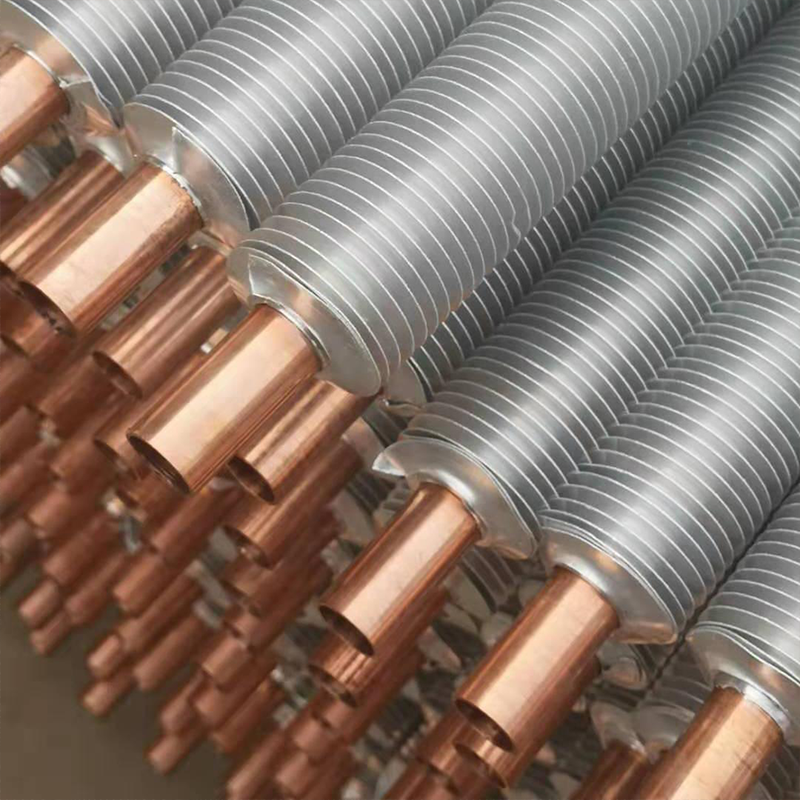
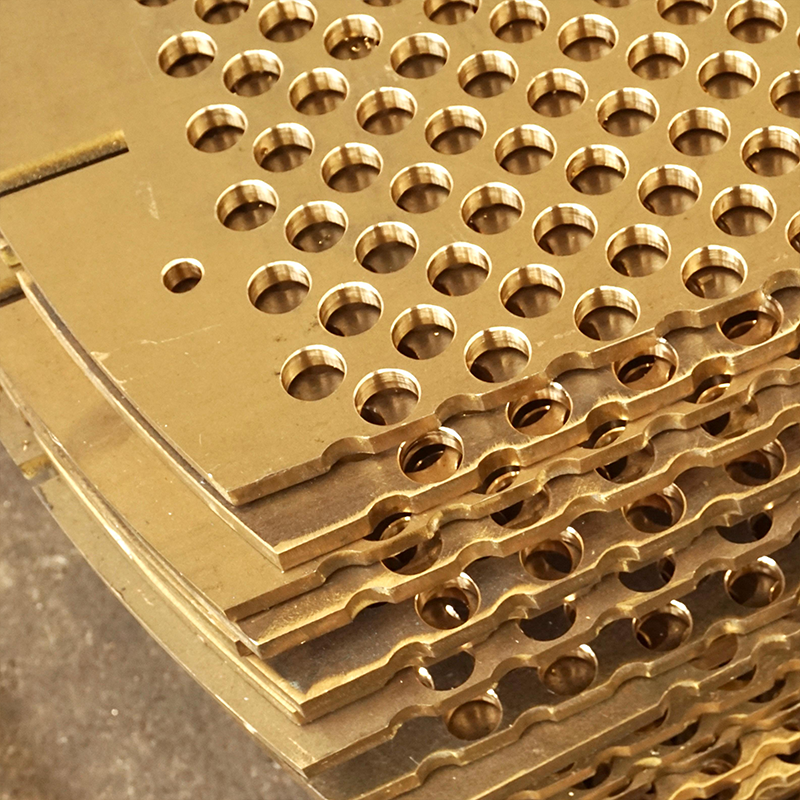
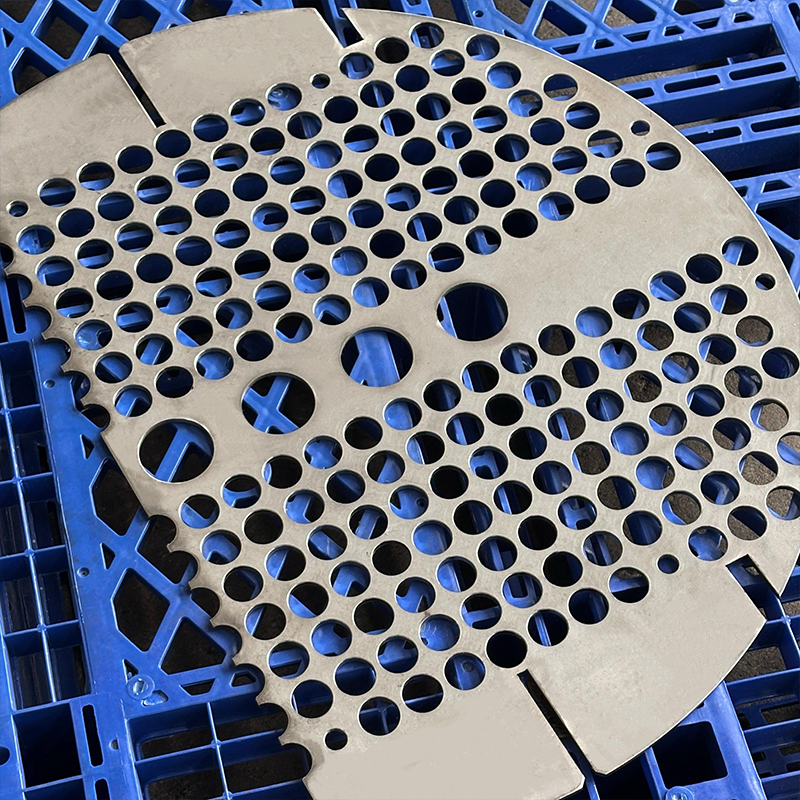
The core product portfolio includes titanium shell and tube heat exchangers, ASME high pressure heat exchangers, 316 stainless steel corrugated tube bundles, C46400 marine brass, copper-nickel alloys and N06625 nickel alloys. The company also produces air coolers, recovery boilers and critical components such as tube sheets made from 321 stainless steel, C46400 brass and C70600 alloys.
Products are made from carbon, stainless, alloy steel, as well as titanium, copper and nickel alloys. All products are certified to international PED and ASME standards, offering exceptional corrosion resistance, high thermal efficiency and resistance to extreme pressures and temperatures. The equipment of Wuxi Kaisheng LLC is widely used in oil refining, petrochemicals, chemical industry, seawater desalination, shipbuilding and energy saving. The company provides customers around the world with high-quality customized solutions and reliable equipment, demonstrating that success in the industrial sector is built on technological excellence and attention to detail.