
Team building for teams of tank manufacturers”
2026-09-05
- Why Standard Team Buildings Don't Work for Tank Factories
- Specifics of the psychology of production personnel: from welder to chief engineer
- Methodology "Production site": simulation of real problems
- Integration of safety norms and quality standards into the program
- Quantifying Performance: From Morale to KPIs
- A Practical Guide to Organizing: Steps and Mistakes
- The role of leadership and transformation of corporate culture
- Conclusion: an investment in the reliability of your business
Why Standard Team Buildings Don't Work for Tank Factories
In our practice of managing production teams, we are faced with a harsh reality: classic rope courses and office quests are not only useless for engineers and welders involved in the production of steel containers, they are often repulsive. TeamTeam building for teams of tank manufacturers- this is not about fun games, but about survival in conditions of tight installation deadlines and the highest requirements for the tightness of seams. When millions of rubles in fines for a leak or disruption of the start-up of an oil refinery are at stake, trust between the workshop and the quality control department (QC) becomes a matter of the economic security of the enterprise.
We have seen cases where the formal unity of a team led to catastrophic mistakes. One of our clients, a large plant in Tatarstan, held a traditional corporate event with alcohol and competitions. Two weeks after this event, the installation team, feeling like a “united family,” hid the defect in the bottom of the 5,000 m³ tank so as not to let down their fellow welders before handing over the project. The result was an accident during hydrotesting, a line downtime for three weeks and reputational losses that cannot be measured in money. This example proves that industry requires a specific approach, where cohesion is built on professional interdependence, and not on emotional kinship.
Real team building in heavy engineering should simulate critical production situations. It must include elements that check communication when working with KMD drawings, interaction when lifting large-sized elements with cranes, and algorithms for action when defects are detected. If your goal is to reduce the percentage of rework and speed up the passage of products through quality control, forget about paintball. You want production simulations where a mistake on the team results in job failure, not a ridiculous penalty like squats.
Specifics of the psychology of production personnel: from welder to chief engineer
The team of the tank metal structures plant (RMK) is a complex ecosystem with a clearly defined hierarchy and a specific language of communication. There are barriers here that conventional HR methods cannot overcome. Welders working in harsh conditions with increased dust and noise often perceive process engineers as people “out of touch with reality” who draw components that are impossible for high-quality assembly. In turn, the supply department is considered a “brake” of the entire process due to metal delays, and quality control specialists are considered “punishers” looking for a reason to reject the work.
In our practice, we have identified three key conflicts that destroy the effectiveness of such teams. The first is the conflict between speed and quality. The production plan requires the production of tons of finished products per day, while welding technology dictates its own rates of cooling and processing of seams. The second is the information gap. Changes in design documentation often reach the installation site late, which leads to the production of components not according to the current version of the drawings. The third is the problem of responsibility. When an emergency situation arises, for example, when the geometry of the shells deviates, each workshop tends to shift the blame to its subcontractors, instead of jointly looking for a solution.
EfficientTeam building for teams of tank manufacturersmust take these psychological profiles into account. An argon welder values concrete results and skill; abstract discussions about “corporate spirit” are alien to him. The design engineer needs to understand the technological limitations of the equipment. The event should become a testing ground where these roles change places or complement each other in extreme conditions. Only after going through a joint overcoming of a technical problem do participants begin to see in a colleague not a function, but a partner on whom their own success and bonus depend.
It is important to note that in an industrial environment, authority is earned only through competence. A team building leader cannot be just an animator. He must speak the language of GOST standards, know the difference between automatic submerged arc welding and manual arc welding, understand the terms “hydrotest” and “pneumatic test”. If the facilitator cannot answer the question about acceptable edge deviations according to GOST 23118, he will instantly lose the respect of the audience, and the event will turn into a formality.
Methodology "Production site": simulation of real problems
The most effective format for our industry is the “Production Range” methodology. This is not a game in the usual sense, but a series of engineering and technical challenges, as close as possible to the realities of a workshop or installation site. Scenarios are built around typical problems: assembly of a large unit in a limited space, prompt change in technology due to lack of material, elimination of a conditional accident during hydraulic testing.
Let's consider a specific case that we implemented for a plant in the Leningrad region. The task was: “To design and assemble a model of a tank with a volume of 100 m³ from a limited set of elements in 4 hours, ensuring tightness and compliance with geometric dimensions.” The team was divided into groups: designers, cutters, assemblers and inspectors. The condition was complicated by the fact that in the second hour of the game the “supplier” (organizers) reported a change in the thickness of the metal sheet, which required recalculation of welding modes and strengthening of the structure.
During the task, hidden communication problems were revealed. The designers produced a drawing that the assemblers physically could not implement with the available tools. The inspectors, instead of stopping the process at the marking stage, silently waited for the end of the assembly to issue a marriage certificate. This mirrored the situation in real production, where the fear of stopping the line outweighs the desire to do it well. The debriefing after such a simulation gives much more than a month of lectures on lean manufacturing. The participants themselves realize the cost of their silent inconsistency.
Another scenario is Crane Operation. The group needs to move a fragile structure (simulating the bottom of a tank) from point A to point B using a system of pulleys and ropes controlled by different people. Not a single participant sees the full picture: one controls the winch, the second monitors the angle of inclination, the third coordinates the movement via radio. The slightest desynchronization of commands leads to an “accident”. This exercise ideally trains the skill of clearly transmitting commands and trusting operators, which is critical when installing using the roll or large block method.
The key element of the methodology is the mandatory stage of reflection linked to production indicators. We don't ask "how did you feel?" We ask: “Where exactly did the failure occur?”, “Which decision was unnecessary?”, “How much time did we lose due to the lack of a common terminology standard?” The answers to these questions form the basis of a roadmap for improving the internal processes of the enterprise.
Integration of safety norms and quality standards into the program
Any event for industrialists must be based on strict compliance with occupational health and safety (OH&S) standards. Ignoring these aspects in a team building scenario sends the wrong message: “you can relax here.” On the contrary, safety rules must be integrated into the mechanics of the game as an integral condition of victory. Violation of health and safety rules during the competition should lead to disqualification or serious penalty points, regardless of the speed of completion of the main task.
We introduce knowledge testing of specific regulatory documents into the scenario. For example, the “Permit to work” stage, where the team must correctly issue a permit, identify hazardous areas and select the necessary PPE (personal protective equipment) for a specific operation. Errors in the selection of a helmet, safety belt or fencing lead to a stop in “production”. This creates a persistent stereotype: safety is not bureaucracy, but a tool that allows you to get work done without injuries or downtime.
Particular attention is paid to quality standards, such as GOST R 56407-2015 (Vertical cylindrical steel tanks for oil and petroleum products) or API 650. Game tasks set acceptance criteria similar to real ones. If the seam on the model has a conditional “lack of penetration” or excess reinforcement, the group does not receive credit, even if they assembled the structure the fastest. This teaches staff that speed without quality in our business is zero. Moreover, this demonstrates the importance of the work of the technical control department (TC) not as an enemy, but as a guarantor of product reliability.
In one of the programs we used the “Stopping Production” method. At the leader’s signal, all work stopped, and the teams had to audit their workplace for compliance with 5S requirements. Chaos in the workplace, scattered tools or lack of marking of parts led to the loss of points. This approach helps to transfer a culture of order from the play area directly to the workshop, as participants experience first-hand how difficult it is to work in a cluttered space.
It is important to emphasize that the integration of standards should not turn the event into a boring exam. The mechanics of the game allow you to test your knowledge of norms in a stressful situation, when time is limited and pressure is high. It is in such conditions that a true understanding of the rules is revealed, and not memorized answers to tickets.
Quantifying Performance: From Morale to KPIs
The main difference between a professional approach and an amateur one is the ability to measure the result in numbers. The plant management has the right to ask: “What did we get for the budget spent?” The answer should not come down to smiles in the photo report. Program effectivenessTeam building for teams of tank manufacturersassessed through the prism of production indicators in the period from 1 to 6 months after the event.
The first level of metrics is operational indicators. We monitor the dynamics of the following parameters:
- Reduced defect rate:After training on mutual control and understanding of related processing technologies, the number of defects detected at later stages (for example, during hydrotesting) is reduced by an average of 15-20%. This is a direct savings on rework and materials.
- Reducing approval time:Improved communication between design and manufacturing reduces requests for specification (RFIs) and errors in drawing interpretation. The time it takes to complete documentation from release to the start of cutting is reduced by 10-12%.
- Reducing injuries:The introduction of a safety culture through game mechanics leads to an increase in the number of potentially dangerous situations identified (near-miss) by employees themselves before an incident occurs.
The second level of metrics is the socio-psychological climate. Although it is more difficult to measure with a ruler, there are proven methods. Regular employee engagement surveys (eNPS) show increased loyalty. But a more important indicator is staff turnover in key job specialties. In an industry where there is an acute shortage of qualified welders and assemblers, retaining an experienced employee saves the company hundreds of thousands of rubles on finding and adapting a new one.
Let's give a real example of calculating ROI (return on investment). The plant spent 500,000 rubles on a series of three two-day intensive courses for 40 people. During the quarter after the events, two major complaints from the customer were avoided due to the fact that the assemblers independently discovered an error in joining the sheets before shipment. The amount of losses prevented amounted to 4,200,000 rubles. In addition, the reduction in overtime hours caused by rework resulted in savings of another 300,000 rubles. The final ROI was more than 800%.
However, you should be honest: not all effects can be instantly converted into money. Strengthening horizontal connections creates a “safety cushion” for the organization. At times of peak load, when it is necessary to deliver an object in a short time, it is this invisible resource that allows the team to mobilize and produce results without rush jobs and breakdowns of the nervous systems of managers.
A Practical Guide to Organizing: Steps and Mistakes
Organizing high-quality team building for an industrial enterprise requires careful preparation. You can’t just hire an event agency and farm out the task. Here is a step-by-step algorithm based on our experience in implementing similar projects:
- Audit of the current situation.Before developing the script, it is necessary to conduct a series of interviews with shop managers and ordinary employees. Identify “pain points”: where do conflicts most often arise? Which area is the bottleneck? Without this diagnosis, the medicine may be useless or even harmful.
- Formation of mixed teams.It is strictly forbidden to divide participants into departments (“workshop versus office”). Groups should be formed so that each contains representatives of different professions and levels of hierarchy. The shop manager and the young welder must be in the same boat, literally and figuratively.
- Development of technical specifications for organizers.If you engage external providers, provide them with detailed information about the specifics of your production. Show photos of workshops, product samples, tell us about the technologies used. The script should smell like metal and oil, not office creativity.
- Site preparation.The ideal place is the factory itself (in a safe zone) or the nearest testing ground that simulates production conditions. Holding an event in a restaurant or forest blurs the focus of attention. The context should be reminiscent of work, but in a safe, learning environment.
- Post-processing and implementation.The most important stage. Based on the results of the game, specific proposals for improving work processes should be formulated. These ideas must be taken into account by management. If employees see that their insights during the game have led to real changes in production, the value of team building will increase many times over.
A common mistake is trying to cover too many topics in one event. Don't try to solve the problem of motivation, safety, quality and communication in two days. It is better to have a series of short, thematic sessions rather than one overloaded meeting. It is also dangerous to ignore the opinion of the trade union or informal team leaders. Their support is critical to success.
Another pitfall is coercion. Participation must be voluntary or, at a minimum, well-founded. The phrase “the director orders everyone to appear” kills the whole point of the event in advance. People need to understand why they are here and how it will benefit them personally and their work.
The role of leadership and transformation of corporate culture
The success of any undertaking in the field of personnel development depends on the position of the company's chief executive and top management. If the plant director perceives team building as “fun for the workers,” then the attitude of the employees will be corresponding. Leaders must participate in events on an equal basis with everyone else, removing their shoulder straps and regalia. When the chief engineer carries heavy loads with everyone else or solves a logistics problem, it breaks down barriers more effectively than any training.
The transformation of culture does not happen at the moment of the game, but in the following weeks. The task of management is to maintain and develop those patterns of behavior that have been worked out. If at team building openness and the right to make mistakes in order to find the truth were encouraged, then in real life you cannot be punished for reporting a problem. Double standards destroy trust the fastest.
We have observed cases where, after successful team building, a system of daily five-minute stand-up meetings was introduced at the plant, following the example of game briefings. This simple action, born during the game, made it possible to synchronize shift activities and reduce the number of equipment downtimes by 5%. Such micro-changes, initiated by the team itself, are the best proof of the effectiveness of the program.
The tank manufacturer's culture must evolve from a culture of "executing the plan at all costs" to a culture of "conscious manufacturing" where everyone understands their role in creating a highly reliable end product. Team building here acts as a catalyst that triggers the processes of awareness and unification of efforts.
Conclusion: an investment in the reliability of your business
Tank production is an area of high responsibility, where the cost of an error is measured in environmental disasters and human lives. In such conditions, the coherence of the team becomes not just a pleasant bonus, but a critical factor in the survival of the business. Properly organizedTeam building for teams of tank manufacturersis a strategic investment that pays off by reducing risks, improving product quality and strengthening the reputation of a reliable supplier.
You shouldn't wait for a crisis or a major accident to think about the state of the team. Prevention is always cheaper than cure. Start small: conduct a communications audit, discuss pressing issues with colleagues, and consider conducting a specialized production intensive. Remember that the strongest welds are made where metal meets with understanding and trust.
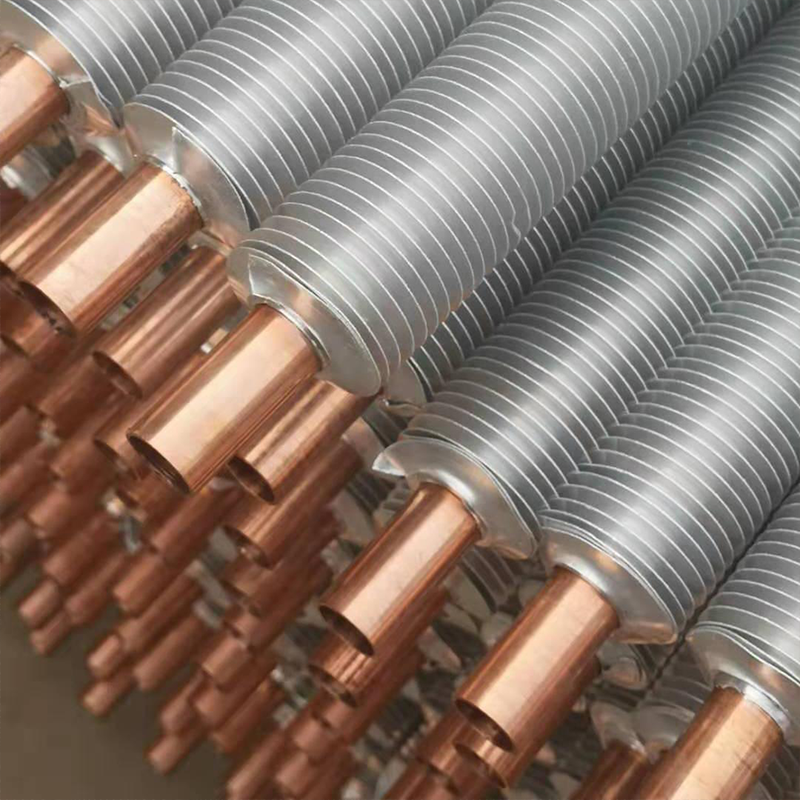
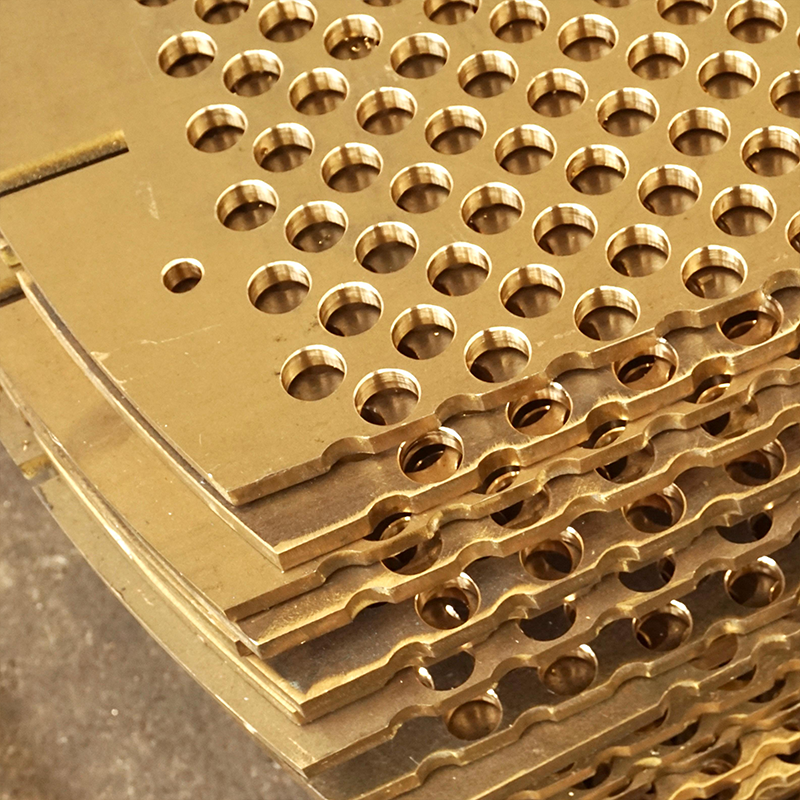
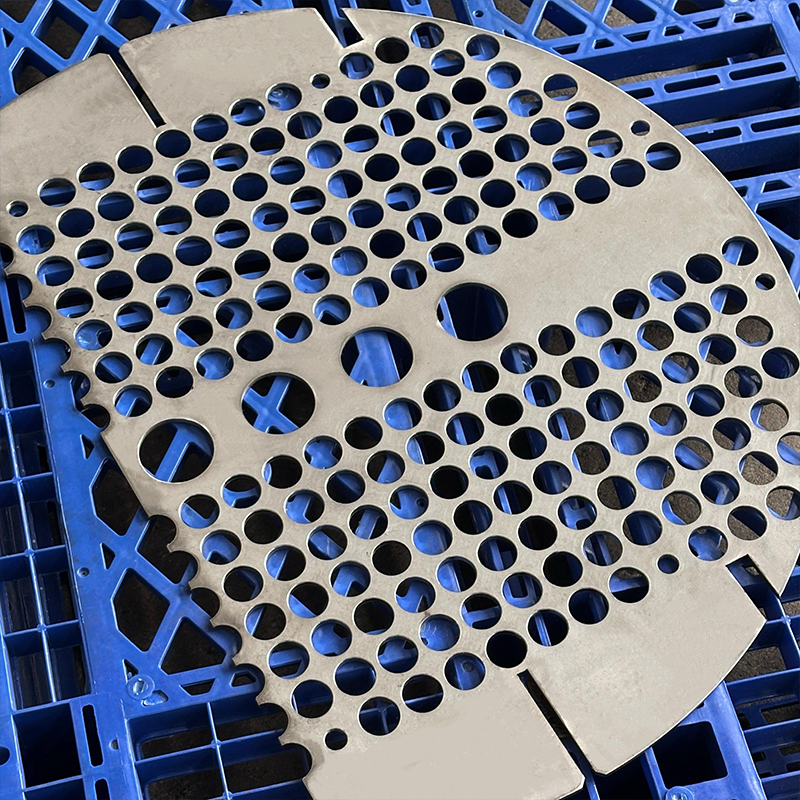
The high standards of quality and safety discussed in the article are the foundation not only for the effective work of teams, but also for the production of the equipment itself. A striking example of this approach is the companyWuxi Kaisheng Electric Power and Petrochemical Equipment Co., Ltd.. Specializing in the development and production of sophisticated heat exchange and petrochemical equipment, the company demonstrates how the well-coordinated work of engineers and production workers allows us to create world-class products. Their portfolio includes titanium shell-and-tube heat exchangers, ASME high-pressure units, 316 stainless steel and C46400 marine brass corrugated tube bundles, and copper-nickel and nickel alloy products (N06625).
Certified to strict international PED and ASME standards, Wuxi Kaisheng products are widely used in petroleum refining, chemical industry, water desalination and shipbuilding. The company's success is based on that very culture of "conscious manufacturing", where every employee - from the technologist to the welder - understands that corrosion resistance and resistance to high pressures depend on the error-free interaction of all links in the chain. As with effective team building, there is no room for chance: only professional interdependence and a commitment to quality enable us to deliver consistent equipment to customers around the world.
If you are ready to take interaction in your team to a new level and turn disparate departments into a single mechanism that operates like a clock, we invite you to dialogue. Our programs are developed taking into account the specifics of heavy engineering and tested on real objects.Contact us todayto discuss the details of developing an individual scenario for your enterprise. Together we will build a team capable of implementing projects of any complexity.